All posts by Barbara Nevins Taylor

10 Makeup Tips For Any Age

When I talk to makeup artist Richard Grandinetti he always gives me a tip that makes a difference. He suggests not too much, not too little, and like baby bear’s porridge the makeup turns out just right.

Richard knows how to help women enhance what they have without turning the look into a freak show. So I asked him to put together a list of 10 easy makeup tips for any age. And because I’m particularly interested in makeup for Baby Boomers and older women, I asked him to focus on us. 

Lisa, who just turned fifty, Lisa

and Peggy, who is eightyish, volunteered their faces. I think you will find the tips easy to follow and agree that Lisa and Peg look great. 

Peg

Richard Grandinetti’s 10 Makeup Tips For Any Age

Step 1

Brighten The Eye With A Base

Richard says, “Most people worry about eye shadow. All you have to do is brighten your whole lid and take away the darkness and redness as well.” He uses a neutral eye shadow base. In this case, it’s Trish McEvoy’s Bare Essential, Bare.

Step 2 

Use Pencil To Fill In Your Lashes 

Use a pencil and dot in between your lashes as you look in the mirror. Richard thinks this is better than drawing a line because you don’t have to worry about it coming out straight. He says, “You just hold your eye secure and you push it into your own lash line. It makes the lashes look longer.”

Step 3

Apply Mascara

Step 4

Brighten Under The Eye

Richard says most women have darkness, redness or thin skin under their eyes. He use Trish McEvoy’s Instant Eye Lift and applies it in a V from the corner of the eye near the nose down to just above the cheek bone and back up to the corner of the eye. But he brings it up a little higher on the outside of the eye to highlight the cheekbone.

He suggests using a product that is a shade lighter than your skin. 

Step 5

Even Skin With Tinted Moisturizer or Foundation

Richard says, “You don’t have to put foundation all over. Look at yourself objectively and see where you have redness or discoloration.” He suggests starting at the bridge of the nose, using a brush, and blending out: “You want to even out the T-zone and blend a little around your mouth.” And he adds that if your chin seems red than you need some there too.

Using a brush, he says, helps lay down the thinnest amount possible. 

Step 6

Apply Bronzer (Instead of Blush)

Richard thinks a bronzer will give you a more current look for every day instead of using what he calls “a blazing color.”  He says, “Using a little bronzer sculpts the face and adds warmth. Most people make the mistake of using bronzer all over the face. You don’t want to do that.  You apply it a thumb away from the eye and a thumb away from the nose just caressing your cheek bones.”

He also recommends that you brush a little under your eyebrow on the bone to contour the eye and a little under the chin and in the middle of the neck.

Step 7

Apply Lip Color

Richard suggests using a bright lip color, but not a dark color. “You want to be careful when selecting a lip color that you are not going too dark. Dark lips slim your lips the way black slims your figure. And we don’t want that,” he says.

He likes to use a brush, but also recommends putting lipstick on from the tube. “You are going to put it on again, and again. Women always say that their lipstick doesn’t stay on. That’s why you need to reapply it several times.

Richard cautions you not to blot the lipstick. “That’s the same as taking it off,” he says.

He also lines the lips after he puts on the lipstick to create definition.

Step 8

Fill In Brows

Richard suggests filling in the brows with a pencil starting at the thicker part near your nose. He likes to use a thin brow pencil to help define a natural brow. He says, “You always want to make your brows a shade lighter than your hair. Dark brows can make you look mean.”

After you fill in, brush up and smooth the hairs into place. “You always want to use a light hand with brows,” Richard reminds us.

Step 9

Apply Eye Shadow For An Evening Look

Richard likes neutral eye shadow colors like gray, beige and brown. He applies the shadow in the outside corner of the eye and blends it down into the lash line. He cautions us to keep the inner corner of the eye light. 

Step 10

Apply Blush For An Evening Look

Richard likes small brushes to apply cheek color. He recommends that you start a thumb away from your eyes and a thumb away from your nose and just dust on a little color.

Richard Used The Following Trish McEvoy Products:

Bare Essential, Bare

Deep Aubergine Intense Gel Eyeliner Pencil

Precision Brow Shaper

Lash Curling Mascara

Instant Eye Lift Under Eye 

Beauty Balm Shade 1

Golden Bronzer

Nude Lip Essentials on Lisa

Red Lip Essentials on Peggy

Long-Wear Lip Liner

Easy Going Blush

 

Richard and PegRichard Grandinetti works as a makeup artist for Trish McEvoy at Bergdorf Goodman in New York City. You can reach him @richardgrand@gmail.com.




When You Stop Paying Off A Pension Advance


by Barbara Nevins Taylor


John Greene, a California retiree, heard about a ten-year investment deal through his financial advisor that offered a 7.22 percent return. The advisor called it a “structured asset,” and it seemed “reasonable” to Greene. Apparently, he was unaware someone might stop paying off a pension advance loan and he might lose money.

At the other end of the deal, James Trujillo, a 43-year-old retired California police officer, suffering from PSTD and a compulsive gambling habit, needed money to pay off his debts. He found himself willing to trade his monthly disability pension payment for a lump sum of $117,000. And he too gave little thought to the possibility he would stop paying off a pension loan.

It seemed like a perfect marriage of needs. But the story of how this pension advance loan deal played out offers a cautionary tale for people at both ends of these kinds of transfers. Pension advances for people who need quick cash and structured assets for those who want monthly income can turn easily into financial disaster for the lender and the borrower. 

For Trujillo and Greene it began in 2011. Voyager Financial Group (VFG) reached out to Trujillo, who told ConsumerMojo.com his PSTD-fueled gambling addiction racked up debts and made him feel “desperate.” He had lost his home and filed for bankruptcy.

Trujillo signed a contract with VFG to sell what it called his “structured asset.” The agreement called for him to sign over a portion of his rights to future pension payments for ten years.

Greene, described in court papers as “semi-retired and in the property management business,” learned about this investment possibility from his financial advisor Leo Bertucci in Rondo Beach, California.  Bertucci, a licensed insurance agent, testified that he discovered the plan through a marketing company called Mainline Guarantee. He said he thought it was like an annuity but offered a better return because of California taxes on annuities. 

Voyager Financial Group prepared the documents for Trujillo and Greene. It required Trujillo to take out a life insurance policy as security in case he died during the ten-year term of the contract. He also signed a special Power of Attorney that allowed a title company to distribute the money to Greene, and changed the direct deposit for his California pension from his bank to an escrow account controlled by the title company in Arizona. 

Greene agreed to put up $215,000, although he did not know how much Trujillo would receive. He entered into the deal even though he and his financial advisor knew that Trujillo had filed for bankruptcy. Court papers say that Greene was told by his financial advisor that the bankruptcy covered only Trujillo’s previous debts. 

In mid-February 2012, Trujillo received $117,000. The remainder of the up-front money apparently went to the companies that put the deal together. Green would get $2,496.00 for 120 months. But the deal spelled trouble for Trujillo. He needed more money than he made as a labor representative for a local of the California Teachers’ Union.

The bankruptcy settlement required him to pay certain debts. So he did what he’d done before. He gambled to supplement his salary.

The deal worked out as planned for almost two years.

Greene received 21 payments totaling $52,429.00. And then an error by the California pension system delayed a payment and got Trujillo thinking. He told ConsumerMojo, “I felt awful about it. I realized I couldn’t make ends meet between my gambling and my job and I needed that pension money.” 

Trujillo asked the pension system to return the monthly direct deposits to his personal account. That left Greene out over $164,500.

Greene sued Trujillo in state court in Los Angeles to try to get the contract enforced, but that court ruled that Trujillo’s earlier bankruptcy filing protected his pension. Greene and his legal team considered suing Voyager Financial Group but they discovered the company no longer had any assets. They took the case to federal bankruptcy court and asked a judge to exempt the pension from the bankruptcy.

U.S. Bankruptcy Judge Stephen L. Johnson in the Northern District of California considered Trujillo’s gambling addiction and his need for money. He found that under the 1974 Employment Retirement Security Act (ERISA), Trujillo’s pension couldn’t be reassigned. He ruled that the company drafted the contract to “circumvent ERISA’s prohibition on assignment of pension benefits as well as to provide a misleading sense of security to the buyer.” He said, “In reality then, the ‘purchase’ amounted to nothing more than an unsecured loan.”

That’s exactly what consumer advocates say when they warn against entering into these deals.

But still, the issue in the Trujillo-Greene case involved something else.  The judge had to decide if the pension was protected under the bankruptcy law. Judge Johnson ruled that because Trujillo had declared bankruptcy, his assets and pension were protected. Trujillo got to keep his pension. Greene was left holding a mostly empty bag.  

In the middle of all of this, Greene’s financial advisor Bertucci voluntarily gave up his insurance license in an agreement with the California Insurance Department in connection with an investment fraud that cost elderly Californians $1.5 million. Bertucci did not admit wrongdoing and his attorney told the Daily Breeze.com that his client “did not profit and in fact lost substantially in the process.” In addition, he said Bertucci “was extremely instrumental in obtaining the return of 80 percent of his clients’ losses.”

In April 2013, the Arkansas Securities Commission issued a cease and desist order to Voyager Financial Group and its Managing Member Andrew Gamber along with his partners Kevin McNay, Jonathan Sheets and Robert Henry for violating Arkansas laws and selling pension advances.

John Greene did not return our request for an interview, but James Trujillo told us he is in recovery from his gambling addition and said, ‘I was tremendously relieved by the judge’s decision. But the whole thing is pretty embarrassing.” He says he feels badly about Greene and, “didn’t realize that he had given the company more than $200,000.”

For consumer advocates who caution against these deals, the story serves as a warning to others. Stuart Rossman of the National Consumer Law Center told us, “It shows why the pension advance companies try so hard to keep the claims out of bankruptcy estate while avoiding the anti-assignment provisions of various statutes that protect pensioners. It is a tightrope that they try to walk and fortunately when challenged they usually fail.”


readmoreDanger of Pension Advance


DNC Leader Wasserman Schultz Goes Against Consumers

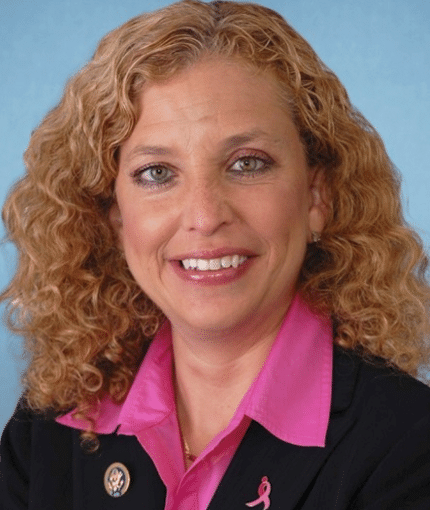
Consumers apparently no longer have a friend in the Democratic chairwoman, Florida Representative Debbie Wasserman Schultz. Schultz co-sponsored legislation aimed at reducing the power of the Consumer Financial Protection Bureau (CFPB) to rein in abusive payday lenders.

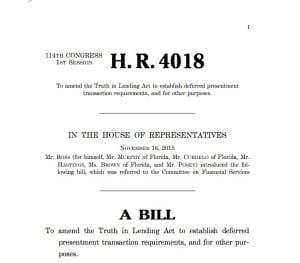
The Huffington Post first reported the story. But a wade through the dense language of congressional legislation reveals that HR 4018, a bill to “amend the truth-in-lending law,” would let weak state regulations override any new, tough regulations proposed by the CFPB. It would also delay new regulations to curb the worst abuses in payday lending.

The Consumer Financial Protection Bureau plans to introduce the regulations sometime in 2016. But Republicans and banking lobbyists have lined up to block it. The Wasserman Schultz endorsement of the legislation seems to have come as a surprise. 

HR 4018

 Often, people who live from paycheck to paycheck and need cash quickly resort to a payday lender without realizing the consequences. In some cases, lenders charge 400 to 600 percent interest and it becomes very difficult for borrowers to pay off those loans.

A report by the Center For Responsible Lending found that a quarter of the people who borrowed money this way are on Social Security and took out an average of 19 loans. 

Consumer groups including the Center for Responsible Lending, the Consumer Federation of America, the NAACP, the Southern Poverty Law Center and the National Consumer Law Center wrote letters to Congress opposing the legislation.

So why Wasserman Schultz and six other Democrats would sign on to the bill remains a mystery. 


Citibank To Pay Millions For Debt Collection Fraud


Have you ever wondered how a debt collection company gets the names and contact information for people who may or may not owe money? A recent action against Citibank by the Consumer Financial Protection Bureau sheds light on an often shady practice that seems especially shady in this case. 

Citibank, according to the CFPB, from 2010 to 2013 sold credit card debt to 16 debt collectors and inflated the interest rates people paid from zero to 29 percent. When people actually paid their bills to the bank, Citibank failed to tell the debt collectors about the payments.

While Citibank did not admit wrongdoing, it did agree to repay $5 million to 2100 consumers and pay a $3 million penalty. And Citibank will pay additional penalties because two law firms, Falconi & Associates and Solomon & Solomon, PC, falsified court documents in connection with the collections in New Jersey. Consumers will get $11 million in this part of the case, and Citibank must stop trying to collect about $34 million from about 7,000 people.

CFPB Director Richard Cordray said the “. . . action provides redress to consumers who were victimized by slipshod practices.” He described the settlement “. . . as part of our ongoing work to fight abuses in the debt collection market.”

Makes you wonder why some people didn’t get jail time. 

But as a result of the settlement, from now on Citibank will have to let credit card holders know what they owe, and tell them when the bank sells their debt. The settlement also requires companies that buy debt from Citibank to sign agreements that prevent them from reselling the debt.


IRS Warns About Tax Preparers and Scams


by Barbara Nevins Taylor

When I think about tax preparers and fraud, I always remember a soft-spoken man who ran a storefront operation in East Orange, New Jersey. He and his team helped people prepare their tax returns. People trusted him. They told me about the big refunds he helped them get. But he also opened them up to prosecution for fraud. 

Because of people like him, the IRS has issued an alert this year warning you to make sure no one involves you in a scam and falsifies income on your returns.

IRS Commissioner John Koskinen said, “Taxpayers should not falsify their income or other information on their tax returns to improperly claim tax credits. Misrepresenting facts is cheating and taxpayers are legally responsible for all the information reported on their tax returns.”

That means if you can face criminal prosecution and have to repay money that you received. 

In the New Jersey case,  a college student called me to blow the whistle. He said the preparer had listed 3 dependents on his tax return form.  The 19-year-old worked at fast food restaurant and had no children or any other dependents. Yet the preparer claimed that with the dependents, the student was entitled to a refund under the Earned Income Tax Credit (EITC). He told the student the refund should come to his office and would serve as his payment.

Eventually, prosecutors went after the preparer and he went to prison. The student was not prosecuted.

But the scheme goes on, and that’s why the IRS urges you to choose your tax preparer carefully and offers the following tips:

1. Avoid fly-by-night preparers. 

2. Use the IRS Directory of Federal Tax Return Preparers with Credentials and Select Qualifications. This tool can help you find a qualified tax return preparer and it allows you locate them by zip code and profession like CPA, lawyer or enrolled agent.

3. Check the preparer’s history. Ask the Better Business Bureau about the preparer.

4. Check for disciplinary actions and the license status for credentialed preparers.

5. For CPAs, check with the State Board of Accountancy.

6. For attorneys, check with the State Bar Association.

7. For Enrolled Agents, go to IRS.gov and search for “verify enrolled agent status” or check the Directory.

8. Ask about service fees. Preparers are not allowed to base fees on a percentage of their client’s refund.

9. Avoid those who boast bigger refunds than their competition.

10. Make sure that your refund goes directly to you – not into your preparer’s bank account.

11. Ask to e-file your return. Make sure your preparer offers IRS e-file. Paid preparers who do taxes for more than 10 clients generally must offer electronic filing. The IRS has processed more than 1.5 billion e-filed tax returns. It’s the safest and most accurate way to file a return.

12. Provide records and receipts. Good preparers will ask to see your records and receipts. They’ll ask questions to determine your total income, deductions, tax credits and other items.

13. Do not rely on a preparer who is willing to e-file your return using your last pay stub instead of your Form W-2. This is against IRS e-file rules.

14. Make sure the preparer is available. In the event questions come up about your tax return, you may need to contact your preparer after the return is filed.


Poetry To Warm A Valentine’s Heart

How do you say I love you?  Poets often find images that give voice to our thoughts and express our deepest feelings about enduring love. I chose William Shakespeare, E.E. Cummings, Elizabeth Barrett Browning, Maya Angelou and Pablo Neruda to lead us to the heart of it. (Pun intended) 


Shall I Compare Thee To a Summer’s Day? (Sonnet 18)

by William Shakespeare

Shall I compare thee to a summer’s day?

Thou art more lovely and more temperate:

Rough winds do shake the darling buds of May,

And summer’s lease hath all too short a date:

Sometime too hot the eye of heaven shines,

And often is his gold complexion dimm’d;

And every fair from fair sometime declines,

By chance or nature’s changing course untrimm’d;

But thy eternal summer shall not fade

Nor lose possession of that fair thou owest;

Nor shall Death brag thou wander’st in his shade,

When in eternal lines to time thou growest:

So long as men can breathe or eyes can see,

So long lives this and this gives life to thee.


(i carry your heart with me(i carry it in)

by E.E. Cummings

i carry your heart with me(i carry it in

my heart)i am never without it(anywhere

i go you go,my dear;and whatever is done

by only me is your doing,my darling)

                                                      i fear

no fate(for you are my fate,my sweet)i want

no world(for beautiful you are my world,my true)

and it’s you are whatever a moon has always meant

and whatever a sun will always sing is you

here is the deepest secret nobody knows

(here is the root of the root and the bud of the bud

and the sky of the sky of a tree called life;which grows

higher than soul can hope or mind can hide)

 and this is the wonder that’s keeping the stars apart


How Do I Love Thee (Sonnet 43)

by Elizabeth Barrett Browning

How do I love thee? Let me count the ways.

I love thee to the depth and breadth and height

My soul can reach, when feeling out of sight

For the ends of being and ideal grace.

I love thee to the level of every day’s

Most quiet need, by sun and candle-light.

I love thee freely, as men strive for right.

I love thee purely, as they turn from praise.

I love thee with the passion put to use

In my old griefs, and with my childhood’s faith.

I love thee with a love I seemed to lose

With my lost saints. I love thee with the breath,

Smiles, tears, of all my life; and, if God choose,

 I shall but love thee better after death.


 Touched By An Angel

by Maya Angelou

We, unaccustomed to courage

exiles from delight l

ive coiled in shells of loneliness

until love leaves its high holy temple

and comes into our sight

to liberate us into life.

Love arrives and in its train come ecstasies

old memories of pleasure ancient histories of pain.

Yet if we are bold,

love strikes away the chains of fear

from our souls

We are weaned from our timidity

in the flush of love’s light

we dare be brave

And suddenly we see t

hat love costs all we are

and will ever be.

Yet it is only love

which sets us free.  

 One Hundred Love Sonnets:XVII

by Pablo Neruda 

I don’t love you as if you were a rose of salt, topaz,   

or arrow of carnations that propagate fire:   

I love you as one loves certain obscure things,   

secretly, between the shadow and the soul.

I love you as the plant that doesn’t bloom but carries    t

he light of those flowers, hidden, within itself,   

and thanks to your love the tight aroma that arose   

from the earth lives dimly in my body.

I love you without knowing how, or when, or from where,   

I love you directly without problems or pride:

I love you like this because I don’t know any other way to love,

except in this form in which I am not nor are you,   

so close that your hand upon my chest is mine,   

so close that your eyes close with my dreams.

Listen To An IRS Phone Scam Call and Beware

Talk about timing. Just as I was about to post this warning about IRS phone scams, we received a call from a scammer. Listen to what he says:

In case you didn’t catch it, the man said his name is David Grey. The Seattle, Washington, phone number is 206-204-5025. I guess he thinks it is super clever to use a name like Grey from Fifty Shades of Grey, but he’s not trying to lure you into an S&M relationship. This Mr. Grey wants your money. If this number turns up on your caller ID, delete it. Whitepages.com gives it a 4 out of 4 scam rating.

These audacious, out-of-control IRS phone scams concern the IRS so much that the agency issued a new warning urging consumers to beware of callers working the fraud. The agency says it has seen a “huge surge” of calls by scam artists who claim they represent the IRS and demand money, threaten arrest and sometimes deportation.

Investigators say threatening phone calls by criminals impersonating IRS agents top the list of 2016 tax scams and have cost taxpayers more than $26.5 million since 2013 when the agency began to receive complaints.

IRS Commissioner John Koskinen said, “There are many variations. The caller may threaten you with arrest or court action to trick you into making a payment. Some schemes may say you are entitled to a huge refund.”

IRS agents never call you to demand money. Commissioner Koskinen explained, “We continue to say if you are surprised to be hearing from us, then you’re not hearing from us.”

The IRS Scam works like this:

1. The phone rings and an IRS caller ID may even show up on your phone. A caller will identify himself, or herself, with a fake name, title and perhaps a fake IRS badge number. 

2. They may use your name and know your address. 

3. They will demand that you pay a phony tax bill, money that you don’t owe. They will give specific instructions about how to pay it. They may ask you to use a prepaid debit card, or wire the money. 

4. They may leave urgent messages through robocalls or through phishing (phony) emails.

Don’t fall for any of it. Don’t let them push you around. Don’t give them money.

The IRS says:

1. It will never call to demand immediate payment. 

2. If you owe money, it will send a bill.

3. It will never demand money without giving you a chance to appeal or challenge the agency. 

4. It will never require you to use a specific payment method like a pre-paid card.

5. It will never ask for credit card, or debit information on the phone.

6. It will never threaten to bring local police or other law enforcement agents to have you arrested.

WHAT TO DO IF YOU RECEIVE A CALL FROM THE “IRS.” 

If you get a call from a so-called IRS agent, hang up. 

Don’t give out any information.

Report the call and the number if you have it to the IRS Impersonation Scam Reporting Page, or call 1-800-366-4484.

You can also report it to the Federal Trade Commission.


Credit Reporting Company’s Rack Up Complaints

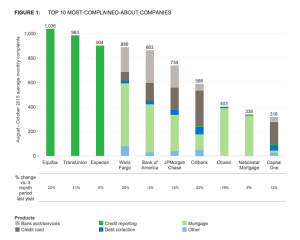
 If Equifax, TransUnion and Experian make you mad, you have plenty of company. The latest monthly report from the Consumer Financial Protection Bureau (CFPB) put the three major credit reporting agencies at the top of the list of most complained-about companies. 

These for-profit companies compile and keep track of how you pay your bills, whether you pay on time, pay late or miss payments. The CFPB report doesn’t spell out what they did, or failed to do, to rack up the most complaints from August through December 2016. But we do know that many complain that they have to fight to get the agencies to correct errors on their credit reports 

In the New York metro area, including New York, New Jersey, Pennsylvania and Connecticut, JP Morgan Chase made the top three along with Experian and Equifax.  

ConsumerMojo asked the individual credit reporting bureaus for comment and they referred us to the Consumer Data Industry Association. A spokesman criticized the publication of the data as unfair.

In an email, Norm Magnuson, Vice President of Public Affairs, told us, “…when consumers read a report about complaints they assume that the complaint has been verified and it means there’s been a failure to comply with law or to otherwise work with the consumer.  That isn’t the case with the CFPB’s monthly complaint reports.”

And in a letter to CFPB Director Richard Cordray, the CDIA’s President and CEO Stuart Pratt asked the bureau to postpone publication of the monthly report until it analyzes the data.

Advertisement


He said that in some instances the credit reporting agencies did not receive and verify the complaints. In other cases, people complained about the credit reporting agencies when they should have complained about another company. And he said that the CFPB process for soliciting complaints may confuse consumers about where they should file a complaint.

Nevertheless, we know that many have legitimate complaints about the credit reporting bureaus and those complaints often take a long time to get resolved.

Ten Most Complained About

If you have had trouble getting your credit report online

readmoreHere’s why.


Time For Procrastinators To Get Health Insurance

You can’t put it off much longer. Time is running out for procrastinators to get health insurance under the Affordable Care Act, aka Obamacare, for 2016. You have until January 31st and that’s the last call for this year.

If you don’t sign up for health insurance you face a penalty of either 2.5 percent of your income or $695, whichever is higher.

Anyone who doesn’t have health insurance through an employer can enroll and should. You want to protect yourself if you get sick or if you get injured in an accident. And you never know.

If you have Medicare, you don’t need to worry about this. Medicare covers your needs. 

While the federal Department of Health and Human Services (HHS) oversees the sign-up and sets some of the rules, private insurers offer the plans.

Plans vary slightly from state to state and doctors and hospitals in different states treat plans differently, accepting some and rejecting others. That’s why, when you consider a plan, it’s a good idea to find out if your doctor or medical provider accepts the insurance.

ALL PLANS COVER BASIC SERVICES

  • Outpatient medical care
  • Emergency treatment
  • Hospitalization including surgery and overnight stays
  • Pregnancy, maternity and newborn care
  • Pediatric care
  • Mental health and substance abuse services
  • Rehabilitative services
  • Laboratory services
  • Preventive and wellness services 
  • Birth control
  • Breast feeding services

Some plans may include dental and vision.

WHAT YOU PAY

Eight in ten people who apply in 2016 will qualify for financial assistance that will help you lower the monthly premiums. People with moderate and higher incomes, especially in small rural states, complain that the premiums and out-of-pocket expenses run high.  

Poorer people pay less in most cases, and some pay no premiums at all. Many states increasingly realize the value of providing health care and have expanded or plan to expand Medicaid to cover a wider group of people. Medicaid and the Children’s Health Insurance Program (CHIP) provide health insurance for millions across the country and the Department of Health and Human Services expects millions more to sign on.

You can apply online at Healthcare.gov, by phone at 1-800-318-2596 or with local in-person help. You can find that help here


Pension Advance and Structured Asset Disaster


by Barbara Nevins Taylor


John Greene, a California retiree, heard about a ten-year investment deal through his financial advisor that offered a 7.22 percent return. The advisor called it a “structured asset,” and it seemed “reasonable” to Greene.

At the other end of the deal, James Trujillo, a 43-year-old retired California police officer, suffering from PSTD and a compulsive gambling habit, needed money to pay off his debts. He found himself willing to trade his monthly disability pension payment for a lump sum of $117,000.

It seemed like a perfect marriage of needs. But the story of how it played out offers a cautionary tale for people at both ends of these kinds of transfers. Pension advances for people who need quick cash and structured assets for those who want monthly income can turn easily into financial disaster for the lender and the borrower. 

For Trujillo and Greene it began in 2011. Voyager Financial Group (VFG) reached out to Trujillo, who told ConsumerMojo.com his PSTD-fueled gambling addiction racked up debts and made him feel “desperate.” He had lost his home and filed for bankruptcy.

Trujillo signed a contract with VFG to sell what it called his “structured asset.” The agreement called for him to sign over a portion of his rights to future pension payments for ten years.

Greene, described in court papers as “semi-retired and in the property management business,” learned about this investment possibility from his financial advisor Leo Bertucci in Rondo Beach, California.  Bertucci, a licensed insurance agent, testified that he discovered the plan through a marketing company called Mainline Guarantee. He said he thought it was like an annuity but offered a better return because of California taxes on annuities. 

Voyager Financial Group prepared the documents for Trujillo and Greene. It required Trujillo to take out a life insurance policy as security in case he died during the ten-year term of the contract. He also signed a special Power of Attorney that allowed a title company to distribute the money to Greene, and changed the direct deposit for his California pension from his bank to an escrow account controlled by the title company in Arizona. 

Greene agreed to put up $215,000, although he did not know how much Trujillo would receive. He entered into the deal even though he and his financial advisor knew that Trujillo had filed for bankruptcy. Court papers say that Greene was told by his financial advisor that the bankruptcy covered only Trujillo’s previous debts. 

In mid-February 2012, Trujillo received $117,000. The remainder of the up-front money apparently went to the companies that put the deal together. Green would get $2,496.00 for 120 months. But the deal spelled trouble for Trujillo. He needed more money than he made as a labor representative for a local of the California Teachers’ Union.

The bankruptcy settlement required him to pay certain debts. So he did what he’d done before. He gambled to supplement his salary.

The deal worked out as planned for almost two years.

Greene received 21 payments totaling $52,429.00. And then an error by the California pension system delayed a payment and got Trujillo thinking. He told ConsumerMojo, “I felt awful about it. I realized I couldn’t make ends meet between my gambling and my job and I needed that pension money.” 

Trujillo asked the pension system to return the monthly direct deposits to his personal account. That left Greene out over $164,500.

Greene sued Trujillo in state court in Los Angeles to try to get the contract enforced, but that court ruled that Trujillo’s earlier bankruptcy filing protected his pension. Greene and his legal team considered suing Voyager Financial Group but they discovered the company no longer had any assets. They took the case to federal bankruptcy court and asked a judge to exempt the pension from the bankruptcy.

U.S. Bankruptcy Judge Stephen L. Johnson in the Northern District of California considered Trujillo’s gambling addiction and his need for money. He found that under the 1974 Employment Retirement Security Act (ERISA), Trujillo’s pension couldn’t be reassigned. He ruled that the contract was drafted to “circumvent ERISA’s prohibition on assignment of pension benefits as well as to provide a misleading sense of security to the buyer.” He said, “In reality then, the ‘purchase’ amounted to nothing more than an unsecured loan.”

That’s exactly what consumer advocates say when they warn against entering into these deals.

But still, the issue in the Trujillo-Greene case involved something else.  The judge had to decide if the pension was protected under the bankruptcy law. Judge Johnson ruled that because Trujillo had declared bankruptcy, his assets and pension were protected. Trujillo got to keep his pension. Greene was left holding a mostly empty bag.  

In the middle of all of this, Greene’s financial advisor Bertucci voluntarily gave up his insurance license in an agreement with the California Insurance Department in connection with an investment fraud that cost elderly Californians $1.5 million. Bertucci did not admit wrongdoing and his attorney told the Daily Breeze.com that his client “did not profit and in fact lost substantially in the process.” In addition, he said Bertucci “was extremely instrumental in obtaining the return of 80 percent of his clients’ losses.”

In April 2013, the Arkansas Securities Commission issued a cease and desist order to Voyager Financial Group and its Managing Member Andrew Gamber along with his partners Kevin McNay, Jonathan Sheets and Robert Henry for violating Arkansas laws and selling pension advances.

John Greene did not return our request for an interview, but James Trujillo told us he is in recovery from his gambling addition and said, ‘I was tremendously relieved by the judge’s decision. But the whole thing is pretty embarrassing.” He says he feels badly about Greene and, “didn’t realize that he had given the company more than $200,000.”

For consumer advocates who caution against these deals, the story serves as a warning to others. Stuart Rossman of the National Consumer Law Center told us, “It shows why the pension advance companies try so hard to keep the claims out of bankruptcy estate while avoiding the anti-assignment provisions of various statutes that protect pensioners. It is a tightrope that they try to walk and fortunately when challenged they usually fail.”


readmoreDanger of Pension Advance


Getting Answers About Pension Payouts

Should you take your pension in monthly payments or should you ask for a lump sum of money? Private employers increasingly offer this choice and that means you will face a tough decision.

Confusion about pension payouts can lead to a financially devastating mistakes, especially for older people who can’t get a do-over. That led the Consumer Financial Protection Bureau (CFPB) to step into the breach. It came up with a guide to help you navigate pension payment choices. 

The guide provides answers about pension payouts and offers tips and warnings to help you protect and manage your money. CFPB Director Richard Cordray said, “Retirees are increasingly being faced with the difficult one-time choice to either take their pension payments in a lump sum or as a lifetime income stream. Clear information about the trade-offs they face can help consumers make the right financial decision for their retirement security.”

When you review your needs, key factors to consider include:

Consider the the length of time you need the income.

A monthly payment option offers steady lifetime income and substantially reduces a consumer’s risk of running out of money later in life. This is especially important if the consumer or their spouse is in good health or if either of the two has a family history of longevity.

With a monthly payment, you have the protection of the Pension Benefit Guaranty Corporation (PBGC). If your company declares bankruptcy or cannot make its pension payments, the PBGC guarantees those payments up to a certain amount. The CFPB says, “Pension payments are also protected against certain creditor claims or debt collectors. With a lump-sum payout, consumers lose these protections.”

In addition, if you choose the monthly payment, your benefit may include a surviving spouse clause.

A lump-sum payout, however, might make sense if you have terminal disease or illness. It also might work for you if you have a steady income stream from another source.

But the CFPB guide reminds that if you take a lump sum you can lose it all unless you have good money management skills  

The lump sum also makes you a target for scammers. And you’ll want to triple check before taking advice from people or making investments with your retirement money.

You can find more on the CFPB website and you can see the guide for figuring out your pension here.


Obama Tears Up As He Talks About Need For Gun Safety

President Obama talked emotionally about why he issued a series of executive orders to close gaps in the background check system for people who buy guns at fairs, gun shows, or online. He also explained why he took other measures to reduce gun violence, including beefing up the Bureau of Alcohol, Tobacco and Firearms (ATF).

During his video address, the President wiped away tears several times as he recalled lives lost during recent shootings.

Here’s what President Obama plans to do, according to the White House press staff.

“The Bureau of Alcohol, Tobacco, Firearms and Explosives (ATF) is making clear that it doesn’t matter where you conduct your business—from a store, at gun shows, or over the Internet:  If you’re in the business of selling firearms, you must get a license and conduct background checks.

ATF is finalizing a rule to require background checks for people trying to buy some of the most dangerous weapons and other items through a trust, corporation, or other legal entity.

 Attorney General Loretta E. Lynch has sent a letter to States highlighting the importance of receiving complete criminal history records and criminal dispositions, information on persons disqualified because of a mental illness, and qualifying crimes of domestic violence.

The Federal Bureau of Investigation (FBI) is overhauling the background check system to make it more effective and efficient.  The envisioned improvements include processing background checks 24 hours a day, 7 days a week, and improving notification of local authorities when certain prohibited persons unlawfully attempt to buy a gun.  The FBI will hire more than 230 additional examiners and other staff to help process these background checks.

2.      Make our communities safer from gun violence

 The Attorney General convened a call with U.S. Attorneys around the country to direct federal prosecutors to continue to focus on smart and effective enforcement of our gun laws.

 The President’s FY2017 budget will include funding for 200 new ATF agents and investigators to help enforce our gun laws.

 ATF has established an Internet Investigation Center to track illegal online firearms trafficking and is dedicating $4 million and additional personnel to enhance the National Integrated Ballistics Information Network.

ATF is finalizing a rule to ensure that dealers who ship firearms notify law enforcement if their guns are lost or stolen in transit.

The Attorney General issued a memo encouraging every U.S. Attorney’s Office to renew domestic violence outreach efforts.

3.      Increase mental health treatment and reporting to the background check system.

The Administration is proposing a new $500 million investment to increase access to mental health care.

The Social Security Administration has indicated that it will begin the rule making process to include information in the background check system about beneficiaries who are prohibited from possessing a firearm for mental health reasons.

The Department of Health and Human Services is finalizing a rule to remove unnecessary legal barriers preventing States from reporting relevant information about people prohibited from possessing a gun for specific mental health reasons.

4.      Shape the future of gun safety technology.

 The President has directed the Departments of Defense, Justice, and Homeland Security to conduct or sponsor research into gun safety technology.

The President has also directed the departments to review the availability of smart gun technology on a regular basis, and to explore potential ways to further its use and development to more broadly improve gun safety.

Congress should support the President’s request for resources for 200 new ATF agents and investigators to help enforce our gun laws, as well as a new $500 million investment to address mental health issues.

 Because we all must do our part to keep our communities safe, the Administration is also calling on States and local governments to do all they can to keep guns out of the wrong hands and reduce gun violence.  It is also calling on private-sector leaders to follow the lead of other businesses that have taken voluntary steps to make it harder for dangerous individuals to get their hands on a gun.  In the coming weeks, the Administration will engage with manufacturers, retailers, and other private-sector leaders to explore what more they can do.”


NYPD Academy Graduates To Hit The Streets New Year’s Eve


More than a thousand graduates of the NYPD class of 2015 took the oath of office at Madison Square Garden, and immediately got a reminder about the challenges of their new jobs. 

U.S. Homeland Security Secretary Jeh Johnson told the graduates they stand on the front line against domestic terrorism. “I encourage you to build bridges to the communities in this city that the Islamic state is attempting to target for recruitment. ‘If you see something, say something’ must be part of your constant message,” he said.

New York City Mayor Bill de Blasio told graduates that he considers this class the generation that closes the divide between the police department and the community. And he said the city has armed them with technology and “cutting-edge information to do your job every day.”

The city invested in iPads, smart phones, tablets and something called ShotSpotter that allows police to pinpoint where gun shots come from. They will also have the latest bulletproof vests.

Commission William Bratton welcomed the new officers, who swell the ranks to 36,000. He said, “I pledge to take care of you, to give you the resources and training that you need, because I am a cop, too.”

The 1,123 new police officers will hit the streets on New Year’s Eve as a force of 6,000 patrols the Times Square area. The crowd, estimated to reach one million, presents a challenge for the city. But at a news conference to discuss the city’s readiness, Chief of Department James O’Neill said, “Leave the worrying to the NYPD. People should feel safest this New Year’s Eve because we’re there.”

To that end, the NYPD bomb squad and a unit that specializes in chemical and biological threats will sweep hotels, parking lots and garages. They will also monitor the subways and close off key entrances and exits.

In addition, a special counterterrorism unit, newly created and trained to deal with emerging threats, will stand ready with 500 officers at or around Times Square to monitor the scene and respond to emergencies.


Merry Christmas

Merry Christmas to all.

Last night, New York City’s streets emptied out as homebound travelers left to celebrate with family and friends. We decided to take a taxi to the beautiful, annual Christmas Eve party hosted by Nan, Gay, Pamela and Katherine Talese on the East Side, a planet away from our home in the Village. 

A cab stopped on our street to drop someone off and we hailed it. A black jacket lay on the back seat. “Someone left this here,” I said to the driver. 

“Oh. It must be the people I just let out. I want to give it to them. Do you mind?” 

“Do you know where they went?” I asked. “Yes. 18. The building where you came from,” the cabbie said. 

Nick grabbed the jacket. “I’ll take it,” he said and ran off.

I got in.  Ayman, the driver, pulled over to wait,  turned and smiled. “Merry Christmas,” he said. 

“And Merry Christmas to you. But I’m like you, It’s not my holiday.  I’m Jewish,” I explained, perhaps unnecessarily.

“Oh. It doesn’t matter what religion. I love New York City during this holiday. Everyone is so happy. I love the lights and the decorations. It’s beautiful,” he said. 

Beautiful and happy. How right.

Photo by ConsumerMojo.com

So in this season of good will, we hope the message of peace, love and tolerance reaches beyond the walls of churches, synagogues, mosques, temples, taxis and subways and wherever people pray.

NYC Mayor de Blasio Talks Housing With Seniors


by Barbara Nevins Taylor

As we head into 2016, 20 percent of older people in New York live in poverty and housing is the number one issue, according to New York Mayor Bill de Blasio. The mayor spoke on a telephone conference call about affordable housing with a thousand members of AARP.

Callers’ questions for Mayor de Blasio reflected the widespread fear of older New Yorkers, and their relatives, about how they can stay in their apartments in a city where a luxury building boom and gentrification continue to transform neighborhoods. 

One woman asked what she should do. She said, “$50,000 a year in rent is getting a little crazy.” The mayor suggested that she and others take advantage of this year’s historically low Rent Guidelines Board increase. For a one-year lease, landlords must offer a zero percent increase. But the mayor seemed to like the idea of a two-year lease with a 2 percent increase that, at least, offers security for a couple of years. “This is good for some,” he said.

Jean, an 80-year-old caller, said she’s been in her apartment for 46 years. She worries that the landlord may force her out as he converts the apartments to condos. She said, “He’s not renewing leases,” and while her lease isn’t up until next year, she’s not sure what to do.

Housing Preservation and Development Commissioner Vicki Been, who was with the mayor, suggested Jean and others in the same situation call 311 and ask to talk to a legal aid lawyer. She also suggested calling the New York Attorney General’s office to inquire about protecting her rights and to make sure the landlord follows the rules.

The mayor said the city invested $60 million in lawyers to offer free services for all New Yorkers in need. 

Mayor de Blasio tried to assuage fears and repeatedly talked about his five- borough plan that will create 10,000 new units for seniors and preserve 120,000 existing apartments.

Those interested in new affordable apartments can find the information on the New York City Housing Connect site. Once you apply online your name goes into the hopper for a lottery and you may get lucky.

Typically affordable housing units will go to people who earn less than $20,000 a year.

The city is also reaching out to landlords of small buildings to join the city’s preservation program. It can help them upgrade their buildings’ infrastructure, water and energy, through a low-cost loan program. 

The mayor closed the call by asking New Yorkers to contact their city council person and express support for his housing plan that would require landlords who build new high rises to make 20 percent of the units affordable. Many community boards oppose the plan because it allows landlords to build large buildings in low-rise neighborhoods.

Tell us what you think?


Stay in housing now.

Freeze on water bill. Make sure your water bill will not go up.

Seniors in rent stabilized housing

Vickie Bean 

Donna Corrado