All posts by Barbara Nevins Taylor

How Do You Choose Home Health Agencies

We rarely think about these things in advance and who can blame us?  So when a crisis occurs in our lives and we need to get a home health aide for a parent, relative, friend, or even ourselves, we tend to scramble in the dark.

The Centers for Medicare and Medicaid Services (CMS) took a giant step forward for us and made it easy to answer the question: How do you choose home health agencies when you need someone to assist at home?

CMS created a user friendly online tool that digs deep into the resources in your state and zip code.


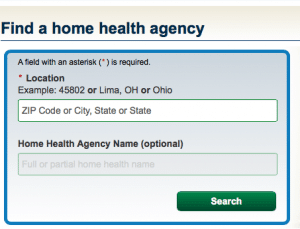
Find A Home Health Agency

I entered my zip code to test it and to compare three services that I might use. I had used two of them already, on separate occasions for relatives. The CMS results surprised me. They’ll help me make my choice the next time that I need help for myself or someone  else.

CMS used feedback from patient surveys and Medicare reporting data to create a star rating system based on how well organizations perform the basic tasks that we might need:

  • How often the home health team began patients’ care in a timely manner.
  • How often the home health team made sure that patients had received a flu shot for the current flu season.
  • How often the home health team taught patients (or their family caregivers) about their prescribed drugs.
  • How often home health patients got better at walking or moving around.
  • How often home health patients got better at getting in and out of bed.
  • How often home health patients had less pain when moving around.
  • How often home health patients got better at bathing.
  • How often home health patients’ breathing improved.
  • How often home health patients had to be admitted to the hospital.

Based on the information, home healthcare services can earn up to 5 stars. And you get to look at the ratings for each area and see how many stars the service you considered earned.

Dr. Patrick Conway,  Acting Principal Deputy Administrator for CMS said, “Adding star ratings to Home Health Compare is another step forward in our continuing efforts to empower consumers by providing more information to help them make health care decisions, while also encouraging providers to strive for higher levels of quality.”

We say, Way to go!

Scam Of The Summer


by Barbara Nevins Taylor

Willy Wong felt lucky. The day after he posted an ad online for his mobile home, he got a  response from a potential buyer,

Cherry Wilson. In a chatty email, she said she was in the Army without access to phone service and asked a few questions about the condition of the vehicle. She also asked if Willy had a PayPal account.

She  put the scam of the summer into play.

Cherry wrote that she wanted to buy the mobile home for her son and said, “I have a mover that will come for pickup once payment clears first.”  

In the next email, she skipped other preliminaries, didn’t haggle and agreed to pay $16, 600.

“I was very excited to sell the mobile home for my asking price so quickly,” Willie remembered.

Then the 66-year-old retired postal worker began to receive emails with the PayPal logo. They announced that someone called Wayne Tiller had deposited $16,600 in Willy’s PayPal account.  But he couldn’t claim the money quite yet.

PayPal 1

To get the money, Willy would have to send $1500 via Western Union to cover the cost of transporting the motor home from Queens, New York, across the country to Tiller in Colorado. One of the emails had a moving ball on it that made action seem urgent.


Willy and his wife Angel imagined the $16,600 in their bank account, thought about a possible vacation and so many other things. They  wanted to claim the money before the buyers changed their minds. “We didn’t have time to think,” Angel said.

Willy and Angel Wong

The Wongs printed out the emails and took them to a Western Union store near where they live. “We thought we had to do this right away. We were really excited and happy and we thought someone at Western Union could tell us more., ” Angel recalled.

They showed the Western Union representative the emails and  asked how they could get the $16,600. He  shook his head and told them, “We don’t handle that kind of money, If you want to wire the  $1,500, we can handle that.” But he said he had no clue how they would get the money from the buyer.

Willy and Angel looked at each other and  left the store. “We’re not that stupid. We knew something was wrong,”  Angel said. We wouldn’t send money until we were sure we had the big money in our account.”

So, deflated and confused, they drove home talking and thinking. They spread out all the emails on their kitchen table.

Willy remembered that he’d never given his full name or his PayPal account information. “How could the money be in my account?” he wondered.

Their 23-year-old son James looked over their shoulders and said impatiently, “This is fake. PayPal doesn’t send emails like this. They’d use your name. They wouldn’t say, “Hi.”

Willy Googled the “transport” company in Waverly, Iowa “The address had no house or building number. And he told his family, “There is no such address.”

Angel looked at him and sighed with disappointment. “James is right. It’s fake,”

Willy shot off an email to the so-called buyers and wrote, “We know what’s going on with you. Don’t send us anything anymore.”

The Wongs discovered the scam before they sent the money  and consider themselves really fortunate.

The scam of the summer puts a new twist on a con game we have seen played over and over again in a number of variations.

The Federal Trade Commission (FTC) lumps the new and the old together and calls them “money transfer scams.”

Typically, you get an email or a phone call and someone tells you they will buy an item  from you, but you have to send money first for shipping or taxes, or something that doesn’t make much sense. They might say:

  • You won a prize but you have to pay taxes on it.
  • A friend in trouble needs your help.
  • You can get a loan, even with bad credit. But you must pay a small fee first.
  • Your grandson or granddaughter needs money right away to get out of trouble.

A PayPal spokesman told ConsumerMojo.com, the company won’t comment about specific scams. But PayPal, he said, takes these frauds seriously and warns consumers to protect their accounts against what PayPal calls “spoofs.”

He also confirmed what James Wong told his parents. PayPal always sends emails that address you by your full name, or your company name.  It never sends emails that say, “Hi,” or “Dear PayPal User.”

The spokesman offered a few suggestions for all PayPal users.

  • ” If you believe you have received a fraudulent email, please forward the entire email <including the header information> to spoof@paypal.com. We investigate every spoof reported. Please note that the automatic response you get from us may not address you by name.”


  • “Don’t share personal information via email: We will never ask you to enter your password or financial information in an email or send such information in an email. You should only share information about your account once you have logged in to www.paypal.com.”


  • “Don’t download attachments: PayPal will never send you an attachment or software update to install on your computer.”

Angel and Willy Wong  say they intend  to take extra care when they do get a response from a legitimate buyer for their mobile home.  Willy said, “They find so many ways to steal from you on the Internet. You have to be careful.”



Good Ideas to Help Baby Boomers From the White House Council on Aging

The White House Conference on Aging wrapped up its 2015 session and came up with good ideas to help Baby Boomers and our aging population stay healthy and engaged.

The conference, held once every ten years, tries to influence policy by articulating an agenda and by working with government agencies and outside groups to get its proposals adopted widely.

The 2015 strategy hits the mark and  highlights the need to do more to promote exercise and continued physical and mental activity.

PHYSICAL ACTIVITY 

In conjunction with the National Institutes of Health and other partners, it will launch Go4Life , an exercise and physical activity campaign for older adults.

And the U.S. Surgeon General and YMCAs across the country will partner in inter-generational physical activity events during the first week of August to promote opportunities for young and older Americans to get active together.

PREVENT SLIPS AND FALLS

It seems pretty obvious that we need to help each other prevent the slips and falls that break hips and cycle us into physical descent.  One in three older adults gets hurt in a fall every year. And that’s why we welcome the idea of an education campaign to focus on preventable injuries.

TRAINING HEALTH PROFESSIONALS

The Centers for Disease Control and Prevention (CDC)  will offer a free on-line course that provides continuing education credits to physicians, nurses and other health professionals on making falls prevention a routine part of clinical care.

EXPAND GERIATRIC EDUCATION

The Health Resources and Services Administration (HRSA)  will award $35 million to health professionals for training programs to expand geriatric education. 

IMPROVED NURSING HOME RULES

The Centers for Medicare and Medicaid Services plans to require nursing homes to do more than warehouse people. It will  update requirements for the first time in almost 25 years to improve  care and safety.

HELP FOR WOMEN CAREGIVERS

This resonates with me in a big way.  The Office of Women’s Health  plans to develop training to help family caregivers maximize their own health and address specific care needs of persons with dementia.

BRAIN HEALTH

It seems like a small amount of money, but the Administration on Community Living  will put $4 million into a Brain Health Awareness Campaign “to help older adults better understand changes that occur in the brain as people age and reduce the fear of discussing concerns with family members and clinicians.”

ALZHEIMER’S

The Department of Health and Human Services (HHS)  will update the National Plan to address Alzheimer’s Disease to set new priorities. This will include a new  Alzheimer’s Disease and Related Dementias training curriculum for health care workers in the hope that early detection can help.

The Centers for Medicare and Medicaid Services will work with groups to get the word out about the preventive benefits that Medicare offers.

Medicare and End-of-Life Discussions


What’s the most difficult discussion you ever had? Maybe you haven’t had it yet, and maybe it was about how to treat your parents at the end of their lives.

I remember lunch with my dad and stepmother, in Atlanta, long ago. My husband Nick had just published Necessary End, about taking care of his parents in their final years. And I asked my dad if he had made any plans. He wrinkled his nose, shook his head, ordered a glass of red wine and brushed me off.

But I persisted because my in-laws thought and planned ahead and consequently, doctors, hospitals and nursing homes followed their wishes. They made choices that people abided by and consequently Nick’s parents lived to the end with as much dignity as people could muster in bad circumstances.

Jack and Clare Taylor

My mother-in-law had thoughtfully written everything she wanted down on a yellow legal pad and she and Nick’s dad chose to have living wills that included “do not resuscitate” orders. That meant they did not want extreme measures taken should they begin to slip away.

If they hadn’t thought about this, life support and other measures may have prolonged their suffering and their lives artificially.

My dad had me to talk with.  Nick’s parents had him, although they’d already made up their minds. My dad, shortly after our difficult conversation, did have a living will drawn up and so did my stepmom.

But some people find these tough conversations with family members too upsetting and some older people may not have the appropriate people to consult.

That’s why an item about Medicare and end-of-life discussions, buried in a CMS news release, comes as welcome news.

CMS published a proposed rule involving payment to doctors. The new proposal would allow pay for doctors to discuss “advanced care planning” for seniors and other Medicare beneficiaries.

That’s an awfully polite way to say a doctor can talk with you about making plans for your end-of-life care.

CMS carefully says that the proposal follows the recommendations of the American Medical Association “to make advanced care planning services a separately payable service under Medicare.”

These aren’t “death panels,” but discussions everybody needs to have.

The plan will go into effect in the fall after a 60-day comment period.


Online Sites That Offer Quick Cash


If you wonder about the online sites that offer quick cash and make it seem so easy to get money, a recent Federal Trade Commission (FTC)  settlement with questionable “lenders” pulls back the curtain on how they work.

The FTC sued Timothy A. Coppinger,  Frampton T.  Rowland III and their companies for allegedly swindling millions of dollars from people who gave their personal information to online sites that offer quick cash.

Many inquired about loans, but  never actually applied for them. Yet they  found money deposited in their accounts without their permission. That made them responsible for high interest payments and recurring finance charges.

HOW ONLINE SITES THAT OFFER QUICK CASH WORK

So here’s how it can happen. The sites that offer “fast cash,” ” fast installment loans,” “easy fast cash,” “bad credit fast cash loans,” and more don’t lend money.

The FTC describes these companies as “lead generators.” They pull you in  and ask for all your personal financial information including your checking account number. These lead generators then bunch many  people’s information together  in a bundle and auction the bundle off to the highest bidder.

That’s where the shady lenders step in. They now have your information and can make loans whether or not you want them.

And you might want to take extra care when you give your information out even if you think you need money immediately.

In the recent settlement with the lenders, the FTC says after the companies deposited money in consumers’ accounts they withdrew recurring fees that didn’t go to pay down the principal owed.

FTC’s complaint says, “the defendants told consumers they had agreed to, and were obligated to pay for, the unauthorized “loans.” To support their claims, the defendants provided consumers with fake loan applications or other loan documents purportedly showing that consumers had authorized the loans. If consumers closed their bank accounts to stop the unauthorized debits, the defendants often sold the “loans” to debt buyers who then harassed consumers for payment.”

A federal judge in the Western District of Missouri approved a settlement  with the lenders that does not send them to prison, but it does cancel consumers’ debts and bars the lenders from reporting the debts to credit reporting agencies and from future involvement in the lending business.


The settlement orders the defendants to repay about $54 million. At this point, the FTC doesn’t say how consumer’s will get their share of the repayment. Stayed tuned.

The defendants are Coppinger and his companies, CWB Services LLC, Orion Services LLC, Sandpoint Capital LLC, Sandpoint LLC, Basseterre Capital LLC, Basseterre Capital LLC, Namakan Capital LLC, and Namakan Capital LLC, and Rowland and his companies, Anasazi ervices LLC, Anasazi Group LLC, Vandelier Group LLC, St. Armands Group LLC,; Longboat Group LLC, doing business as Cutter Group, and Oread Group LLC, d/b/a Mass Street Group.


Living!

Ann McGovern is the first profile in our web video series called Living!  

Photo by Jim Scheiner

AND THIS IS WHY WE PROFILED ANN McGOVERN 

We’ve met so many people whom some might call “older,” or “senior” who continue to work and play with great passion. They face life head on and discover new ways to build on what they’ve already accomplished.

Most of the people we’ll profile are over 80. The stories, mostly told in their own voices, reveal how they continue to pursue their passions, find new interests and do meaningful and often creative things. Consider them leaders in the field of living. 

You may know Ann McGovern as the author of children’s books that have sold more than 30 million copies. Annie began as an editor for Golden Books, went on to edit for Scholastic and wrote wonderful books like “Stone Soup” and “Too Much Noise.”

She’s still writing, creating art, traveling and enjoying life to the fullest. Like the rest of us, she’s had her ups and downs. But her story is inspiring because she refuses to to be pulled down by the challenges that come her way. Anne is a breast cancer survivor.  

Recently, doctors at Mount Sinai Medical Center in New York successfully treated two brain tumors that threatened her life. But again, cancer and illness do not stop her.

Instead, she deals with the hurdles and moves on to enjoy what she loves. She’s a great example for the rest of us, especially those in the Baby Boom generation who will have an opportunity to be productive for a long time to come. To borrow from Elvis Presley, millions of us “Got a Lot O’ Livin’ To Do.”

Consider that one out of every four 65-year-old Americans is likely to live past 90, according to the Social Security Administration, and most 65-year-old men will live until 83 and women until 85.

We can all use inspiration and Living! and Ann McGovern offers remarkable insight into what makes a wonderful life.

Give us recommendation for another video profile of a person whose life inspires others.

readmoreYOU MAY ALSO LIKE   NEW LOVE AFTER 60

Flamingo Guitar Maker Francisco Manuel Diaz

We had come to Granada to visit the Alhambra, the fairytale palace, fortress and gardens created by the Muslims who ruled Andalusia from the 9th century until 1491 when Ferdinand and Isabella defeated them.

Photo by ConsumerMojo

The next day we began to explore the rest of the city, which sits under the Sierra Nevada’s snow-capped peaks.

We wandered down the steep hill from the Alhambra  and the hotel where we stayed and found ourselves on Cuesta de Gomérez. Midway down the narrow street we heard the sound of flamenco guitar music and saw the sign and captured this video postcard.

Through the doorway, we saw a man in deep concentration sawing a piece of wood. He looked up and nodded.

We learned that we had stepped into the workshop of Francisco Manuel Diaz, a master flamenco guitar maker and a renowned guitar player.

Aficionados use the term “luthier,” someone who makes or repairs stringed instruments, to describe Francisco Manuel Diaz. But guitar and flamenco experts consider him so much more.

The 73-year-old was born in Granada and studied with master guitar makers Eduardo Ferrer and Manuel de la Chica. He also made a mark playing flamenco guitar and traveled extensively to perform in festivals and clubs.

Those in the know prize the guitars he builds and praise his deep knowledge of the craft and attention to musical and aesthetic details.

An online seller of one of his guitars described, “a  very rich old flamenco sound, which is difficult to find in most modern guitars.”

We talked with the master briefly about how the ban on ivory affects string instrument makers. He told us he never uses ivory. “Only bone,” he said.

We shot our video postcard in Granada with an iPhone 5s.

READ MORE  ONLINE TICKETS FOR TRAINS IN SPAIN


Military Members Get Interest Rate Help


New York State took an important step to help protect military members from outrageously high interest loans whether or not they are permanent residents of New York State.  And it’s about time military members get interest rate help.

Since 2006, a loophole in New York law allowed lenders to make loans with interest rates as high as 36 percent to military members, even though the state caps interest rates, for everyone else, at between 16 to 25 percent depending upon the circumstances.

This essentially gave permission for lenders  to set up shop near military bases to make payday and other kinds of loans. One company, Omni Military Lending, near Fort Drum in upstate Evans Mills, New York, had legally been making loans at interest rates of 36 percent, according to Governor Andrew Cuomo’s office.

The company and others fell under the so-called  Fort Drum Loophole, which allowed them to take advantage just because someone serving in the military listed a permanent address outside of New York State.

That changed with an executive order issued by Governor Andrew Cuomo on July 6, 2015.  “Jacking up the interest rates on loans made to military service members to make a greater profit is simply unacceptable, and it will not be tolerated in the State of New York. This action will help protect military service members and their families from predatory lending, and companies should know that we will not hesitate to crack down on bad actors,” Governor Cuomo said in a news release.

Omni Military Lending will apparently continue in business but will fall under the regulation of the New York State Department of Financial Services.

Governor Cuomo’s office also plans to continue to crack down on illegal online lending by military lenders. The state has taken aggressive action to try to rein in online payday loans, and online loans to military members.

Gay Pride And the New Normal


“It’s normal now. We’re all normal,” 37-year-old Tom Parker said. Parker and his boyfriend stood side-by-side, across from the Stonewall Inn. They smiled, cheered and basked in gay pride and the new normal as a float with a huge wedding cake and two men dancing on top lingered in front of the historic bar during the annual New York City Gay Pride parade.


Tom Parker


“I skipped some of the Pride parades in the past. But this year I thought it was important to be here after the Supreme Court decision,” the New Yorker said.


Hundreds of thousands who felt the same way turned out despite the drizzle that slowly turned to a soft sunny afternoon. Many we talked with described the June 26th Supreme Court decision that declared gay marriage a constitutional right as an important cultural shift.


They praised the decision and those we talked with told us they thought that it will improve their lives and the lives of lesbian, gay, bi-sexual and transgender people all across America.

Katia Vaira


“It made me feel like it was a big change. Finally everyone’s on the same page and we feel accepted,” Katia Vaira told ConsumerMojo.


Tracy Thompson


Nearby, Tracy Thompson from the Bronx took photos with her phone and said, “This all means a lot to gay people. People died, committed suicide because they weren’t accepted. And now people aren’t against us.”


Cuomo Officiates at Wedding


Hours earlier at the Stonewall Inn, New York Governor Andrew Cuomo married  David Contreras Turley and Peter Thiede. Thiede, 35,  works as  an analyst for UBS.  Turley,  36,  works for the Human Rights Campaign and participated in the 2011 coalition that fought to make gay marriage legal in  New York.

“Suddenly, there was a thunderbolt and everything changed,” Brian Herrin said as he and his husband Shannon Rednour stood on the corner of Grove Street.


Brian and Shannon


The 47-year-olds married n New Jersey when it became legal two years ago.  Brian’s a V.P. of finance at a software company and Shannon works as a digital producer. They first married in San Francisco in 2004 when  then-Mayor Gavin Newsome declared gay marriage legal, but their marriage was annulled after the California Supreme Court voided gay marriages.

After 22 years together, they now feel safe. Shannon’s family lives in Arkansas, and Brian’s lives in Kansas. Both states failed to accept gay marriages and they worried about visiting.  Shannon said, “Now we can go to Arkansas and we’re still married.

“And that means if something happens, I can go to the emergency room and see him and help him” Brian said.

That’s ordinary, normal stuff for married couples. And that’s why the Supreme Court ruling means so much. Just ordinary stuff.


Why Your Credit Report May Not Be Available Online


updated September 11, 2017

by Barbara Nevins Taylor

Getting a free credit report online is easy, unless a security alert gets triggered by you or someone else. And the Equifax breach adds up to a giant security alert trigger for more than 143 million of us. 

When a security alert gets flagged for any reason, you may have to jump through hoops to see your report. We originally reported this story before the Equifax data hack that compromised Social Security numbers, drivers licenses and other personal information. We have the latest about what you should do about the Equifax data breach here

In general, this story explains why your credit report may not be available online.

TransUnion Chief Operating Officer David Emery says, “95 percent of those who try the online system have no problem. We send out 20 million credit reports a year.”  

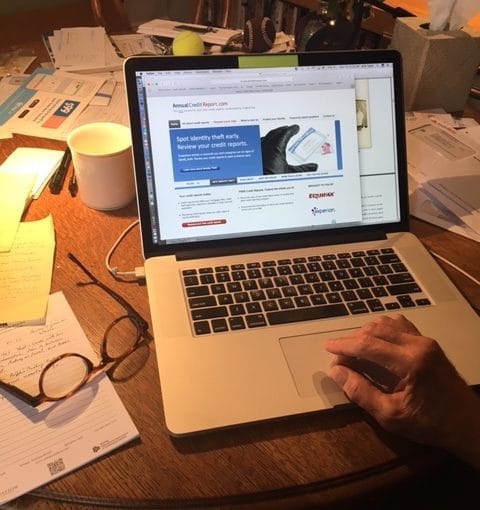
Yet there are circumstances when you can’t get instant information from the online system. We discovered the problem that some encounter when our intern Paul, who asked us not to use his real name, logged on to AnnualCreditReport.com for the first time. Paul recently graduated from college and moved from his small-town college community to New York City to go to graduate school. He wanted to make sure that information on his credit report is accurate and that no one had stolen his identity. IMG_0903 Paul followed the online prompts. He entered his name, Social Security number and address, but then was told he couldn’t get his credit report online. So he tried the AnnualCreditReport.com’s 800 number and the automated system wasn’t helpful either. He was impatient and selected Equifax, another credit reporting bureau, through annualcreditreport. He received the same screen message.  

Continue → Or go to page 1  2  3 Read: How to Improve Your Credit

Read: What Should You Do About Equifax Data Hack?

Read: Consumer Outrages Forces Equifax Backtrack

Finis Jhung Gives A Tip For Good Posture


Finis Jhung, one of the world’s leading ballet teachers, offers an easy tip that you can put into practice to improve your posture. You can do this standing up or sitting down. 77-year-old Finis demonstrates it while he sits. You’ll find the full story about Finis here.

“If I had one tip to give you about posture, it has to do with your head, because you must remember that your brain is in your head, so it is very important. Yet with most people the head is falling.

“What I teach my beginners is: ‘Lace your fingers and put your fingers on the back of your head.

When you do that you push your head forwards. If you push back into your hands, with your elbows back and you are trying to keep your chest up and stand up as erect as possible.

‘If you keep pushing forward and back you will feel the muscles between your shoulder blades and up the back of the neck. So this is the first way you can learn to balance your head, where it needs to be.’ The other thing I always tell my students, I say, ‘If you pick up your ears and pull your ears up, you are lifting your head up out of your body; lift your ears up and back above your shoulder.

‘So if you always think, keep your ears up and back so you never drop your ears, because again, as soon as your head pitches forward, then you are starting to strain your neck, you are starting to lapse in your chest, you are starting to cave in on yourself.'”

REACH FOR THE CEILING

“So up here, you know, I am going to say, ‘Ears back above your shoulders, and then you have a sense of energy, that if you think that you are always pushing up to the ceiling through your head, you are reaching for the ceiling, through the top of your head. So you are always trying to stay as tall as you can, so you try to keep your eyes and you ears far away from the floor.'”

Finis also believes we all need to stretch. “I stretch all parts of my body everyday,” he said.

Continue →for more and a demonstration of  Finis Jhung’s Kitchen Sink Stretch.

←Previous The full Finis Jhung video is here.

Chinese Restaurant Earns An “A”

The A on the front door of Lake Pavilion beckoned like a flashing welcome sign. And we happily turned on to a block off of Main Street in Flushing to find parking. The idea of yummy Chinese dim sum made us smile and delighted us to learn that this Chinese restaurant earns an A from the New York City Health Department.

Dim Sum CartDelicate shrimp dumplings, shrimp wrapped in silky rice noodles, pork in thin tofu skin with a syrupy glaze, eggplant stuffed with shrimp, salt baked skinny fish, chunks of boneless chicken, thick pork puns, hacked up sweet spareribs, mounds of noodles and greens fill the carts the ladies wheel between tables. And we wanted a taste of it all.

We stopped visiting Lake Pavilion after a scathing health department report in the fall of 2014. Even though the restaurant cleaned up quickly and got the all-clear from the health department, we couldn’t bring ourselves to eat there right away.

But on this Sunday morning, we made a trip to a nearby Costco, in Rego Park, to load up on household cleaning stuff and paper goods, and decided to swing by the restaurant to check it out again.

Lake Pavilion fills the old Palace diner right off the Long Island Expressway and you can’t beat the convenient location. The bright, sun-filled restaurant looked spotless when we arrived. Our timing seemed pretty good. Only a handful of people waited around the reception desk. While the main room and all the little side rooms were full, the wait was only about five minutes.

Frequently, we share a table with others. But this time, we got a table for two jammed in between two big tables filled with families. And the food started coming almost as soon as we sat down.

The ladies wheeled their carts with the steaming bamboo containers filled with everything we love to eat and tried to explain dishes we hadn’t tasted before.

Dim Sum Dishes from Lake Pavilion in Flushing Queens. Photo by ConsumerMojo.com

My husband Nick puts fiery spicy red sauce and mustard on most of the food he eats for lunch. But I love the delicate taste of the naked, plump dumplings and it all tasted just right to me. Nick held off on dumping the sauce on the delicate tofu skin rolls stuffed with pork. “This dish doesn’t need anything,” he said.

Now we plan to visit Lake Pavilion for dinner when the seafood menu shines. We’ll tell you about that in the coming weeks.


Buy Jewelry For Mom Without Getting Ripped Off


by Barbara Nevins Taylor

Our mom loved good jewelry and my sister and I bought her pretty things for Mother’s Day and her birthday.  Looking back, it’s amazing to me that we managed to buy gold jewelry without getting ripped off.  

I’m the big sister and the shopper in the family and remember starting the tradition when I was in high school.

On one shopping trip in the  47th Street Diamond District in Manhattan, around the corner from my high school, I found a gold abstract bird pin.  Its eye was a tiny ruby chip and I thought the pin was perfect.  It turned out our mom did too. 

But how did I know it was gold?  I really didn’t.  I thought I knew because I had watched my mother inspect stamps on the back of jewelry, looking for the 14K sign, for years. I did the same. How did I know it was a real ruby? I had no idea.  

Basically, I shopped with faith, and that’s not such a good idea.  Shakespeare knew what he was talking about when he wrote, “All that glitters is not gold.”

Long after my teenager jewelry buying, as a reporter I investigated jewelry sales and found some ugly practices.  My team and I discovered some unscrupulous jewelers sold fake gold  and phony gemstones. 

That’s why I’m sharing a few basic facts. We put together a simple guide to help you buy jewelry for mom without getting ripped off.

SIMPLE GUY TO BUY JEWELRY

Courtesy Wikimedia
Courtesy Wikimedia

1. Decide how much you want to spend in advance so that you can avoid getting pushed into buying something that costs more than you had in mind. Sales people are often persuasive, maybe too persuasive.

2. Think about the type of jewelry that you’d like to buy. This will allow you to be in control and avoid feeling overwhelmed when you get to the jewelry counter.

3. Don’t buy anything on impulse. Take time to think about it and maybe even comparison shop.

4. Research the stores where you think you’ll shop. Check the store’s reputation online. Ask friends, or relatives for recommendations.

5. Study up to learn the terms that jewelers use.  What’s 14K, 18K, 22,K- for example.  Once you understand what the jeweler is talking about, you’ll get an idea about whether what you want to buy is worth the price.

6. Understand the refund and return policies before you buy.  Can you get your money back, or must you exchange it for something else. Make sure you get a receipt and  that the phone number is visible on the receipt. Sales receipts should have information about the jewelry including a gemological report from a laboratory.

The Jewelers Vigilance Committee offers this excellent information about jewelry:

Diamonds

  • The Four C’s are the criteria used to value a diamond. Ask about the carat weight, color, clarity and cut (cut refers to the quality of cut, not the shape).
  • Ask if the diamond(s) have been treated in any way (i.e. fracture-filled, laser drilled) and whether or not the treatment is permanent.

Colored Gemstones

  • Is the gemstone natural, lab created or an imitation?
  • Has this gemstone been treated? If so, how?
  • If treated, is the treatment permanent and has the treatment affected the gemstone’s value?
  • What is the country of origin of the gemstone?
  • Is special care required?

Pearls

  • Are the pearl(s) natural or cultured?
  • Has the pearl been dyed to enhance or change its color?
  • If the pearl is dyed, is the treatment permanent? Did this affect the value?
  • Is special care required?

Precious Metals

  • In addition to the specifics about precious metals, make sure that jewelry containing precious metal(s) is marked in compliance with the law.
  • The item’s karatage must be identified to you in some way (verbally, through signage, etc.).
  • If an item is stamped to indicate the quality of metal it contains, it must have a trademark in close proximity to the quality mark. (A trademark is a symbol stamped next to the quality mark and may be initials or a logo to identity the make of the item.)Platinum
  • Items containing 950 parts per thousand (95%) may be marked as platinum.
  • Items that are 85% or 95% platinum must be marked with the platinum content. Examples: 900Pt, 850Pt.


  • Items containing less than 85% platinum must detail the platinum group metal. Example: 750Pt200Irid. Total parts must equal 950 (95%).
    Note: Platinum group metals are: Platinum, Palladium, Rhodium, Iridium, Ruthenium and Osmium.Gold
  • 10 karat gold is the minimum fineness of gold that may be sold in the U.S. Jewelry under 10kt fineness may not be sold as gold.
  • Jewelry is made of many different types of gold: solid gold, gold plate, gold filled, gold overlay, gold electroplate, gold flashed/washed or rolled gold plated.Silver
  • Silver/Sterling Silver means that 925 parts per thousand (or 92.5%) of the item is made of pure silver.
  • Silver plate describes a product made of base metal and layered (or plated) with silver.
  • Silver coins contain 900 parts per thousand (or 90%) pure silver.


If you think a jeweler is cheating, and he or she won’t resolve the problem, you can file a complaint with the FTC,  the Better Business Bureau, the Jewelers Vigilance Committee’s Alternative Dispute Resolution Service, or your state Attorney General.


watchmore How to Sell Gold Jewelry

Instant Response Medical Alert Scam Shut Down

You wonder why some people don’t get sent directly to jail. The Brooklyn man behind the Instant Response System, or IRS, medical alert service wins my nomination.

True, it’s a good thing that a federal judge ordered the Instant Response medical alert scam shut down. But shouldn’t the scammer pay a bigger price?

IRS mastermind Jason, or Yaakov, Abraham targeted adults over 70 who lived alone on fixed incomes. He wrote a script and hired telemarketers to sell them a medical alert pendant that would supposedly provide 24-hour service seven days a week.

Telemarketers asked a series of questions like:

Have you ever fallen down?

Do you have dizzy spells?

How long did you lie there before being found?

What would happen if you were not found?

The telemarketers played on peoples’ worst fears and told them the pendant would cost between $817 and $1,602.

Once people gave their names and addresses, IRS shipped the pendants and the harassment for payment began, even if people never ordered the pendants.

Telemarketers repeatedly threatened physical injury, financial ruin and even the possibility of jail time. They also sent threatening letters and phony police reports to people who refused to bend to the intimidation.

The threats got results. Abraham and IRS took in more than $3.4 million from consumers, according to the Federal Trade Commission (FTC). The agency sued IRS and asked a federal judge to permanently shut down the business.

Judge I. Leo Glasser in the Eastern District of New York agreed with the FTC and found that Abraham “…knowingly made misrepresentations to hundreds of consumers over a five-year period.” He also pointed out that in 2003 a federal judge in Washington, D.C., shut down an Abraham scam that marketed  fake international driver’s permits and barred Abraham from engaging in telemarketing.

The judge ordered that the $3.4 million IRS took in should go back to the hundreds of consumers all across the country who forked out the money.

But we think Jason (Yaakov) Abraham deserves a stiffer penalty.


College Loan Delinquencies Plague New Yorkers

The latest news from the New York Federal Reserve Bank confirms suspicions about the burden of student loans, especially in New York City. The Regional Household Debt and Credit Snapshot found the average student loan debt was $34,300 during the last quarter of 2014.

The latest numbers on student loan debt support calls for reform by advocates like Senator Elizabeth Warren. The Massachusetts Democrat proposed a law to make it as easy to refinance a student loan as it is to refinance a mortgage.That would give students a real shot at lowering the interest rates on their loans when interest rates go down. Right now, they’re stuck with paying relatively high interest rates.

New York City students have more reason than most to root for a plan to refinance their college loans. The Fed study found that debt for students in the city is higher than for those throughout the state who carry an average balance of $31,000. And it’s higher than the national average of about $28,000.

College loan delinquencies plague New Yorkers. The most troubling statistic in the Fed’s analysis reveals that 14.7 percent of city student loan holders were seriously delinquent in the last half of the year. That means they hadn’t made a payment in 90 days or more.

Depressingly, researchers found student loan delinquencies surpass credit card and mortgage delinquencies.

President Obama issued an executive order in June of 2014 that should help some. About 5 million people nationwide will get an opportunity to tie their monthly payments to what they earn. This means your loan payment could be capped at 10 percent of your monthly income starting in December 2015. The order covers those who borrowed money between October 2007 and October 2011.

If you’re eligible, take advantage and if your loan servicer gives you trouble and makes it difficult for you to stay on top of what you owe, complain to the US Department of Education, or the Consumer Financial Protection Bureau.

Watch:

When To Enroll In Medicare


by Barbara Nevins Taylor

Figuring out when to enroll in Medicare may sound simple enough. But in fact, Medicare enrollment gets complicated. And if you don’t sign up for Medicare Part B when the formal schedule requires you to, it will cost you extra money every year of your life.

That’s why the Medicare Rights Center called for changes and improvements in the enrollment process. It issued a call for better notification for the 10,000 Baby Boomers who turn 65 every day, more support for employers, and a better appeals process if you make a mistake.

Many of us don’t know the rules and the consequences for failing to follow them.

For example, if you turn 65 and you or your spouse stopped working and have coverage under Cobra or another extended insurance plan, you still need to sign up for Medicare B right away. You have a seven-month window: three months before your birth month, your birth month, and three months after.

Even if you have insurance under your spouse’s plan and you are not working, you need to sign up for Part B during the open enrollment period.

Why? Medicare will penalize you, and charge you extra for Part B insurance for the rest of of your life. You also may end up without insurance until the next open enrollment period.

Because: You can only ignore the specific enrollment period if you are “actively employed” and have health insurance coverage from your employer. Medicare specifically rules out part-time employment and coverage from another insurance source.

Barry Galkin, an insurance consultant who specializes in Medicare-related issues says, “There have been cases that I’ve heard of where people who were 65 and still employed did not sign up for Part B. When they had medical issues, their insurers refused to pay anything at all because they were not signed up for Part B.”

The Medicare Rights Center suggests:

1. Start to think about Medicare six months before your 65th birthday.

2. Make an appointment to talk to someone in your local Social Security office, or an insurance broker or advisor.

3. Write down what people tell you so that you can review and make sure you understand the details.

4. Consider enrolling in Medicare Part B even if you are still working and are covered by your employer.

5. If you have an unusual situation, don’t assume the general rules apply to you. Ask a lot of questions.

Continue → Figuring Out Medicare Choices