All posts by Barbara Nevins Taylor

Subway Loses Power and Conductor Reassures

by Barbara Nevins Taylor

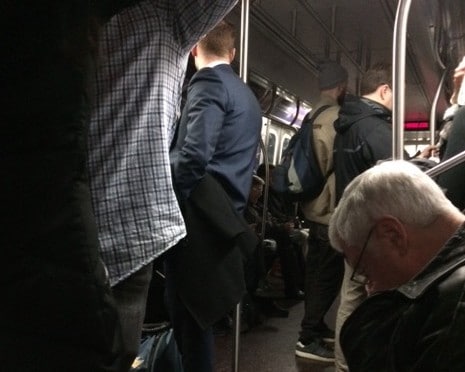
When the E train pulled out of 34th Street and then stopped in the tunnel around 6:10 p.m., no one looked up. But the lights dimmed and the electric signs that display the subway route faded to black, and we began to look around at each other.

“This doesn’t seem so good,” I said.  The  guy standing in front of me, watching a movie on his iPad, rolled his eyes and the two men seated next to me groaned in unison.
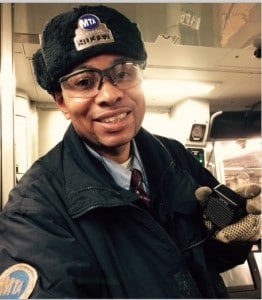
NYC Subway Conductor

Then we heard the ding. And a second later, a disembodied voice said, “Ladies and gentleman, this is your conductor. There’s a problem at West 4th Street and we’re being held. I’m sorry for the inconvenience.

No electricity. No Internet. Some played with their phones. Others kept their eyes down. Then again the ding.

“Ladies and gentlemen, this is your conductor. We lost power on the E train and they’re working to find out what happened and restore it. Thank you for your  patience.”

The E train lost power and stalled in the subway station, but the conductor reassured passengers and kept them calm. The man watching the movie said, “I think he’s my favorite conductor.”

We sat some more. Three guys who looked like they had just left the office and planned to hit a bar found that the door between cars opened.  “Can we get out?” one said.  “If we crawl out, we can do it,” another said.  “Okay. So now we have to have the balls to do it.”

They circled around the open door and looked out.

People in stalled NYC subwayA woman sat down on train floor and burrowed into a device. A woman across from me kept her eyes on Ordinary Grace, the book in her lap, by William Ken Kreuger. Another tried to read the latest New York Magazine. And on my left Sandra Diaes fiddled with her phone, poked me and said, “I’m trying to find my flashlight. Oh. Here it is. Look. You never know if we might need it in the tunnel.

And then we heard the ding. “Here we go again,” the man on my right said.

“Ladies and gentlemen, this is your conductor. The power is out on the 8th Avenue and 6th Avenue lines. They are working to restore it. I’ll let you know what’s happening as soon as I know. Thank you for your patience.”

People laughed and shook their heads and we sat. I admit my thoughts ran to gruesome scenes where trains stalled and bad things happened. Clips from horror videos of the imagination played out in my mind and I pushed them aside.

The three men who thought about escape stood between the cars and leaned out.

Ding. “Ladies and gentlemen, this is your conductor. They are working to restore the power. Please don’t leave the train. When we get power back, it could be very dangerous if you are on the tracks. Please don’t leave the train. Thank you for your patience.”

More than an hour after the train stopped, we heard the ding again. “Ladies and gentlemen, this is your conductor. We have power. But there are trains in front of us. So it may take a few minutes for us to move. Thank you for your patience.”

The lights went on, and we heard the rumble of an express train traveling in another direction. A few minutes later: Ding. “Ladies and Gentlemen, this is your conductor. The train will be going backwards to 34th Street. Please stay inside the train. Thank you for your patience.”

The train came to life and rolled backwards and lurched to a stop. People stumbled. Ding. “Ladies and gentlemen, this is the conductor the backward movement triggered the emergency brake. We’ll be moving in a few minutes.”

And an hour and ten minutes after the train stopped in the tunnel, we’re back in 34th Street and everyone got off the train.

Conductor Herbert Sansom gets a big nod here.  The subway loses power and conductor’s reassurance says it all. Thanks Mr. Sansom for keeping us informed.

The MTA says a manhole fire south of West 4th Street damaged cables and caused the outages. There may be delays on the trains on the A, C and E trains on Friday morning.

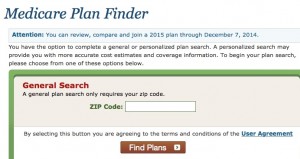
Changes In Your Medicare Plan


Who likes change? Who enjoys hassle? You’d rather save time and maintain the status quo by sticking with your Medicare insurance plan.  But loyalty may not pay off for you. Insurance companies tinker with and change their plans and that’s why it’s a good idea to make a quick review of what your insurer will offer in 2015.

You have until December 7th to make a change in your Medicare insurer and your Part D plan. Medicare Open Enrollment gives you the opportunity to change your plan and Part D. There may be a better deal that works for you.  Not all insurers charge the same monthly fee, nor do they offer the same range of services.

Insurers also change the rules and the fees they charge every year. So the plan you like now may not reflect what the insurer will offer in 2015.

You can review and compare plans available to you through the website of the Center for Medicare and Medicaid Services (CMS).

Medicare Search


Medicare Part D

When it comes to Medicare Part D, you want to make sure that the insurer will cover your drugs. It does require research. You can call your insurer, or check the information they sent to you. Make sure the drugs you use are covered in the list of drugs, or “formulary.”

If they don’t offer what you need, try another insurer in your area. The website of the Centers for Medicare and Medicaid Services (CMS) offers a an easy-to-use tool that can help you locate another insurer.

Medicare Plan Finder

You can change your Medicare health and drug coverage without penalty now as long as you do it on or before December 7, 2014. Your new benefit plan will go into effect on January 1, 2015.

We provide tips to figure out the key things to consider in your Part D plan in ConsumerMojo’s post Why Change Your Medicare Part D Plan?

Push To Control Debt Collectors

There’s a new push to control debt collectors and protect consumers from abusive and deceptive practices on the national and the local level.

The Consumer Financial Protection Bureau (CFPB) charged New Jersey-based Premier Consulting Group and the the law office of Michael Lupolover with charging customers, in a number of states, illegal upfront fees for debt-settlement services they never received,

Neither Premier nor the Lupolover office admitted wrongdoing, but Premier will pay a $69,000 fine to the CFPB.

Director Richard Cordray said, “Charging upfront fees for debt-settlement services is against the law, and today’s action is another reminder that these illegal practices will not be tolerated.”

In New York, Governor Andrew Cuomo outlined debt collection regulations that will go into effect in January of 2015.  It all seems like common sense, but we have heard the stories and know that debt collectors often abuse people who can’t fight back.

Debt collectorNew York regulations that go into effect in 2015 say debt collectors cannot:


  • Use or threaten violence.
  • Make repeated phone calls and annoy, abuse, or harass you.
  • Use obscene or profane language when they call you.
  • Call you at times they know, or should know, are inconvenient, including before 8 am and after 9 pm.
  • Contact you at work if your employer prohibits you from receiving personal calls.

If you live in New York you should contact the Consumer Hotline at (800) 342-3736, or file a complaint with the New York State Department of Financial Services (DFS).

The Consumer Financial Protection Bureau also wants to hear from you and you can file a complaint with the bureau.  Or call 855-411-2372.

This video blog by the New Economy Project’s Susan Shin explains why should avoid debt settlement and credit repair companies.

Cyber Shopping Safety Tips

Many of us may do more holiday shopping this year because we feel better about the economy, according to the 2014 Deloitte University Press Survey. And we’re likely to do 40 percent of our gift buying online. But it’s also a busy season for the bad guys. They’re standing by ready to take every opportunity we give them to steal money and identities. And that’s why we put together these cyber shopping safety tips.

1.  Shop only on encrypted secure Internet connections

https: look for it.

Shopping and paying for your purchase using public Wi-Fi while drinking a latte, on a train, or walking through a transportation terminal may seem like a good idea, but it’s only safe if the Internet connection is encrypted. If it’s not, scammers can intercept your personal information and steal your identity. Most mobile hotspots are not encrypted.

Look for https at the start of the Internet address.  s stands for secure. And the Federal Trade Commission warns that you should “look for https on every page you visit, not when you sign in.”

You may not see the https when you use a smartphone, but you’ll know if the connection is encrypted if you are asked to enter a password or code.

If you do a lot of shopping on the go, you might want to set up a VPN or virtual private network. OpenVPN is a popular free service. Apple, Google and Microsoft all support VPN.

Be aware that using public Wi-Fi for financial transactions is risky, period. 

2. Log out if you find yourself on an unencrypted page.

3. Watch out for fake sites posing as the real thing

Some scammers set up fake sites using names of well-respected retailers. Look at the URLs to make sure that they match the retailer’s name exactly.

Don’t click on links. Type the name of your retailer in yourself.

4. Use credit cards

Shop with credit cards to protect yourself.  Credit cards offer purchase protection and fraud dispute resolution. Don’t use debit cards that link directly to your bank.

5. Print or save your receipts

If there’s a dispute, you want those receipts. Print them out and keep them.

6. Read the fine print

Read the fine print about what you intend to purchase. Watch out for words like refurbished (that’s not new), vintage or close-out. The FTC says that “brand name products with bargain basement prices could be counterfeit.” So take care.

7.  Careful with shopping apps

Shopping apps are great, but they also collect a lot of personal information. Make sure you know what they gather and what they do with it.

If pay with an app you may not have the same purchase protection as you do with a credit card. The FTC found that some app user agreements say the companies don’t take responsibility for helping you if you run into a problem.

So you might want to comparison shop with an app and buy with a credit card.

Safe shopping and enjoy the holidays!

Give Thanks For Immigrants


by Nick Taylor

Today is a perfect time to give thanks for immigrants and remember the story of the original Thanksgiving.

The Pilgrims and Puritans arrived on these shores as immigrants.  Like immigrants to America today, they came in search of a life they could not achieve at home. Religious freedom was one of their objectives. But that was just one component of a new life of opportunity that a boundless country, not yet formed, presented them.

Today’s immigrants come here for the same things the Pilgrims sought — opportunity and freedom. They don’t come looking for handouts. They come looking for access to things they can’t find where they came from. They’re willing to work hard at jobs others won’t do. They seek opportunities for education. They bring skills our country needs. And over time they become part of the multi-colored, multi-religious, multi-ethnic fabric that makes us unique among the nations of the world.

Thanksgiving isn’t just a day to eat and watch football. Or watch the Macy’s parade, even if your alma mater’s in it — I was proud to see my Western Carolina Pride of the Mountains band marching down Broadway this morning. At its best Thanksgiving is a day of remembrance of who we are and who we try to be.

Our goals alone prompt thanks today as well. We don’t always live up to them, but they remind us of bedrock human ideals. In a world where suffering and greed, corruption and cruelty dominate the news, America continues to represent the belief that men and women can live lives of substance and value, free from tyrannical demands.

My father was an immigrant. My mother’s father was as well. I’ll never know what they escaped. But I know what they found. For that we should all be grateful on Thanksgiving.

Winter Vacation Travel Warning

by Nick Taylor

Chikungunya. It sounds like a tongue-twister or some kind of fusion recipe involving chicken. It’s actually much worse, and it’s affecting many people’s travel plans this winter.

Chikungunya is a mosquito-borne virus sweeping the Caribbean as well as Central and South America. It started to spike last winter and according to the Centers for Disease Control (CDC) “continues to spread with no sign of slowing down.” That’s why we’re passing on this winter vacation travel warning.

Courtesy Wikimedia
Courtesy Wikimedia

Before the outbreak, an average of 28 chikungunya sufferers returned to the U.S. from the outbreak zone each year. This year, through early November, 1,600 travelers came back with the disease. Some 800,000 cases have occurred in 37 countries and territories in the Western Hemisphere.

No one is sure why, but the mosquitoes that spread chikungunya bite mostly during the day. So travelers headed for Caribbean, Central and South America – where you’re going for some winter sun, right? – are advised to wear long-sleeved shirts and long pants during the day. Once you slather the sunscreen on your tasty bits that are still exposed, add insect repellent on top of that. And stay in air-conditioned or well-screened rooms at night.

Be especially careful if you’re over 65, have arthritis or underlying conditions including heart disease, high blood pressure, or diabetes. Travelers in these high-risk groups should let their doctors know about their plans.

The illness is rarely fatal, but it’s uncomfortable at best. Its victims, says the CDC, “typically develop fever and joint pain. Other symptoms can include muscle aches, headaches, joint swelling, or rash.” The joint pain can be severe and debilitating. And there’s no preventive vaccine and no specific treatment except time; victims usually recover in about a week, but some experience long-term joint pain.

If there’s any good news in all of this, it’s that unlike ebola, the chikungunya virus is not spread between people.

What Obama’s Immigration Reform Plan Means

by SINDY NANCLARES

Maria Manzano stopped looking over her shoulder two years ago and now looks forward to an immigration reform plan that will help her family and millions of other undocumented immigrants.

The 29-year-old became became a temporary legal U.S. resident through the Deferred Action For Childhood Arrivals Program (DACA). The program gave her a Social Security number, a work permit and a real chance at a strong economic foothold in the country she calls home.

President Obama may soon issue an executive order to expand DACA to other young immigrants and set up a similar deferred action program for parents of U.S. citizens, legal residents and spouses, according to The New York Times. Maria’s family could benefit.

Her parents came to New York from Mexico 30 years ago. They worked, paid taxes and raised their children in the U.S., but they share a sense of unease with millions of other undocumented immigrants. “This reform would give peace of mind to my parents,” Maria said.

What Obama’s Immigration Reform Plan Means

A presidential order could ease the anxiety of millions and allow them to work legally. An estimated 3.3 million family members may become eligible for Social Security cards, work permits and drivers’ licenses.

The Obama plan would also provide temporary legal status for people who’ve lived in the U.S. for five years, regardless of whether a family member is a citizen or has temporary legal status.

Overall, the executive order would extend temporary legality to an estimated 8.5 million, according to the Migration Policy Institute in Washington.

Since his first election, in 2008, immigrant advocates hoped the President would set a new immigration agenda. But anti-immigrant factions in Congress, and Republican hostility toward Obama’s initiatives, made it impossible. Now, with big Democratic party losses in the midterm elections, the President apparently plans to side-step Congress completely.

But the prospect of a temporary solution, without the backing of both parties, worries some. Californian Noel Castro wonders what will happen to his parents if they sign up for a program that gives them legal status, only temporarily, and Republicans take the White House in 2016.  A new president could rescind the executive order.

“The government would have all of my parents’ information…and if the Congress cancels the measure in the future, it would be easier to catch them and deport them,” Castro says.

Deportation remains a real concern.

The Obama administration vigorously enforced deportation and sent more than 2 million packing in a failed effort to woo Republican support for immigration reform. Instead immigration advocates dubbed him the Deporter-in-Chief and lost confidence in his ability to achieve reform.

But the executive order would switch the emphasis and focus on deporting criminals and those caught at the country’s borders.

President Obama has not confirmed the leaked details of the reforms but we may know more this week.

See our report Biometrics Not So Scary

And How to Apply For Deferred Action

Comment and let us know what’s going on with you.

Protection For PrePaid Card Users

If you use prepaid cards instead of a checking account, you’ll applaud the latest move by the Consumer Financial Protection Bureau (CFPB). It plans to institute federal protections for prepaid card users similar to those that cover people who rely on checking accounts

Prepaid card use exploded from $1 billion in 2003 to nearly $65 billion in 2012, and CFPB projections indicate consumers will load nearly $100 billion on these cards by the end of 2014.

So it makes sense to offer protections already in place for checking accounts and credit cards.

PROPOSED PROTECTIONS:

1. Easy and free access to account information

The CFPB proposal would require financial institutions to either provide periodic statements or make account information easily accessible online and for free.

Unlike checking account customers, prepaid users typically do not automatically receive statements. The proposal would ensure that consumers are able see their account balances and a history of their transactions and fees.

2. Resolve Errors

When a consumer finds an error, new rules would require the financial institutions to work with them.

Now prepaid customers who get double-charged for a transaction, or get charged an incorrect amount, find it difficult to fix the problem. This proposal would require financial institutions to investigate errors that consumers report and resolve them in a timely way.

3. Protection Against Fraud and Loss

The proposal would protect consumers against unauthorized, erroneous, or fraudulent withdrawals or purchases.  The rules would limit consumers’ responsibility for transactions they did not authorize and create a timely method for them to get their money back. Customers’ liability would be capped at $50 if they notify the financial institution as soon as they discover the loss.

Know Before You Owe Disclosure

The Bureau’s proposal also includes new information to provide consumers with disclosures about fees and the costs of using the card.

Credit Protections

The CFPB proposals protect consumers who use a prepaid card like a credit card. They would be entitled to the same protections that credit card users have.

1. Ability to pay

New rules would require prepaid companies to make sure consumers have the ability to repay the debt before offering credit.

2. Regular Statements

Prepaid companies would have to give customers the same monthly periodic statement that credit card customers receive.

3. Reasonable time to pay and limits on late fees

Customers would have at least 21 days to repay their debt before they are charged a late fee, just like credit card customers. And the companies would need to lay out a schedule of late payment fees.

4. Limited fee and interest charges

Total fees could not exceed 25 percent of the credit limit during the first year. Card issuers generally are prohibited from increasing the interest rate on an existing balance unless the cardholder has missed two consecutive payments.

5. Thirty-day waiting period

Consumers would have to wait 30 days after getting a prepaid card before a company could offer them credit.

These proposals won’t go into effect for 90 days and in the meantime anyone who objects can let the CFPB know.

Danger of Pension Advance Plans (5)

←PREVIOUS

In Washington, Pennsylvania Congressman Matt Cartwright introduced legislation aimed at protecting federal and military retirees. Congressman Cartwright told us his legislation would close loopholes in federal law. He said it “. . . expands Truth In Lending Act provisions to any situation where a federal or military pension is used as a consideration for an advance.” The bill also sets the interest rate for these loans at 6 percent and it would allow people who find themselves in illegal deals to sue.

That’s another wrinkle.  Contracts like the one Darren signed specifically say that you can’t sue to get out of the contract or join a class action lawsuit to recover damages. “It makes it very difficult for them to bring a claim for fraud,” Florida attorney Silver said.

Darren filed complaints with the California attorney general and the federal Consumer Financial Protection Bureau (CFPB). Neither would comment about Darren’s case. But a spokesperson for the CFPB said the bureau is monitoring the advance pension issue.

We called and emailed Pensions Annuities & Settlements LLC.  The person who answered the phone asked me to direct the emails to someone at LumpSum Pension Advance.  So far, we haven’t heard a thing.

In the meantime, Darren has little recourse. He said callers representing Pensions Annuities & Settlements LLC told him the company would take him to court if he didn’t keep up his payments.

Until there are regulations to curb the industry, National Consumer Law Center’s Stuart Rossman advises, “If you need to borrow money you will be much better off going to a community savings and loan or cooperative. You’ll get a much better deal.”

Go to page 1  2  3  4  5

_______________________________________________________________________________

YOU MAY ALSO LIKE:
Video Explains Obamacare
Medicare Open Enrollment
AT&T Mobile Customers Will Get Refunds

Danger of Pension Advance Plans (4)

←PREVIOUS

AARP Vermont State Director Greg Marchildon first noticed online ads for these companies last year and became concerned. “We’re the second fastest aging state in the nation, behind Maine. And about seven in ten Vermonters rely on Social Security and their pensions, if they are  lucky. So we wanted to put a cabosh on this before it really got started,” he told us.

Marchildon went to state Treasurer Beth Pearce and she embraced the issue. She immediately teamed up with legislators to craft a bill that Governor Peter Shumlin signed into law in April. Treasurer Pearce told ConsumerMojo, “We don’t want companies charging an inordinate amount of interest and putting elders at risk. The newly-enacted law is about consumer protection.”

Consumers all across the U.S.  need similar protection against pension advance schemes and that’s why AARP is working to convince states to consider new laws.

Regulators are also taking a hard look at what’s going on.  New York and Massachusetts launched investigations into companies that advertise advance or lump sum settlements on pensions.  New York Governor Andrew Cuomo said, “. . . backdoor high-interest loans will not be tolerated in our state.”  The New York Department of Financial Services subpoenaed  records from  a number of companies, including Pensions Annuities & Settlements LLC., the company  Darren did business with.

CONTINUE→    

Or go to page 1  2  3  4  5


Danger of Pension Advance Plans (3)

←PREVIOUS

He went back to the Internet and couldn’t find PAS. “The company website disappeared. I finally located a phone number and talked to someone.  The man said I have to pay off $24,300, the full amount of the five-year contract. But I didn’t see anything in the contract that says there’s a prepayment penalty.”

The contract Darren shared with us lays out the details. Although he insisted it wasn’t clear to him and wasn’t explained, he said he believed the company representative who negotiated the deal. “I take a person at his word. He told me about the contract and I thought it was okay,” Darren sighed.

Broward County, Florida attorney Scott Silver told us he represents dozens of former military members who’ve had similar experiences with pension advance companies.  “Clients come to me desperate to repay these loans without paying usurious interest rates and they find themselves trapped and unable to to make the monthly payments.”

In Darren’s case, the word “loan” doesn’t appear in the contract. The language describes him as a “seller,” and that apparently is a device commonly used in this industry.

“Seller is a cosmetic way to avoid the truth-in-lending laws,” AARP attorney Jay Sushelsky says. “By not calling the person a  “borrower,” it’s not a loan.  It’s an advance purchase or sale. So it takes the transaction out of a whole regime of state and federal lending laws.”

Federal and state officials have begun to take notice.  Vermont is the first state in the nation to pass legislation that defines these pension advance deals as loans and requires lenders to apply for a license with the state.

CONTINUE→

Or go to page 1  2  3  4  5


Danger of Pension Advance Plans (2)

←PREVIOUS

He was drawn to ads for a company called Pensions, Annuities & Settlements, LLC (PAS). They seemed to indicate that he could get a pension advance, borrow and get a lump sum of cash.

Darren filled out initial information on the website for the pension advance and a  PAS representative called. “The way he explained it to me, it was a loan. They were going to hold a part of my pension as collateral and then they would give me X amount of dollars and then I pay the money back,” Darren said.

He completed the online application with his financial information and was asked to use an online signature system. But he was so eager to get the money that he overlooked details of the pension advance contract and details that he didn’t understand. “It was like a whole bunch of mumbo jumbo. It wasn’t clear what I was signing,” he said.

He even ignored a red flag when a notary in his hometown of Turlock questioned the paperwork. He said that she called PAS for clarification because there apparently was an error in the order of the pages.  Darren recalls her saying, “This doesn’t look right.”

Nevertheless, Darren agreed to the deal and soon discovered that a $600 fee was deducted from the $5,000.  He began making payments of $415 a month and six months later he heard from the IRS. It considered the money an early pension withdrawal and asked him to pay tax on the money.

He said, “If I knew that what they were doing, that this was an early withdrawal from my retirement, I would never have gotten it.”  He was so upset that he decided to find out if he could pay off the loan immediately.

CONTINUE →

or go to page 1  2  3  4  5


Video Explains Obamacare

You need the health insurance, but you find the drama and expense  that goes with it exhausting and draining. It’s probably little comfort, but consider yourself a member of a big club.

If you signed up for insurance under the Affordable Care Act (ACA), or Obamacare, you must re-enroll. You can re-up with your current insurer or change companies.

If you didn’t sign up, you get the chance to do it now. 

Open enrollment starts November 15 and the Healthcare.gov website provides clearer information than it did this time last year.

IMPORTANT DATES

November 15, 2014 — The first day to apply for 2015 coverage.

December 15, 2014 — The last date to enroll for coverage that starts January 1, 2015.

December 31, 2014 —  All 2014 Marketplace coverage ends, no matter when you enrolled.

January 1, 2015 — 2015 coverage can start if you apply by December 15, 2014, or if you accept automatic enrollment in your 2014 plan or a similar plan.

February 15, 2015 — The last day to enroll in 2015 coverage. If you miss this deadline, you can’t sign up for a health plan inside or outside the Marketplace for the rest of 2015. The only exception is if you qualify for a Special Enrollment Period.

If you find yourself confused by the rules, the Kaiser Family Foundation makes things clearer in the video above that explains Obamacare and the ins and outs of the health insurance program.

We want to report about your experience with insurers. Please comment and let us know what’s happening.

A Caregiver’s Most Important Job

by Lynda Cohen Cassanos


At 6:15 p.m., almost every other Sunday evening, I board a bus in midtown Manhattan that takes me to a suburban shopping center in Baltimore by 9:30 that night.

The bus, run by a private tour company, brings energetic day-trippers to the city every morning to shop, visit museums, go to the theatre, and see the sights. They leave Baltimore at 6:15 a.m. and the returning travelers are beat, ready to sleep the entire ride home.

I travel one way – the return trip. I’ve lived in New York City for thirty-two years, but my 96-year-old mother, who suffers from advanced dementia, still lives in our family home on the northwest edge of Baltimore city.

This has been my routine for over six years. As an only child, I am the one responsible for my mother’s well being and care. The opportunity to move her to a facility in New York never materialized.

After my 93-year-old father’s death in 2009 from congestive heart failure, which followed a rough nine-month recovery from aortic valve surgery, back and forth trips to the ER, and extended stays in rehab and nursing homes, I had had it with institutional care.

I know that worthwhile facilities exist and that they are often the best choice for the patient and caregiver, but at the time the extreme stress of my father’s last months in what is considered a top nursing home negated this option for me.  And the fact that my frail mother was receiving attentive and loving care from two round-the-clock nurses in her own house clinched the decision to stay put.

The bus ride south along the turnpike at night is a welcome pause between the jarring transition of leaving my family and routine in New York to enter the upside-down world of my formerly articulate, creative, and independent mother.

A dear cousin picks me up at the bus stop and usually comes in for a visit. After he leaves, I start my routine: organizing the piles of bills and mail on the office desk, checking the grocery list the day nurse left on the kitchen table, and looking around to see if I have to make any urgent repairs to the sixty-year-old house.

Meanwhile, my mother sleeps, or doesn’t sleep – just mumbles and fidgets, with her attendant nearby, in her makeshift bedroom in the large den on the first floor.

It is well-known that Alzheimer’s caregiving and caregiver’s burn-out is a widespread problem and can be stressful for all involved. People cope in different ways.

Just among the people I know I’ve seen many scenarios.

One friend renovated the first floor of her house to accommodate the live-in needs of both parents who were suffering from the disease and their rotating cast of ten caregivers.

Another traveled from New York to Wisconsin every four weeks to visit her mother in a nursing home.

One friend moved her mother to a comfortable small group home with six or seven residents and a dedicated staff of caregivers. The house has a warm, communal atmosphere and the staff provides personal, one-on-one care. Residents have their own cheerful bedrooms and homemade meals are prepared in the kitchen.

I think a nurturing group home is perhaps the ideal situation, but this type of care is not widely available and most people must choose from a more limited number of options.

My decision to keep my mother at home was based on emotional and circumstantial issues, and the desire to provide consistent, quality care.

No matter what the choice is, I have discovered that there is one important job: that of showing up and making sure the healthcare providers know you care about your loved one – whether that loved one is in their own home, a residential house, or a facility.

Showing up is not always easy. It’s difficult to be pulled away from your life and routine for several days a week, or even for an afternoon, no matter how much you love the person for whom you are responsible.

In some ways, it can become harder as the disease progresses. In the beginning and middle stages of my mother’s dementia, she was usually her gracious, talkative self. In her Southern, well-mannered way, she would ask the caregivers if they were hungry to indicate that, in fact, she was hungry. Confused but colorful compliments for their perfectly prepared grits, eggs, and crab cakes charmed her day and night nurses.

Every morning she would describe in detail the exquisite party she’d been to the night before. Although her conversations often sounded like a mélange of Tennessee Williams and Ionesco monologues, there was a sparkle and connection that has disappeared. A good visit now may consist of one slight smile of recognition during my three-day stay.

This stage has lasted for more than two years, with slight peaks but more declines. In the morning, after giving my mother breakfast and during her nap that often lasts all day, I grocery shop and pay bills. In the afternoon I try to spend a few hours cleaning out a house filled with sixty years of stuff, but often just sit and read the boxes of saved letters and postcards that date back to the 1930s.

The responsibilities of house, grounds and car maintenance hadn’t registered when I signed on to in-home care. I’ve lived in apartments in cities with good public transportation since my college days and home repairs still remain a challenge.

But beyond the petty annoyance of routine chores, it is the trauma and anguish of seeing a loved one in this ongoing degenerative state that can be so unbearable. It is truly the long goodbye. However, my mother’s disease is a fact of life; it is the reality right now.

For me, it helps to try to be grateful for the positive aspects that exist alongside the overwhelming sadness of her condition. I try to focus on the fact that my mother is comfortable and seemingly content.

She eats well, enjoys her meals and does not have any painful medical conditions. A doctor and podiatrist make house calls every three months. And, most importantly, my mother has received exceptional attention from two devoted caregivers for over six years.

Moonlight on Sea

There is a haiku that goes: “The robbers took everything/but the moon in the window.” In spite of the devastating loss, there’s still something there, at least for now – a smile, a nod, the moon in the window.


Biometrics for Deferred Action – Not So Scary

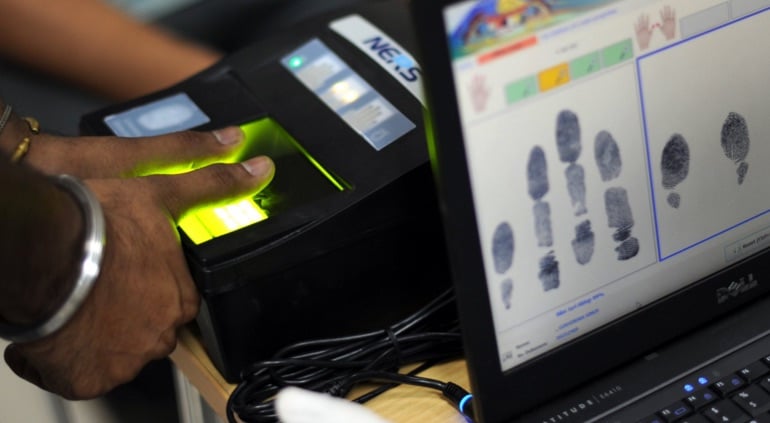
← Previous GET FINGERPRINTED A woman who seemed like a manager told me to put my finger on a clear surface, which was connected to a computer that scanned my finger prints. She took a few variations of prints and then asked me to sign my name on a touchscreen signature pad. SMILE FOR THE CAMERA She then asked me to sit down and took my photo for the work permit. She wished me luck and gave me a short survey to fill out.  RATE THE  EXPERIENCE The survey asked about the process and also about her service. While filled it out she looked over my shoulder and asked miscellaneous questions. She made me feel a little uncomfortable. It seemed like she wanted good ratings. So I gave her all “excellent” even though I wanted to give her “good.” But in all honesty, I had no complaints.   Some can’t afford to pay the $465 to fee to apply. Now there is a no interest loan.       

Go to Page  1  2

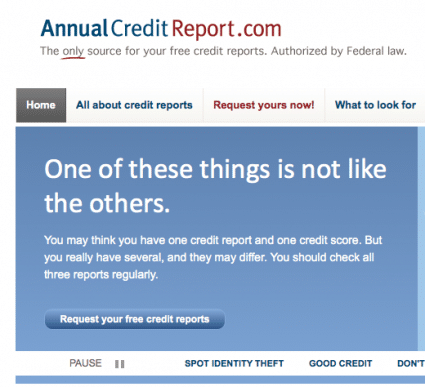
Why Your Credit Report May Not Be Available Online

←Previous Tips for Getting a Credit Report When you Hit a Road Block Write to AnnualCredit Report.com and request a report. TransUnion’s Emery suggests you call his company hotline directly. You’re likely to get a real person instead of recording device. TransUnion: 1-800-916-8800.

At Equifax, Meredith Griffanti says they try to get the reports out quickly. “After we receive the appropriate documents and confirm the consumer’s identity, then we send them their hard copy report through the mail. Again, this is simply for the sake of identity protection and security.

David Emery says the credit bureaus want to provide the reports. “For some reason people believe we are trying to make it difficult to get a credit report.” That’s not so he says, adding, “For most people it is seamless.” Go to Page 1  2  3

Worried about the EquifaxBreach? Read: What Do I Do About The Equifax Data Hack?