All posts by Barbara Nevins Taylor

Scam Survey

Please take ConsumerMojo.com’s Scam Survey. We want to find out what’s happening to our friends and neighbors.

It’s easy to fall victim to a scam, and it can happen to anyone. A study at the University of Exeter in England found that smart, successful people often sign on to scams because they are easily persuaded.  The same researcher also found that people who were very knowledgable about a specific area might be over- confident and jump into a scheme that’s really too good to be true.

Yet, studies also show that older adults may be more vulnerable to scams because they read facial clues differently. Dr. Shelley E. Taylor at the University of California, Los Angeles found that older adults are more likely than younger people to see people as trustworthy when they may not be. In addition, brain scans found that when older and younger adults were shown the same pictures of suspicious people the anterior insula, the area of the brain that works out gut feelings, lit up. But older adults didn’t have the same neurological reaction.

While older people may be more vulnerable, we do know a lot of younger people who’ve jumped into scams thinking they would come out on the winning end. That’s why the F.B.I. has a list of Frauds from A-Z and recommends that you file a complaint if you’ve been targeted.

The Federal Trade Commission (FTC) regular prosecutes scammers of all kinds to put them out of business and get restitution for victims. If you have a complaint about a telemarketing scam, identity theft, Internet scams, shopping frauds, job scams, work at home scams and credit and debt scams the FTC’s complaint line is a good place to make your voice heard.


Click the link to take our survey and let us know what’s happening with you. SCAM SURVEY


Prescription Drug Scam Crackdown

facebook


twitter


Prescription drugs are so expensive that many go to great lengths to try to save money and it’s no wonder that they become vulnerable to ripoffs.  The most recently discovered scam involves an audacious team of Canadian and American scammers that teamed up to allegedly target older Americans and literally lifted money out of bank accounts.

Courtesy Wikimedia
Courtesy Wikimedia

The Federal Trade Commission (FTC), working with the Royal Canadian Mounted Police and the Canadian Anti-Fraud Centre, found the group made calls from a telemarketing boiler room in Montreal to Americans over 65.

They allegedly offered their victims discount prescriptions, and in some cases discount cards that are widely available but useless for people on Medicare or Medicaid. They convinced people to give them bank account numbers and allegedly the American part of the team then used “demand drafts” to take $300 from each account.

A complaint filed in the U.S. District Court for the Northern District of Illinois says that callers often said, or inferred that they were from Medicare or the Social Security Administration and people were frequently confused and frightened enough to give up their banking information. In return, they received either nothing or the virtually worthless discount card.

A federal judge issued a temporary restraining order halting the defendants’ deceptive scheme and freezing their assets.

“This scam, which targeted and deceived our nation’s seniors, is as cynical and wanton as they come,” said Jessica Rich, Director of the FTC’s Bureau of Consumer Protection. “We look forward to bringing this operation to a halt and working to get relief for the victims.”

The end game here is to put the scammers out of business and to get restitution for the victims.

The U.S.-based defendants in the case include AFD Advisors, LLC, of Wisconsin, which also does business as AFD Medical Advisors; AMG Associates, LLC, of Delaware, which also does business as AMG Medical and AMG Medical Associates; Aaron F. Dupont, individually and as an officer of AFD Advisors and AMG Associates; CAL Consulting, LLC, of Georgia,  which also does business as Clinacall; Charles A. Lamborn, III, individually and as an officer of CAL Consulting; and Park 295 Corp, of New York.

The Canadian-based defendants are 9262-2182 Quebec Inc; Stephanie Scebba, individually and as an officer of 9262-2182 Quebec Inc.; 9210-7838 Quebec Inc; and Fawaz Sebal, also known as Frank Sebag, individually and as an officer of 9210-7838 Quebec Inc.
REMEMBER DO NOT GIVE YOUR BANK ACCOUNT INFORMATION TO ANY CALLER,  NO MATTER WHAT THEY SAY.

watchmore Tips for Choosing a Medicare Part D Prescription Drug Plan


Love a Hotel With Free Wi-Fi


by Barbara Nevins Taylor

It’s a pleasure to find a beautiful hotel that offers free Wi-Fi.  I was genuinely surprised recently when I checked into the Hyatt Grand Hotel in Aspen, Colorado and learned that Wi-Fi was free.

So many hotels add a fee and the charges often come as a shock when you check out.

But the Hyatt Grand offered this unexpected bonus. First of all, the room was large, lovely and comfortable. The beige stone bathroom area had a spa-like shower and tub and everything about it felt luxurious.  So I was delighted, but I was even more pleased when I called the desk for the Internet password and asked if there was a fee for in-room use. “There isn’t any,” the receptionist said.

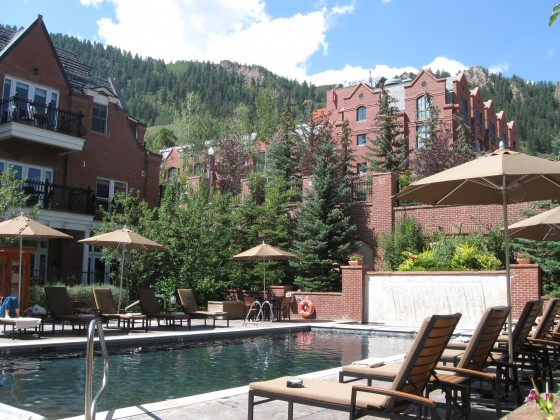
But I didn’t go to Aspen to sit in the room and work online and the hotel provided other pluses. It’s perfectly situated almost at the base of the mountain. It’s built in a horseshoe style around a heated swimming pool and hot tub area that offer dreamlike mountain views. 

While the front of the hotel doesn’t look like much, you have quick and easy access to Aspen’s restaurants and pricey stores.

For bike riders, it’s easy to get in and out. That’s why we were there. My sister Hope and brother-in-law Ed were part of a group that rode 60 miles from Dotsero, Colorado to Aspen. And my husband Nick was in another group that rode 30 miles from Carbondale to Aspen.

I was the designated driver and made the spectacularly scenic trip from Edwards through the Glenwood Canyon to join the others so that there would be a vehicle for the ride home.

I rented a clunky bike at the hotel and rode about 10 miles down and back along the Rio Grande trail.

This was a pretty easy ride on the bike-and-hike-only path that begins at about 7900 feet. It starts out paved and then turns to gravel. All the way along, it offers rugged Rocky Mountain views and close up encounters with waterfalls and the river.

I won’t swear to it, but it I think I dodged lumps of big bear droppings on the path.

The next day, while Ed was doing another bike ride, Hope, Nick and I hiked up Ajax, or Aspen Mountain.

We either misunderstood the trail advice we got, or went the wrong way. But this was a tough climb.

Scenic for sure and a little fox crossed our path. But while we got pretty far, we had to turn around before we reached the top where a lift would have brought us down. Instead, we slowly but surely made our back down praying to keep our knees in working order.

It was great two-day trip from our base in Edwards where Hope and Ed live, and I recommend a visit to Aspen and a stay at the Hyatt Grand to all who like the active life.

You can find our list of  hotel chain policies and charges in our post Watch Out For Hotel Room Wireless Charges.


Banks Taking Back Homes – Find a Foreclosure

Here’s a paradox. Foreclosures are down but banks are taking back more homes. The latest news from RealtyTrac found that in August 2013 foreclosure filings decreased 2 percent from the previous month and were down 34 percent from August 2012.


Photo by ConsumerMojo.com


That’s great news for many families and the economy. But repossessions in August increased 6 percent from the previous month. A little good news here is that they while they increased they were still down 25 percent from a year ago.


Bank reposessions, or REO’s, increased from the previous month in 26 states and were up from a year ago in 23 states. In New York they were up 123 percent to a 34-month high. Emmett Laffey, CEO of Laffey Fine Homes International, covering Long Island and New York City, said, “It is surprising that the number of default notices has risen so sharply… Some of the increase could be caused by a late ripple effect from Hurricane Sandy.”

In New Jersey bank repossessions were up 63 percent to a 31-month high. In  Florida they were up 48 percent to a seven-month high. In Ohio they were up 46 percent to an eight-month high and in Indiana, up 41 percent to a 9-month high.

The RealtyTrac data shows that Nevada now tops Florida for the sad distinction of having the highest foreclosure rate in the nation. Florida comes in second with Ohio, Maryland and Delaware following close behind.

Miami, Port St. Lucie, Jacksonville, Ocala, Tampa and Orlando are the Florida cities with the highest foreclosure rates. Riverside-San Bernandino, California, Las Vegas, Chicago, Baltimore, Philadelphia, New York and Washington, D.C. had more foreclosures so far in 2013 than in 2012.

FORECLOSURE OPPORTUNITIES

Banks are selling those foreclosed properties and our video and free guide tell you what you need to know to How Do I Find a Foreclosure

readmore

 Mortgage Guide  Download Our Free Guide


readmoreHome Buying in the Chilly Season


Costco Name Used In Facebook Scam


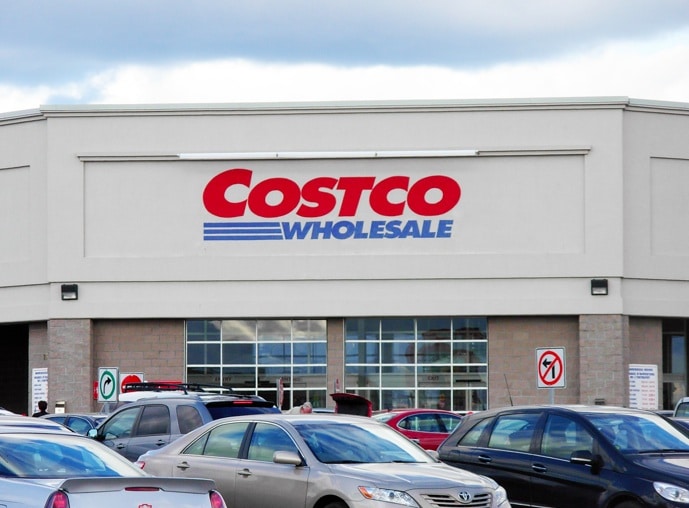
I received three notifications from Facebook from someone named Sean Ritchie. Basically, he was pushing a scam that led Facebook users to believe they could sign up to get a free $500 gift card from Cotsco.

The links led you to something called My Free Costo.com.   Paul Latham a weary sounding Costco executive told me he’d never hear of the $500 offer, or the site. He said, “These things happen all of the time. It’s so easy to to put up scams on the Internet and it’s difficult to track down the scammers.

Subject: Sean Ritchie mentioned you on Facebook
Reply-To: Reply to Comment
facebook
Sean Ritchie mentioned you in a comment.
Sean wrote: “WOW Check this out Max Gomez Lisa Mateo Christine McKinley Barbara Nevins Taylor Missy Filoreto Carrie Terni Kaity Tong Amanda Fugate-Moss Lynda Haviland Battenhausen Daniela Florenzino OPxR”
Reply to this email to comment on this note.
See Comment
This message was sent to barbaranevinstaylor@mac.com. If you don’t want to receive these emails from Facebook in the future, please unsubscribe.
Facebook, Inc., Attention: Department 415, PO Box 10005, Palo Alto, CA 94303

It looks like the posting is removed from Facebook now. But it has popped up before and who know what will happen in the future. It does remind us of the need to watch out for these two-good-to-be-true deals. While you think you are signing up for something great and may have the chance of  lifetime, you’re actually giving a scammer access to your personal information. That can be disastrous.

Scammers tell you that you will get something for free, but first you need to give them bank information, or social security numbers, or access to other personal information.


Courtesy Creative Commons via Flickr

They can clean out your bank account, or use your information in identify theft frauds. Often, when scammers promise to give you something, they ask for money to help secure your “free prize.” Once you sent the money, you either get a bunch of junk mail or nothing at all.

The Federal Trade Commission (FTC) offers these warnings:

  1. Disreputable companies sometimes use a variation of an official or nationally recognized name to give you confidence in their offers. Don’t be deceived by these “look-alikes.” It’s illegal for a promoter to misrepresent an affiliation with — or an endorsement by — a government agency or other well-known organization.
  2. It’s important to read any written solicitation you receive carefully. Pay particularly close attention to the fine print. Remember the old adage that “the devil is in the details.”
  3. Some contest promoters use a toll-free “800” number that directs you to dial a pay-per-call “900” number. Charges for calls to “900” numbers may be very high.
  4. Disclosing your checking account or credit card account number over the phone in response to a sweepstakes promotion — or for any reason other than to buy the product or service being sold — is a sure-fire way to get scammed in the future.

REPORT A SCAM to the FTC go to ftc.gov/complaint


Young, No Health Insurance? Maybe You Qualify For A Subsidy

We’re sharing this calculator created by the Kaiser Family Foundation with you.

You may be surprised to learn that subsidies are available if your income is low. This is especially important for you if you are in your twenties or thirties and just starting out in a career.

Pundits call you the Millennials, and the Invincibles. But accidents happen. People get sick. Health insurance is a good thing, and there’s no shame in taking a subsidy if you deserve one. Play around with the calculator to see where you stand.

Here’s an example: Let’s say you earn $30,000. That puts you at 261 percent of the poverty level for 2014. You qualify for a subsidy. So while you might be scheduled to pay $3,163 a year, you could receive a government subsidy of $651 and end up paying $2,512 a year.

So who needs to sign up?

If you don’t have employer-based insurance and are uninsured, you can begin to sign up for insurance under the Affordable Care Act (ACA) starting October 1st. If someone asks you to sign up before, or asks you for information in advance, it’s a scam. The Federal Trade Commission (FTC) is investigating these ripoffs. But after October 1st, you can go online, make a phone call or write to an insurance exchange to find out how to get the insurance.

25 states agreed to participate in Marketplace Exchanges. They are getting money from the federal government to set up helplines and offer you options. The people who are providing the information are called Navigators and the Department of Health and Human Services gave $67 million to groups, mostly non-profits, to do the explaining. If your state isn’t participating, you can go directly to the federal government website: HealthCare.gov. Individual insurance companies and brokers are also available to explain the options to you. But be aware that brokers are not required to explain the full range of options to you, and there is the potential for fraud so you have to be very careful and ask a lot of questions.

Penalties for Not Signing Up

The idea behind the Affordable Health Care Act is to get as many people insured as possible to ultimately keep down health care costs. That’s why there are penalties for not signing up. Starting in 2014, your tax forms will ask whether you have insurance. If you don’t you’ll be fined $95 or one percent of your taxable income, whichever is greater. The penalties are expected to change over the next three years.

You have until March 31, 2014 to sign up. The insurance begins after you make your first monthly payment.


readmoreObamacare Signup Continues

Time to Change Your Medicare Part D Plan?


Our video, with experts from the Medicare Rights Center and Center for Medicare Advocacy, explains what you need to know about the Open Enrollment period. This is an important time to to take advantage of the opportunity to change your Part D plan.

The open enrollment period began on October 15th and runs until December 7. So now is the time to consider  a change to your Medicare Part D plan. You might want to choose another plan with your current insurer, or even choose another. Why should you?

Good question.


WHY CHANGE YOUR DRUG PLAN?

 Your insurer may not list your drug on its “formulary.” The “formulary,” is what the insurer calls its list of approved drugs.

Every insurer has a variety of plans, and each plan has it’s own list of approved drugs. It’s maddening that there is not a uniform policy. But this is the way it is.


Courtesy Creative Commons via Flickr

So even if you have a happy relationship with your insurer, they may have changed things up on you. It’s really important to check your mail. If you received a notice that said something about important changes, open it.


Photo by ConsumerMojo.com

Don’t dump it on the pile of mail.

It’s likely that there is something in the notice that tells you the insurer has added approved drugs, or removed others. Check to see if your medication is on either list  

Tip 1

  • Make a list of your prescription drugs
  • Match your list to what the plans offer

Tip 2

       Check to see how your insurer categorizes your drug in its tier system.


The tier system is a complicated way of explaining that you’ll pay more for certain drugs.

Tier 1 drugs are cheaper, than Tier 2. Tier 3 drugs are more expensive than Tier 1 and Tier 2. And Tier 4 will cost you the most. 


Tip 3 

Read the rules the insurer outlines. It’s essential to know whether the company will require you to get prior approval or require you to use a generic drug for a test period called “Step Therapy.” In “Step Therapy,” it will require you to use a generic drug or several generic drugs before it approves a brand-name drug for payment.

Or, the insurer may limit the quantity of medication that you can get. It’s important to look at these rules because they can cost you money and make your life hellish if you don’t understand the benefits and the limitations.

  • Prior approval
  • Step Therapy
  • Quantity Limits


readmore  Figuring Out Medicare Basics


readmore Medicare Basics for Boomers and Everyone Else


watchmore Medicare Part B, Boomers and Costly Mistakes


watchmore Choosing Power of Attorney Tips


LIKE OUR POSTS AND COMMENT PLEASE!


Labor Day Praise For American Airlines Employees And Others

by Barbara Nevins Taylor


Employees of American Airlines win our badge for great service and follow-up. And this is personal.  During the last week of August, my husband Nick and I headed for a week of biking and hiking in the Colorado Rockies. We flew out of LaGuardia in New York, changed planes in Dallas and quickly boarded another to Eagle, Colorado. The connections were perfect and all was well, we thought.

My sister Hope and brother-in-law Ed picked us up and as we drove toward their home in the hills above Edwards, the blue sky was fading to a silvery blue streaked with red as brilliant as the mountains. That evening Ed cooked a delicious seafood pasta and our vacation was off to a fine start.

But the next morning as we headed to Leadville and a bike ride on a trail called the Mineral Belt, I noticed a missed a call from a Miami number. The voice mail told the story. An American Airlines employee informed me that my wallet had been found and was in Miami. I hadn’t even missed it, but I rummaged around in my handbag and sure enough, there was no wallet. Before my panic had a chance to escalate, the cell phone rang.

It was Daynelis Sanchez, another American Airlines employee. When I explained I wasn’t in Miami, she arranged to send the wallet via FedEx to my sister’s home in Edwards. She said, “Your credit cards are here and so is your driver’s license. There’s also $88.77 in cash. We can’t send that Fed Ex. Is it okay if we put it an American Airlines account and send you a check?” “Of course,” I said gratefully.  “I can’t thank you enough.”

But when I hung up, it all seemed too good to be true. And I warn people regularly about scams and things that seem too nice. So I called the number that was in my cell phone and got another woman. “Who is this?” I asked. “This is Sheyla Ubrina, I’m an American Airlines employee and I called you earlier.” It turns out my wallet was probably left on the plane in Dallas. After it returned to New York, it was flown to Miami and a crew member found it. That crew member brought it to Sheyla Urbina who reached out to me and then made sure that the lost-and-found team followed up.

Three American Airlines employees went out of their way to help and make sure that a customer received a lost wallet, credit cards and money. This says a lot to me about people who believe in their company and take pride in their jobs and their commitment to customers. Thank you.

There’s one more thing. The day the wallet was set to arrive, my husband, sister and brother-in-law were biking to Aspen. I was going to drive to meet them. But I didn’t have my driver’s license. I arranged online to pick up the package in Eagle and I worried that I wouldn’t get the license in time for the drive to Aspen. But that morning, the phone rang.

“Barbara? This is Tina from FedEx.” I was so surprised. “You have my wallet!” I shouted into the phone. “Can I come get it now?”“Oh. It’s your wallet. Oh my goodness,” she said. “It’s on the truck. I’ll get on the truck and look for it. Do you know how to get here?”

 Tina gave me detailed directions and told me to take my time. I gassed up and diddled around.  And a half an hour later, the phone rang again. “Hi. It’s Tina. Did you get lost?” she asked.  I was right outside.

Here again was another employee of a big company who restored my faith in the American worker’s ethic for honesty and great service and on this Labor Day weekend, we celebrate them.


President Obama Promotes Affordable College Tuition

President Obama stood up for college students and those who hope to go to college and despair at the debt that they face.  Here’s what he said during a speech at the State University of New York Buffalo:


THE PRESIDENT:  Hello, Buffalo!  (Applause.)  Hello, Bulls! (Applause.)  Well, it is good to be back in Buffalo, good to be back in the north.  (Applause.)

I want to begin by making sure we all thank Silvana for the wonderful introduction.  Give her a big round of applause.  (Applause.)  Her mom and dad are here somewhere.  Where are they? I know they’re pretty proud.  There they are right there.  Give mom and dad a big round of applause.  (Applause.)

A number of other people I want to acknowledge here — first of all, our Secretary of Education, Arne Duncan, who’s doing a great job.  (Applause.)  One of the finest governors in the country, your Governor, Andrew Cuomo, is here.  (Applause.)  Your outstanding Mayor, Brian Higgins, is here.  Give him a big round of applause.

AUDIENCE:  Congressman!

THE PRESIDENT:  What?

AUDIENCE:  The Mayor is Byron Brown!

THE PRESIDENT:  Byron Brown.  That’s — I’m sorry, Byron.  (Applause.)  What I meant was — your Congressman, Brian Higgins, is here.  (Applause.)  Your Mayor, Byron Brown, is here.  (Applause.)  This is what happens when you get to be 52 years old.  (Laughter.)  When I was 51 everything was smooth.  (Laughter.)  But your Congressman and your Mayor are doing outstanding work.  We just rode on the bus over from the airport, and they were telling me that Buffalo is on the move.  That was the story.  (Applause.)

A couple other people I want to acknowledge — SUNY Chancellor Nancy Zimpher, is here, doing a great job.  (Applause.)  University president Satish Tripathi is here.  (Applause.)   And we’ve got all the students in the house.  Thank all the students for being here.  (Applause.)

Now, today is a check-in day at the dorms.  So I want to thank all the students for taking a few minutes from setting up your futons and — (laughter) — your mini-fridges just to come out here.  I hear that the last sitting President to speak here was Millard Fillmore.  (Applause.)  And he was actually chancellor of the university at the same time — which sounds fun, but I’ve got enough on my plate.  (Laughter.)

This is our first stop on a two-day road trip through New York and Pennsylvania.  (Applause.)  And after this I head to Syracuse — (applause) — yay, Syracuse — to speak with some high schoolers.  Tomorrow I’m going to visit SUNY Binghamton and Lackawanna College in Scranton.  But I wanted to start here at University at Buffalo.  (Applause.)

And I wanted to do it for a couple reasons.  First, I know you’re focused on the future.  As I said, talking to the Mayor, he was describing a new medical school — (applause) — and new opportunities for the high-tech jobs of tomorrow.  So there’s great work being done at this institution.  I also know that everybody here must be fearless because the football team kicks off against Number 2, Ohio State, next weekend.  (Applause.)  Good luck, guys.  (Laughter.)  It’s going to be a great experience.  (Laughter.)  It’s going to be a great experience.  It could be an upset.  (Applause.)

And third, and most importantly, I know that the young people here are committed to earning your degree, to helping this university to make sure that every one of you “Finishes in Four” — (applause) — makes sure that you’re prepared for whatever comes next.  And that’s what I want to talk about here today.

Over the last month, I’ve been visiting towns across the country, talking about — yes, feel free to sit down.  Get comfortable.  (Laughter.)

AUDIENCE MEMBER:  We love you!

THE PRESIDENT:  Thank you.  I love you, too.  (Applause.)

Over the last month I’ve been out there talking about what we need to do as a country to make sure that we’ve got a better bargain for the middle class and everybody who’s working hard to get into the middle class -– a national strategy to make sure that everybody who works hard has a chance to succeed in this 21st century economy.  (Applause.)

Now, I think all of us here know that for the past four and a half years, we’ve been fighting back from a brutal recession that cost millions of Americans their jobs and their homes and their savings.  But what the recession also did was it showed that for too long we’ve seen an erosion of middle-class security.
So, together, we saved the auto industry.  Together, we took on a broken health care system.  (Applause.)  We invested in new technologies.  We started reversing our addiction to foreign oil. We changed a tax code that was tilted to far in favor of the wealthy at the expense of working families.  (Applause.)

And add it all up, today our businesses have created 7.3 million new jobs over the last 41 months.  (Applause.)  We now generate more renewable energy than ever before.  We sell more goods made in America to the rest of the world than ever.  (Applause.)  Health care costs are growing at the slowest rate in 50 years.  Our deficits are falling at the fastest rate in 60 years.  (Applause.)

Here in Buffalo, the Governor and the Mayor were describing over a billion dollars in investment, riverfront being changed, construction booming — signs of progress.  (Applause.)

So thanks to the grit and the resilience of the American people, we’ve cleared away the rubble from the financial crisis. We’ve started to lay the foundation for a stronger, more durable economic growth.

But as any middle-class family will tell you, as folks here in Buffalo will tell you, we’re not where we need to be yet.  Because even before the crisis hit — and it sounds like Buffalo knows something about this — we were living through a decade where a few at the top were doing better and better, most families were working harder and harder just to get by.  Manufacturing was leaving, jobs moving overseas, losing our competitive edge.  And it’s a struggle for a lot of folks.

So reversing this trend should be, must be, Washington’s highest priority.  It’s my highest priority.  (Applause.)  I’ve got to say it’s not always Washington’s highest priority.  Because rather than keeping focus on a growing economy that creates good middle-class jobs, we’ve seen a faction of Republicans in Congress suggest that maybe America shouldn’t pay its bills that have already been run up, that we shut down government if they can’t shut down Obamacare.

AUDIENCE:  Booo —

THE PRESIDENT:  That won’t grow our economy.  That won’t create jobs.  That won’t help our middle class.  We can’t afford in Washington the usual circus of distractions and political posturing.  We can’t afford that right now.

What we need is to build on the cornerstones of what it means to be middle class in America, focus on that — a good job with good wages, a good education, a home of your own, affordable health care, a secure retirement.  (Applause.)  Bread-and-butter, pocketbook issues that you care about every single day; that you’re thinking about every single day.  And we’ve got to create more pathways into the middle class for folks who are willing to work for it.  That’s what’s always made America great.  It’s not just how many billionaires we produce, but our ability to give everybody who works hard the chance to pursue their own measure of happiness.  That’s what America is all about.  (Applause.)

Now, there aren’t many things that are more important to that idea of economic mobility -– the idea that you can make it if you try –- than a good education.  All the students here know that.  That’s why you’re here.  (Applause.)  That’s why your families have made big sacrifices -– because we understand that in the face of greater and greater global competition, in a knowledge-based economy, a great education is more important than ever.

A higher education is the single best investment you can make in your future.  And I’m proud of all the students who are making that investment.  (Applause.)  And that’s not just me saying it.  Look, right now, the unemployment rate for Americans with at least a college degree is about one-third lower than the national average.  The incomes of folks who have at least a college degree are more than twice those of Americans without a high school diploma.  So more than ever before, some form of higher education is the surest path into the middle class.

But what I want to talk about today is what’s become a barrier and a burden for too many American families -– and that is the soaring cost of higher education.  (Applause.)

This is something that everybody knows you need — a college education.  On the other hand, college has never been more expensive.  Over the past three decades, the average tuition at a public four-year college has gone up by more than 250 percent — 250 percent.  Now, a typical family’s income has only gone up 16 percent.  So think about that — tuition has gone up 250 percent; income gone up 16 percent.  That’s a big gap.

Now, it’s true that a lot of universities have tried to provide financial aid and work-study programs.  And so not every student — in fact, most students are probably not paying the sticker price of tuition.  We understand that.  But what we also understand is that if it’s going up 250 [percent] and your incomes are only going up 16 [percent], at some point, families are having to make up some of the difference, or students are having to make up some of the difference with debt.

And meanwhile, over the past few years, states have been cutting back on their higher education budgets.  New York has done better than a lot of states, but the fact is that we’ve been spending more money on prisons, less money on college.  (Applause.)  And meanwhile, not enough colleges have been working to figure out how do we control costs, how do we cut back on costs.  So all this sticks it to students, sticks it to families, but also, taxpayers end up paying a bigger price.

The average student who borrows for college now graduates owing more than $26,000.  Some owe a lot more than that.  And I’ve heard from a lot of these young people who are frustrated that they’ve done everything they’re supposed to do –- got good grades in high school, applied to college, did well in school — but now they come out, they’ve got this crushing debt that’s crippling their sense of self-reliance and their dreams.  It becomes hard to start a family and buy a home if you’re servicing $1,000 worth of debt every month.  It becomes harder to start a business if you are servicing $1,000 worth of debt every month, right?  (Applause.)

And meanwhile, parents, you’re having to make sacrifices, which means you may be dipping into savings that should be going to your retirement to pay for your son or daughter’s — or to help pay for your son or daughter’s education.

So at a time when a higher education has never been more important or more expensive, too many students are facing a choice that they should never have to make:  Either they say no to college and pay the price for not getting a degree — and that’s a price that lasts a lifetime — or you do what it takes to go to college, but then you run the risk that you won’t be able to pay it off because you’ve got so much debt.

Now, that’s a choice we shouldn’t accept.  And, by the way, that’s a choice that previous generations didn’t have to accept. This is a country that early on made a commitment to put a good education within the reach of all who are willing to work for it. And we were ahead of the curve compared to other countries when it came to helping young people go to school.  (Applause.)

The folks in Buffalo understand this.  Mayor Brown was talking about the city of Buffalo and the great work that is being done through the program called “Say Yes,” to make sure that no child in Buffalo has to miss out on a college education because they can’t pay for it.  (Applause.)

But even though there’s a great program in this city, in a lot of places that program doesn’t exist.  But a generation ago, two generations ago, we made a bigger commitment.  This is the country that gave my grandfather the chance to go to college on the GI Bill after he came back from World War II.  (Applause.)  This is the country that helped my mother get through school while raising two kids.  (Applause.)  Michelle and I, we’re only where we are today because scholarships and student loans gave us a shot at a great education.  (Applause.)

And we know a little bit about trying to pay back student loans, too, because we didn’t come from a wealthy family.  So we each graduated from college and law school with a mountain of debt.  And even though we got good jobs, we barely finished paying it off just before I was elected to the U.S. Senate.

AUDIENCE:  Whew!

THE PRESIDENT:  Right?  I mean, I was in my 40s when we finished paying off our debt.  And we should have been saving for Malia and Sasha by that time.  But we were still paying off what we had gotten — and we were luckier because most of the debt was from law school.  Our undergraduate debt was not as great because tuition had not started shooting up as high.

So the bottom line is this — we’ve got a crisis in terms of college affordability and student debt.  And over the past four years, what we’ve tried to do is to take some steps to make college more affordable.  So we enacted historic reforms to the student loan system, so taxpayer dollars stop padding the pockets of big banks and instead help more kids afford college.  (Applause.)

Because what was happening was the old system, the student loan programs were going through banks; they didn’t have any risk because the federal government guaranteed the loans, but they were still taking billions of dollars out of the program.  We said, well, let’s just give the loans directly to the students and we can put more money to helping students.

Then we set up a consumer watchdog.  And that consumer watchdog is already helping students and families navigate the financial options that are out there to pay for college without getting ripped off by shady lenders.  (Applause.)  And we’re providing more tools and resources for students and families to try to finance college.  And if any of you are still trying to figure out how to finance college, check it out at StudentAid.gov.  StudentAid.gov.

Then, we took action to cap loan repayments at 10 percent of monthly income for many borrowers who are trying to responsibly manage their federal student loan debt.  (Applause.)  So overall, we’ve made college more affordable for millions of students and families through tax credits and grants and student loans that go farther than they did before.  And then, just a few weeks ago, Democrats and Republicans worked together to keep student loan rates from doubling.  (Applause.)  And that saves typical undergraduates more than $1,500 for this year’s loans.

So that’s all a good start, but it’s not enough.  The problem is, is that even if the federal government keeps on putting more and more money in the system, if the cost is going up by 250 percent, tax revenues aren’t going up 250 percent — and so some point, the government will run out of money, which means more and more costs are being loaded on to students and their families.

The system’s current trajectory is not sustainable.  And what that means is state legislatures are going to have to step up.  They can’t just keep cutting support for public colleges and universities.  (Applause.)  That’s just the truth.  Colleges are not going to be able to just keep on increasing tuition year after year, and then passing it on to students and families and taxpayers.  (Applause.)   Our economy can’t afford the trillion dollars in outstanding student loan debt, much of which may not get repaid because students don’t have the capacity to pay it.  We can’t price the middle class and everybody working to get into the middle class out of a college education.  We’re going to have to do things differently.  We can’t go about business as usual.

Because if we do, that will put our younger generation, our workers, our country at a competitive disadvantage for years.  Higher education is still the best ticket to upward mobility in America, and if we don’t do something about keeping it within reach, it will create problems for economic mobility for generations to come.  And that’s not acceptable.  (Applause.)

So whether we’re talking about a two-year program, a four-year program, a technical certificate, bottom line is higher education cannot be a luxury.  It’s an economic imperative:  Every family in America should be able to afford to get it.  (Applause.)

So that’s the problem.  Now, what are we going to do about it?  Today, I’m proposing major new reforms that will shake up the current system, create better incentives for colleges to do more with less, and deliver better value for students and their families.  (Applause.)

And some of these reforms will require action from Congress, so we’re going to have to work on that.  (Laughter.)  Some of these changes I can make on my own.  (Applause.)  We are going to have to — we’re going to be partnering with colleges to do more to keep costs down, and we’re going to work with states to make higher education a higher priority in their budgets.  (Applause.)

And one last thing — we’re going to have to ask more of students who are receiving federal aid, as well.  And I’ve got to tell you ahead of time, these reforms won’t be popular with everybody, especially those who are making out just fine under the current system.  But my main concern is not with those institutions; my main concern is the students those institutions are there to serve -– because this country is only going to be as strong as our next generation.  (Applause.)

And I have confidence that our country’s colleges and universities will step up — just like Chancellor Zimpher and the folks at SUNY are trying to step up — and lead the way to do the right thing for students.

So let me be specific.  My plan comes down to three main goals.  First, we’re going to start rating colleges not just by which college is the most selective, not just by which college is the most expensive, not just by which college has the nicest facilities — you can get all of that on the existing rating systems.  What we want to do is rate them on who’s offering the best value so students and taxpayers get a bigger bang for their buck.  (Applause.)

Number two, we’re going to jumpstart new competition between colleges –- not just on the field or on the court, but in terms of innovation that encourages affordability, and encourages student success, and doesn’t sacrifice educational quality.  (Applause.)  That’s going to be the second component of it.

And the third is, we’re going to make sure that if you have to take on debt to earn your college degree that you have ways to manage and afford it.  (Applause.)

So let me just talk about each of these briefly.

Our first priority is aimed at providing better value for students — making sure that families and taxpayers are getting what we pay for.  Today, I’m directing Arne Duncan, our Secretary of Education, to lead an effort to develop a new rating system for America’s colleges before the 2015 college year.  Right now, private rankings like U.S. News and World Report puts out each year their rankings, and it encourages a lot of colleges to focus on ways to — how do we game the numbers, and it actually rewards them, in some cases, for raising costs.  I think we should rate colleges based on opportunity.  Are they helping students from all kinds of backgrounds succeed — (applause) — and on outcomes, on their value to students and parents.

So that means metrics like:  How much debt does the average student leave with?  How easy it is to pay off?  How many students graduate on time?  How well do those graduates do in the workforce?  Because the answers will help parents and students figure out how much value a college truly offers.

There are schools out there who are terrific values.  But there are also schools out there that have higher default rates than graduation rates.  And taxpayers shouldn’t be subsidizing students to go to schools where the kids aren’t graduating.  That doesn’t do anybody any good.  (Applause.)

And our ratings will also measure how successful colleges are at enrolling and graduating students who are on Pell grants. And it will be my firm principle that our ratings have to be carefully designed to increase, not decrease, the opportunities for higher education for students who face economic or other disadvantages.  (Applause.)

So this is going to take a little time, but we think this can empower students and families to make good choices.  And it will give any college the chance to show that it’s making serious and consistent improvement.  So a college may not be where it needs to be right now on value, but they’ll have time to try to get better.

And we want all the stakeholders in higher education — students, parents, businesses, college administrators, professors — to work with Secretary Duncan on this process.  And over the next few months, he’s going to host a series of public forums around the country to make sure we get these measures right.  And then, over the next few years, we’re going to work with Congress to use those ratings to change how we allocate federal aid for colleges.  (Applause.)

We are going to deliver on a promise we made last year, which is colleges that keep their tuition down and are providing high-quality education are the ones that are going to see their taxpayer funding go up.  It is time to stop subsidizing schools that are not producing good results, and reward schools that deliver for American students and our future.  (Applause.)

And we’re also going to encourage states to follow the same principle.  Right now, most states fund colleges based on how many students they enroll, not based on how well those students do or even if they graduate.  Now, some states are trying a better approach.  You got Tennessee, Indiana, Ohio — they’re offering more funding to colleges that do a better job of preparing students for graduation and a job.  Michigan is rewarding schools that keep tuition increases low.  So they’re changing the incentive structure.

And I’m challenging all states to come up with new and innovative ways to fund their colleges in a way that drives better results.  (Applause.)

Now, for the young people here, I just want to say that just as we’re expecting more from our schools that get funding from taxpayers, we’re going to have to expect more from students who get subsidies and grants from taxpayers.  (Applause.)  So we’re going to make sure students who receive federal financial aid complete their courses before receiving grants for the next semester.  (Applause.)

We’ll make sure to build in flexibility so we’re not penalizing disadvantaged students, or students who are holding down jobs to pay for school.  Things happen.  But the bottom line is we need to make sure that if you’re getting financial aid you’re doing your part to make progress towards a degree.  And, by the way, that’s good for you, too, because if you take out debt and you don’t get that degree, you are not going to be able to pay off that debt and you’ll be in a bind.  (Applause.)

All right, second goal:  We want to encourage more —

AUDIENCE MEMBER:  We love you, Obama!

THE PRESIDENT:  (Laughter.)  Thank you.

The second thing we want to do is to encourage more colleges to embrace innovative new ways to prepare our students for a 21st century economy and maintain a high level of quality without breaking the bank.

So let me talk about some alternatives that are already out there.  Southern New Hampshire University gives course credit based on how well students master the material, not just on how many hours they spend in the classroom.  So the idea would be if you’re learning the material faster, you can finish faster, which means you pay less and you save money.  (Applause.)  The University of Wisconsin is getting ready to do the same thing.

You’ve got Central Missouri University — I went there, and they’ve partnered with local high schools and community colleges so that their students can show up at college and graduate in half the time because they’re already starting to get college credits while they’re in high school or while they’re in a two-year college, so by the time they get to a four-year college they’re saving money.  (Applause.)

Universities like Carnegie Mellon, Arizona State, they’re starting to show that online learning can help students master the same material in less time and often at lower cost.  Georgia Tech, which is a national leader in computer science, just announced it will begin offering an online master’s degree in computer science at a fraction of the cost of a traditional class, but it’s just as rigorous and it’s producing engineers who are just as good.

So a lot of other schools are experimenting with these ideas to keep tuition down.  They’ve got other ways to help students graduate in less time, at less cost, while still maintaining high quality.  The point is it’s possible.  And it’s time for more colleges to step up with even better ways to do it.  And we’re going to provide additional assistance to states and universities that are coming up with good ideas.

Third thing, even as we work to bring down costs for current and future students, we’ve got to offer students who already have debt the chance to actually repay it.  (Applause.)  Nobody wants to take on debt — especially after what we’ve seen and families have gone through during this financial crisis.  But taking on debt in order to earn a college education has always been viewed as something that will pay off over time.  We’ve got to make sure, though, that it’s manageable.

As I said before, even with good jobs, it took Michelle and me a long time to pay off our student loans — while we should have been saving for Malia and Sasha’s college educations, we were still paying off our own.  So we know how important it is to make sure debt is manageable, so that it doesn’t keep you from taking a job that you really care about, or getting married, or buying that first home.

There are some folks who have been talking out there recently about whether the federal student loan program should make or cost the government money.  Here’s the bottom line — government shouldn’t see student loans as a way to make money; it should be a way to help students.  (Applause.)

So we need to ask ourselves:  How much does a federal student loan cost students?  How can we help students manage those costs better?  Our national mission is not to profit off student loans; our national mission must be to profit off having the best-educated workforce in the world.  That should be our focus.  (Applause.)

So, as I mentioned a little bit earlier, two years ago, I capped loan repayments at 10 percent of a student’s post-college income.  We called it Pay-As-You-Earn.  And it, along with some other income-driven repayment plans, have helped more than 2.5 million students so far.

But there are two obstacles that are preventing more students from taking advantage of it.  One is that too many current and former students aren’t eligible, which means we’ve got to get Congress to open up the program for more students.  (Applause.)  And we’re going to be pushing them to do that.

The other obstacle is that a lot of students don’t even know they’re eligible for the program.  So starting this year, we’re going to launch a campaign to help more borrowers learn about their repayment options and we’ll help more student borrowers enroll in Pay-As-You-Earn.  So if you went to college, you took out debt, you want to be a teacher, and starting salary for a teacher is, let’s say, $35,000, well, only 10 percent of that amount is what your loan repayment is.  Now, if you’re making more money, you should be paying more back.  But that way, everybody has a chance to go to college; everybody has a chance to pursue their dreams.

And that program is already in place.  We want more students to take advantage of it.  We’re really going to be advertising it heavily.

Now, if we move forward on these three fronts –- increasing value, encouraging innovation, helping people responsibly manage their debt –- I guarantee you we will help more students afford college.  We’ll help more students graduate from college.  We’ll help more students get rid of that debt so they can a good start in their careers.  (Applause.)

But it’s going to take a lot of hard work.  The good news is, from what I hear, folks in Buffalo know something about hard work.  (Applause.)  Folks in America know something about hard work.  And we’ve come a long way together these past four years. We’re going to keep moving forward on this issue and on every other issue that’s going to help make sure that we continue to have the strongest, most thriving middle class in the world.  We’re going to keep pushing to build a better bargain for everybody in this country who works hard, and everybody who’s trying to get into that middle class.  (Applause.)

And we’re going to keep fighting to make sure that this remains a country where, if you work hard and study hard and are responsible, you are rewarded, so that no matter what you look like and where you come from, what your last name is, here in America you can make it if you try.  (Applause.)

Thank you very much, everybody.  God bless you.  God bless America.  (Applause.)

NY Goes After Online Payday Lenders


New York State is after online payday lenders in a big way.  An investigation by the New York State Department of Financial Services (DFS) found 35 companies offering illegal payday loans to consumers and sent them cease and desist letters. Some of these companies offered loans with annual interest rates as high as 1,095 percent.

Benjamin M. Lawsky, Superintendent of Financial Services, also sent letters to 117 banks – as well as NACHA, which administers the Automated Clearing House (ACH) network and whose board includes representatives from a number of those banks – requesting that they work with DFS to cut off illegal payday lenders’ access to New York customer accounts.  Credits and debits that must pass through the ACH network make the loans possible. The Cuomo Administration is requesting that those banks and NACHA work with DFS to create a new set of model safeguards and procedures to cut off ACH access to payday lenders.

Governor Andrew Cuomo said, “Illegal payday lenders swoop in and prey on struggling families when they’re at their most vulnerable – hitting them with sky-high interests rates and hidden fees. We’ll continue to do everything we can to stamp out these pernicious loans that hurt New York consumers.”

Superintendent Lawsky said: “Companies that abuse New York consumers should know that they can’t simply hide from the law in cyberspace. We’re going to use every tool in our tool-belt to eradicate these illegal payday loans that trap families in destructive cycles of debt.”

Superintendent Lawsky also sent letters today to all debt collection companies operating in New York specifically directing them not to collect on illegal payday loans from the 35 companies DFS identified.

The move is winning praise from consumer activists like Sarah Ludwig of the New Economy Project, formerly NEDAP. She said,”Governor Cuomo and Superintendent Lawsky are taking exactly the right approach here — not only demanding that online payday lenders stop making illegal loans to New Yorkers, but also holding accountable banks and the payment system itself, which make this usurious and extremely exploitative lending possible in the first place.”

The following 35 companies received cease and desist letters today from Superintendent Lawsky for offering illegal payday loans to New Yorkers. The DFS investigation found that a number of these companies were charging interest rates in excess of 400, 600, 700, or even 1,000 percent.

watchmore  What’s Wrong With Payday Loans?

Here on the companies that are the list:

· ABJT Funding, LLC, www.dollarpremier.com
· Advance Me Today, www.advancemetoday.com
· American Web Loans, www.americanwebloan.com
· Archer Direct, LLC, www.archerdirectservices.com
· Bayside Loans, www.baysideloans.com
· BD PDL Services, LLC, www.bottomdollarpayday.com
· Blue Sky Finance, LLC , www.extrafundscash.com
· BS Financial Group Inc., www.paydayaccelerated.com
· Cash Jar, www.cashjar.com
· Cash Yes, www.cashyes.com
· Discount Advances, www.discountadvances.com
· DMA Financial Corp., www.qloot.com
· Eastside Lenders, LLC, www.eastsidelenders.com
· Fast Cash Personal Loans, www.fast-cash-personal-loans.com
· Golden Valley Lending, www.goldenvalleylending.com
· Government Employees Credit Center, Inc., www.cashdirectexpress.com
· Great Plains Lending, LLC, www.greatplainslending.com
· Horizon Opportunities, LLC, www.paydaycashlive.com/horizon-opportunities-PAYDAY-LOAN
· Loan Point USA Online, www.loanpointusaonline.com
· MNE Services, Inc., www.ameriloan.com
· MobiLoans, LLC, www.mobiloans.com
· MyCashNow.com, Inc., www.mycashnow.com
· National Opportunities Unlimited, Inc., www.itsmypayday.com
· Northway Broker Ltd., www.myzip19.com
· PayDayMax Ltd., www.paydaymax.com
· Peak 3 Holding, LLC, www.peak.3.holdings.pay.day.loans.750cashs.com
· Plain Green, LLC, www.plaingreenloans.com
· Red Rock Tribal Lending, LLC, www.castlepayday.com
· SCS Processing, www.everestcashadvance.com
· SFS, Inc., www.oneclickcash.com
· Sonic Cash, www.soniccash.com
· Sure Advance, LLC, www.sureadvance.com
· Tribal Credit Line, www.quickcredit911.com
· United Consumer Financial Services, Inc., www.ezpaydaycash.com
· Western Sky Financial, LLC, www.westernsky.com


Confused About Medicare

In the video Medicare Rights Center President Joe Baker explains why you need to sign up for Medicare Part B.

Our friend George Gentry in Atlanta made a costly discovery about his Medicare choices. He wrote, “I  just got a $1700 bill for ambulance service. My private insurance covered 70 percent but if I had Medicare Part B, it would have paid all of it. So how did I get sold on the idea that paying extra for private insurance was better?”

That’s a really good question. Many of us are confused about Medicare. Our health needs and concerns may be slightly different and every state has different insurance rules, but George’s story illustrates an issue that’s important for us all. His insurance situation is complicated because he’s a Vietnam veteran and has lingering health issues.
Courtesy George Gentry

He says, “I am a 70 percent service-connected disabled vet so I need to use V.A. for things that are service connected, especially hearing aids and knee injury problems, but to do that I have to have a V.A. primary care doctor.”  Yet, he’s concerned about the quality of medical care offered by the V.A. “I don’t trust the V.A. medical care, so I also have a private primary care doctor.”

That means George has another health insurance layer. It’s a holdover from his last job for the federal government. He’s a brilliant videographer and photo journalist who set up the U.S. Fish & Wildlife Service TV Production Center for the National Conservation Training Center and trained a team of  videographers, producers and still photographers to produce education and outreach materials for the U.S. Department of the Interior and other conservation organizations.

He retired at 60 and continued the employer-based insurance he had with  MHPB, or Federal Employees Health Benefits. When he turned 65 he took Medicare Part A, but did not sign up for Part B and opted to pay for a continuation of MHPB. It worked pretty well, until recently when he discovered that he had a congenital heart defect and his medical costs started to pick up.

HOW DO YOU KNOW WHAT TO DO?

This it where it gets tricky. Decoding Medicare choices is complicated and while the Medicare website offers you a tool to try to figure out what to do, it is still a bewildering process.

Medicare experts tell us that when George turned 65, he should have signed up for Medicare B.  Joe Baker, President of Medicare Rights Center says, “A lot of people who take early retirement have the retirement coverage from their former employer and they say, ‘This is great.’ But it’s not enough. Baker is emphatic: “What they don’t realize is that when they turn 65 that coverage…becomes secondary to Medicare. You need to enroll in Medicare for primary coverage.

In addition, Barry Galkin, an insurance consultant who specializes in Medicare related issues says, “There have been cases that I’ve heard of where people who were 65 and still employed did not sign up for Part B. When they had medical issues, their insurers refused to pay anything at all because they were not signed up for Part B.”

KEY TIP

Don’t wait.  At 65 sign up for Medicare B

Going back to George-if he had  what MHPB calls its Medicare Part B Option, he would have paid nothing for the ambulance.  He can still switch over during an open enrollment period and sign on with MHPB to coordinate his Medicare Part B.  

That means he’ll have to use doctors in the MHPB network who accept Medicare. But since he is using MHPB anyway, it seems like it would work. One bad thing here, it’s likely that he’ll have to pay a penalty for signing up for Part B after 65.

Now George is not a whiner. He’s just like the rest of us. He’s trying to figure out the smartest way to get quality affordable health care.

But it’s not so easy.  He says, “I can afford the care and I’m really glad all this medical technology is available. Every time I go to the dentist and write big checks for  services or get something taken care of by a doctor, I am sooooo thankful that the service is there and that I can afford it. All that said, there is a lot of room for improvement.”

YOU MIGHT ALSO LIKE OUR OTHER STORIES ABOUT MEDICARE. 

readmore  Medicare Basics for Boomers and Everyone Else


 Boomers, Medicare Part B and Costly Mistakes

watchmore  Figuring Out Medicare Basics

readmore  Choosing Power of Attorney Tips


readmore Find out how to set up a College Savings  529 Plan for for your grandkids


U.S.EmbassiesTo Close-Worldwide Travel Alert

The U.S. State Department issued a worldwide travel alert and plans to close some embassies in the Middle East and North Africa on August 4th.

This is the alert:

“The Department of State alerts U.S. citizens to the continued potential for terrorist attacks, particularly in the Middle East and North Africa, and possibly occurring in or emanating from the Arabian Peninsula.  Current information suggests that al-Qa’ida and affiliated organizations continue to plan terrorist attacks both in the region and beyond, and that they may focus efforts to conduct attacks in the period between now and the end of August.  This Travel Alert expires on August 31, 2013.

Terrorists may elect to use a variety of means and weapons and target both official and private interests. U.S. citizens are reminded of the potential for terrorists to attack public transportation systems and other tourist infrastructure.  Terrorists have targeted and attacked subway and rail systems, as well as aviation and maritime services.  U.S. citizens should take every precaution to be aware of their surroundings and to adopt appropriate safety measures to protect themselves when traveling.

We continue to work closely with other nations on the threat from international terrorism, including from al-Qa’ida.  Information is routinely shared between the U.S. and our key partners in order to disrupt terrorist plotting, identify and take action against potential operatives, and strengthen our defenses against potential threats.

We recommend U.S. citizens register their travel plans with the Consular Section of the U.S. Embassy through the State Department’s travel registration website. We strongly recommend that U.S. citizens Traveling abroad enroll in the Department of State’s Smart Traveler Enrollment Program (STEP).  STEP enrollment gives you the latest security updates, and makes it easier for the U.S. embassy or nearest U.S. consulate to contact you in an emergency.  If you don’t have Internet access, enroll directly with the nearest U.S. embassy or consulate.

For the latest security information, U.S. citizens traveling abroad should regularly monitor the Department of State’s Internet website attravel.state.gov where theWorldwide CautionCountry Specific InformationTravel Warnings, and Travel Alertscan be found. Follow us on Twitter and the Bureau of Consular Affairs page onFacebook as well. Download our free Smart Traveler app, available through  iTunes or Google Play, to have travel information at your fingertips.

In addition to information on the internet, travelers may obtain up-to-date information on security conditions by calling 1-888-407-4747 toll-free in the United States and Canada or, from other countries, on a regular toll line at 1-202-501-4444.  These numbers are available from 8:00 am to 8:00 pm Monday through Friday, Eastern Time (except U.S. federal holidays).”


READ ConsumerMojo.com’s story about  and travel warnings.


Debt Relief Scam Stopped

Debt relief scams take advantage of people who can’t afford to make mistakes. So it’s good news to hear that the Federal Trade Commission put another one out of business. The FTC reached an agreement with a telemarketer who allegedly defrauded consumers with false promises of debt relief and charged them without their consent.

 Jeremy R. Nelson and four companies he controlled agreed to a plan that bans him and them from selling debt relief services, telemarketing, and making robocalls.

The FTC alleged  that they called phone numbers on the National Do Not Call Registry, called consumers who had told them not to call, delivered pre-recorded messages without prior written consent, repeatedly called consumers to annoy them, and delivered pre-recorded messages that failed to identify the seller, the call’s purpose, and the product or service.

The awful thing here is that the FTC tried to get money back for consumers, but apparently can’t. There’s a judgement of $4.6 million against the defendants. But it’s suspended because Nelson can’t afford to pay. He does have surrender his bank accounts and investment assets frozen by the court to the FTC.

You have to wonder what happened to the money?

If you have trouble with money, here are a 4 tips for dealing with debt.

1. Avoid debt collectors and debt settlement companies.

2. Find out how much you owe.

3. Contact your creditors and tell them that you are having trouble making payments. Work out a modified payment plan with them. Most companies want the money and will work with you.

4. Visit a not-for-profit counseling agency in your area if you need help. The U.S.Department of Justice offers a state-by-state list of approved counseling agencies.


watchmoreAvoid Debt Settlement and Debt Repair Companies and Debt Collectors-What are My Rights?