All posts by Barbara Nevins Taylor

Power of Attorney Do’s and Don’ts


There are a few important things to consider if you or someone you know is thinking about choosing a person to act as a power of attorney.

Sylvia DiPietro is an estate and elder care lawyer. She is also a professor at Brooklyn Law School.  She’s helped many who made mistakes and picked the wrong person and were harmed by their bad judgment and actions. 

Here are Sylvia’s Do’s and Don’ts

           Choosing An Attorney

  • DO have an attorney draft the power of attorney document.
  • DO select an attorney who has patience, won’t rush you and will explain everything clearly.

            Choosing Your Power of Attorney

  • DO select someone you know is accurate, detailed, responsible and efficient in their own life with their own finances. You want someone to pay your bills on time and ensure that your tax returns are prepared and filed on time.  Try to avoid a family member or friend who borrows frequently, has a great deal of credit card or other debt or is generally careless with themselves and their finances.  There is a good chance that their bad habits will spill over to your finances.
  • DO find someone who can help supervise the power of attorney. Select an outside monitor, like an attorney, who has the authority to request that your power of attorney produce all records of transactions made on your behalf.  The monitor can review the activities of the person you choose as power of attorney, if his or her actions become or appear questionable.  Having a responsible monitor appointed can also appease anxious family members
  • DO select a backup power of attorney at the same time you decide on your power of attorney.
  • DO agree upfront on a reasonable hourly fee to compensate your power of attorney for services  on your behalf. This eliminates any guesswork and misunderstandings.  You can also agree on a fee for the monitor.  If you only require basic bookkeeping, don’t select an attorney who will charge you his or her legal hourly rate.

DON’TS

  • DON’T download a power of attorney, or any other important legal instrument from the Internet.  If you do, it may cost you or your estate down the road.
  • DON’T assume anything and DON’T be afraid to ask questions.  When it comes to your life and your retirement plans, make sure that the attorney is clear about your wishes. You can always change them.
  • DON’T grant any powers to your agent that you are not comfortable giving.  You can always appoint someone as your healthcare proxy and executor under your will and these individuals don’t have to be the same person.
  • DON’T execute more than one power of attorney and give a separate power of attorney to each of your loved ones. That’s sure to create friction in the family. Discuss openly with your loved ones who you have appointed as your agent and why.
  • DON’T allow your power of attorney to make gifts or loans to himself or other family members, unless you have discussed it fully with your attorney beforehand and the ground rules are laid out.

watchmore


A Few Hours More for Obamacare

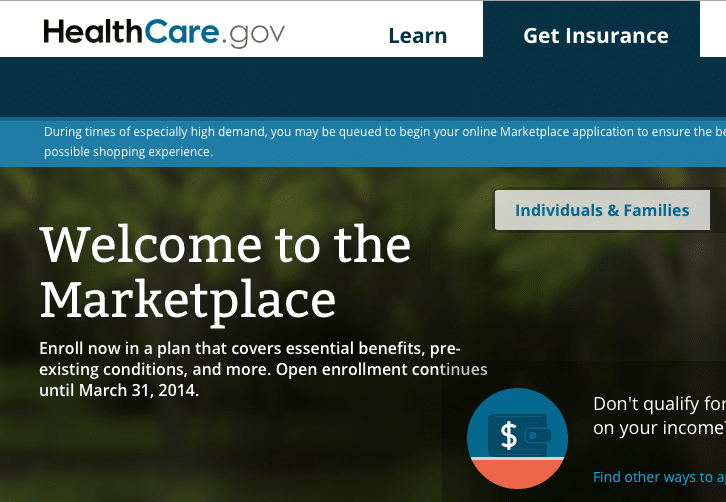
You still have a few more hours to sign up for Obamacare. Healthcare.gov and the call center is accepting applications until midnight E.S.T. You can reach the call center here: 1-800-318-2596

Volume on the site is heavy. It had more than 2 million visits yesterday. So be patient. Try the queuing system. They say it works and if you leave an email they will get back to you.

This is the latest from the Department of Health and Human Services

IF YOU MISSED THE DEADLINE

“Our highest priority is making sure that everyone who wants to enroll to have health care coverage by January 1 is able to do so, particularly since consumers had a hard time accessing HealthCare.gov in October and November. As such, we are making sure we can provide information directly to consumers if and when they have questions about their particular situation, and if they are covered as of January 1.

Consumers who tried to enroll prior to today and had problems with the system should contact the Marketplace call center, 1-800-318-2596, for individual assistance. We have developed a robust casework process to address individual inquiries, respond to specific situations, and help consumers transition to new coverage. Consumers will hear directly from their health plan about the date their coverage is effective.

In addition, Center for Medicaid and Medicare Services (CMS) and health plans are continuing to reach out to consumers who’ve selected a plan to remind them of the final steps they must take to enroll in coverage, such as paying their bill, who to contact if they have questions, and how they can access care.

Consumers who begin the process of selecting a health plan after today will be covered as of February 1.

The call center will be closed on Christmas and will reopen on the 26th

Robocall Alert 2


If you get a robocall and a voice suggests a company can help settle your debt, modify your mortgage or resolve debt problems in any way, hang up.

The people behind the call are likely to have a history of scamming, do not have your best interests at heart and will lead you further into debt.

The Federal Trade Commission (FTC) just cracked down on two separate alleged scams and banned the people involved from participating in so-called debt mortgage and debt relief businesses.  American Mortgage Consulting Group, Home Guardian Management Solutions was charged with offering false promises of mortgage-rate reductions to consumers in jeopardy of losing their homes.

The company promised to substantially lower monthly mortgage payments and asked for an upfront fee of $1,495 to $4,495.  But the FTC alleges the company made false promises to consumers that made the offer appealing.

According to the FTC, it promised consumers would get a mortgage modification. If they didn’t, they’d get their money back. It also allegedly pretended representatives were from the government and could provide legal representation.

None of this was true. The head of the company Mark Nagy Atalla, is banned from conducting this type of business and faces a $514,910 judgment. The judgment will be suspended when he turns over personal property and proceeds from the sale of other assets. Another Case In another case, Southeast Trust, LLC (formerly known as The Debt School, LLC, also doing business as Financial Freedom Credit Counseling) and the company’s principal, Paul A. Wexler, allegedly promised consumers they could receive zero interest credit cards if they paid hundreds of dollars. Calls were routinely made to people who listed their numbers on the Do Not Call Registry, according to the FTC.  


 A settlement orders Wexler to pay $2.7 million to the government. But it’s suspended because he can’t pay.  Again, these stories illustrate the way unscrupulous people take advantage and gives us all reason to be very cautious about dealing with people who make promises that sound great.  The FTC offers four tips for recognizing a scam

  1. A company charges fees before it settles your debts
  2. It guarantees it can make your debt go away
  3. It tells you it can stop all debt collection calls and lawsuits
  4. It demands personal and financial information, like your credit card and bank account numbers, before it sends free information, or any information at all.

    watchmore Avoid Debt Settlement and Credit Repair  

Sunshine for Campus Bank Deals

Is your college or university getting a kickback every time  a student gets a credit or debit card?  This isn’t fantasy. Banks and other financial institutions do have deals that give schools an incentive for allowing them to market to you on campus. Colleges and universities were paid over $50 million in 2012, according the Consumer Financial Protection Bureau (CFPB).

The CFPB wants financial institutions to disclose all their deals.

floating money

Right now disclosure only covers college credit cards. It is encouraging that there were fewer credit card deals this year than last.  The CFPB’s annual report on college credit card agreements shows a decline of 23 percent in college agreements from 2011 to 2012.

CFPB Director Richard Cordray says, “Students and their families should know if their school, whether well-intentioned or not, is being compensated to encourage students to use a specific account or card product. When financial institutions secretly give kickbacks to schools, they are engaging in risky practices.”

Courtesy Creative Commons, Wikimedia

In 2008, Congress passed a law that requires schools to disclose preferred lender arrangements with student loan providers and to establish a code of conduct for school financial aid officials.

In 2009, Congress passed the Credit Card Accountability, Responsibility, and Disclosure (CARD) Act.  It requires lenders and banks to disclose to the CFPB the terms and conditions of any college credit card agreement, the number of new credit card accounts, and the compensation paid by issuers to institutions of higher education. The CFPB is required to write an annual report to Congress about the information provided by card issuers about these agreements.

Courtesy Wikimedia
Courtesy Wikimedia

Highlights of the CFPB Report: 

  • College card agreements declined by 41 percent between 2009 and 2012.
  • 617 schools had agreements with financial institutions in 2012 compared to 1,045 in 2009
  • In 2009, 1,045 college card agreements were in effect for over two million accounts, compared to only 617 agreements for just over a million accounts in 2012.
  • Colleges and universities were paid over $50,395,000 in 2012 and that’s less than the approximately $84,400,000 in 2009.

But the CFPB also found that the sands are shifting and now financial institutions are focused on checking, debit and prepaid cards.  The CFPB wants those agreements made accessible for all to see so that if you sign up for a card,  you know whether your school is getting a piece of the action.

There’s a guide for students and families about choosing checking accounts and debit cards: http://www.consumerfinance.gov/paying-for-college/manage-your-college-money/


watchmoreHow to Pay Down Your Student Loan 

Authors Guild Helps Writers

by Richard Russo
It’s all changing, right before our eyes. Not just publishing, but the writing life itself, our ability to make a living from authorship.
Even in the best of times, which these are not, most writers have to supplement their writing incomes by teaching, or throwing up sheet-rock, or cage fighting. It wasn’t always so, but for the last two decades I’ve lived the life most writers dream of: I write novels and stories, as well as the occasional screenplay, and every now and then I hit the road for a week or two and give talks. In short, I’m one of the blessed, and not just in terms of my occupation.
My health is good, my children grown, their educations paid for. I’m sixty-four, which sucks, but it also means that nothing that happens in publishing—for good or ill—is going to affect me nearly as much as it affects younger writers, especially those who haven’t made their names yet. Even if the e-price of my next novel is $1.99, I won’t have to go back to cage fighting.
Still, if it turns out that I’ve enjoyed the best the writing life has to offer, that those who follow, even the most brilliant, will have to settle for less, that won’t make me happy and I suspect it won’t cheer other writers who’ve been as fortunate as I.
It’s these writers, in particular, that I’m addressing here.
Not everyone believes, as I do, that the writing life is endangered by the downward pressure of e-book pricing, by the relentless, ongoing erosion of copyright protection, by the scorched-earth capitalism of companies like Google and Amazon, by spineless publishers who won’t stand up to them, by the “information wants to be free” crowd who believe that art should be cheap or free and treated as a commodity, by internet search engines who are all too happy to direct people to on-line sites that sell pirated (read “stolen”) books, and even by militant librarians who see no reason why they shouldn’t be able to “lend” our e-books without restriction.
But those of us who are alarmed by these trends have a duty, I think, to defend and protect the writing life that’s been good to us, not just on behalf of younger writers who will not have our advantages if we don’t, but also on behalf of readers, whose imaginative lives will be diminished if authorship becomes untenable as a profession.
I know, I know. Some insist that there’s never been a better time to be an author. Self-publishing has democratized the process, they argue, and authors can now earn royalties of up to seventy percent, where once we had to settle for what traditional publishers told us was our share. Anecdotal evidence is marshaled in support of this view (statistical evidence to follow).
Those of us who are alarmed, we’re told, are, well, alarmists. Time will tell who’s right, but surely it can’t be a good idea for writers to stand on the sidelines while our collective fate is decided by others.
Especially when we consider who those others are. Entities like Google and Apple and Amazon are rich and powerful enough to influence governments, and every day they demonstrate their willingness to wield that enormous power.
Books and authors are a tiny but not insignificant part of the larger battle being waged between these companies, a battleground that includes the movie, music, and newspaper industries. I think it’s fair to say that to a greater or lesser degree, those other industries have all gotten their asses kicked, just as we’re getting ours kicked now.
And not just in the courts. Somehow, we’re even losing the war for hearts and minds. When we defend copyright, we’re seen as greedy. When we justly sue, we’re seen as litigious.
When we attempt to defend the physical book and stores that sell them, we’re seen as Luddites. Our altruism, when we’re able to summon it, is too often seen as self-serving.But here’s the thing.
What the Apples and Googles and Amazons and Netflixes of the world all have in common (in addition to their quest for world domination), is that they’re all starved for content, and for that they need us. Which means we have a say in all this.
Everything in the digital age may feel new and may seem to operate under new rules, but the conversation about the relationship between art and commerce is age-old, and artists must be part of it.
To that end we’d do well to speak with one voice, though it’s here we demonstrate our greatest weakness. Writers are notoriously independent cusses, hard to wrangle.
We spend our mostly solitary days filling up blank pieces of paper with words. We must like it that way, or we wouldn’t do it. But while it’s pretty to think that our odd way of life will endure, there’s no guarantee. The writing life is ours to defend.

Protecting it also happens to be the mission of the Authors Guild, which I myself did not join until last year, when the light switch in my cave finally got tripped. Are you a member? If not, please consider becoming one.

We’re badly outgunned and in need of reinforcements. If the writing life has done well by you, as it has by me, here’s your chance to return the favor. Do it now, because there’s such a thing as being too late.


Click here for the Guild application form.  IF YOU APPLY PUT BARBARA NEVINS TAYLOR IN THE BOX THAT ASKS WHO REFERRED YOU.


65 Plus and Looking for Work


How old do you feel?

If you are like many Baby Boomers, you probably don’t feel your age. And you’ve probably said that many times. Now a new study funded by the Boston College Sloan Center on Aging and Work puts a social science spin on what we know.

The Associated Press-NORC Center for Public Affairs Research conducted a survey of 1,024 adults ages 50 and over about retirement and work.

It found that, “Americans who have reached or are nearing the traditional retirement age generally do not think of themselves as “old.” Overall, the majority of Americans age 50 and older have a positive outlook about their own ages. Six in ten report they feel younger than their age, a third feel about their age, and only 6 percent feel older.”

65 PLUS AND WORKING

The survey also discovered that a quarter of adults 65 plus are working or looking for work and half of those 50 and older are working or looking for work.

YOUNG BOSS VS. OLDER BOSS

Nearly half of those survey say their bosses are younger.

But people over 50 with older bosses have positive things to report. They think their age is an asset. The survey’s authors say, “…people with an older boss are more likely to report that they have experienced positive situations at work because of their age including having colleagues come to them more often for advice, feeling that they receive more respect within the company, and receiving desirable assignments.”

There is also the dark side of the workplace for older workers. One in five who are 50 and older report that they have experienced age discrimination at work or while looking for work.


readmoreMyths About the Older Worker


watchmoreTips for Older Job Seekers


A Winner With Obamacare Even With Pre-Existing Condition

by Barbara Nevins Taylor

Marilyn Parver is cheerleading for Obamacare. She discovered that even though she has a pre-existing condition, she’ll have better and cheaper insurance than she has now. “All I ever hear is the bad side,” she told us and then shared what she thinks is important for everyone to know. 

Marilyn’s experience was the opposite of bad. The health insurance plan she found saves her almost $300 a month and she feels like a winner.

“I am 61 years old and easily as physically fit as any 50-year-old. My health is good but a pre-existing condition affected my ability to buy insurance,” she explains.

Twelve years ago, Marilyn discovered that she has a slow-growing brain tumor. There aren’t any symptoms but it requires regular checkups. While she lives in Kingman, Arizona. the doctor who monitors her annually, with an MRI, is at Johns Hopkins Medical Center in Baltimore, Maryland. 
Roll of money
Her current insurance is expensive. She pays $1,000 a month for what she describes as “very limited benefits.”  
Under this insurance, many of her visits to health care professionals require pre-approval and the answer is often, “No.”
Courtesy Wikimedia
Courtesy Wikimedia
She recalls that before she made a recent trip to Kenya, the insurer refused to pay for anti-malaria medication.  
“They told me if I get malaria they would cover my treatment. I ended up buying the pills I needed in Kenya for $20 a month compared to over $300 in the U.S. without insurance.”
So she was more than ready for an alternative that provided more coverage and cost less and began her search on Healthcare.gov.
Keyboard and stethescope
She found plans tailored for her state, but the online system couldn’t help her because she required coverage for an out-of-state doctor.  She followed the prompts and  called the phone hotline.
A customer service representative recommended that she deal with insurers in her state directly and offered to send her a list of insurers.
She was emailed 59 pages listing insurers and descriptions of plans offered in Arizona. 
“My new choices were staggering both because of lower cost options but also because of better benefits. I picked the most appealing options and then called the insurance companies directly. They all have dedicated departments to deal with the new policies and they answered my questions quickly,” she says enthusiastically.
Image by Chris Potter via Flickr
Marilyn narrowed her choice to two plans offered by Humana.  The less expensive plan is $440 a month. But it has a 20 percent co-pay.
And that’s a concern because she worries about the possibility that she may need surgery to remove the brain tumor. “Surgery is expensive and even 2o percent of the bill would be painful,” she explains.

Her second choice was a Preferred Silver Plan that paid for everything after a $3500 deductible. Her monthly premium is $721. That’s less than the $1,000 she pays now. “My deductible is $5000 right now and I never reach it so I never get a break,” she says.

She’s thrilled with the range of benefits that the new plan offers.  “Once I made up my mind it was super easy. I was signed up in 20 minutes.”

 She’s also relieved because she’s paying less and getting more. She says, “With any kind of pre-existing conditions, you have had to pay a fortune for medical coverage. Now we have choices that are affordable.”

Arizona Mountains

It’s worth it to note here that Marilyn used Healthcare.gov because Arizona doesn’t have a state health insurance Marketplace.

Republican Governor Jan Brewer did accept the expansion of Medicaid in Arizona so that the state will receive federal funds to provide Medicaid for those who qualify under Obamacare.

Remember you have until December 23rd at midnight to sign up for health insurance that will begin January 1, 2014.  But the entire open enrollment period runs until March 31, 2014 for insurance that will begin after you sign up and pay your first month’s premium.


Home Buying in the Chilly Season

by Barbara Nevins Taylor

The days grew shorter. The weather turned colder and Angel and William Wong found themselves searching for a home in Flushing and College Point in Queens, New York.  They had been surprised at how quickly their New Jersey home sold. It went into contract in August and their family had a month to move. But house hunting proved difficult.

There was fierce competition and bidding for houses in the neighborhoods where they wanted to live. So they put everything in storage and moved into a temporary apartment while they searched.

They were determined to buy a new home in the chilly season to take advantage of the relatively low interest rates and they were keenly aware that rates are rising.  Angel said, “I want a home and I want to get the  interest rate while it’s still low.”

But every time they made an offer on a house another family offered more money.

The Wongs had talked to a banker at Chase and found that they could get a 15-year fixed-rate mortgage with 3.4 percent interest. At the beginning of December, they found  a three-bedroom home facing a park. They quickly signed a contract and locked in the 3.4 percent rate.

They were lucky because interest rates inched up slightly in December. A 15-year fixed-rate mortgage was 3.6 percent, a 30-year-fixed rate 4.55 percent, according to Bankrate.com.

With interest rates expected to rise, the chilly season may be the best time this year to shop for a home.

ConsumerMojo.com’s  videos and posts have a lot of information about  getting a mortgage and gives you the information that you need to get the best mortgage deal.

watchmore

7 Tips to Get the Best Mortgage Deal

Obamacare Success Stories


The news is slowly getting better about Obamacare and this is a reminder that you have until December 23rd at Midnight to sign up to get insurance that starts January 1, 2014.

Good stories are always nice to hear and that’s why we’re posting Health and Human Services Secretary Kathleen Sebelius’s blog that describes her meeting with people who signed up for Obamacare in Miami.

by HHS Secretary Kathleen Sebelius

“Today at the main branch of the Miami Dade Library, I had the opportunity to meet with three Miami-area residents and learn how they successfully signed up for coverage through the Health Insurance Marketplace. They told me their new plans would be less expensive and provide better coverage than what they once had.

Marcelo Cantos, a 22 year-old student at Florida International University, had been uninsured for the last five months. Marcelo used to pay about $160 a month for insurance. But late last month, Marcelo met with an in-personal assistor who helped him find and sign up for a silver plan through HealthCare.gov.

Marcelo said he qualified for a tax credit that reduced his monthly premium to just over $7 a month. 

I also met with Mick Erlandson, a young law student at the University of Miami, who told me about his previous plan with high costs and limited benefits that cost about $120 a month and had a $15,000 deductible. After some initial problems signing on to HealthCare.gov in early October, Mick said he logged on in mid-October and was able to sign up for a silver plan in about 30 minutes.

Now Mick has better coverage for only $47 a month and he enrolled in a dental plan that costs him only $14 a month.

He also helped both his parents sign up for coverage, which he says costs half of what they paid before.

Another of the Floridians whom I met today was Nancy Lewe, who’s self-employed. Nancy has been paying nearly $900 a month for coverage through COBRA.  She also has gotten a better deal through HealthCare.gov: she’ll be saving $600 a month for better coverage, plus she will now have dental benefits.

Additionally, her deductible is plummeting from $1,000 to $250 a month.

The Affordable Care Act, which made the Marketplace a reality, is “a dream come true,” Nancy said. Before the law, she said, it was “better to take a job you hate than be uninsured.”

I also had the opportunity to talk with Karen Egozi, CEO of the Epilepsy Foundation of Florida. Karen is one of the many trained in-person assistors and Navigators across the country helping their neighbors sign up for the coverage of their choice in the Marketplace.

Karen, who has been working on behalf of patients with epilepsy and their families since 2005, knows the importance of affordable, quality health insurance to families’ financial security and peace of mind.

The Miami Dade Library has trained personnel on call daily from 10 a.m. to 5 p.m. to work with people who want some personal help in shopping and signing up for the best health plan for them.

If you don’t have health insurance, or don’t like what you have, I want to invite you to shop for a new affordable plan in the Marketplace, like Marcelo, Mick and Nancy. Open enrollment lasts until March 31, but, to get benefits beginning on January 1, 2014, you have until December 23rd to sign up. And don’t forget the final step – you must pay your premium to the insurance company directly – not to the Marketplace. If you select a plan on HealthCare.gov, you will see an orange message indicating you must make payment to be covered on January 1. Insurers handle payment differently, so follow the instructions from the insurer you select about what forms of payment are accepted and the due date of your first premium – which will be on or before December 31, 2013, depending on the plan you choose.

There are many ways to sign up, including: 

Once you’ve signed up for a plan, don’t forget to check with your insurer to make sure your premium was received.

Refunds For Mystery Debits


Keep an eye out for a refund check if you think a mystery debit sucked money from your bank account. It may have happened after you shopped with an online discount site or while you applied for a payday loan.

Federal Trade Commission Building

The Federal Trade Commission (FTC)  is sending 34,859 refund checks to people whose bank accounts were debited, allegedly without their consent, by Nevada-based payment processor Automated Electronic Checking Inc. (AEC)

A total of $870,000 is on the way to consumers who found these surprise debits on their statements. The amount you’ll receive depends upon how much you lost. The average check will be about $25. It’s not a lot, but it is something and it is the holiday season.

The FTC says the debits occurred “…through a relatively new payment method called remotely created payment orders to give merchants access to consumer bank accounts, AEC debited many consumers who had never heard of AEC or its client merchants.”

floating money

It may seem like found money, but be sure to cash the check as soon as possible. Your check must be cashed within 60 days of the mailing date.

Be aware that some people may contact you and suggest that you pay money or provide information before you can cash the check. That’s another scam. If you have any questions after you receive the check, call the FTC refund administrator, Analytics Consulting LLC, at 1-855-529-6824, or visit www.FTC.gov/refunds 

This investigation was part of President Obama’s initiative to fight financial fraud at the consumer level.

If you think you’ve been ripped off in a scheme, file a complaint with FTC  in English or Spanish via the online Complaint Assistant or call 1-877-FTC-HELP (1-877-382-4357).


watchmoreWhat’s Wrong With Payday Loans?

Holiday Jobs and Your Rights

We’re reposting this blog from the U.S. Department of Labor because it hits home. Many people take jobs to make cash during the holiday season and it’s great to work. But it’s also good to understand the work rules and your rights.

We’re not saying employers will take advantage. We are saying, it’s always a good idea to go into a new situation armed with as much information as possible.


This blog is by:

Laura Fortman, principal deputy administrator for the Wage and Hour Division.


This time of year, many people hold temporary or part-time jobs helping retailers and other businesses with the heavy demands of the busy holiday shopping season. It’s a great opportunity to gain valuable work experience, get a foot in the door for long-term employment or just earn extra cash.

Workers not familiar with this type of short-term arrangement may have questions related to their employment. Here are answers to some most of the frequently asked questions we receive, and additional resources for more information:

How many hours is part-time employment? How many hours is full-time employment?

Crowded shopping mall

The Fair Labor Standards Act, which is the governing federal labor law here, does not define full-time employment or part-time employment. That is a matter generally to be determined by the employer.

Am I entitled to overtime pay?

In all likelihood, yes. Most workers in this country, particularly in retail, are employed by businesses covered by the FLSA. That means that they are entitled to at least the federalminimum wage, which currently stands at $7.25 per hour, though some states and localities have higher minimum wage rates. Such workers are also entitled to overtime pay at a rate not less than one and one-half times their regular rate of pay for hours worked beyond 40 in a workweek. This is true regardless of whether the employee is considered a temporary worker or a permanent hire. In some instances, however, certain retail or service employees who are paid bycommissions could be exempt from overtime pay.

Are there restrictions for teens working during the holiday season?

Federal law says that 14 is the minimum age for work in retail or at an office, grocery store, restaurant or movie theater. In general, 14- and 15-year-olds can only work during non-school hours and no more than three hours on a school day, including Fridays, and 18 hours total in a week. On weekends, holidays and school breaks, however, they can work eight hours a day and up to 40 hours in a week. And though the law is more permissive during the summer, they can only work between the hours of 7 a.m. and 7 p.m. during the school year.

Federal law does not limit the number of hours or times of day for workers 16 years and older, but many states have enacted more restrictive labor laws and have higher minimum standards that must be obeyed. It’s important to note that workers under 18 are limited in what they can do and must not be placed in hazardous occupations or given certain tasks deemed hazardous. Check out the YouthRules! website to learn more.

Help is a click or phone call away

If you still have questions and want to learn more, please refer to our Holiday Season Employment Information Guide. You can also check out our website, or call 1-866-4US-WAGE.

Best of luck on the job, and happy holidays!


watchmoreRide the 7 Train With Young Immigrants


Crackdown on Hidden Interest for Medical Credit Cards

How many high pressure sales pitches have you heard for credit cards that hide the truth about their interest rates? When it happens in a medical professional’s office, it’s particularly bad. That’s why the Consumer Financial Protection Bureau (CFPB) is cracking down on hidden interest for medical credit cards.

The CFPB ordered GE Capital Retail Bank and its subsidiary, CareCredit, to refund up to $34.1 million to more than 1 million victims of deceptive credit card enrollment tactics. These people signed up for credit cards in doctors’ and dentists’ offices, often when they were faced with big medical bills.

They thought the credit cards were interest free, or that they could skate by during a promotional period when there was no interest. Instead, they were shocked to learn the interest rate clock started kicking in from sign-up day if they didn’t pay off the balance in full at the end of the promotion.

CFPB Director Richard Cordray says, “Medical debt is already a big problem for many Americans. Poor credit card transparency should not be making the problem even worse.”

CareCredit is sold in 175,000 dental, cosmetic, vision, and veterinary care offices around the country. Doctors, dentists and other medical providers and their office staffers sell it as a payment option and about 4 million people have active accounts.

About 85 percent are in deferred-interest financing plans during a promotional period that lasts from six to 24 months. The tricky thing is that CareCredit assesses 26.99 percent annual interest on a consumer’s balance throughout the promotion.  If the consumer pays off the balance, fine. But most don’t pay it off, and if there’s any balance left,  the consumer is liable for all of the accrued interest.

The CFPB says that since January 2009, consumers who signed up for the credit card didn’t get adequate explanations about the interest and what would happen when it kicked in.

GE Capital Retail Bank and CareCredit will have to:

  • Create a $34.1 million reimbursement fund

            1. They will have to notify customers that refunds are due, and the process will be handled by an independent adjudicator   

  • Full Disclosure

           1. CreditCare will have to adequately disclose terms to consumers and include a warning at least 72 hours before a promotional period is ending.

           2. For transactions of more than $1,000, customers will have to enroll directly through CareCredit and not through a doctor’s office.

  • Training for Doctors’ Staffers

           1. CreditCare will have to train personnel in doctors’ offices to fully disclose the details about interest and the credit card contract.


Hidden Danger in Proposals to Cut Medicare and Social Security


Guest Post by Max Richtman

President/CEO

National Committee to Preserve Social Security and Medicare Why a “Grand Bargain” Would Hurt Seniors, Veterans and the Disabled

While some in Washington may have given up on a so-called “grand bargain,” many others including the White House, still consider benefit cuts to millions of seniors, veterans and people with disabilities a part of the budget debate.

This so-called “entitlement reform,” actually means benefit cuts targeting seniors including: Social Security chained CPI, extending means testing in Medicare to the middle class, raising the retirement and eligibility ages, and ending traditional Medicare in favor of Rep. Paul Ryan’s “Couponcare” plan.

Each of these ideas shares the same fundamental flaw, requiring the still struggling middle-class to pay down our deficit while giving the wealthiest Americans a pass.

Blue Social Security Card


However, the chained CPI plan to change the formula which calculates the cost of living adjustment for seniors, veterans and people with disabilities is the most insidious of these proposals.

Here’s why the chained CPI is so devastating, not only to seniors but to our economy as well.

Capitol

While some in Washington portray this benefit cut as nothing more than a “technical tweak,” the truth is that it would be a benefit cut imposed on the oldest and most vulnerable Americans who would be least able to afford it.

In our new National Committee Foundation report, produced in consultation with economist Dean Baker, we’ve also clearly shown that the chained CPI will have a huge impact on local businesses, state economies and our national economic recovery.

The Chained CPI: Shackling America’s Economic Recovery,” provides a detailed look at what the adoption of a stingier cost of living adjustment really means for communities and states.

This study uses the Congressional Budget Office projections for cuts to national spending to estimate cuts that would be made in each congressional district, based on the Social Security Administration’s data on Social Security spending by congressional district. It also makes projections for the economic impact on the reduction in output as well as the jobs lost in each district. The results are striking.

The negative impact of the chained CPI should not be ignored or trivialized. This new analysis clearly illustrates just how harmful this COLA cut will be to seniors as well as state economies and local businesses.

Courtesy Andrew McGill via Flickr


Adoption of this so-called “tweak” could mean the loss of $31 billion in economic output and more than 200,000 jobs nationwide. Washington’s blind determination to cut Social Security benefits in the name of deficit reduction must be stopped and those who continue to peddle the chained CPI should now explain to American workers, retirees and their families how losing billions of dollars in economic output and hundreds of thousands of jobs is a ‘modest adjustment’ we should accept.

While Washington’s well-financed austerity lobby has downplayed the economic impact of losing billions in benefits spent in local communities due to the chained-CPI, step outside the Beltway and state lawmakers and business owners alike understand what this benefit cut would mean.

That’s why this study applies these calculations to each congressional district. It’s time members of Congress see in clear dollars and cents what the chained CPI actually means to their communities and constituents. Many districts with large populations of retirees would be especially hard-hit by these cuts.

Florida Sign

In Florida’s 16th congressional district, which includes Sarasota and other cities along the Gulf Coast, the benefit cuts would be $6.1 million in 2015, $53.3 million in 2020, and $87.7 million in 2023. This implies a loss of output in the district of $8.9 million in 2015, $80.2 million in 2020, and $127.2 million in 2023. The job loss would be 70 in 2015, 550 in 2020, and 780 in 2023.

Pennsylvania


In Pennsylvania’s 12th congressional district, a largely rural area in the southwest corner of the states, the benefit cuts would be $5.0 million in 2015, $44.9 million in 2020, and $71.3 million in 2023. This implies a loss of output in the district of $7.2 million in 2015, $65.2 million in 2020, and $103.3 million in 2023. The job loss would be 60 in 2015, 440 in 2020, and 630 in 2023.

Given the economy’s slow rebound, is this really their plan to strengthen America? Is there any community which can afford to lose millions of dollars and hundreds of jobs over the next decade? This is also at stake if the chained CPI is adopted.

Real dollars, real jobs and real damage to our economy.


Follow Max Richtman on Twitter: www.twitter.com/maxrichtman