All posts by Barbara Nevins Taylor


Last Chance to Change Medicare
The Medicare Rights Center in New York reminds us that we have until Saturday, December 7th, to make changes in Medicare health and drug coverage without any restrictions. You can watch our video that explains all, if you’d like all the reasons to review your plan.
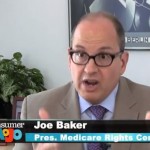
Joe Baker, president of the Medicare Rights Center points out there are very good reasons to make a change.
He says, “Plans can change their costs and benefits every year, and what works for you this year may not be your best choice in 2014. It’s important to take stock of your current health and drug coverage and to consider your health and financial needs.”
If you pick a plan now and don’t like it, you have an chance to make a change in January.
Baker says, “People with Medicare who become unhappy with the Medicare Advantage plan they chose during Fall Open Enrollment are able to switch to Original Medicare and a stand-alone prescription drug plan during the Medicare Advantage Disenrollment Period (MADP), which begins January 1 and ends February 14. They will also have the right to add a Part D prescription drug plan during the MADP. They will not, however, be able to switch from one Medicare Advantage plan to another.”

“The Medicare Advantage Disenrollment Period is a limited window of opportunity that can be useful for some beneficiaries,” said Baker. “But it’s important to remember that if you make a change during that time, you may not be able to get a Medigap plan to fill the gaps in coverage, or your Medigap choices may be limited.”
RIGHT NOW
You may not want to bother to take a second look at your plan. We understand that. But you may find that you’ll be able to save money and it will be worth your effort.
Bakers says, ” It’s best to put the time in now to find the best plan for you, because after December 7 may be too late.”
Changing Medicare Plans and Avoiding Penalties
Time is almost up to change your Medicare plans and you may be able to save money if you do. The Medicare Open Enrollment period ends December 7th.
Some people have tricky situations and may want to figure out a special strategy. Sheila Gassler wrote to us and said she discovered that she has a penalty payment for her Medicare drug plan because she didn’t sign up for Medicare Part D initially. Now she has to pay extra for the rest of her life, and the charges add up.

She says, “I am 79 years old and want to get a Medicare Advantage plan, but the plan came with a drug plan. The plan costs $50 a month.” But the penalty, she says, is an additional $40 a month and it doesn’t seem worth it. She says that she’s been paying out of pocket and finds that she can get cheaper medication when she needs it in Canada.
We asked the experts what someone like Sheila should do.
Rae Carole Fisher, an agent for UnitedHealthcare, told us, “There are Medicare Advantage Plans that do not have a drug component. At United Healthcare we have a Medicare Advantage Plan that is called Medicare Advantage Essentials.”
The plan may not be available in every state, so you have to do a little research and check to see which plans are offered in your area.
The tip is simple
- Ask insurers in your area if they have Medicare Advantage plans that don’t require a separate drug plan that will come with a penalty.
Heavy Browsing on Health.gov
Millions are browsing the Obamcare website, but it’s not clear how many are actually signing up. The Centers for Medicare and Medicaid Services is cagey about details and says it will have official numbers in mid-December.
Julie Bataille, a spokesperson for the agency, said that 790,00 people in one day used a new tool that allows you to simply look at health plans that are available. But she wouldn’t tell reporters, during a conference call, how many people purchased insurance since Sunday when the rejuvenated website became easier to use.

Instead she offered 4 Tips If You Get Stuck on Healthcare.gov
- If the site doesn’t seem to be working for you, log out and log in again and start a new application. You have to refresh your browser.
- If you need help, try the 24-hour hotline 1-800-318-2596
- You can forget the site and deal directly with an insurance company, agent or broker.
- Once you select an insurance plan, make sure that you pay and confirm with the insurance company that you are signed up.
But all is not well for some who are trying to sign up.
In New Jersey, Brian Kartagener is attempting use Healthcare.gov to get insurance for his wife and two children.
On Tuesday, he was frustrated when he was offered no choices of insurance plans in his state. On Wednesday he said, “The site is working today, but online chat support is clueless. They obviously work off a script.”
At this point, he’s not happy with the plans that he’s finding because they are too expensive. Like others, he needs health insurance and this isn’t fun.
The deadline for applying for Obamacare was extended until December 23 if you want insurance that begins January 1, 2014. But the application process continues until March 15, 2014 for insurance that will start later.
The Obama Administration hopes that 7 million people will sign up by March 15th.

Help for Those With Student Loans
If you’re one of the 40 million Americans with an outstanding student loan, you’ve got a friend at the Consumer Financial Protection Bureau (CFPB). The bureau is stepping up to oversee the seven non-bank loan servicers that deal with student loans every day.
Servicers are the companies you deal with after you get the money. Lenders turn the processing and management of loans over to these companies and now the CFPB says it wants to make sure that loans get processed accurately and fairly.

It’s particularly important because we’re in the middle of a student loan crisis. The CFPB reported earlier this year that outstanding student debt totals approximately $1.2 trillion and about 7 million student loan borrowers are in default.
CFPB Director Richard Cordray said, “Student loan borrowers should be able to rest assured that when they make a payment toward their loans, the company that takes their money is playing by the rules.”

The servicers are big faceless bureaucracies and dealing with them is often frustrating, time-consuming and can cost you extra money because of unfair and unnecessary penalties.
A recent annual report by the Bureau’s Student Loan Ombudsman highlighted the following “repayment stumbling blocks.”
- Servicers lose paperwork and make processing errors that result in late fees, especially when loans are transferred from one servicer to another.
- If you have multiple loans and attempt to make a large payment, the payment is often split up and applied to all of the loans instead of the loan with the highest interest, or largest balance.
- If you make a partial payment, it is often spread across your loans so that there are penalties on all of the loans because you haven’t made a full payment to any of them.
The CFPB is an agency that really wants to help and is extremely proactive.
It created an interactive tool, Repay Student Debt, that allows you to explore repayment options.
It also has Ask CFPB to find answers to common questions, like whether to refinance a student loan.
All of this is great, but if you have trouble with a servicer submit a complaint to the CFPB: http://www.consumerfinance.gov/students/.

Crackdown on Fast Cash Sites
We get it. Online ads for fast cash seem really appealing and look like an easy answer to cash flow problems. But in fact, they are like the venus fly traps of lending. They lure you in to very risky loans with high interest rates that can keep you in debt for years.
So it’s welcome news that New York Governor Andrew Cuomo and N.Y. Financial Services Superintendent Benjamin Lawsky continue to go after these payday lending companies and their surrogates.

Payday lending is illegal in New York State and Lawsky’s Department of Financial Services (DFS) sent subpoenas to 16 online companies that don’t make loans, but generate leads for payday lenders.
These companies run sites that advertise fast cash and easy access. Even when you make an inquiry, the sites are likely to ask you to provide personal information including your Social Security number and bank account numbers.
Once they have it, they sell or turn over the information to payday lenders. The DFS says it appears that they have also provided the information to scammers.
Consumers complain that after they filled out information on these sites, they received calls from people soliciting for services with upfront fees, pre-paid debit cards and other shady offers.

DFS Superintendent Lawsky says, “New Yorkers can get sucked into a seemingly endless black hole of consumer abuse if they provide their sensitive personal information to these types of websites.”
In August 2013, 35 companies received notices from Lawsky that they were operating illegally in New York State and apparently the majority stopped working with New York consumers.
But we are told the investigation is ongoing and other companies may be targeted. Governor Cuomo says, “We will continue to follow this investigation wherever it leads and use every tool at our disposal to safeguard New Yorkers from those who seek to prey upon vulnerable consumers.”
DFS is asking the following companies for marketing materials, contracts and consumer privacy policies.
· Allied Cash Advance
· Bahamas Marketing Group, Inc.
· Blue Global, LLC d/b/a 100DayLoans, HighSpeedPayday
· DJR Group, LLC
· Fix Media Group, LLC d/b/a We Fix Money
· Hydra Fund II
· LightSword, LLC d/b/a Aero Advance
· Payday Loan Ranger
· Payday Mobility
· PayDayForest
· PayDayMall
· Personal Cash Advance
· Selling Source, LLC d/b/a MoneyMutual, LLC
· US Cash Loans
· ValleyTrust
· WebMarketerLive d/b/a JustClickHereLoans, CashMoneyNow
If you think you’ve been a victim of an illegal payday lender, file a complaint with the Department of Financial Services at (800) 342-3736.

New Start for Healthcare.gov
It’s easy to be snarky about the anemic launch of Healthcare.gov, but December 1, marks a relaunch of sorts and its important for everyone who needs affordable health insurance.
It’s a new day and it should be easier to use the Obamacare website to apply and actually sign up for health insurance.
Jeff Zients, a technology whiz who has supervised the overhaul of Healthcare.gov said, on a Sunday morning conference call, “Healthcare.gov is night and day from where it was October 1st. The site is now stable.”
SAFE TO USE HEALTHCARE.GOV NOW
This means it’s likely that you can log on and go through the application process and shop for insurance without facing error messages, blank pages and frustration.
We’re told that 50,000 people can log on and use the site at the same time and a minimum of 800,000 people can use Healthcare.gov to apply for health insurance every day.
Yet Zients cautions that, “There may be times when there is too much volume and we’ve established a queueing system. If there are too many people on the site at one time, you’ll get a message just like the ones you receive online during a busy customer service experience.”
If the site is at its capacity you will be emailed with information about when to come back to the site. The system will provide a link that allows you to go to the head of the line when you log on again.
FIVE WEEK FIXES
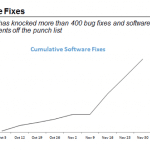
All this is possible because, during the past five weeks, the Obama administration brought on a new team and outside consultants to fix what what was clearly broken. The new team worked round the clock and made 400 software repairs and upgrades to the system. They made key hardware upgrades as recently as this past Friday night. In addition, 12 servers will exclusively handle the website traffic.
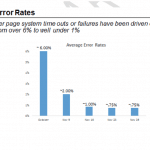
Zients told reporters that response times are now under a second and error rates are down under 1 percent and the system is stable with far speedier up-times.
PEOPLE WHO TRIED THE SYSTEM BEFORE GET PRIORITY
People who tried to apply for insurance and couldn’t get through the glitches will now be getting priority. Julie Bataille, a spokeswoman for the Department of Medicare and Medicaid Services, said Sunday morning, “Our focus is on making sure that those who have tried to enroll in the past several weeks are able to complete that process. “
 Doctor Considers Healthcare Costs

Wait Until Sunday to Try Healthcare.gov
Doctor Considers Healthcare Costs, Or the Doctor of My Dreams
by Barbara Nevins Taylor
I think I found the internist of my dreams. He interviewed me. He talked, reviewed my medical history and actually examined me.
It was kind of like visiting Dr. Friedlander, the general practioner in Laurelton, the community in Queens, New York, where I grew up, or visiting my uncle Dr. Murray Robin’s office in Lindenhurst, Long Island.
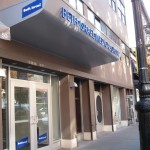
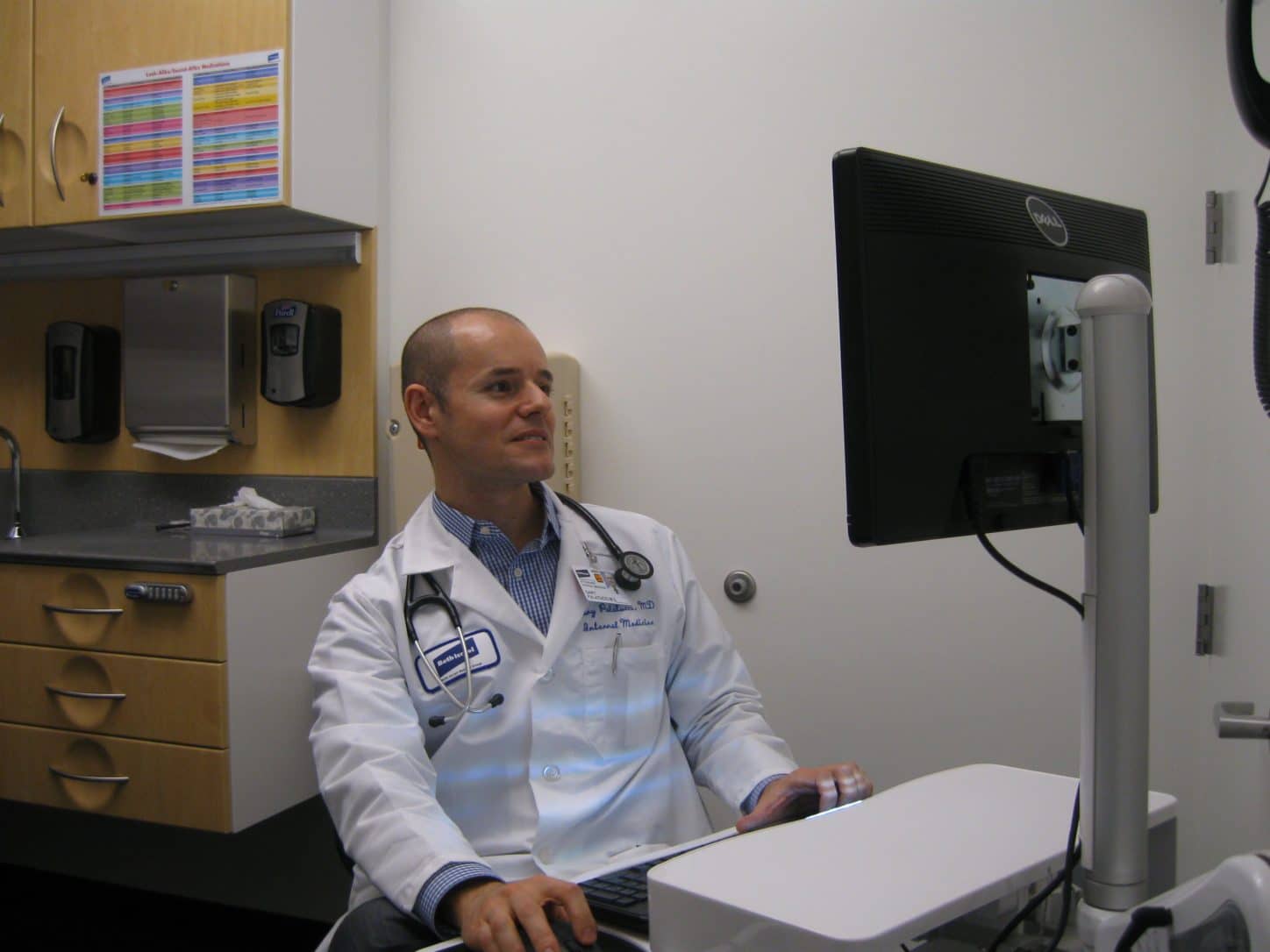
This doctor, 39-year-old Gary Palatucci just opened a street level practice on 8th Street in Greenwich Village as part of the Beth Israel Medical Group in New York City. I saw the office, looked him up and decided to try him for a routine checkup.
I hadn’t seen an internist in years primarily because I don’t have a lot of medical problems. I’m tempting fate here. My family is superstitious and as soon as this pops up online, it qualifies as kinahora. That’s the way we use a Yiddish word to describe bringing a curse or the evil eye upon yourself.
 But back to Dr. Palatucci. He seemed to embrace a kind of old-fashioned common sense medicine. “Is there a particular reason that you are here?” he asked. I explained that I have no big complaints, but thought it was time to establish a relationship with an internist.
He didn’t rush me off to get a complete blood screening or suggest a battery of expensive tests. He was completely unfazed after I gave him my previous blood tests to review.
I explained that I’ve had high cholesterol for years, and am part a tribe of long-lived Ashkenazi Jews whose genetic marker is the high level and large size of “good” cholesterol.

I know this because I’m in the second wave of subjects in the Longenity Study at Albert Einstein Medical Center run by Dr. Nir Barzilai. He’s been studying Ashkenzi Jews, like my family members who live to 95 and older, to find out if there’s something about us that can promote good health in others.
Nevertheless, every doctor I’ve met previously was eager to keep testing and to sign me up for cholesterol reducing medication, which I always declined.

Dr. Palatucci said, “You know right now there’s a controversy in medical circles about cholesterol testing and risk factors. If you are a healthy, active non-smoker without a family history of heart disease and you have high cholesterol, the risk is different for you than it may be for an inactive person whose family does have a history of heart disease.”
I liked him because he said, “I’m not a proponent of testing for testing’s sake. I tell my medical students at Albert Einstein Medical College that tests are only good if you know what you are looking for.”
His advice to me and other patients is practical: “If you ride a bike, a motorcycle or ski, wear a helmet. Don’t smoke. Don’t eat too much, don’t drink too much.” Uncle Murray and Dr. Friedlander would have said the same thing.
It’s the kind of advice and practice of medicine that can help us stay healthy and reduce what we pay out for routine medical care.
“Healthcare costs in this country are just too high and excess testing is one of the contributing factors,” Dr. Palatucci said.

It’s refreshing to meet a doctor who likes practicing medicine and doesn’t view patients as marching dollar signs. He’s not a cut-rate physician, but he doesn’t ask you to sign up and pay for an annual plan. He doesn’t suggest you buy vitamins online, reminding you to mention on the site that he’s your doctor.
Instead, he makes a point of explaining on his web profile that he’s not in business with pharmaceutical companies. It’s like a breath of fresh air.
I hope that I don’t have to visit the doctor again soon. But I admire and support his approach to treating patients as individuals and to helping us all by keeping an eye on the money issue.
Oh. And did I mention that he accepts insurance and Medicare.
Time to Change Your Medicare Part D Plan?
Holiday Season And How Are Your Aging Parents?

Holiday Season and How Are Your Aging Parents?
by Barbara Nevins Taylor
When families come together during holiday season, many things are revealed.
We share our love, stories about our lives, and sometimes we even tell the truth.
The last thing most of us want to do is take a critical look at our aging parents. But while we’re all together and relatively relaxed, it is an opportunity to take a second look and give a second listen to what’s going on.
If you do it now, you may save yourself and your family a lot of heartache later. Lou-Ellen Barkan, President and CEO of the Alzheimer’s Association, NYC Chapter, says, “You can’t go wrong when you are talking about making people safer. But you can go wrong by ignoring an obvious situation.”
Her personal story highlights the difficulties most families face.
Barkan took care of her aging parents before her current job when she worked in politics and finance. She says, “My parents lived in Florida, which is very far away from New York City, especially if you are busy working person.”
Her dad developed dementia after prostate surgery and years later, after a stroke, the dementia deepened.
“Here was this man who was on his own, ran a business, played golf all of the time, and suddenly he needed a great deal of help,” she said. Her mom was the caretaker. “My mother kept him at home. And was very good to him, but it was tough on her.” Barkan recalls.
 After her dad died, her mother began to decline. She was 78 and insisted on remaining in her home. Barkan and her brother did successfully convince their mom to allow someone to come in and help in the mornings.
It didn’t take long for them to understand that something was really wrong. “My mother started falling out of bed. When the aide would come in, she would be on the floor.”
And then there was a bigger event, which is typical for most older people in decline: “She really had a fall. She went to the hospital and from the hospital they would not allow her to go home. At that point, I would say that her cognitive abilities were down 30 to 50 percent.”
Barkan and her family arranged for their mom to move to an assisted living facility in Florida. But six months later she had a stroke and could no longer do anything on her own. Barkan’s family moved her to New York and into the Sarah Newman residence in Mamaronek. Barkin says, “It was a wonderful place. She was there for a year-and-a-half and was safe and comfortable.”
We all want safety and comfort for our parents. But if their memory is slipping and they are still driving, or simply living alone, it’s potentially dangerous.
That’s why as painful as it may be, it’s a good idea to try to evaluate what’s going on
“We have what we call the ten signs of dementia and if you see three or four you need to pay attention,” Barkan says.
10 Warning Signs of Dementia
1. Forgetting dates, asking the same information over and over or overly relying on notes and other things to spur memory.
2. Having difficulty doing routine things like following a recipe, or a plan.
3. Difficulty completing a task like playing a game of Scrabble.
4. Confusion about dates and time.
5. Vision problems that affect spacial judgment or the ability to see colors.
6. Trouble with words or following a conversation.
7. Misplacing things without being able to retrace steps.
8. Using poor judgment like taking excess money out of the bank, or giving away large sums to charities or telemarketers.
9. Withdrawing from company and social activities
10. Changes in mood and attitude that may lead them to be depressed, paranoid or overly suspicious.
When to Choose Assisted Living

When A Trial Offer Is A Bad Deal
Trial offers, bonus gifts and freebies are often irresistible. Why not get something for free? Let me count the reasons you should avoid them.
Primarily because most are like magician’s tricks. They use sleight of hand to capture your attention and reel you in. Tricks are fun. But the offers are not. They fool you into thinking you’ll get an amazing benefit, when in fact you will pay and pay and pay.
That’s why we’re glad to hear that the Federal Trade Commission (FTC) went after a company that lured consumers into trial memberships, supposed government grant programs and money-making schemes.
 The FTC says I Works ran an elaborate $275 million scheme. The company, and its subsidiaries, convinced consumers to provide their credit card numbers, to be used for a small handling fee supposedly for materials related to obtaining grants, and then billed the consumers a one-time charge of $129.95 and monthly fees of up to $59.95.
Consumers had not agreed to pay these fees and ultimately received little or nothing of value.
In 2010, after the FTC filed a complaint, the assets of the company were frozen. Now there is an agreement between two of the company’s leaders, Bryce Payne and Kevin Pilon. They are both banned from selling or having a financial interest in any company that sells grant-related products or investment opportunities and selling or disclosing consumers’ financial information.
Payne was hit with a $289 million judgement and Pilon $7.5 million. But apparently neither can pay and will have to forfeit whatever assets they have. Good riddance to them.

But be wary because there are others out there.
HERE ARE 4 TIPS TO AVOID GETTING SNAGGED BY ONE OF THESE SCHEMES.
- Research the company and the offer. If people are complaining, consider that a red flag and stay away.
- Look at the online or printed signup form carefully. If a box on a form is pre-checked, uncheck it. If you don’t you might be agreeing to something you don’t want.
- Check the time limit of a free trial on your calendar. If you’ve signed up, remember to cancel it before the date it is set to end.
- Review your credit card statements carefully to make sure there are no mystery charges.
If you think you are a victim of a trial offer scam, contact the FTC.
Medicare Advantage Rates Go Up In 2014
If you are among the nearly 15 million people enrolled in a Medicare Advantage plan, you might want to take a look at that booklet they sent you about rates going up in 2014. Yes, it is a pain in the neck. Yes, it is probably more than you want to do. But you may save money if you’re willing to review your plan.
RATES GO UP In 2014
Researchers at the Kaiser Family Foundation discovered that Medicare Advantage monthly premiums will rise about 14 percent in 2014. Most people who remain in the plans they have now will pay about $5 more a month and their rates will go up to a little over $39.
In addition, five percent of those who now use Medicare Advantage will find their existing plans won’t exist in 2014. Other than the pain in the neck factor, there’s not much to worry about because there is still a wide range of Medicare Advantage plans to choose from. New Advantage plans are likely to be offered by your current company.
OUT-OF-POCKET EXPENSES
Check the 2014 rates for the limit on out-of-pocket spending. Limits will go up about 11 percent, or about $600, from $4,333 in 2013 to $4,797 in 2014.
PART D PRESCRIPTION DRUG PLAN

If you’re in an HMO your prescription drug rate will increase about 13 percent to $30.50
Local PPO rates will go up a little more than $8 to $63.96 in 2014.
Those in PFFS plans will see an increase of more almost $11 to $66 in 2014.
And in regional PPOs the increase will be about $7.66 per bringing the monthly cost to about $36.14 in 2014.
HOW TO SAVE MONEY
You may save money if you switch plans. So it’s a good idea to compare what’s offered in your area. On average, most of us have about 18 private Medicare Advantage plans to choose from. And because they are offered by a range of private insurers, the rates are different.
How I Found The Right Medicare Part D Plan

Immigration Fasters Get Visit From Labor Secretary
We’re reposting a blog from the U.S. Department of Labor because we think that Labor Secretary Tom Perez’s commitment to immigration reform is really important.
Here’s what Secretary Tom Perez has to say.
“In 1968, in the thick of the farmworkers’ struggle to gain basic rights and relief from brutal mistreatment, Cesar Chavez didn’t just march or strike or demonstrate − he fasted in order to raise awareness about his movement and highlight the importance of nonviolent resistance.
Today, a new generation of activists is going without all food except water – this time to bring attention to the urgent need for comprehensive immigration reform.
I visited the fasters yesterday on the National Mall, where they are camped out in tents. I was moved by their conviction and their moral clarity. They regard their discomfort as a mere inconvenience compared to the suffering of those living on the margins, often separated from their families and stripped of basic dignity.
One man who’s been fasting for 10 days told me: “This is a way to pay back my parents’ sacrifices.” Fasting, he explained, is “the only way I can look into my parents’ and community’s eyes and tell them I did everything I could to pass comprehensive immigration reform.”
With 11 million people living in the shadows, toiling in an underground, exploitative economy that depresses wages and working conditions for everyone, the immigration status quo is intolerable and unconscionable. Fixing it is a humanitarian and economic imperative.
We are indeed a nation of immigrants. People who choose to come to America have always been one of our greatest sources of national vitality. They keep our economy strong and our communities dynamic. They are some of our greatest patriots. My parents, fleeing a repressive regime in the Dominican Republic, were embraced by this country and taught us to love it in return. After my father served proudly in the U.S. Army, they settled in Buffalo, N.Y., and were able to live the American Dream. They taught me and my four siblings to work hard, to aim high and also to make sure the ladder is down for others.
Eliseo Medina, a stalwart of the labor movement who was an associate of Cesar Chavez and is now one of the leaders of this “Fast for Families” effort, has said: “I fast not out of anger or despair, but out of faith, of hope and love.” For him and others, this fast is an act of empowerment, fueled by a belief that our nation’s leaders will rise to this moment and give us an immigration system worthy of America and consistent with our values.
“Paciencia y fe,” my mother always used to say − patience and faith. I believe, because of the passion and the resilience of the fasters I met today, and so many others acting with courage and conviction across our country, we will get there.”
Fake IRS Calls
Beware of this one. Email and phone scams aims to get people to shell out money for taxes they don’t owe. The scammers cast a wide net targeting a lot of us, but many of their victims are immigrants.
HERE’S HOW IT WORKS
It starts with fake IRS calls. Someone calls and tells you they are from the IRS or your state’s tax department like the New York State Department of Taxation and Finance. They say you owe back taxes and if you don’t pay immediately you’ll be fined, deported or arrested.
 In some cases after they call they send an email with the fake claim that you owe money. They instruct you to wire the money through a pre-loaded debit card. If you hesitate, sometimes they have another scammer call up and pretend to be a law enforcement agent.
Many calls come from the 530 area code in California. Others use “spoofing’ techniques to mask their identity and they are good at it.
So the numbers that come up on caller ID are the real phone numbers of the IRS, the New York State Department of Motor Vehicles, and local police departments. Scammers also used fake names and IRS badge numbers, and may be able to recite the last four digits of a victim’s Social Security Number.
THINGS TO KNOW TO AVOID THE SCAM
1. The IRS does not call to threaten or demand money.
2. The state tax department does not call to threaten or demand money.
3. The IRS sends all requests by mail, not email.
4. The state tax department sends all request by mail, not email.

READ OUR LATEST STORY ON THE IRS SCAM HERE
WHAT TO DO IF YOU GET A CALL OR EMAIL
1. Hang up the phone immediately if someone claiming to be from the Tax Department or IRS unexpectedly calls and threatens police arrest, deportation or license revocation.
2. Report fraud to the IRS by calling 1-800-829-0433.
3. Report the fraud to New York State.
4. Contact the State Tax Department at 518-435-8523, the New York State Department of State’s Division of Consumer Protection at 518-474-8583. 5. File a complaint online.
Governor Andrew Cuomo says, “These criminals are posing as public officials and using fear to dupe taxpayers into forfeiting their money. I urge all New Yorkers to be mindful of these scam artists and encourage anyone who thinks they may have been targeted to immediately contact the proper authorities.”
Listen to a Fake IRS call and read an update here

Military Payday Victims Get Payback
Cash America, a payday lender and financial services company, will pay up for ripping off military members and their families who turned to the company when they were strapped for cash.
Cash America will pay back as much as $14 million because of illegal overcharges and robo-signing.
 The Consumer Financial Protection Bureau (CFPB), in its first enforcement action against a payday lender, ordered Texas-based Cash America to refund money to military members and their families and pay a $5 million dollar fine for destroying records.
The CFPB review of Cash America’s transactions found the company violated the Military Lending Act when it charged 300 service members or their dependents more than the legally allowed 36 percent interest rate.
In addition, employees at Cash America’s debt collection subsidiary in Ohio, Cashland Financial Services Inc., illegally manually stamped attorney signatures on legal pleadings, military-status affidavits, and consumer account paperwork without reviewing them.
This is considered robo-signing and is against the law because it doesn’t allow a thorough check to make sure the documents are properly prepared and contain accurate information.

As part of the deal with the CFPB, Cash America voluntarily repaid about $6 million to military borrowers and victims of the robo-signing practices.
Through today’s CFPB order, they have committed to offer an additional $8 million to consumers, for a total refund of up to $14 million.
Consumers who were subject to debt collection lawsuits in the state of Ohio from 2008 through January 2013 are eligible. More information is available at: www.consumerfinance.gov/blog/our-first-enforcement-action-against-a-payday-lender
Cash America also dismissed pending collections lawsuits, terminated all post-judgment collections activities, cancelled all judgments obtained, and corrected information it furnished to credit bureaus for the nearly 14,000 wrongful cases filed in Ohio.
If you’re thinking about a payday loan

$4 Billion for Homeowners from JPMorgan Settlement
Underwater homeowners and potential homebuyers will get something out of the Justice Department’s $13 billion settlement with JPMorgan. More than 100,000 homeowners are expected to benefit from a $4 billion pot of money set aside for them.

The settlement resolves federal and civil lawsuits generated after the 2008 financial crisis when it was discovered that JP Morgan and companies it acquired, Bear Stearns and Washington Mutual, packaged risky home loans and sold them as safe mortgage-backed securities.
The $4 billion will be used in a variety of ways by JPMorgan including:
- Principal forgiveness.
- Loan modification.
- New loans.
- Efforts to reduce blight.
The Justice department plans to appoint an independent monitor to make sure the money goes to the right places. If it doesn’t by the end of 2017, it must pay the money to an affordable housing not-for-profit called NeighborWorks America.
A large portion of the $13 billion will go back to several states. It’s possible that will also benefit homeowners.
$298.9 million to California.
$19.7 million to Delaware.
$100 million to Illinois
$34.4 million to Massachusetts
$613.8 million to settle claims by the State of New York.
Attorney General Eric Holder said, “Without a doubt, the conduct uncovered in this investigation helped sow the seeds of the mortgage meltdown. JPMorgan was not the only financial institution during this period to knowingly bundle toxic loans and sell them to unsuspecting investors, but that is no excuse for the firm’s behavior.”