All posts by Barbara Nevins Taylor

Latest Crackdown on HCG Weight Loss Supplement

You may have seen the Facebook or pop-ads for a dietary supplement that uses a hormone from human placenta that claims to help you  lose a pound a day. It may sound great. But the Federal Trade Commission (FTC) charges the claims are untrue and  wants to put the marketer out of business. 

The FTC sued Kevin Wright and his HCG companies for falsely promoting weight loss. The products they sell contain, or are said to contain, HCG. But the FTC says,”HCG, or human chorionic gonadotropin, is a hormone produced by the human placenta that, for decades, has been falsely promoted by various marketers for weight loss.”
Investigators claim Wright and his companies HCG Platinum and Right Way Nutrition, LLC, “… promise consumers that HCG Platinum liquid drops will cause rapid and substantial weight loss, and they claim consumers will likely lose as much weight as the endorsers in their advertisements.”

In its complaint, filed in Arizona Federal District Court, the FTC says ads for the products, “..direct consumers to place the HCG concoctions under their tongues before meals and stick to a very low calorie diet of 500 to 800 calories per day.” A thirty-day supply of one of the formulations costs between $60 to $149.  This apparently has been a very good business for Arizona-based Wright and his companies. The FTC says they’ve sold more than $13 million of HCG Platinum since 2010.

The FTC considers the money “ill-gotten gains” and wants a judge to order the defendants to give up the money.

Wright was warned  in November 2011, when the FTC sent letters alerting him and six others that the agency considered  HCG products mislabeled drugs. It reminded them that it’s illegal to, “…make weight-loss claims that are not supported by competent and reliable scientific evidence.”

Warning for Consumers: 

The FTC says there’s also a warning in this for consumer who are lured by the ads and false claims of supplement marketers that promise quick weight loss.


Medicare Rates Stay The Same

Here’s good news on the Medicare front. Monthly premiums for Medicare Part B won’t go up in 2014, according to the Centers for Medicare and Medicaid Services. The baseline premium is $104.90 for most people and that remains the same. But what you pay is generally tied to your income, so that people with higher incomes pay more, and those premiums also will remain the same.


Here’s the schedule of what you will pay monthly for Part B

  • $85,000 and $107,000 -$146.90
  • $107,000 to $160,000 –  $209.80
  • $160,000 to  $214,000 – $272.70
  • Above $214,000              –  $335.70

This is the third year that the premium hasn’t gone up and CMS Administrator Marilyn Tavenner says,“We continue to work hard to keep Medicare beneficiaries’ costs low by rewarding providers for producing better value for their patients and fighting fraud and abuse.”


Prescription Drug Savings

In addition, the Obama administration is touting the savings generated by provisions in the Affordable Care Act, or Obamacare, that help Medicare reduce drug costs. If your prescription medication costs more than Medicare will pay, you reach what they call the “coverage gap,” or “donut hole.” The Affordable Care act allocates money to help offset the burden on your wallet. It gives you a 50 percent discount at the pharmacy counter for both brand-name and generic drugs when you go over the threshold.

readmore

Medicare Part D Hell


The maximum out-of-pocket expense was $4,750 in 2013 and will be $4,550 in 2014. That’s still an awful lot of money. Yet, we’re told that so far in 2013, Medicare recipients saved an average of $834 each. That comes to a total of $2.3 billion for 2.8 million people. These savings are expected to continue until the “donut hole” is closed in 2020 and this is all courtesy of the Affordable Care Act.

Medicare Recipients Don’t Need to Sign up for Obamacare

There’s also a reminder from CMS: “People with Medicare don’t need to sign up for the new Health Insurance Marketplace, as they are already covered by Medicare.  The Marketplace won’t affect Medicare choices, and no matter how an individual gets Medicare, whether through original Medicare or a Medicare Advantage Plan, they still have the same benefits and security they have now.”


Open Enrollment-Making Medicare Decisions


More Trouble for Healthcare.gov

We’re rooting for Obamacare to work. But there’s more trouble for Healthcare.gov. The site’s data hub went down on Sunday and this time it wasn’t the fault of the government or those running the site. Terremark, a private contractor that runs the data hub had network failure that a affected a number of clients including HealthCare.gov.  Terremark is a division of Verizon and late Sunday Jacob Aaron a spokesman for the Department of Health and Human Services said,  “Secretary Sebelius spoke with the CEO of Verizon this afternoon to discuss the situation and they committed to fixing the problem as soon as possible.”

The data hub is a critical part of the site because that’s what allows people to find out their eligibility for coverage and subsidies. People were able to apply for Obamacare,  but they couldn’t sign up because they could not complete the process. The outage also affected state health exchange websites, which depend on the data hub to determine subsidy and Medicaid eligibility.


watchmoreArtists Hope Obamacare Works


Fixes Continue at Healthcare.gov

The Obama administration hired a general contractor to oversee fixes on Healthcare.gov to make the site useable for the millions who need it. To be clear, the site does function and has processed more than 700,000 applications so far. But it isn’t easy to use and it’s discouraging and frustrating to many who need affordable health care.

Jeff Zients, a technology consultant brought in to figure out what’s wrong, apparently thinks it’s fixable. Health and Human Services spokeswoman Julie Bataille says, “At the request of the President and Secretary Sebelius, Jeff worked over the last week with a team of expert engineers and technology managers from leading technology companies around the country to assess the overall state of the HealthCare.gov site.

In Jeff’s own words, “The topline result of this assessment is that the HealthCare.gov site IS fixable. It will take a lot of work, and there are a lot of problems that need to be addressed, but let me be clear: HealthCare.gov is fixable.”

The assessment identified key problems including speed, response time, reliability issues and bugs that prevent the software from working the way it’s supposed to. There is a sense of urgency and we’re told that tech people will work around the clock to improve the website. It’s predicted that it will be easier to use by the end of November.

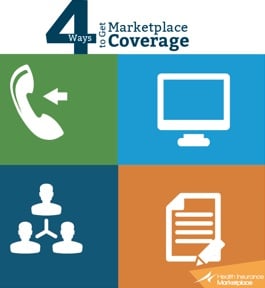
That’s a bit of a problem, since you have until December 15th to sign up for Obamacare.  And so President Obama and administration officials are encouraging people to use Healthcare.gov to sign up even if it’s slow, clunky and frustrating. Remember Healthcare.gov is one of four ways to sign up.

  • Apply online. Visit HealthCare.gov to get started.
  • Apply by phone. Call 1-800-318-2596 to apply for a health insurance plan and enroll over the phone. (TTY: 1-855-889-4325)
  • Apply in person. Visit a trained counselor in your community to get information and apply in person. Find help in your area at LocalHelp.HealthCare.gov.
  • Apply by mail. Complete a paper application and mail it in.  You can download the paper application form and instructions from HealthCare.gov.

watchmore             Artists Hope Obamacare Works

Obama Pushes For Immigration Reform


President Obama is moving forward and continues to make his case for immigration reform. He renewed his call for congress to pass immigration reform this year.

Here’s a transcript of the President’s White House speech.

THE PRESIDENT:  Thank you very much.  Please have a seat, everybody.  Good morning, and welcome to the White House.  Today I’m here with leaders from business, from labor, from faith communities who are united around one goal — finishing the job of fixing a broken immigration system.

This is not just an idea whose time has come; this is an idea whose time has been around for years now.  Leaders like all of you have worked together with Republicans and Democrats in this town in good faith for years to try to get this done.  And this is the moment when we should be able to finally get the job done.

Now, it’s no secret that the American people haven’t seen much out of Washington that they like these days.  The shutdown and the threat of the first default in more than 200 years inflicted real pain on our businesses and on families across the country.  And it was a completely unnecessary, self-inflicted wound with real costs to real people, and it can never happen again.

Even with the shutdown over, and the threat of default eliminated, Democrats and Republicans still have some really big disagreements — there are some just fundamentally different views about how we should move forward on certain issues.  On the other hand, as I said the day after the shutdown ended, that’s no reason that we shouldn’t be able to work together on the things that we do agree on.

We should be able to work together on a responsible budget that invests in the things that we need to grow our economy and create jobs even while we maintain fiscal discipline.  We should be able to pass a farm bill that helps rural communities grow and protects vulnerable Americans in hard times.

And we should pass immigration reform.  (Applause.)  We should pass immigration reform.  It’s good for our economy.  It’s good for our national security.  It’s good for our people.  And we should do it this year.

Everybody knows that our current immigration system is broken.  Across the political spectrum, people understand that.  We’ve known it for years.  It’s not smart to invite some of the brightest minds from around the world to study here and then not let them start businesses here — we send them back to their home countries to start businesses and create jobs and invent new products someplace else.

It’s not fair to businesses and middle-class families who play by the rules when we allow companies that are trying to undercut the rules work in the shadow economy, to hire folks at lower wages or no benefits, no overtime, so that somehow they get a competitive edge from breaking the rules.  That doesn’t make sense.

It doesn’t make sense to have 11 million people who are in this country illegally without any incentive or any way for them to come out of the shadows, get right with the law, meet their responsibilities and permit their families then to move ahead.  It’s not smart.  It’s not fair.  It doesn’t make sense.  We have kicked this particular can down the road for too long.

Now, the good news is, this year the Senate has already passed an immigration reform bill by a wide, bipartisan majority that addressed all of these issues.  It’s a bill that would continue to strengthen our borders.  It would level the playing field by holding unscrupulous employers accountable if they knowingly hire undocumented workers.

It would modernize our legal immigration system, so that even as we train American workers for the jobs of the future, we’re also attracting highly-skilled entrepreneurs from beyond our borders to join with us to create jobs here in the United States.

It would make sure that everybody plays by the same rules by providing a pathway to earned citizenship for those who are here illegally — one that includes passing a background check, learning English, paying taxes, paying a penalty, getting in line behind everyone who is trying to come here the right way.

So it had all the component parts.  It didn’t have everything that I wanted; it didn’t have everything that anybody wanted; but it addressed the core challenges of how we create a immigration system that is fair, that’s just, that is true to our traditions as a nation of laws and a nation of immigrants.  And that’s passed the Senate by a bipartisan majority.  (Applause.)

So here’s what we also know — that the bill would grow the economy and shrink our deficits.  Independent economists have shown that if the Senate bill became law, over the next two decades our economy would grow by $1.4 trillion more than it would if we don’t pass the law.  It would reduce our deficits by nearly a trillion dollars.

So this isn’t just the right thing to do; it’s the smart thing to do.  Securing our borders; modernizing our legal immigration system; providing a pathway to earned, legalized citizenship; growing our economy; strengthening our middle class; reducing our deficits — that’s what common-sense immigration reform will do.

Now, obviously, just because something is smart and fair, and good for the economy and fiscally responsible and supported by business and labor — (laughter) — and the evangelical community and many Democrats and many Republicans, that does not mean that it will actually get done.  (Laughter.)  This is Washington, after all.

So everything tends to be viewed through a political prism and everybody has been looking at the politics of this.  And I know that there are some folks in this town who are primed to think, “Well, if Obama is for it, then I’m against it.”  But I’d remind everybody that my Republican predecessor was also for it when he proposed reforms like this almost a decade ago, and I joined with 23 Senate Republicans back then to support that reform.  I’d remind you that this reform won more than a dozen Republican votes in the Senate in June.

I’m not running for office again.  I just believe this is the right thing to do.  (Applause.)  I just believe this is the right thing to do.  And I also believe that good policy is good politics in this instance.  And if folks are really that consumed with the politics of fixing our broken immigration system, they should take a closer look at the polls because the American people support this.  It’s not something they reject — they support it.  Everybody wins here if we work together to get this done.  In fact, if there’s a good reason not to pass this common-sense reform, I haven’t heard it.

So anyone still standing in the way of this bipartisan reform should at least have to explain why.  A clear majority of the American people think it’s the right thing to do.

Now, how do we move forward?  Democratic leaders have introduced a bill in the House that is similar to the bipartisan Senate bill.  So now it’s up to Republicans in the House to decide whether reform becomes a reality or not.

I do know — and this is good news — that many of them agree that we need to fix our broken immigration system across these areas that we’ve just discussed.  And what I’ve said to them, and I’ll repeat today, is if House Republicans have new and different, additional ideas for how we should move forward, then we want to hear them.  I’ll be listening.  I know that Democrats and Republicans in the Senate, those who voted for immigration reform already, are eager to hear those additional ideas.  But what we can’t do is just sweep the problem under the rug one more time, leave it for somebody else to solve sometime in the future.

Rather than create problems, let’s prove to the American people that Washington can actually solve some problems.  This reform comes as close to anything we’ve got to a law that will benefit everybody now and far into the future.  So let’s see if we can get this done.  And let’s see if we can get it done this year.  (Applause.)

We’ve got the time to do it.  Republicans in the House, including the Speaker, have said we should act.  So let’s not wait.  It doesn’t get easier to just put it off.  Let’s do it now.  Let’s not delay.  Let’s get this done, and let’s do it in a bipartisan fashion.

To those of you who are here today, I want to just say one last thing and that is — thank you.  I want to thank you for your persistence.  I want to thank you for your activism.  I want to thank you for your passion and your heart when it comes to this issue.  And I want to tell you, you’ve got to keep it up.  Keep putting the pressure on all of us to get this done.  There are going to be moments — and there are always moments like this in big efforts at reform — where you meet resistance, and the press will declare something dead, it’s not going to happen, but that can be overcome.

And I have to say, Joe, as I look out at this room, these don’t look like people who are easily deterred.  (Laughter.)

THE VICE PRESIDENT:  I don’t think so.

THE PRESIDENT:  They don’t look like folks who are going to give up.  (Applause.)  You look fired up to make the next push.  And whether you’re a Republican or a Democrat or an independent, I want you to keep working, and I’m going to be right next to you, to make sure we get immigration reform done.  It is time.  Let’s go get it done.

Thank you very much, everybody.  (Applause.)

 

Obamacare Sign Ups Continue as Blame Game Begins

House Energy and Commerce Committee Hearing

The sorry tale of the problems with Healthcare.gov continues even as hundreds of thousands actually break through the technical barriers. So here’s the good news first, and you might take this as an encouraging sign if you are considering signing up.  700,000 applications for Obamacare were completed and are in the pipeline according to the Centers for Medicare and Medicaid Services Communications Director Julie Bataille.

In addition 1.6 million successfully got through to the call center — 1-800-318-2596 — where you can get help with applications and information. There is now apparently less than a minute’s wait for assistance.

On a conference call with reporters, Bataille admitted that the operating system for Healthcare.gov wasn’t adequately tested. She also admitted that  un-named administrators made a “business decision” to put the website together in-house rather than allowing outside contractors to integrate the parts that they were creating for the system.

Who is to blame, Bataille wouldn’t say and deflected direct questions. She also failed to answer questions about whether Health and Human Services  Secretary Kathleen Sebelius was aware of the problems with the site before it launched on October 1st.

In the meantime, on Capitol Hill contractors appeared before a house subcommittee and explained that their companies did small parts of the big website job. 55 contractors participated in the program and were involved with a number of federal agencies including Homeland Security and the IRS.

A Good Opportunity

While the finger pointing continues, we still think that Obamacare is a great way to buy affordable health insurance. Tech experts are working on Healthcare.gov. And even though the administration is using the weird phrase”Tech Surge” to describe the influx of smart tech people who’ve been brought in to straighten things out, the glitches and bugs are getting fixed and it’s easier to log on and complete an application without the error messages and white screens popping up.

You may also be able to apply in your state, and that might make things easier.


watchmoreArtists Hope Obamacare Works


Public College Tuition Hikes Ease

Someone is listening to the cry for more reasonable college tuition. Maybe a lot of someones. The College Board’s latest Trend in Student Aid report found tuition hikes at public colleges were lower than they have been since 1975-76. Tuition and fees increased 2.9 percent for  in-state students in 2012-13 to 2013-14.

Students at private schools also found their bills slightly less painful than they might have been. Their tuition increased by 3.8% at four-year schools and  3.5 percent at two-year schools. These are the smallest increases at private schools since 2007 and 2008.

There is a big but here,  and it’s not necessarily good news. Both public and private college students will find that federal and state governments are less generous than they had been. Grant aid is not keeping up with even the modest increases in costs. That means you and your family will have to pay a bigger share of the bill.

What are people borrowing?

The average undergraduate federal loan was $6,760 and the average graduate student loan was $17,230 in 2012-13.

Researchers say that about 60% of students who earned bachelor’s degrees in 2011-12 from either a public or private college graduated with debt and the average was $26,500. Yet some have taken advantage of the flexible repayment plans that don’t eat up everything they earn. In 2013, 1.6 million federal Direct Loan borrowers were in repayment plans that limit their payments to a specified percentage of their incomes.

College Board President David Coleman is pushing politicians and academic leaders to get a handle on costs. He says, “A college education is an unparalleled investment, but there is no college opportunity without college affordability.”

The College Board is attempting to work with politicians in Washington to improve the financial aid system. It’s also focusing on helping students make better choices when they apply for college. The organization sent personalized packets called “Realize Your College Potential” to 28,000 low-income, high-achieving high school seniors. The information they received matches colleges with their academic credentials and highlights what financial aid might be available to them. These packets also include application fee waivers for as many as eight colleges.

It plans to send the same kind of information, with fee waivers for four colleges, to an additional 70,000 college-ready, low-income students. Another 200,000 college-ready students will receive electronic college planning information.

Consumer Reports Rebuts Claims It Turned Against Obamacare

Consumer Reports (CR) rebuts claims that it has turn against the Affordable Care Act because of problems on Healthcare.gov. It says, “Obamacare opponents have misrepresented Consumer Reports’ position.”  The group responded after  Conservative bloggers and media outlets picked up a quote from a caution offered by Consumer Reports’ health care writer Nancy Metcalf.

Metcalf writes a daily blog that offers tips about signing up for Obamacare and she’s listed the problems people have hadwith Healthcare.gov.  She did suggest that consumers wait to sign up on the federal registry until the technical problems on the site are resolved. She wrote, “Stay away from Healthcare.gov for at least another month if you can. Hopefully that will be long enough for its software vendors to clean up the mess they’ve made. The coverage available through the marketplaces won’t begin until Jan. 1, 2014, at the earliest, and you have until Dec. 15 to enroll if you need insurance that starts promptly.”

But she did not urge people to stay away or boycott Obamacare. In fact, Consumer Reports thinks that Obamacare is a good and valuable way for most Americans to purchase affordable health insurance. Metcalf, posted this response to those who twisted her advice to consumers:

Pundits opposed to the new health care law and some media outlets have tried to suggest that our coverage of the troubled HealthCare.gov site means that Consumer Reports has turned against the Affordable Care Act.

Not true. Consistent with our mission to inform and protect consumers, particularly in this complicated health care market, our advice remains the same: The best place to buy coverage on your own is through the Health Insurance Marketplace in your state. That guarantees you will get comprehensive coverage, and it’s the only way you can lower the cost of your premiums and possibly even your deductibles and copayments.”

WHAT YOU CAN DO

If you live in one of the 16 states that have their own healthcare exchanges you are in luck. There are some problems, but most of the state websites allow you to sign up without difficulty. Consumers in states including Kentucky, Delaware, California, Maryland, Minnesota and New York are reporting that they are able to sign up successfully.

Again, you do have until December 15th to sign up for health insurance that begins January 1, 2014.

OUR ADVICE

It’s worth it. Don’t give up.


readmore Latest Fixes on Obamacare 


Artists Hope Obamacare Works                watchmore

 

More Tech Help for Obamacare


by Barbara Nevins Taylor


More tech help is on the way for the beleaguered Obamacare website Healthcare.gov., and it’s about time. While nearly half a million people applied for health insurance under Obamacare in the past few weeks and the site had over 19 million unique visits, the process was filled with drama and frustration. Many who rushed to take advantage of the great opportunity to get affordable health carecouldn’t do basic things like create accounts or log on.

It’s an embarrassment that the Department of Health and Human Services acknowledges in a statement from spokeswoman Joanne Peters,”The initial consumer experience of HealthCare.gov has not lived up to the expectations of the American people. We are committed to doing better.”

So we’re happy to hear that HHS reached beyond its team to get tech help from outside the government. It says it’s adding “the best and the brightest” to  fix the errors and improve the user experience.

They are also dumping some of the quick fixes they made in response to the huge number trying to get on the site. The virtual “waiting room” was confusing and didn’t help anyone. Tech people are working at night to get rid of the glitches and debug the system. HHS says maintenance will continue in the off-hours to trouble shoot problems.

And here’s your opportunity to shout back. They actually want you to honestly tell them about your experience on the site, or so they say. We’re told HHS wants negative and positive feedback. So go for it. You can make your comments at  https://www.healthcare.gov/connect.

On a positive note, the New York Times reported about a the Kentucky Healthcare exchange called Kynect, which according to the report is functioning really well. Kentucky Governor Steven Beshear is on board in a big way urging Kentuckians to take advantage of the program and get the health insurance they need for themselves and their families. Kentucky is the only Southern state operating it’s own healthcare exchange.


readmore

Latest  Fixes on Obamacare


readmore Still Frustrated by Obamacare


watchmore

Comedian John Green Tries to Sign Up for Obamacare


watchmore  Artists Hope Obamacare Works

Comedian John Green Tries to Sign up for Obamacare

A lot of people we know want to sign up for Obamacare and a lot have tried. Frustrating delays and snags seem to beset nearly everyone who jumped on the bandwagon after October 1st and attempted to apply. The good news is that many actually broke through the technical barriers and succeeded on websites run by their states. The federal website is a story in glitches and delays unto itself.

Comedian John Green turned the camera on and attempted again and again to do the Obamacare signup. He also made a stab at applying for private health insurance. Those of you who spent hours working at this will identify with his determined pursuit. But you may also be surprised by his conclusions.

If you don’t want to watch this video, take a look at the post by Shaira Frias. She tells the story of her struggle with the New York State health marketplace website.


readmore

More Tech Help for Obamacare

watchmoreArtists Hope Obamacare Works

Still Frustrated by Obamacare


by Shaira Frias,

This is the end of the third week of Obamacare and I’m still waiting to find out about a health insurance plan for 2014.  Come on guys. Get your act together.

Like a lot of other people, I jumped on the opportunity to get lower cost health insurance. But the roadblocks in the system were really annoying. It took me five days to apply and I’m not finished. My quest started on October 1st when I logged on to the New York State of Health website. To say that the site frustrated me is an understatement.

I tried five times before I got a username. Once I passed that hurdle, I thought we were on a roll. But then it  it all suddenly stopped. A message popped up on the white screen, “site currently unavailable.” It said that over and over again.

I thought it was my Internet connection.  But I soon realized, it wasn’t me. It was them. The  website was riddled with glitches. I stopped and started again. At exactly 9:51 I tried once more. When “site currently unavailable” reappeared,  I yelled, “I give up!” and shut it down.

 Seven attempts on Oct 2nd, and still no luck

 Oct. 3rd I was not successful, again.

I tried to psych it out. Why not give it a go late at night when everyone is asleep?  So at around 11:40 p.m. I tried to log in. My strategy was a failure. A new notice said, “session timed out.”

 On October 4th, I was able to sign in and was beyond excited. I got to the third page of the application and “session timed out” popped up again. But I was still excited because there was a small  victory. After five days of attempting to sign up for the Affordable Care Act, the application was almost completed.

Once I got in and the frustrating messages stopped, I was surprised because the application process was easy. It asked for simple things like household members, income, and my work information. I finished the entire process in less than 20 minutes.

At end of the application a message of congratulations popped up. That was nice considering how much time I spent trying to get there.  A new message informed me that I was eligible to enroll in a health insurance plan, and that I would get a letter or e-mail alerting me when to go to the online Healthcare Marketplace to pick a health plan best suited to my needs. After all this effort, I thought that I’d be able to really sign up for plan.

I’m ready to go. I know the choices because I looked at them in advance. I’m a healthy girl in my twenties and I’m pretty sure I’m going to choose the Bronze plan, which is the cheapest level.  If had a medical problem or needed to go to the doctor more regularly, I’d choose one of the silver, gold or platinum plans if I could afford it.

Anyway, even though I submitted my application successfully I was still unsure what would happen next. I contacted a local organization called the Community Service Society of New York (CSS), which is one of the so-called Healthcare navigators paid by the federal government and New York State to help people like me.

I was told that that what I did online sounded right and that  people like me who complete applications prior to December 15th 2013 and pay their first month’s premium, if it’s required, will get coverage starting January 1, 2014. That’s good news. But I wish that I didn’t have to spend any more time on this.

 Now about the navigators. Let just say, I’m pretty independent and like to do things on my own. So I didn’t really need a navigator. The glitches I encountered were impossible for anyone to get around. They required technicians to make the fixes. But if you are not sure what plan to choose or have any questions during the application process, don’t be afraid to contact a Health Care Navigator. I recommend it if you have a number of people in your family who contribute to your monthly budget. A navigator can help you figure out the money part.

States that agreed to participate in the marketplace system have their own navigators. The services are free, and you can sit down and talk to a real person face to face.  I’m familiar with New York because that’s where I live. If you go to the New York State of Health website, look on the left side of the page under the options tab. Click Manage Broker/Navigator and you can search to find  Navigators in your county to answer all of your questions. New York has 400 throughout the state. You can also call 1-855-355-5777 to get a list of local organizations in your area.

My bottom line is that I want the health insurance and wish they’d speed up the process.

 readmoreMore Tech Help for Obamacare

 watchmoreComedian John Green Complains About the Same Stuff 


M

Take Charge to Pay Down Student Loans

Take charge.  That’s the message for those trying to pay down student loans and erase debt.  The Consumer Financial Protection Bureau (CFPB) analyzed more than 3800 complaints about private student loans and found what many of you already know: the companies that service loans often make it difficult and put “stumbling blocks” in the way of early, or quick repayment. The servicers also lose paperwork and impose surprise penalties.
Now, the CFPB has put the servicers on notice and told them they must follow the rules and cooperate to help you reduce or pay off your debt. But you can’t assume this will happen automatically and that’s why you need to step up to make sure that the servicers follow your instructions.
Courtesy Creative Commons via Flickr
If you have more than one loan and you make payments, you must be explicit about how you want the payment allocated. It’s to your benefit to pay the most money on the loan that has the highest interest rate. You can save a big chunk of money in interest payments that way. But the servicer won’t automatically apply the most money to your highest loan. It’s more likely that they’ll spread it around.  That means you have to provide written instructions about how you want your money used to pay off your debts.
The CFPB suggests that you write a letter similar to this:
Dear Servicer:
I am writing to provide you instructions on how to apply payments when I send an amount greater than the minimum amount due. Please apply payments as follows:
1.  After applying the minimum amount due for each loan any additional amount should be applied to the loan that is accruing the highest interest rate.
2.  If there are multiple loans with the same interest rate, please apply the additional amount to the loan with the lowest outstanding principal balance.
3.  If any additional amount above the minimum amount due ends up paying off an individual loan, please then apply any remaining part of my payment to the loan with the next highest interest rate.
It is possible that I may find an option to refinance my loans to a lower rate with another lender. If this lender or any third party makes payments to my account on my behalf, you should use the instructions outlined above.
Retain these instructions. Please apply these instructions to all future overpayments.
Please confirm that these payments will be processed as specified or please provide an explanation as to why you are unable to follow these instructions.
Thank you for your cooperation.
BE SURE TO KEEP A COPY OF YOUR LETTER


Making Medicare Decisions

Even though the Medicare Open Enrollment period ended December 7th, it’s still a good idea to familiarize yourself  your Medicare plan and examine what your insurer offers. It’s pretty important because insurers change their plans every year and in 2014 you may not get the same benefits you received in 2013.

It’s also essential to take a look at your Part D prescription drug plan to see if your medications will still be covered in 2014.  

Courtesy Creative Commons via Flickr

Insurers and Medicare use the jargony word “formulary” to describe the list of drugs they cover. So it’s a good idea to review your insurer’s formulary to learn if it will continue to cover what you need.

You might find that your insurer changed the rules about what it will cover. The 2014 plan may require you to do what they call “step therapy.” That means you’ll have to use another drug, or a generic medication and monitor its effectiveness before the insurer will approve the medication that your doctor prescribed.

It’s possible that other rules may have changed. For example, in 2014 you may need prior approval for a visit to a specialist or for a procedure. These are things that you want to discover.

The Google Hangout we hosted with the Medicare Rights Center, the Center for Medicare Advocacy and the National Council on Agency offers an in-depth discussion about a range of Medicare topics.

ASK MORE QUESTIONS AND WE’LL GET THE ANSWERS


readmore How I Found the Right Medicare Part D Plan


watchmore Figuring Out Medicare Choices


readmore

Medicare Basics for Boomers and Everyone