All posts by Barbara Nevins Taylor

“DUMB” Move In Washington

The latest unnecessary crisis in Washington will cost 750,000 people their jobs, according to President Obama. Federal agencies will now have to cut $85 billion from their budgets and that means lay-offs and furloughs for government employees including FBI agents, Border Patrol agents and  air traffic controllers.

In a speech in the White House Briefing Room, the  President told reporters, “At a time when our businesses have finally begun to get some traction — hiring new workers, bringing jobs back to America — we shouldn’t be making a series of dumb, arbitrary cuts to things that businesses depend on and workers depend on, like education, and research, and infrastructure and defense. It’s unnecessary. And at a time when too many Americans are still looking for work, it’s inexcusable.”

The President said he’ll continue to reach out to Republicans in Congress to try to reach a compromise. The main issue for Republicans is reduction of the $16 trillion national deficit caused by wars in Iraq and Afghanistan and in part by the federal stimulus that kept the country out of another Great Depression. President Obama wants to reduce the deficit with a combination of spending cuts and tax increases on the wealthy. To get there, he wants to eliminate tax loopholes.  But the Republicans resist efforts to tax the wealthy or cleanup loopholes that let some people skate.

Seems like it’s time for grownups to get serious.


What’s The First Step To Get A Mortgage?

WHAT’S THE FIRST STEP TO GET A MORTGAGE?

Credit Smart-Mortgage Ready

by Barbara Nevins Taylor

If you think it’s time to buy a home, it’s time to get credit smart. Take a hard look at your personal finances before you do anything else. Melissa Cohn of Manhattan Mortgage advises, “The most important thing to do is get your financial house in order.” That requires you to do a number of things.

EXAMINE YOUR CREDIT REPORT

Begin by examining your credit report. “Your credit report is literally a report of the credit that you’ve applied for and your payment history,” says Leonard Gordon, Northeast Regional Director of the Federal Trade Commission.

CREDIT BUREAUS

Equifax, Experian and TransUnion are the three private companies that keep track of personal credit histories.

Student loans, credit card payment, late payments, car loans, mortgages and information about judgments against you are listed on the credit report.
Sometimes the information is wrong, and that’s why it’s important to check your credit report.

CREDIT REPORTS

You can check your credit report for free three times a year by going to annualcreditreport.com. There is no need to pay for a credit report, or a credit check.

The FTC’s Gordon says, “If you’ve been paying your bills on time and it shows that you are paying them late, you want to fix that. If there is anything inaccurate in your report, you should write letters to both the reporting agency and the creditor explaining why the report is in error. Attach documentation and send it by certified mail.” Do not send the originals. Send copies, and keep a copy of everything that you mail. Find a sample letter at http://www.ftc.gov/bcp/edu/pubs/consumer/credit/cre21.shtm

The credit reporting company must investigate. It usually takes about 30 days. Then they must tell you, in writing, what they discovered. If there’s anything wrong, the company must make the changes and provide a free copy of the new report. You can also ask the credit bureau to send a copy of the new report to anyone who received your erroneous credit report in the previous six months.

ACCURATE NEGATIVE INFORMATION

If your credit report has negative comments and you have outstanding debts, there is no magic fix. Many companies advertise that they can help you improve your credit score. “That’s a lie,” says Herman De Jesus with the consumer advocacy group NEDAP in New York.

He says “We’ve seen a lot of people who have paid a large amount of money to these companies that promise a quick turn around on the repair of their credit, and it’s never, ever happened.”

You must pay your bills on time, and clear your previous debts. It takes seven years to completely clean up your credit report.

CREDIT REPORT AFFECTS CREDIT SCORE

What’s on your credit report affects your credit score. Your credit score is different than your credit report. The credit score is a statistical analysis of the information listed on the report. It takes into account how many credit cards you have, your outstanding debt and your bill paying history.

YOUR FICO SCORE

Most banks use the FICO Score created by the Fair Isaac Corporation. Fico Scores range from 300 to 850.

Banks consider 740 an A credit score. Mike Copley, Senior Executive Vice President of TD Bank, says, “We would look at anything from 680 up. Other banks have different policies at New York’s Amalgamated Bank, Eric Ruskiewicz says, “We’ll lend to someone with a 620 score, and we think most people would qualify.”

Generally, if your credit score is high you’ll get a lower interest rate. If it’s low and you’re still credit worthy, you’ll pay a higher interest rate. Copley explains, “If you have a lower FICO you are deemed more risky and the banks have to price in that element to protect themselves.”

The difference in interest rates can be significant. If you have a FICO Score of 780 to 850 and want to get a $300,000 mortgage, you will get 1½ percent lower interest rate than if you had a 620 to 639 credit score. And that means you’ll save more than $104,000 over the life of a 30-year mortgage.

But again, banks do things different. At Amalgamated Bank example, Ruskiewicz says, “The interest rate is usually the same, but you may pay more in fees.

NEXT STEP

Once you understand your credit score, it’s time to assess your budget. “Before you go shopping for a home you have to know how much you have to spend,” says attorney Adam Leitman Bailey author of Finding the Uncommon Deal.

A banker, mortgage broker, or a counselor at a not-for-profit agency can help figure it out, and pre-qualify you for a mortgage. You’ll need a complete financial package.

“That means your bank accounts and all the cash you have on hand. Banks will require that you provide a verification of your income for the past two years, meaning tax returns. You will have to provide verification of your liquid assets,” says Mellissa Cohn of Manhattan Mortgage.

It’s important to avoid making big purchases and opening new credit cards the year that you apply for a mortgage. Payments reduce the amount banks are willing to lend you.

Kenneth Totten of Metuchen Savings Bank offers an excellent example: “If you have a $300-a-month car payment, that will affect your ability to buy the house by about $60,000. If you were able to afford a $300,000 house that goes down to $240,000 because you are driving around in a $300-a-month car.”


Saving Money-A Novel Idea?


Are you saving money?  Or is it an idea in the back of your mind that twirls round and round, and you never quite get to it?  Maybe today’s a good day to put the idea into practice.  America Saves, a campaign from the Consumer Federation of America is trying to encourage us to save money.  And  as part, “America Saves Week,  they are ask us to take a pledge  and start to save now.

The Consumer Financial Protection Bureau (CFPB) is part of the campaign and offers these tips to get started:

  • Set goals and identify the specific reason you want to save. 
  • Create a savings plan.  Decide how much you want to put away each month and how much it will take to reach your goal.
  • Direct Deposit is the easiest way to go.  Have a set amount taken out of your paycheck for automatic deposit into your account.

The CFPB produced the cute video. Hope you enjoy it and look at more videos with good tips on ConsumerMojo.com.  Let us know what you think.


Prepaid Credit Card Protection

Prepaid credit cards used instead of a checking or debit account may seem like a great idea. But hefty fees, in some cases, can eat into the money you load on to your card. The Consumer Financial Protection Bureauwants to set up new rules to regulate fees and other practices of prepaid card programs.

“The people who use prepaid cards are, in many instances, the most vulnerable among us. All consumers need, and deserve, products which are safe and whose costs and risks are clear up front,” said Consumer Protection Bureau Director Richard Cordray. Consumer Advocates worry that celebrity endorsements lure some to sign up for the cards. The CFPB points out that the Kardashian sisters, baseball player Alex Rodriquez and characters from the Twilight movie pitched for prepaid cards. And CFPB Director Cordray says , “This kind of celebrity marketing can be an unhelpful distraction to consumers who don’t know how the card works…”

In addition there’s concern that some providers steer low-income consumers toward prepaid cards rather than offering lower cost checking accounts. The CFPB wants to regulate the cards now because an increasing number of consumers are signing up for them. 7 million consumers use the cards and the Mercator Advisory Group projects the amount loaded on to prepaid cards will reach $167 billion dollars by 2014.

No changes right away. The CFPB is getting input to shape new regulations and if you have something to say, the bureau wants to hear from you.


High Debt For Medical Students


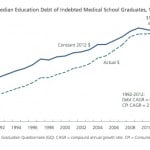
The debt that medical students carry is at record high levels and rising.  86 per cent of medical students had a debt of about $170,000 after earning their M.D. degrees, according to a new study by the Association of American Medical Colleges. This is an increase of 5 percent over last year.

Medical Student Debt


Pay Later Approach

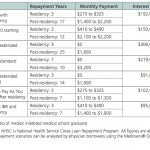
Medical students are certainly  aware of the high cost when they enroll and borrow money, but interest on deferred repayment is staggering.  And it’s not clear that students are aware of the options they have.  The new study lays out the numbers starkly. If a student does not start to pay down a loan during residency and waits until he or she is finished with school, with the interest, they  may owe between $320,000 to $476,000.

The chart below tells all:

Medical Students Loans with Interest


Top Consumer Complaints

Identity theft tops the list of consumer complaints to the Federal Trade Commission (FTC) for 2012.  The latest numbers remind us of the need to take extra care with how we handle our personal information, especially when we fill out forms.  Every doctor, dentist and service provider does not need our social security number.  Try saying, “No.”

The most complaints about identity theft came from South Florida and the area that stretches from Miami to Ft. Lauderdale to Pompano Beach. There’s no analysis of why, but there is a large concentration of older people in South Florida and they are frequent targets of scams and ripoffs.  New York and Northern New Jersey ranked second on the list of identity theft victims and complaints and the Los Angeles area followed in third place.

Complaints about debt collection took second place on this unhappy list.  Here’s what the top 10 look like:

1. Identity theft

2. Debt collection

3. Banks and lenders

4. Shop-at-home and catalog sales

5. Prize sweepstakes and lotteries

6. Imposter scams

7. Internet services

8. Auto-related complaints

9. Telephone and mobile services

10. Credit cards


Crackdown On Payday Lenders


by Barbara Nevins Taylor
We don’t understand why state legislators coddle payday lenders. 15 states and the District of Columbia have  strict laws either banning or limiting payday loans, according to the National Conference of State Legislators. This type of loan is a rip-off and a trap for an estimated 12 million Americans who pay as much as 400%-700% interest because they made the mistake of  getting a short-term loan as an advance on their paycheck.  You’d think elected officials would vote to help and protect consumers.  Instead, legislators in Virginia recently failed to vote for a proposal to tighten its laws.  A proposal in North Carolina’s state senate would bring back payday loans, which were abolished there ten years ago, according to the Center for Responsible Lending.

New York Takes Aggressive Action

That’s why we like the aggressive action of  New York’s Governor Andrew Cuomo.  Even though payday lending is illegal in New York, lenders work the Internet to circumvent the law and attract unsuspecting borrowers.  Cuomo just sent a letter to debt collectors in New York State reminding them that collecting on a payday loan is illegal in the state because payday lending violates the New York’s usury law.  He warned the debt collectors that New York intends to prosecute anyone found violating the law.

Cuomo gets it right.  He said, “Studies clearly show that payday loans are not a solution for people with low incomes, but rather a high cost debt trap.  That’s why they are illegal in New York, and the state will continue to protect consumers from these misleading loans.”

There’s an excellent The New York Times article that explains how big banks enable the online payday lending industry.

Watch the Video

ConsumerMojo.com’s, “What’s Wrong With Payday Loans? video gives a clear picture of why more states should crackdown on payday lenders.


NJ Sandy Victims Get Housing Extension

More than 1,000 New Jersey residents displaced by SuperStorm Sandy can stay in emergency transitional housing until March 8, 2013.  Governor Christie worked out the new arrangement with FEMA.

The  Transitional Sheltering Assistance (TSA) program is mean to be short term.  It places families in hotels while they work toward a longer-term housing plan.

To be eligible for FEMA Programs you must:

  • Register via smartphone or tablet by using the FEMA app or going to m.fema.gov, or
  •  Register  by calling 800-621-FEMA (3362) (TTY 800-462-7585). For 711 or Video Relay Service (VRS), call 800-621-3362.


N.Y. Gas Gouging Hotline

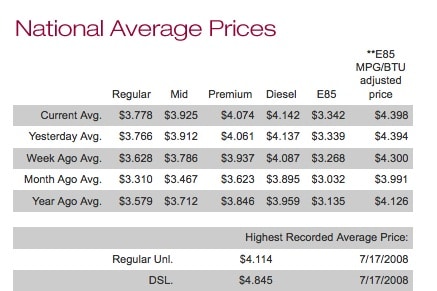
If you drive, you know that gas prices are maddeningly moving upward again.  This chart from AAA and Wright Express shows what gas costs us. There’s plenty of argument about whether oil speculators are partially to blame for the inflated prices.  But the bottom line is that we are paying more, and New York Governor Andrew Cuomo wants to protect consumers at ground level.  He’s set up a hotline for complaints about gas gouging and illegal practices by gas stations.  If you think a gas station is taking advantage, call the  New York State Hotline:  1-800-214-4372, or file a complaint  http://www.dos.ny.gov/consumerprotection/consumer_resources/gas_gouging.html


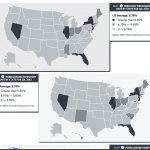
Mortgage Delinquency And Foreclosure Maps

Delinquency and Foreclosure Map by the Mortgage Bankers Association

The Mortgage Bankers Association‘s (MBA) maps paint a stark portrait of where the foreclosure and late payment problems are now. Yet, there is good news from the MBA. In most areas of the country homeowners apparently find it easier to make  mortgage payments and aren’t falling behind.

The group’s Chief Economist and Senior Vice President of Research Jay Brinkmann said, “The 30 day delinquency rate decreased 21 basis points to its lowest level since mid-2007. With fewer new delinquencies, the foreclosure start rate and foreclosure inventory rates continue to fall and are at their lowest levels since 2007 and 2008 respectively,”

On the other hand, SuperStorm Sandy continues to take a toll in New York, New Jersey and Connecticut where there was an increase in late payments and foreclosures.  Still the outlook is good in these states according to MBA’s Brinkmann, “We expect to see improvements in these states as we move into 2013,” he said.