All posts by Barbara Nevins Taylor

More Robocalls


The Federal Trade Commission (FTC) says Americans are getting more robocalls than ever.  Companies use autodialers to send out thousands of calls per minute. And they are audacious.  The FTC recently asked a federal judge to shut down a robocall operation that allegedly impersonated the FTC  to trick consumers to get them to give bank account information and other sensitive personal data.

Fact: If you haven’t given your written permission to get calls from the company on the other end, the call is illegal.

But the law exempts some callers. Charities and heathcare providers are allowed to continue to call you even if your number is on the Do Not Call list.

And that can be maddening. In our home, we don’t even pick up the phone when it rings. We have caller ID. We hear the name of the person, company or charity trying to reach us. We listen to the calls after the fact, and if we’re interested we call back. We rarely do.

In the meantime, there are companies and individuals that have figured out a way to beat the Do Not Call system. A medical alert system company is persistent. If you get calls from this company, and you are on the Do Not Call list, make sure that you report the calls.

WHAT YOU SHOULD DO ABOUT ROBOCALLS

If you get a call, hang up. Do not press any additional numbers. Do not give any information.

Report the call at www.donotcall.gov.

Make sure you’re number is  listed on the FTC Do Not Call Registry


readmore Medical Alert Robocalls

Phony Credit Card Scheme Shutdown

A company that charged consumers $599 up-front to supposedly get them new low interest rate credit cards was shut down by a federal court in Arizona at the request of the Federal Trade Commission. The FTC says, “National Card Monitor allegedly tricked consumers into paying hundreds of dollars based on bogus promises of lower credit card interest rates.”

According to the FTC, telemarketers working for National cold-called consumers and told them the company could reduce their credit card interest rates to as low as zero,and get them a new card to which they could transfer existing balances. Consumers who said, “Yes,” paid an advance fee from $499 to $599. This company claimed it had a 100 percent money-back guarantee, and that consumers who did not get the promised cards would receive a full refund. Guess what?

The FTC says most found that, “National failed to deliver on its promise to secure a new credit card…and… getting a “guaranteed” refund of their payment was very difficult.”

Beware Of Reverse Mortgages

Reverse mortgages sound tempting if you are over 62-years-old and need money. 

 A reverse mortgage allows you to use your house as piggy bank and borrow the money that you have built up in equity over the years that you’ve owned the home. But many consumer advocates think this is a dangerous way to use your real estate nest egg.

Many lenders no longer offer reverse mortgage. Yet if you need the money, and you feel comfortable with the terms, it might work out for you.

REQUIREMENTS

  • You must be at least 62-years-old
  • You must have paid off your mortgage
  • Or have a small amount remaining

 HOW IT WORKS

Essentially, a reverse mortgage means the bank lends you your money.  But the money they lend eliminates the capital that you have invested in the home.

FHA REVERSE MORTGAGE

The FHA, part of the federal Housing and Housing and Urban Development Administration or HUD, has a reverse mortgage program and government officials suggest that it’s useful. Manny Alvarado a HUD housing specialist explains, “The older you are, the more you can borrow. You can get 50, 60 and up to 70 percent in some cases, depending upon how much equity you have.”

FHA reverse mortgages offer some protection if the price of your home falls.  HUD’s Alvarado says, “A lot of the values on properties have gone down. With FHA we will insure that loan for the original amount that was made to the lender.”

You can find details about an FHA-insured reverse mortgage at http://www.fha.com/fha_reverse.cfm.

 CONCERNS ABOUT HEIRS

Yet it is reasonable to worry about your heirs and question whether they will lose out. In some cases, heirs have the opportunity to repay the money. “If your children take over the house when you pass away, their only obligation is to get financing to pay off the reverse mortgage,” Alvarado says.

But if you’ve taken a great deal of money out, it’s possible that your heirs will lose the property. If there isn’t enough equity still in the home, the lender takes it.

FEES

Costly reverse mortgage fees are another negative because they take a big chunk of your money.

Kenneth R. Totten, Vice President and Chief Lending Officer of Metuchen Savings Bank in New Jersey, says, “Fees can range anywhere from $8,000 to $16,000. Consumer advocacy groups are concerned that lenders take advantage of people who need money and use their homes for reverse mortgages. And there have been predatory fees associated with those types of mortgages.”

 TAKE CARE

If you decide to get a reverse mortgage, it’s very important to pay attention to all of the details. Learn about the fees and what you might lose before you sign up.


GET A FREE COPY OF ALL THIS GOOD STUFF.  HERE’S YOUR LINK:

Reverse Mortgages

Recently 92-year-old Jeanette Ogle, a widow in Lake Havasu City, Arizona faced  losing her home in a foreclosure  auction. The rules of the reverse mortgage allowed the foreclosure because her deceased husband’s name was on the mortgage and her name wasn’t.  But Arizona Attorney General Tom Horn, AARP and the Consumer Financial Protection Bureau stepped in to advocate for her and the lender backed off.

When You Let Your Vehicle Go After A Storm

After a storm or weather disaster strikes, you cope with the big problems first. Often, small details get ignored. But there’s a detail to include on the to-do list.

It’s important to put removal of your registration sticker on the list of priorities before you get rid of the vehicle.

It sounds like small thing. But if you leave the sticker on the windshield, you may face big headaches down the road.

Let’s say, your vehicle is cleaned-up and sold. The new owner sees the sticker and doesn’t bother to register the car under his name. He parks on the street. The tickets add up and the ticket officials come after, who? Not him.

His name isn’t on the registration. Time after time, they go for the person whose name is on the registration sticker and that person must prove that the car no longer belongs to them.

Scraping the sticker off of the windshield can prevent you from getting embroiled in another person’s drama. There’s no reason that after suffering storm damage, you should suffer collateral damage because the new car owner took advantage of the opportunity to use your registration sticker.

After Super Storm Sandy, we reported the following about storm damaged vehicles.

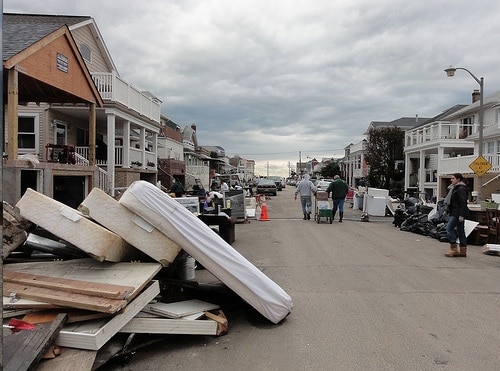
Sandy damaged more than 230,000 vehicles, and many are settling up with insurance companies. The National Insurance Crime Bureau says New Yorkers suffered the most damage with 130,000 vehicles and 60,000 claims were filed in New Jersey.

40,000 claims were filed in Connecticut, Delaware, District of Columbia, Maine, Maryland, Massachusetts, New Hampshire, North Carolina, Ohio, Pennsylvania, Rhode Island, Vermont, Virginia and West Virginia.

But invariably people forget one of the most important things before they let the vehicle go: take the registration sticker off of the windshield.  It’s an important step to protect yourself against the possibility of frauds involving the vehicle.

Nassau Gets $40 Million For Cleanup

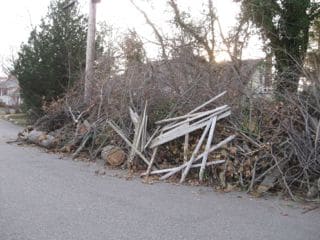
Long Island’s Nassau County received more than $40 million in federal aid to help remove Sandy derbris.  New York Governor Andrew Cuomo gave more than $24 million hard-hit Long Beach, and almost $16 million to Nassau County Public Works to cleanup the mess that still mars streets and communities.

Governor Cuomo said. “This money will significantly help New Yorkers rebuild communities on Long Island and throughout the impacted areas. With the arrival of more support, New York will continue to move forward and build back stronger than before.”

What To Do About Foreclosure

If you’re a homeowner in trouble, about to fall behind, or have missed mortgage payments, don’t wait until things get worse.  

Take action right away.  The truth is that there are no easy solutions for the millions rocked by foreclosure, but it is possible for some to fight and save their homes.  Unfortunately, many can’t hang on.

Manny Alvarado, a housing specialist with the U.S. Department of Housing and Urban Development, says, “We’ve done hundreds of interviews of people who are close to being in foreclosure, or are afraid they’ll be in foreclosure or are in a default situation.  

Many of them should never have bought that house in the first place.  They bought too much house with too little income.”

FORECLOSURE

When your mortgage costs more than you can afford and you fail to pay on time, a lender will foreclose. There is a cascading series of events that will occur after you miss the first payment.

30 – 45 days:  you’ll receive a notice of default

90 days:  the bank may file a lawsuit to obtain a court order to sell the property.  Or, it may pursue a detailed path spelled out in the fine print of the mortgage and foreclose.

120 days:  the bank generally sends a notice of sale and gives you an eviction date when you must leave.

HOUSING COUNSELORS

The legal process varies from state to state, but the steps you take to try to fight foreclosure are the same everywhere.  Talk to the lender and a housing counselor as soon as you fall behind.  “Speak to a counseling agency before you speak to anyone else.  Don’t get scammed.  Don’t pay thousands of dollars to a lawyer or unscrupulous fly-by-night companies that promise to help you modify your mortgage and charge you outrageous fees, says Bernell Greer, CEO of Neighborhood Housing Services of New York. Housing counselors work for you for free.  You can locate a counselor in your area at www.hud.gov.  Click on foreclosure avoidance counseling.

 LOAN MODIFICATION

Depending upon the circumstances, a bank might work out a payment plan or a loan modification.  But you’ll have to prove that you are financially responsible. “If you are seriouabout modifying your mortgage and really having the bank work with you, you really have to be looking at a crisis budget,” Greer says.  The bank is likely to ask you to go through a 90-day trial period to prove that you can make payments on time.  But even if you meet the challenge, the bank might not agree to the modification.  “Getting loan modifications is becoming more and more difficult because a lot of these loans have been sold to Wall Street through the private sector.  They’ve been bundled into packages of securities and then sold to investors.  And the investors don’t know where the paper is,” says HUD’s Alvardo.  Without the physical paperwork the mortgage cannot be modified.It gets more complicated.  Some investors want to hold on to the foreclosed properties to make a profit in the event that the real estate market rebounds.  They gamble that hanging on to an empty property is better than taking a lower price.  Nevertheless, HUD offers help through its “Making Home Affordable” plan, which includes loan modifications, refinancing with an FHA mortgage, VA loan modifications, and helping unemployed homeowners make payments.

You can find out if you qualify for any of these programs at www.makinghomeaffordable.gov.  But be forewarned: if you have a history of making late payments, you won’t qualify. HUD’s Alvardo says, “Consider selling that house or doing a deed in lieu of foreclosure.” That means you’ll give the deed to the bank and walk away from the home.  The process will hurt your credit rating, but it is not as harmful as a foreclosure.

SHORT SALE

 The other possibility for you if you can’t make payments is a short sale, where you sell your home for less than it’s worth.  That too is less damaging to your credit rating than a foreclosure, but you must convince the bank to agree to take less than what you owe. Mike Copley, Executive Vice President of TDBANK says, “Banks are going to be the ones that say, “Yes, I’ll be more than happy to sell Mrs. Jones’s home for $150,000 when the mortgage outstanding is $200,000.”  Getting the bank’s agreement may take a long time, and it can be nerve-wracking.

ACT QUICKLY

There are two important things to remember: act quickly when you receive the first notice.  Open every piece of mail.  Don’t think it will work out magically.  You must work it out.  Also, beware of scammers who promise to negotiate mortgage modifications for a fee.  Remember you can get the same service for free from a HUD-certified housing counselor.

 

Wells Fargo Sued For Alleged Mortgage Fraud

Homeowners who found Wells Fargo had no sympathy for them in the foreclosure process may now show little sympathy for the banking giant.  The U.S. Attorney for the Southern District of New York alleges Wells Fargo engaged in mortgage fraud and socked the company with a civil fraud lawsuit charging it  defrauded the government out of hundreds of millions of dollars.

The complaint says, Wells Fargo made 100,000 mortgages between May 2001 and October 2005 that were backed by FHA insurance. That meant if  homeowners defaulted the bank wouldn’t lose because the FHA, the government, would repay the bank.  Prosecutors claim that at least half of the mortgages weren’t properly vetted and failed to meet FHA standards.

U.S. Attorney Preet Bharara said Wells Fargo relied, “…on the convenient backstop of government insurance.” He said the company gave bonuses to employees and rewarded them based, “…on the sheer number of loans approved.”  In addition the lawsuit charges the bank failed to properly report potential defaults to HUD, which runs the FHA program.  The case will go to a jury unless there’s a settlement, and the U.S. Attorney is asking for treble damages for the government.

In a statement, Wells Fargo, told ConsumerMojo.com that, “it denies the allegations and believes that it acted in good faith and in compliance with Federal Housing Administration (FHA) and Department of Housing and Urban Development (HUD) rules.” The statement went on to say that, “Wells Fargo is the leading FHA lender and has acted as a prudent and responsible lender with FHA delinquency rates that have been as low as have the industry average.” In addition, it says, “Wells Fargo is proud of its long involvement in the FHA program, which has helped so many people obtain affordable mortgages and become homeowners.”


The Great American Foreclosure SONG-VIDEO

Foreclosure has caused plenty heartache, but this comes from ProPublica to highlight the absurdity. Looking to get a handle on the foreclosure crisis, the loan modification fiasco, and the robo-signing scandal? We put it all in a music video.

The video was produced for us by the folks at Explainer Music. Andrew Bean and David Holmes wrote the music and lyrics. Sharon Shattuck and Krishnan Vasudevan created the animation and design. Be sure to visit a not-for-profit housing counselor to try to help you work things out.

Simplying Mortgage Fees

A winning idea from the Consumer Financial Protection Bureau may reduce mortgage costs and help you understand what you’re getting into. The CFPB plans to propose rules to simply mortgage fees.  You can take a look at ConsumerMojo.com’s Mortgage Fees video, or read the PDF, and learn  about the complicated and expensive business of mortgage fees.

One proposal would require banks to reduce interest rates if you pay an upfront fee called “points.”  Another would require banks to offer you a mortgage proposal that doesn’t include points so that you can comparison shop. Another would  limit banks from charging loan origination fees that vary with the size of the loan.

The CFPB will formally propose the rules this summer and expects to enact them by January 2013. Richard Cordray CFPB director said, “Mortgages today often come with so many different types of fees and points that it can be hard to compare offers.” Seems like this is a step in the right direction.

Capital One To Refund $150 Million


Two million Capital One credit card customers will get refunds and Capitol One apologizes because of what the Consumer Financial Protection Bureau calls deceptive marketing practices. If you are due a refund, it will automatically be sent to you. In a settlement with the CFPB the bank agreed to pay about $150 million dollars to customers talked into buying credit card add-ons.

CFPB Director Richard Cordray said, “Customers…were pressured or misled into buying credit card products they didn’t understand, didn’t want, or in some cases, couldn’t even use.”

From August 2010 to Janaury 2012 sales people representing the bank targeted consumers with low credit scores, or low credit limits. The CFPB said some were told that buying payment protection or credit monitoring would improve their credit scores and increase limits on their Capital One cards.

In addition, some were told they had to buy the add-ons to get information about it, others were misinformed about the cost and thought it was free, and others were simply enrolled in the extras program without being told.

Capital One says, it hired outside venders to sell, “Who did not always adhere to company sales scripts and sales policies for Payment Protection and Credit Monitoring products, and the bank did not adequately monitor their activities.” Ryan Schneider, President of Capital One’s Card business said, “These marketing calls were inconsistent with the explicit instructions we provided to agents..” He also said, “We apologize to those customers who were impacted are committed to making it right.”

If you’re a Capital One customers and fall into this group, you’ll receive a refund on your credit card. If you’re no longer a customer, the bank will send you a check. Capital One says customers will begin receiving refunds later this year, and the CFPB says you should not have to do anything to get the money.

Refinancing Benefits


Refinancing current mortgages reduces the risk of  mortgage defaults and saves taxpayers money according to economists at the New York Federal Reserve.

They base their findings on 2012 research that studied payment savings for homeowners who refinanced with Adjustable Rate Mortgages or ARMs.  Taxpayers benefited because of the huge number of mortgages held by the federally back mortgage giants Fannie Mae and Freddie Mac.

With interest rates for both fixed and adjustable rate mortgages below 4% experts say this is a good time to refinance. But it’s smart to shop around for a refinance deal and ConsumerMojo.com explains how to do that in our Mortgage Shopping video and downloadable PDF.  It’s a good idea to pay close attention to the details. You want to make sure that you don’t cut into the amount you’ll save by paying high fees. ConsumerMojo.com’s Mortgage Fees video breaks it down. Again, there’s a downloadable PDF.

Mortgage Assistance Scam Shut Down

Spanish speaking homeowners facing foreclosure thought they’d get help to modify their mortgages.  Instead they were swindled out of $995, to $1,500 by company in the Dominican Republic according to the Federal Trade Commission.  A U.S. District Court judge in Chicago issued a temporary restraining order to shut down the operation while the FTC pursues the case.

Court papers say telemarketers called homeowners all across the country and claimed they represented a Chicago company. The FTC says they falsely promised homeowners help and often advised them to stop making mortgage payments. The sales people apparently also said lenders would forgive late fees and penalties once the mortgage modification was completed .  Homeowners received forms and material in the mail that asked for extensive personal information and often waited in vain after they paid upfront fees.  The FTC says any assistance they did get, they could have gotten by themselves for free.

How To Apply For Federal Disaster Assistance

This is very useful information from  New Jersey Governor Chris Christie’s office that outlines the FEMA process.  It applies to everyone in any state hit by Superstorm Sandy, or Hurricane Sandy:

After registering with FEMA, disaster survivors receive a letter from FEMA concerning the status of their application. The letter is a starting point about whether or not the applicant will receive disaster assistance.

Applicants should read the letter carefully. Even if the letter says that you are ineligible, the reason might simply be that you have not provided all the information or documentation required. It does not necessarily mean “case closed.” When applicable, the letter explains what additional information is needed or how to appeal a decision that you do not qualify for assistance.

Ask for help if you don’t understand the letter. Call the helpline at 800-621-FEMA (3362) or  TTY 800-462-7585 or visit a Disaster Recovery Center where you can talk with a FEMA representative about your particular situation.

To find the nearest center, log on to www.fema.gov/drclocator.

You may not have qualified for financial help right away, but that decision may change if you submit additional documents. Some of the reasons for an initial ineligible decision can be that you:

·         Have not submitted a settlement or denial determination from your insurance company.
·         Did not provide FEMA with all the information needed to process your application.
·         Have not provided proof of ownership or occupancy.
·         Did not provide records that showed the damaged property was your primary residence at the time of the disaster.
·         Did not sign essential documents.

FEMA can never duplicate assistance from insurance or other government sources, but FEMA may be able to cover some of your uninsured losses.

Providing the requested information or taking the required actions outlined in the letter might change FEMA’s determination. The letter also explains how to appeal a determination. Appeals must be filed within 60 days of the date of the ineligible decision.

Remember: the letter from FEMA is a starting point. You should:

·         Read the letter carefully.
·         Ask questions and ask for help.
·         Tell FEMA if you think the decision is incorrect. You have the right to ask FEMA to reconsider the decision.

Quick Tips to Choose Assisted Living

by Barbara Nevins Taylor
Almost one million people live in assisted living now and 74% of them are women whose average age is almost 87-years-old.*  But as the economy improves it’s expected that many who put off selling their homes will look to independent living as a retirement solution. So how do you find the right place?

Couple at Atria Forest Hills

Larissa Kostal a gerontologist with Atria Senior Living suggests, “Go through an elder law attorney or geriatric care manager who can guide you,” You can find a geriatric care manager in your area through the National Association of Professional Geriatric Care Managers. Ask friends and look online. Use recommendations to make a list and visit each facility.  I learned that the marketing people are always happy to see you, take you on a tour and answer questions.

If you’re shopping for a parent or relative, narrow your choices to the top three and then consult other family members. Once you all have a few options that you like, bring your parent or relative for a visit.  Let them choose the one they like best, even if they are reluctant. It’s important for them to feel as though they have options.

Marilyn July 4th 2013


LIKEABILITY

Make sure that you meet the staff that runs the facility and that you feel comfortable with them.  It’s essential to have a clear line of communication with one person who can answer your questions and offer help when it’s needed.  This is a partnership between your family and the facility and you need to know that they take the relationship seriously and are willing to work with you. Conversely, it works best if you designate one person in your family to deal with the staff at the facility.

MONEY

It’s also important to consider the financial aspect.  Assisted living is expensive and residences charge fees for extra levels of service.  Find out exactly what the charges will be before you sign up. I like facilities that operate on the “all inclusive,” model, although they rarely include everything.

THE ALL-INCLUSIVE PLAN

  • Rent, utilities, three meals, house keeping, laundry and some personal assistance are generally part of the all inclusive
  • Most in-house activities  and local trips to supermarkets, shopping malls, religious institutions, libraries and doctors are generally  included.

EXTRA FEES

  • Trips to see shows, or events that charge a fee generally require payment for that ticket.
  • Beauty parlor and grooming services
  • Some create care plans with levels that graduated according to the medication and the assistance needed.
  • At a level one, they may charge to administer two medications a day.  The more you need, the more they will charge.
  • If  help is needed to shower, or dress you are charged extra.

These fees add up.  You might pay more than $1,000 a month in extra fees.


When Someone Suggests Mortgage Modification


When someone suggests a mortgage modification for you to help you avoid foreclosure, proceed very carefully. Many of these people are out to make money, and a lot of them are running scams that may lead you further into debt.

The Consumer Financial Protection Bureau warns you to watch out when you talk to someone who says he or she can help modify your mortgage, especially if they:

  • Tell you to stop making mortgage loan payments. Not making your mortgage loan payments could hurt your credit score and limit your options.
  • Tell you to start making payments to someone other than your servicer or lender.
  • Ask you to pay high fees upfront to receive services.
  • Promises to get you a loan modification.
  • Ask you to sign over title to your property.
  • Ask you to sign papers you do not understand.
  • Pressure you to sign papers immediately.

 You can get  free, truthful help by callling  (855) 411-CFPB (2372) from 8 a.m. – 8 p.m. ET, Monday-Friday to be connected to a U.S. Department of Housing and Urban Development (HUD)-approved housing counselor today.

If you think you’ve been scammed:


Crackdown on Mortgage Modification Scams

They call themselves the National Legal Help Center.  But the Consumer Financial Protection Bureau (CFPB) alleges they were out to help themselves and fool homeowners about mortgage modifications.

The California business run by Najia Jalan and Richard K. Nelson targeted homeowners in 50 states. According to the CFPB, National Legal Help Center falsely claimed it would give legal assistance even though the defendants aren’t lawyers and didn’t actually provide legal help.

They charged a fee and promised to help homeowners get benefits from government-affiliated programs, including the recent nationwide mortgage servicing settlement between state attorneys general and the federal government, and the five largest mortgage servicers. 

The CFPB says, “Defendants also falsely claimed that they were associated with the Independent Foreclosure Review program overseen by the Office of the Comptroller of the Currency (OCC) and the Federal Reserve. In reality, the defendants were not affiliated with either of the programs or in a position to provide the promised benefits to consumers.”

The CFPB got a restraining order against the company, essentially shutting down the operation until the case works its way through the courts.

The bureau also took action against the California based  Gordon Law Firm, which targeted consumers in 25 states.  The CFPB says, “The defendants allegedly gained homeowners’ trust by using Gordon’s “law firm” status and led consumers to believe that a law firm was working with their banks and mortgage companies to modify mortgage loans or provide foreclosure relief, while the defendants typically failed to deliver relief.”