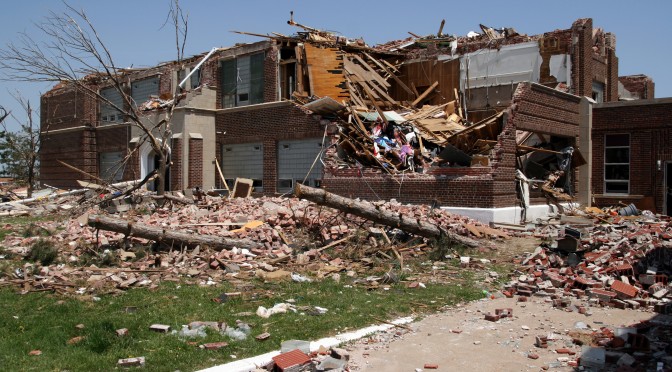
We all hope that our property will escape undamaged when a storm or severe weather strikes. But if you live in area where weather is an ongoing issue and an unpredictable force, you know you have little control.
Insurance is supposed to take care of that. You pay the big premiums and count on the insurance company to come through for you when you need it.
Here are a few things that you can do to make sure that the insurance company fulfills its obligations to you in a timely manner. When an adjuster arrives, it’s important to keep good records. The Consumer Federation of America suggests you keep a notebook. Make sure you have your claim number.
If the adjuster doesn’t show up, write that down.
Make a list of what you lost. Photos help. If you’ve lost everything, someone may have photos from a holiday party that show your possessions.
Get repair estimates from reliable contractors.
Keep receipts from emergency repairs and temporary housing.
Flood insurance covers water damage from a flood. Other damage is covered by homeowners insurance, or not. If you’re denied, check your policy to make sure the reason is listed in the policy. The company may have language that limits what they will pay
If you think the company is wrong, talk to a supervisor. If that doesn’t work.
Complain to the state insurance commissioner and use your notes.
And check with a lawyer. The Consumer Federation of America says that courts often rule in favor of consumers.
It looks like help is on the way for homeowners struggling to get Sandy-related insurance payments. New York Governor Andrew Cuomo says major banks and servicers, which receive the payments from insurers and then pass the money on to homeowners, agreed to speed-up the process. New York’s Department of Financial Services has received complaints about bureaucratic delays that prevent families from making repairs and living in their homes.
“Homeowners need help now and that’s why insurers are sending advance checks to meet their immediate needs,” said Governor Cuomo. “Any delay in making these types of critical home repairs can mean the difference between a family being able to live safely in their home or remaining needlessly displaced for weeks or even months.
The following banks and servicers promised the governor they’d get the payments out quickly:
Bank of America
· Citi Mortgage
· JPMorgan Chase N.A.
· Wells Fargo Home Mortgage
· Apple Savings Bank
· Dime Savings Bank of Williamsburg
· Emigrant Savings Bank
· Homeward Residential
· M&T Bank, Nationstar
· New York Community Bank
· Ocwen Loan Servicing
As a daughter, a relative and a reporter I’ve helped and watched a number of people move into assisted living facilities. We wanted safety, security and a vibrant life for our family members and we urged them to make the change.
But I’m always curious about others I meet and I ask the obvious question, “Why did you choose this?” Most say, “My children are making me do it” Or, “My daughter thinks I need to be here,” or “Well, what was I going to do?”
They all say they didn’t want to give up their homes and their lifestyles. But when I see them a few months later, most seem to ease into the community and create a new life for themselves.
Photo by ConsumerMojo.com
Assisted living may not be the choice of your dreams, but it’s a good one when you’re ready to say that you can’t do everything for and by yourself. A well-run place gives you plenty of breathing room and makes everything easy.
You can have your own apartment and maintain your privacy. In some cases, there’s apartment sharing to help reduce the cost. You’re not a prisoner and you’re not trapped. You can come and go as you please. Some keep their cars, and go off by themselves regularly. But fundamentally, you are in a community with support and a safety net.
WHAT’S OFFERED First of all, you don’t have to cook. While most apartments include small kitchenettes with a refrigerator and a microwave, you share most meals in a dining room with service and a hotel atmosphere.
My mom moved into an assisted living facility, owned by Atria, on Long Island when she was 89-years-old. She lived there happily for six years. While she was reluctant at first, she acclimated quickly. My sister and I were surprised by her level of involvement in activities. She was always proud to show off. “This is where we have coffee in the afternoon, and this is where watch movies. Isn’t it nice,” she would say. On one visit, we found her singing with the chorus. It turned out she was a regular. We had no idea she liked to sing.
Generally, there’s a range of activities from trips to cultural institutions, supermarkets and shopping malls, to gentle exercise programs, to musical and theatrical presentations, to crafts, current affairs and games to stimulate thinking. I’ve use the word community a number times because belonging and participating is part of the package. You don’t feel isolated and lonely.
Photo by ConsumerMojo.com
The community atmosphere works particularly well for my cousin Marilyn. She’d lived alone in a big apartment and found it increasingly difficult to get out. But after she moved into assisted living in Queens, she made new friends, ate better, looked better and even began to have her hair done regularly.
MEDICAL HELP
Marilyn also needs medical help and uses the onsite nursing and healthcare assistance. She no longer worries about which medication to take in the morning, or the evening, “They know what to do,” she says.
Staffers work with the doctors of your choice and dispense medication regularly and safely. At some facilities, doctors make onsite visits. That worked well for my mother. Her mantra always was, “Stay away from doctors.” But eventually she needed some medical help and her visits to the doctor’s office became part of the routine. Frequently, specialists like podiatrists also make scheduled visits and treat patients on site.
This isn’t cheap. Depending upon where you live fees range from $3,000 a month to over $8,000. There are extra fees and add-ons as you need more assistance.
In some states, like New York, you can use Medicaid to pay for some assisted living facilities. The website New York Health Access run by legal aid attorneys and paralegals offers a guide to what’s available. I wish there were enough financial and political support to broaden assisted living programs. It makes sense to help older people continue to live with dignity.
The statistics about for-profit colleges reveal a depressing pattern of debt and failure for many students who see the schools as a way to improve their lives.
A report on the findings of a two year investigation by the Senate Health, Education, Labor and Pensions Committee led by Iowa Senator Tom Harkin found widespread problems in this industry.
For starters, tuition at for-profit colleges is six times higher than at community colleges and twice as high as you might find at a four-year public school. That might be okay if students benefited. But the senate study of 30 for-profit schools found many students attracted by web marketing, TV and other heavy advertising don’t achieve academic success.
Fifty-four percent of the students enrolled in the 2008-2009 school year withdrew by the summer of 2010. Most of the students borrowed money to pay their tuition, and close to one in four defaulted on their federal student loans within three years of leaving school.
Why should you care if you are not a student?
According to the report taxpayers invest more than $30 billion in these schools. Most of the money comes from federal funds. 25% comes from Department of Education, 37% Post 9/11 G.I. Bill benefits, and 50% Department of Defense Tuition Assistance Funds.
Senator Harkin said, “In this report, you will find overwhelming documentation of overpriced tuition, predatory recruiting practices, sky-high dropout rates, billions of taxpayer dollars spent on aggressive marketing and advertising, and companies gaming regulations to maximize profits. These practices are not the exception — they are the norm; they are systemic throughout the industry, with very few exceptions,”
In a news release on its website the Association for Private Sector Colleges and Universities says the senate report, “…continues in the tradition of ideology overriding reality. The report twists the facts to fit a narrative…”
Good news for some Bank of America mortgage customers. The bank sent letters to more than 200,000 homeowners who may be eligible to modify their mortgages under the deal hashed out with the federal government and state attorneys general. The idea is to create affordable monthly payments for troubled homeowners.
To qualify you must owe more on the mortgage than the home is worth and be at least 60 days behind on payments as of January 31, 2012. And your payments must total more than 25 percent of your total gross household income.
Bank of America’s Ron Sturzenegger said, “To the extent principal reduction and other modification tools help us turn mortgages head for possible foreclosure into long-term performing loans, it will be positive for homeowners, mortgage investors and communities.”
The foreclosure crisis is winding down after a tough spell for many homeowners. But there are still a lot of people, maybe you, who are in danger of losing their homes. Scammers know that and are on the prowl.
Most Americans get their mortgage modifications through the Making Home Affordable Program, or HAMP. Unfortunately, it was supposed help four million and only about 800,000 have been helped so far. But you can be one of them.
First, it’s important to avoid the scams.
There are basically four scams.
Counseling Scam- For an upfront fee, which is illegal under the Federal Trade Commission rules, they promise you that they will represent you before the bank. Once they get the fee, they disappear.
The Forensic Audit-Attorneys say they will help find mistakes made by the bank in your loan documents. That doesn’t work.
Rent to Buy-Fraudsters convince you to give them the title to your house. They say they’ll allow you to rent and they will pay the mortgage. Then you are supposed to be able to buy the house back. That never happens.
Bait and Switch- They give you the mortgage papers to sign for a new mortgage and buried is the document that surrenders the title to your house. You don’t need the scammers and it’s important to watch out for them.
There is a way for you to get a loan modification and it’s free. Simply contact a HUD approved counseling agency. They will give you free help. To find them all you have to do is search on the Internet for HUD approved counseling services, or go to HUD.gov
Alexander Roberts is a housing advocate who works tirelessly to make home ownership a reality for thousands of people.
With Community Housing Innovations,(CHI) the not-for-profit he founded in 1991, he gives out an estimated $2 million dollars in state and private grants every year to first time home buyers. C.H.I. also bought and renovated more than 100 homes, in New York’s Westchester County and on Long Island, and sold them to first time buyers. Alec is an award-winning former investigative TV reporter who knows how to spot a scam, and that’s why he thinks consumers need great advice.
Matthew Vann investigates the best way to pay off a student loan. He comes up with a solution that is steady and sure and reduces your burden in a safe way.
The average student loan debts is more than $23,000, and most people wait until after they graduate to begin to think about paying it off.
But reporter Matthew Vann discovered that the longer you wait to start to pay down the loan, the more you’ll pay. Let’s say you take out a graduate Stafford Loan for $20,000.
$20,000 STAFFORD LOAN
6.8% INTEREST
PAY WHILE STILL IN SCHOOL-$113.00 A MONTH
PAY AFTER YOU GRADUATE -+$2,000 IN INTEREST= $230
So you more than double your monthly payment. Columbia University Financial Aid Adviser Eric Halpern says, “The way interest works on a federal loan is that it’s capitalized. If you pay off that interest early, then there’s less of a payment in the long run.” Halpern encourages students to begin to pay off the loans early, “This is going to be a huge part of their lives.
Hopefully only 10 years, but maybe even longer. So it’s not something you can put off because it’s going to affect everything you do. It’s going to affect whether you want to get a house. If you want to get a car. You’re not going to be able to get the car you want if you’re making huge monthly payments. It’s going to affect everything you do. “
TRY TO AVOID LOAN CONSOLIDATION
Many who don’t pay as they go try to manager their student loans after they graduate by consolidating them into one loan.
While this can reduce your monthly bill by 50 percent, it’s far from the perfect solution. Consolidation leads you into a deeper financial hole.
Halpern explains, “When you do consolidation it becomes a 30-year loan. And if you only pay the minimum monthly balance, you’re looking at paying almost double to triple the original loan balance.”
Ever hear of “drip pricing?” It’s a term that some hotels use when they soak us with hidden fees. The Federal Trade Commission (FTC) warned 22 hotel operators that their ads and online reservation sites may violate federal law by failing to disclose these so-called resort fees.
In letters to hoteliers, the FTC cited consumer complaints about undisclosed mandatory fees for newspapers, use of exercise facilities, pools, Internet service and more. These fees can impact your budget because they run as high as $30 a night, and you often don’t learn about them until you receive your bill at check-out time.
Federal Trade Commission Chairman Jon Leibowitz said, “Consumers are entitled to know in advance the cost of their stays. So called “drip pricing” charges sometimes portrayed as ‘convenience’ or ‘service’ fees, are anything but convenient, and businesses that hide them are doing a huge disservice to American consumers.”
The latest numbers on student loans continue a trend of bad news. Outstanding student loan debt is now at $956 billion, an increase of $42 billion since the last quarter according to the Federal Reserve Bank of New York. $23 billion is debt that students just took on, and there’s $19 billion in defaults. The Fed says 11 percent of student loans show delinquency balances of 90+ days. Experts suggest that is important to try to pay down loans while you are still in school, and attempt to avoid consolidating loans once you graduate.
If you’re among the 12 percent of single parent college students you understand the difficulty of balancing home, school and study. Now an analysis of government data by the Institute for Women’s Policy Research(IWPR) reveals the depth of the problem. Researchers found single parent college students have few financial resources, need more financial aid and have greater unmet needs after receiving financial aid.
IWPR Senior Research Analyst Kevin Miller says, “Postsecondary credentials should be a pathway out of poverty, not a source of decades of debt.” But that’s apparently the case. Single student parents have 20-30 percent more debt one year after they graduate, according to the report. And ten years after graduation, they owe three times as much as their classmates.
No quick fixes are on the horizon. Barbara Gault, VP and Executive Director of IWPR says, “Keeping student interest rates low will… be critical to maintaining opportunities for low income parents to pursue college and economic self-sufficiency.
President Obama signed an executive order aimed at protecting veterans and those still serving from misleading marketing of for-profit colleges.
The schools heavily recruit military personnel and according to the Consumer Financial Protection Bureau (CFPB) offer little for the money they charge. Those who sign up are often saddled with huge debt and find that their education is worthless.
A report on the findings of a two year investigation by the Senate Health, Education, Labor and Pensions Committee led by Iowa Senator Tom Harkin found widespread problems in this industry.
For starters, tuition at for-profit colleges is six times higher than at community colleges and twice as high as you might find at a four-year public school. That might be okay if students benefited.
But the senate study of 30 for-profit schools found many students attracted by web marketing, TV and other heavy advertising don’t achieve academic success. Fifty-four percent of the students enrolled in the 2008-2009 school year withdrew by the summer of 2010.
Most of the students borrowed money to pay their tuition, and close to one in four defaulted on their federal student loans within three years of leaving school. Why should you care if you are not a student?
According to the report taxpayers invest more than $30 billion in these schools. Most of the money comes from federal funds. 25% comes from Department of Education, 37% Post 9/11 G.I. Bill benefits, and 50% Department of Defense Tuition Assistance Funds.
Senator Harkin said, “In this report, you will find overwhelming documentation of overpriced tuition, predatory recruiting practices, sky-high dropout rates, billions of taxpayer dollars spent on aggressive marketing and advertising, and companies gaming regulations to maximize profits. These practices are not the exception — they are the norm; they are systemic throughout the industry, with very few exceptions,”
In a news release on its website the Association for Private Sector Colleges and Universities says the senate report, “…continues in the tradition of ideology overriding reality. The report twists the facts to fit a narrative…”
More than 100,000 New Yorkers now can fight back in court against against debt collectors. Federal Judge Denny Chinn granted class action status in a lawsuit brought by the Neighborhood Economic Development Advocacy Project (NEDAP), MFY Legal Services and Emery Celli Brinkerhoff & Abady.
The lawsuit claims that a law firm, a debt buying company, a processing company and others fraudulently won judgements against consumers in state court through a robot-signing type scheme.
The lawsuit charges that these companies bought up debt and engaged in “sewer service.”
They allegedly routinely failed to properly notify people that they owed money needed to appear at court hearings to defend themselves Consequently, when the debt collectors went to court the consumers didn’t show up and judges ruled against them.
Susan Shin, a lawyer with NEDAP says, “These abusive debt collection practices have devastating consequences for low income New Yorkers and communities.” The lawsuit names Mel Harris and Associates, LLC, one of New York’s largest debt collecting firms, and Samserv, Inc., a processing company, and Leucadia National Corporation a public company that buys debt for pennies on the dollar.
Watch Susan Shin’s video blog on ConsumerMojo.com and learn about your rights against debt collectors.
Check your credit report for free at annualcreditreport .com. You can do this for free 3 times a year. If someone wants to charge you a fee to check your credit say, “No.” If someone wants to charge you a fee to “fix your credit” say, “No.” The only thing on a credit report that can be “fixed” is inaccurate information, and you can fix that yourself. Equifax, Experian and TransUnion are the three private reporting companies that keep track of personal credit histories.
Student loans, credit card payment, late payment, car loans, mortgages and information about judgments against you are listed on the credit report. Sometimes the information is wrong.
If the information is incorrect, write letters to the reporting agency and the creditor, with documentation that proves you paid your bill. Explain there’s an error and you want it fixed. Make sure to keep your original documents and send your letter by certified mail.
The credit reporting company must investigate. It usually takes about 30 days, and if there is an error the company and the credit bureau must correct it.
A stay-at-home spouse or partner should get the benefit of the bread-winners access to credit.
That’s the message coming out of the Consumer Financial Protection Bureau (CFPB), which proposed a rule to require financial institutions to consider shared income when a stay-home-spouse or partner applies for acredit card. CFPB Director Richard Cordray said, “…CFPB is proposing common-sense changes that would facilitate credit access for spouses or partners who do not work outside of the home.”
The CFPB says credit worthy people have been denied credit cards under the current rules and cites Census figures that show 16 million married people don’t work outside of their homes. So if this goes into effect it will make it much easier for people over 21, with good credit, to get credit cards. There’s a 60 day comment period before the rule can go into effect and things could change.
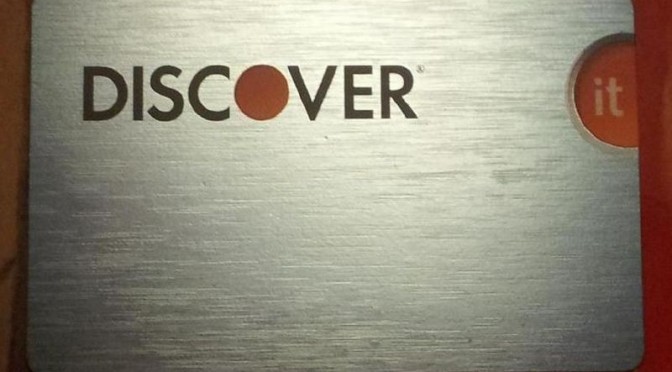
3.5 million current and former. Discover customers will receive refunds for credit card ad-ons sold by high-pressure telemarketers. The order comes from the Federal Deposit Insurance Corporation (FDIC) and the Consumer Financial Protection Bureau (CFPB) and requires Discover Bank to refund $200 million to cardholders and pay a $14 million fine.
The agencies say that Discover’s telemarketers used misleading scripts to push Payment Protection, a Credit Score Tracker, Theft Protection and Wallet Protection. The telemarketers apparently misled consumers about fees, enrolled some without permission and promised they wouldn’t be enrolled in the plans until they received written material, which never materialized.
The settlement covers consumers who bought these services knowingly, or unknowingly from December 1, 2007 to August 31, 2011. You don’t have to do anything to get the refund from Discover. If you currently hold a Discover card, you’ll get a credit on your account. If you no longer have a Discover credit card, you’ll get a check in the mail.





 Assisted Living Quick Tips