All posts by Barbara Nevins Taylor

Immigrant Population Reaches Record Number

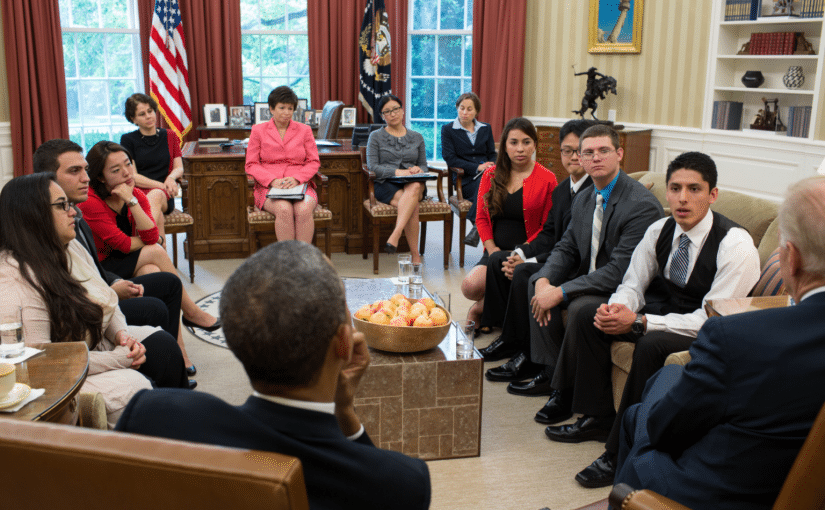
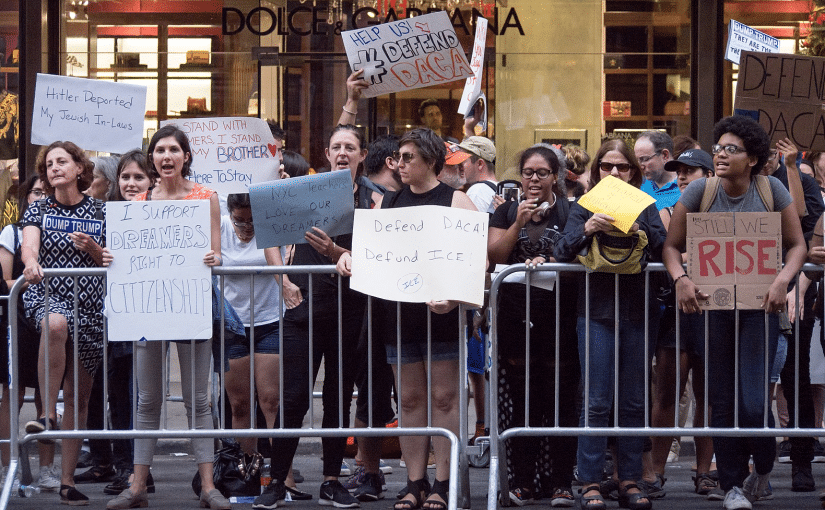
Photo by Rhododentrites, Creative Commons License

The new wave of immigration sweeping into the U.S. brought the immigrant population to a record number of 43.7 million in 2016, according to the U.S. Census Bureau. That includes legal and illegal immigrants and shows an increase of half a million since 2015 and 12.6 million since 2000.

While the country debates immigration and President Trump has moved to overturn the Deferred Action for Childhood Arrivals (DACA) program that gave 800,000 young people legal status, the Census Bureau points out that immigrants represented one out of eight residents in the U.S. or 13.5 percent.  That’s the highest percentage in 106 years.  

People from Mexico represented the largest number of immigrants coming into the country, but because many return to Mexico, the number of Mexican immigrants hasn’t grown in the last six years, the Census Bureau reports.

The increase in the number of people coming into the U.S. came from Caribbean countries, Central America, South America, the Middle East, sub-Saharan Africa, and South Asia.

A look at the individual countries reveals that the number of people from Saudi Arabia has risen 122 percent since 2010.  More than 654,000 came from India and more than 550,000 from China in the same period. 

Many immigrants chose the Sunbelt states as destinations.  Texas gained nearly 588,000 immigrants, Florida close to 578,500, and California 527,000.  New York, by contrast, gained over 238,500 and New Jersey a little more than 171,500.

The Census Bureau did find that number of immigrants overall from Mexico, Canada and Europe declined. 

The data comes from the American Community Survey (ACS), and Homeland Security had previously estimated that the survey missed about 1.9 million immigrants. So the Census Bureau pushed the unofficial estimate of immigrants up to a likely 45.6 million, illegal arrivals as well as legal ones.

Statista, the data-gathering group took the information and created an info-graphic that shows the increase and the pattern of immigration in the U.S. since 1900. 

Infographic: U.S. Immigrant Population Hit Record 43.7 Million In 2016  | Statista You will find more statistics at Statista
Equifax Hack Affects Millions More

by Barbara Nevins Taylor

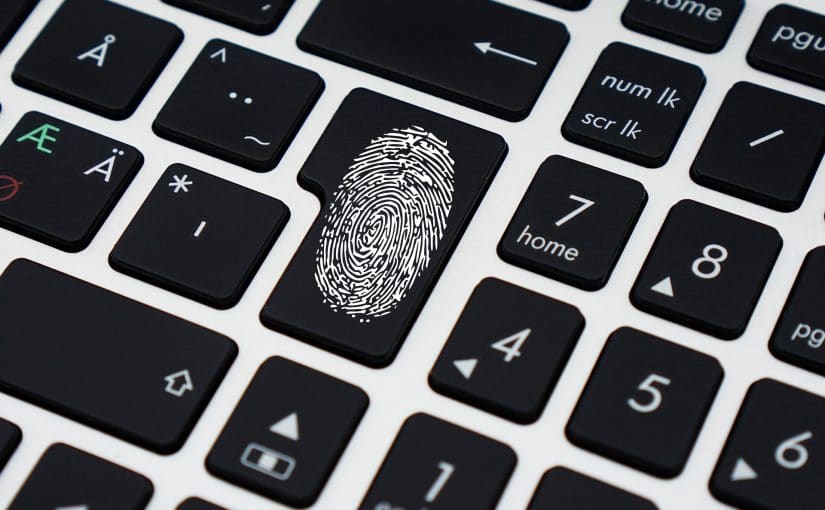
The Equifax hack may affect you because the company’s latest audit shows that the first count was off by 2.5 million people. Forensic investigators hired by Equifax now say thieves stole personal information, including Social Security numbers, of 145.5 million people, not 143 million in the U.S., as the company originally reported on September 7, 2017.

So what you do? 

Go to the website Equifax set up to try to provide answers to people the hack affects.

crisis:  https://www.equifaxsecurity2017.com/

Equifax Hack May Affect You

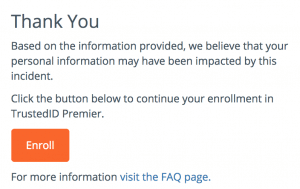
They changed their policy and will now let you know immediately whether the hack may affect you. A screen will come up that tells you.

Equifax-Hack-May-Affect-You 

Then, if the hack affects you, they ask you to enroll in the Equifax TrustedID Premier program. That provides: 

  • Automatic alerts if someone inquires about your credit report at Equifax, or the two other major credit reporting companies, TransUnion and Experian

  •  A copy of your Equifax credit report

  • Equifax Credit Report lock, which allows you to lock your credit report so that no one can enquire about it, “with certain exceptions,” they say.

  • $1 million in identity theft protection in the event someone steals your identity. They say this helps pay for “out-of-pocket” expenses.

  • Social Security number scanning that searches suspicious websites for mention of your Social Security number.

In the meantime, the U.S. Public Interest Research Group has called for Congress to pass a law to would make sure all consumers in every state have the ability to freeze their credit reports for free.

You can get free credit freezes only in Indiana, Maine, North Carolina and South  Carolina. In some states, victims of identity theft can get free credit freezes. 

U.S. Public Interest Research Group’s Consumer Advocate Mike Litt says, “Free freezes are important because you need to pay fees to all three credit bureaus to be sure all the doors to your credit report are closed to identity theft.”

Two bills in the Senate and one in the House contain provisions to offer free credit freezes in every state. But those in Congress need to hear from consumers who want the protection, especially now.

Here’s how to get in touch with your U.S. Senator.

Here’s how to get in touch with your U.S. Representative


Watch Kosciuszko Bridge Blow

Boom! You can watch the old Kosciuszko Bridge blow up. Anyone who endured decades of traffic jams on this span over Newtown Creek linking Brooklyn and Queens will enjoy seeing the 78-year-old bridge come down. And anyone who never had the pleasure will still enjoy the two-and-a-half minute plus video, spectacularly shot by a drone camera.

Demolition workers with Controlled Demolition set 944 linear-shaped explosives on the old bridge. They had weakened it by making 1600 cuts in the steel at strategic points. New York Governor Andrew Cuomo said the explosives manufacturer “confirmed” the blasts would not spew hazardous bi-products into the air. 

The old hulking metal Kosciuszko Bridge rose 110 feet above the creek and was built for 10,000 cars a day. In recent years, more than 180,000 vehicles a day passed over it, mostly very slowly or at a crawl. 

Photo by New York State Department of Transportation

A new, delicate, cable-stay bridge replaced the old truss bridge in April 2017.  A twin span, still under construction, will complete the replacement project. Ultimately, it will provide provide twelve much-needed lanes for traffic on Interstate 278, the Brooklyn-Queens Expressway, known to us locals as the BQE.  The new, like the old, directly links Maspeth, Queens to Greenpoint, Brooklyn. 

The first bridge to span the creek went up in 1803 and for a long while it cost a penny to cross it. In 1939, it was replaced by the one that just came down at a cost of $6 million. Originally, it was called the Meeker Avenue Bridge. A year later, Mayor Fiorella La Guardia led a ceremony to rename it in honor of Tadeusz Kosciuszko, a Polish volunteer and general in the U.S. Revolutionary War.

Whether it’s the old or the new, we should point out that the often maddeningly slow ride across the Kosciuszko Bridge and the BQE offers a spectacular view of the New York skyline that always thrills those of us who love the city. 


You Can Blame Equifax For Data Breach


 You can blame Equifax for the data breach that affects 143 million of us. It apparently did not fix a security flaw that it knew about and had received a fix for. “The Equifax data compromise was due to their failure to install the security updates provided in a timely manner,” the Apache Software Foundation wrote on its September 14, 2017 blog. 

Apache provides open-source software called Apache Struts for Equifax and major financial institutions and government agencies. The website zdnet quotes Fintan Ryan, an analyst at Redmonk, saying that 65 percent of Fortune 500 companies use Apache Struts.

On its blog, Apache says it issued an update alert on March 07, 2017 and recommended that companies, or anyone using Apache Struts, install a security update.

Apparently, Equifax did not do that. Instead, it says it became vulnerable to a hack from mid-May to July 29. Equifax did not make this public until September 7, 2017.

The problem with the software allowed hackers to use file uploads to launch a bug that let them communicate with the servers and steal information including Social Security numbers, drivers license numbers, credit card numbers and other personal financial information.

But in the community of people involved with this type of software and cybersecurity, the word was out and they issued alert warnings. They may not directly blame Equifax, but the facts point in that direction.


In a March 8, 2017 blog, Nick Biasini with the Cisco Talos, a threat intelligence group, wrote, “Talos began investigating for exploitation attempts and found a high number of exploitation events.”

On March 9 another expert, Akamai SIRT, wrote on a blog titled Vulnerability Found In Apache Struts, “If you are currently running an affected version of the software, malicious users could execute code on the system remotely by using a maliciously crafted Content-Type header. Successful exploitation does not require the user to be authenticated. Apache has classified the vulnerability as a “possible remote code execution;” however, the vulnerability is easy to exploit and allows code to be executed using the user context of the account running the Tomcat server. At least two working exploits have been seen in the wild already.”

He also told users,”Upgrading Apache Struts to version 2.3.32 or 2.5.10.1 will fix the current vulnerability.”

So that leaves us with the question about why Equifax didn’t fix the flaw that led to the breach and what happens to us and all of that stolen data now. 

So consumer advocates say you can blame Equifax for the giant mess the credit reporting company made for consumers. That’s why its a good idea to put a freeze on your credit report, as the U.S. Public Interest Group warns in a news release. 

“We’re recommending that consumers get credit freezes with all three credit bureaus. We’ve called on Equifax to pay for all those freezes, but consumers shouldn’t wait for that. Credit freezes are currently only free in seven states (about to be eight in October).

“We are working to make them free in other places like Illinois and Massachusetts, where state bills have been introduced. But Congress should lead and make credit freezes free for everyone in the country.”


What Should You Do About Equifax Data Hack?


updated October 7, 2017

by Barbara Nevins Taylor

You heard and read about the data hack. Now what should you do to protect yourself after the Equifax breach? The theft affects millions of us in a bad way. We have no clue exactly how yet but you can find out if hackers got your personal information. I went on to the Equifax site and discovered hackers got mine. And we’ll explain how you can find out about whether the hack affects you and what to do.

It could. Hackers gained access to the accounts of 143 million people, that’s what Equifax said at first. After an investigation by outside forensic experts, the company upped the number affected to 145.5 million people in the United States. 

The data hack makes three-quarters of consumers with credit reports prime targets for identity theft.

In a news release, Equifax said it discovered the hack on July 29, 2017 and we and other consumer advocates wonder why they waited so long to let us know.

The company acknowledged the information stolen includes “. . . names, Social Security numbers, birth dates, addresses and, in some instances, driver’s license numbers. In addition, credit card numbers for approximately 209,000 U.S. consumers, and certain dispute documents with personal identifying information for approximately 182,000 U.S. consumers, were accessed. As part of its investigation of this application vulnerability, Equifax also identified unauthorized access to limited personal information for certain UK and Canadian residents.”

Next Step

Go to the website Equifax set up for this crisis:  https://www.equifaxsecurity2017.com/

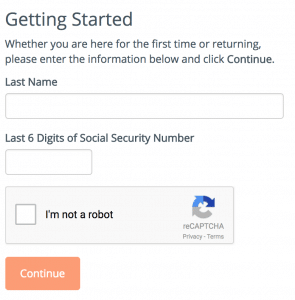
They ask for your name and the last six digits of your social security number. Based on that, you’ll learn immediately whether hackers may have stolen your information.

Then push the “Enroll” button that takes you to the page for the “TrustedID Premier” program.”

Equifax-Hack-May-Affect-You

Once you register, Equifax will offer free services for an unlimited time. Initially they promised a year, but consumer outrage forced the change.

  • Credit monitoring of Equifax, Experian and TransUnion credit reports
  • Copies of Equifax credit reports
  • Give you the ability to lock and unlock Equifax credit reports
  • Identity theft insurance up to $1 million.
  • Internet scanning for Social Security numbers  

But the National Consumer Law Center (NCLC) says Equifax doesn’t go far enough: “Consumers need the ability to “lock down” or freeze their credit reports at all three major credit bureaus, and for more than one year, because the stolen information could still be used to fraudulently apply for credit using a report from Experian or TransUnion as well.”

The NCLC, the U.S. Public Interest Group (USPIRG) and other advocates also demanded Equifax change its forced arbitration plan, which prevented consumers affected by the hack to sue, or join a class action lawsuit.

What should you do about the Equifax data hack now?

But both consumer groups suggest strongly that anyone harmed by the Equifax breach get security freezes immediately at EquifaxTransUnion and Experian.

This means that no loans, credit or services will get approved in your name without your approval. Depending upon your state and age, the credit bureaus offer it free, or charge $5 – $10. 

If you don’t want to do that, put a 90-day “initial fraud alert” in your credit report that tells businesses they should verify your identity before they issue credit. You have to renew an “initial fraud alert” every 90 days.


DACA Supporters Sue

photo by Daniel Ramirez

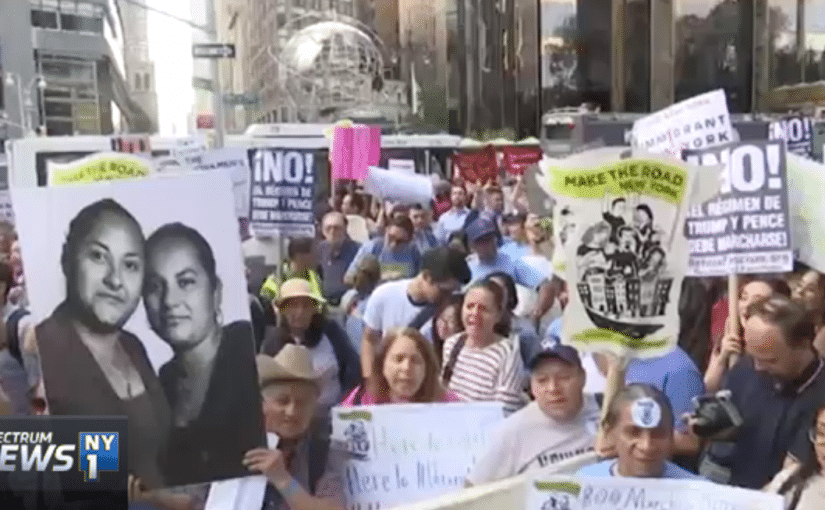
DACA supporters promised to sue on behalf of Dreamers and they delivered. Fifteen states and the District of Columbia filed a lawsuit in Brooklyn federal court to block President Trump’s plan to end DACA, Deferred Action for Childhood Arrivals, a program that gave 800,000 undocumented young people temporary legal status.

The lawsuit filed in the Eastern District of New York asked the court to prevent Trump’s order eliminating the program from going into effect. The lawsuit charges that the president issued an unconstitutional order that deprives people of their rights. It said the White House action reflects “a culmination of President Trump’s oft-stated commitments . . . to punish and disparage people with Mexican roots.” 

President Obama established DACA in 2012 to help young immigrants make a good life for themselves in the United States. Obama’s executive order took the pressure off many of those brought to the U.S. illegally by their parents before they turned sixteen and allowed them to apply for legal status and work permits. Even with DACA, they needed to renew their application every two years. Under the Trump order, which goes into effect in six months, no one will get a renewal. The U.S. Citizenship and Immigration Service will no longer accept first-time applications for DACA.

After he eliminated DACA, Trump called on Congress to draft legislation to help these young people. But it’s not clear what will happen.

The lawsuits could help.


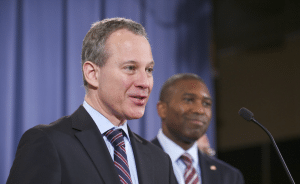
Trump’s plan is “cruel, shortsighted, inhumane and driven by a personal bias against Mexicans and Latinos,” New York Attorney General Eric T. Schneiderman said.

States in the lawsuit include: New York, Massachusetts, Washington, Connecticut, Delaware, Hawaii, Illinois, Iowa, New Mexico, North Carolina, Oregon, Pennsylvania, Rhode Island, Vermont and Virginia, and the District of Columbia.

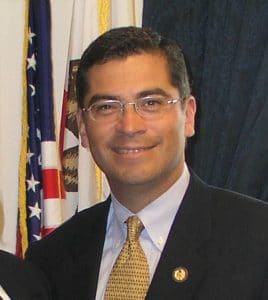
California, with largest DACA population of about 220,000, plans to file a separate lawsuit, according to Bethany Lesser, a spokeswoman for California Attorney General Xavier Becerra.

Courtesy Wikimedia

Lawsuits To Keep DACA And Protect Dreamers

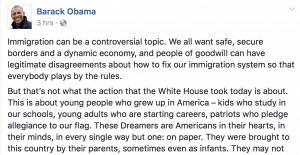
The serious game of lawsuits, to protect 800,000 young immigrants, began within hours after the Trump administration announced an end to DACA, the Deferred Action for Childhood Arrivals program. And President Obama, who created the program in 2012, took to Facebook where he called Trump’s action unnecessary, political and wrong.

Obama said, “Ultimately, this is about basic decency. This is about whether we are a people who kick hopeful young strivers out of America, or whether we treat them the way we’d want our own kids to be treated. It’s about who we are as a people – and who we want to be. 

“This is about young people who grew up in America – kids who study in our schools, young adults who are starting careers, patriots who pledge allegiance to our flag. These Dreamers are Americans in their hearts, in their minds, in every single way but one: on paper.,  To target these young people is wrong – because they have done nothing wrong.”

Obama called on members of Congress, “to protect these young people.”

But action in the courts may make a difference. Martín Battala Vidal, a young immigrant, and the advocacy group Make The Road New York (MRNY) filed a lawsuit in the U.S. District Court for the Eastern District of New York. They argue that President Trump’s elimination of DACA violates federal law and the Constitution’s equal protection guarantee.

They asked the court to allow them to amend a 2016 lawsuit that challenged the Texas case that blocked Deferred Action for Parents of Americans and Lawful Permanent Residents (DAPA). The National Immigration Law Center and the Worker and Immigrant Rights Advocacy Clinic at Yale Law School helped draft the suit.

In California, where the largest number of DACA young people live, more than 220,000 according to the Public Policy Institute of California,  California Atty. Gen. Xavier Becerra promised legal action to challenge Trump’s decision. He said ending the program was unconstitutional because the young immigrants followed the rules and Trump’s decision undermines their right to due process.

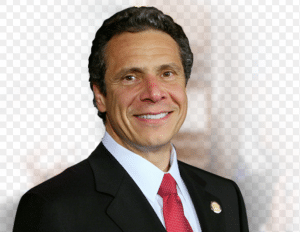
In New York, Governor Andrew Cuomo

and Attorney General Eric Schneiderman said they will sue to protect the Dreamers.

Nearly 40,000 DACA recipients live in New York State. “We should not and cannot sit on the sidelines and watch the lives of these young people ruined.” Cuomo said.

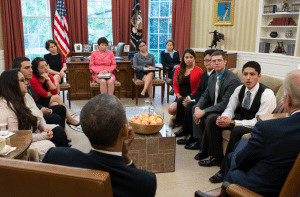
President Obama created DACA with an executive order and it gave undocumented immigrants, brought here by their parents before their sixteenth birthdays, the opportunity to apply for legal status and work permits. It put an end to hiding and worrying about the possibility of deportation and it gave them hope.

President Trump said those with DACA status now will have a six month grace period and asked Congress to come up with a permanent program.

In a written statement he said. “I do not favor punishing children, most of whom are now adults, for the actions of their parents. But we must also recognize that we are nation of opportunity because we are a nation of laws.”


Worry For DACA Dreamers

by Barbara Nevins Taylor

Everything changed for Carolina when President Obama created the Deferred Action for Childhood Arrivals (DACA) program in 2012.  Until then, she worried about what would happen to her when she graduated from Hunter College. Could she get a job? Would immigration officials kick her out? “I barely remember living in Mexico. I was seven when we came her and I consider myself an American. This is the only home I know,” she told ConsumerMojo.

Carolina, her mom, and her then-five-year-old sister entered the country legally from Mexico, but overstayed their visas. Her mom worked two jobs as a cleaner, and while Carolina took classes at Hunter, she and her sister cleaned restaurants at night. But DACA meant that the girls, like others in the same boat, could apply for work papers. It gave this generation of immigrants, “Dreamers,” legal status, although they had to renew every two years.

It also meant that Carolina, an aspiring photographer, could get a job in a well-known photo supply store and take more courses toward her college degree.

President Trump’s pledge to crackdown on immigrants, and his recent threats to do away with DACA, jeopardizes Carolina’s status and that of almost 800,000 other young people brought here by their parents before they they turned 16.  Most identify as Americans. 

We stand with the National Immigration Law Center others trying to communicate with the White House and members of Congress about the importance of these young immigrants.


ConsumerMojo.com championed the DACA program when President Obama issued his executive order. We published videos

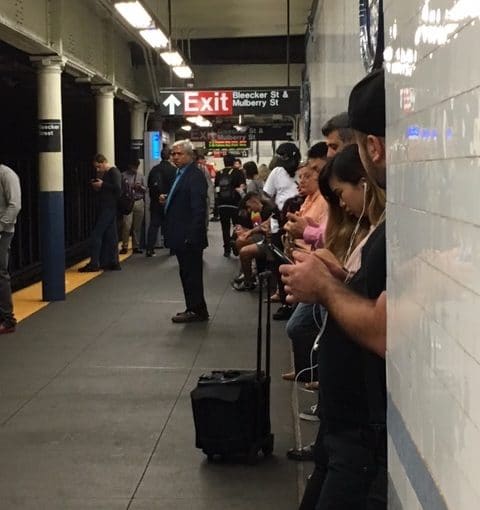
Ride the 7 Train With Young Immigrants

and guides to applying for the program and encouraged young people to come out of the shadows.

That’s why we felt encouraged when we heard House Speaker Paul Ryan say he doesn’t think the program should end. 

Courtesy Wikimedia

When Ryan was asked on WCLO in Janesville, Wisconsin, about the possibility that Trump would end DACA, he said, “I don’t think he should do that.” And he went on to say, “I believe that is something Congress has to fix.” 


Republican Senator Orin Hatch,

from Utah, in a statement said, “I’ve urged the President not to rescind DACA, an action that would further complicate a system in serious need of a permanent, legislative solution. Like the President, I’ve long advocated for tougher enforcement of our existing immigration laws. But we also need a workable, permanent solution for individuals who entered our country unlawfully as children through no fault of their own and who have built their lives here. And that solution must come from Congress.”

White House spokesperson Sarah Huckabee Sanders told reporters Trump would announce his decision on Tuesday. We hope he makes the right one.


Thinking About Donating To Hurricane Harvey Victims?

by Nick Taylor

The heartbreaking scenes of Texas underwater and the long recovery people face prompt us to reach for our checkbooks to do what we can to help. National and local charities will have their hands full for months as rescue shifts to recovery

 But how do you know that your money will go where it’s needed?

Even the American Red Cross, the go-to charity when disasters like Hurricane Harvey strike and displace thousands, was called out in an editorial in Wednesday’s New York Times.

The Times questioned the Red Cross for a lack of transparency about how it spends donations: how much goes to public relations, for example, and how much to assist the homeless stuck in shelters.

The American Red Cross does good work and we want to encourage people to donate. But like the Times, we think they need to tell us more about where the money goes. Sandra Bullock put her money and faith in the American Red Cross with a $1 million donation. 

Pop-up “charities” present thornier problems and a lot of us fall into that briar patch and get ripped off.  New York State Attorney General Eric Schneiderman encouraged New Yorkers to support relief efforts along the Texas coast, but he also cautioned about scammers:  “Unfortunately, there are always some who attempt to take advantage of a tragedy to line their own pockets . . .”

So how do we know?

Beware of robocallers and telemarketers

First of all, watch out for robocallers and telemarketers. Professional money raisers make these calls and you need to ask them some questions before you do anything else.

1. Most states require charities to register to make sure they do legitimate fundraising.  

a. Ask if the charity is registered with your state’s charities bureau. This takes you to New York’s charities bureau.

b. Ask how much of the money goes to the charity.

c. Ask how much the caller, or the caller’s organization, gets paid.

This does seem like a lot of trouble to do something good. But taking a few precautions can help to make the most of your contribution.

  • Ignore spam emails
  • Legitimate charities don’t usually send unsolicited spam emails,
  • Use your good common-sense judgment that helps you avoid other scams.
  • Don’t give cash.
  • Don’t give credit or debit card information
  • Don’t give  personal information over the telephone or by text message.

But People And Legitimate Charities Need Help

We made a list of charities with good reputations. 

The AARP Foundation created the Help Victims of Hurricane Harvey Fund will match donations up to $1 million.  

The Hurricane Harvey Relief Fund set up by Houston Mayor Sylvester Turner and administered by the Greater Houston Community Foundation helps out in a lot of ways.

Houston Rockets point guard James Harden stood with Mayor Turner and announced that he would donate $1 million to relief charities. His boss, Houston Rockets owner Leslie Alexander pledged $10 million to Mayor Turner’s fund.

The United Way of Houston received $1 million from Leonardo DiCaprio, but it needs more money to help people in the recovery.

The L.G.B.T.Q. Disaster Relief Fund run by the Montrose Center also needs help.

Americares provides medicine and supplies to survivors.

Catholic Charities provides food, clothing, shelter and support services to those from all religious backgrounds.

If you live in Texas, the City of Houston Emergency Operations Center posted a list of places where you can drop off donations.

Houston Food Bank and the Food Bank of Corpus Christi need donations. The South Texas Blood and Tissue Center reports a critical shortage. It extended hours in all of its San Antonio-area donor rooms.

The Texas Diaper Bank in San Antonio needs diapers and wipes. You can drop them off or mail them to 5415 Bandera Road, Suite 504, San Antonio, Tex., 78238. 

To help animals:

 Houston Humane Society  

San Antonio Humane Society

Houston Society for the Prevention of Cruelty to Animals

How to check to find a legitimate charity:

Look at the charity’s website and check:

Charity Navigator 

CharityWatch

Wise Giving Alliance of the Better Business Bureau

If a fake charity tries to rip you off, let your state authorities know. In New York, the attorney general’s office wants to investigate these complaints


Should You Switch To An Energy Service Provider?


 by Barbara Nevins Taylor

When our friend Judith asked us about quitting her utility, Con-Ed, to switch to an energy service provider that promised to lower her gas and electric bills, we suggested she wait awhile. We knew that class action lawsuits and investigations alleged that some of these energy resellers, or ESCOs, didn’t deliver what they advertised.

ESCOs sprang up as a result of deregulation in the 1990s. They don’t own or operate the distribution and transmission systems, but they buy energy and theoretically may offer discounts or lower rates if you sign on with them as a supplier. They have used aggressive telemarketing and online campaigns to lure customers. 

New York State Attorney General Eric Schneiderman’s most recent investigation resulted in a settlement with Energy Plus Holdings LLC and Energy Plus Natural Gas LLC “Energy Plus.”    The company will pay $800,000  for false advertising and charging people more than it promised. 

The attorney general said that Energy Plus charged its customers much higher prices than they would have paid if they purchased energy from their utilities. In many instances, consumers who received services from Energy Plus paid hundreds more per year than they would have with their local utility company.

As a result of the settlement, consumers who signed on with Energy Plus will get refunds. So far, more than $5 million has gone back to New York State consumers because of Schneiderman’s investigation, including nearly $2 million to customers of Columbia Utilities Power LLC and more than $1 million to customers of HIKO Energy, LLC.

 In 2013, Energy Plus settled a class action suit based, in part, on Energy Plus’s claims that consumers would pay less with Energy Plus than with their utilities. It provided $1.1 million in refunds and stopped some deceptive practices.

But the attorney general charged that Energy Plus continued to fail to adequately disclose that its rates might be higher than utilities’ rates and failed to disclose that cancellations could take months to process and could result in early termination fees.

Attorney General Schneiderman said, “Thousands of New Yorkers were lured by Energy Plus’s false promises of savings, only to be stuck with more expensive energy bills Energy service companies should be put on notice: we won’t allow them to exploit New Yorkers looking to save on their energy bills.”

Which Airline Might Lose Your Luggage?

Airlines have lost our luggage a couple of times, and the bags showed up a few inconvenient days later. You just don’t want that to happen.

That’s why it seemed like good news when the August 2017 U.S. Department of Transportation report found the number of bags lost by the the 12 major U.S. airlines decreased during the first six months of the year, compared to the same time last year.

Airlines still lose or “mishandle” bags, to use the industry term.  In the first six months of 2017, travelers reported 806,705 bags lost compared to 817,111 in 2016.  That’s a small improvement, but still an improvement.

So which airlines lose luggage most frequently? The data group Statista put together this infographic based on the report by DOT and “the rate of mishandled bags per 1,000 passenger reports” by airline.

Although ExpressJet leads the pack here in the report and the chart, the DOT found that its losses went down, as did those of Delta, United, Spirit and American.

Infographic: Which U.S. Airlines Are Most Likely To Lose Your Luggage?  | Statista 

You might also like to find out how to book a flight cheaper. Click here.

And if you like armchair travel try: 


A Trip to Dubrovnik and the Island of Brac


Read about the trip to the beautiful Bay of Kotor and Kravice Waterfalls 

 Read about the trip to Sarajevo and Mostar


Read about the trip to Zagreb


Read about the trip to Slovenia, Ljubjlana and Bled


In case it piqued your interest, the photo at the top of the page features a shot from a plane over Oregon as it heads to Portland with Mt. Hood in the distance. 


Social Security Scam And Federal Reserve

by Barbara Nevins Taylor 

Consider it a scam and a bad idea to try to pay a bill with your Social Security number or through a Federal Reserve routing number. It could end up costing you money. The Atlanta Federal Reserve issued an alert to warn consumers to stay away from this scam.

YouTube videos, plenty of them, along with online forums and texts, encourage people to use Social Security account numbers and route payments through a branch of the Federal Reserve Bank.

A number of the videos reference “Harvey Dent,” a character who has his own video that tells you that “using your secret Social Security trust account,” you can tap into secret money to pay your bills. The videos go heavy on phony conspiracy theories about big banks and why they don’t want you to know what they do. 

Then they show you how to find a Federal Reserve routing number in your area. But the Federal Reserve says, “Consumers do not have bank accounts with the Federal Reserve holding their unpaid Social Security funds, and those funds can not be accessed by consumers.”

The Federal Reserve uses routing numbers to transfer money between banks, not customers.  In the alert, the Fed explains what happens if you fall for the scam: “. . . bill payments being attempted using the Fed’s routing numbers are being rejected and returned unpaid. Consumers who have attempted to use the Fed’s routing numbers to pay their bills may be subject to penalty fees from the company they were attempting to pay.”

In fact, people have had to pay late fees and other penalties to companies they thought they had paid. 

It’s not clear who if anyone benefits from this. And the National Consumer Law Center warns, “Consumers should be aware of this “too good to be true” scheme and recognize any video, text, email, phone call, flyer, or website describing how to pay bills using information other than their own bank or credit card account number is a scam.”

Law enforcement officials working with Federal Reserve Bank apparently started an investigation. And when we know more, we’ll post it here on ConsumerMojo.com.


Why Sign Up For Medicare Part B?

by Barbara Nevins Taylor

Recently a friend turned 65 and told me that she signed up for Medicare Part A but not part B. “Why should I sign up for Medicare Part B?” she asked. “I don’t need it. I’m covered by my husband’s company.” Yes, but not so fast. Her husband’s insurance can reject her claims because Medicare is her primary insurance and she should have Part B.

Medicare Part B covers among other things doctors’ visits, lab tests, surgeries, ambulances, and medical appliances like walkers. So the costs can add up.

Even though her husband’s company takes care of his insurance and theoretically covers her, she’s not working. So the system requires her to sign up for Part B around the time of her 65th birthday or face serious penalties.

Joe Baker of the Medicare Rights Center says, “If you don’t enroll in Medicare when you turn 65, the month of your 65th birthday or three months after your 65th birthday, you have two penalties.

 Waiting Period

You may find yourself uncovered by insurance. The insurance that you do have is secondary and the insurer is likely to turn down claims because Medicare should be the primary insurance.

But you can’t just jump on the Medicare bandwagon. You get stuck in limbo for awhile. A waiting period penalty prevents you from joining Medicare Part B when you want to do it.

If you don’t enroll when you are first eligible you have to wait for January or March of that calendar year and your coverage won’t begin until July 1st.  

 Financial Penalty

You also face a 10 percent monetary penalty for every year that you could have, or should have, signed up for Part B. So  you will pay 10 percent more every year for Medicare than everyone else.

No Getting Around It 

The rigid penalties were put into place to try to balance the finances of Medicare.  At 65, you fall at the younger, healthier end of the spectrum and your premiums offset the costs for older sicker people.

Medicare Rights President Baker cautions, “I don’t think it’s a good idea for anyone to delay Part B enrollment. The only people who should be delaying Part B are people who are actively at work and have coverage.” 

This video tells the story.


What Americans Want To Do About North Korea

Saber-rattling statements and tweets by Donald Trump put many of us on edge about how he might escalate tensions with North Korea. Referring to threats from North Korea, he told reporters at his Bedminister, New Jersey, golf club, “Best not make any more threats to the United States. They will be met with fire and fury the world has never seen.”

Hours later, the North Korean People’s Army released a statement threatening to fire missiles at Guam and American military bases on the island. 

Secretary of State Rex Tillerson, apparently trying to cool things down, said there was no “imminent threat” from North Korea and that the “American people should sleep well at night.”

A poll by the Chicago Council on Global Affairs, conducted just before the last comments, found that three-quarters of Americans now think North Korea’s nuclear program threatens the United States.

Statista put together a revealing info-graphic that shows 76 percent of Americans back economic sanctions against North Korea and far fewer support using military force. 

Infographic: What Americans Want To Do About North Korea  | Statista You will find more statistics at Statista
Balkans Videos


The Balkans offers travelers history, breathtaking scenery, great food and adventure. We found it all on our trip from Slovenia through Croatia, Bosnia, Montenegro and then back to Croatia on the Adriatic Coast. These videos will give you a taste of what we experienced.