All posts by Barbara Nevins Taylor

Last Minute Jewelry Buying Tips

updated February 13, 2018 

by Barbara Nevins Taylor

If you waited until the last minute to look for a Valentine’s Day gift, here are last minute jewelry buying tips to help you get the best deal. 

When I worked on TV, the run-up to Valentine’s Day always led us to investigate claims from stores, big and small, and predictably we uncovered some people who didn’t sell what they advertised.

In the stores with questionable practices, we frequently found that some gold jewelry didn’t weigh as much as claimed.  And in some, we found so-called gold jewelry that wasn’t gold at all. So it’s a good idea to take care when you shop. And that’s why we put together this tip sheet on how to avoid Valentine’s Day jewelry scams.  

 6 Last Minute Jewelry Buying Tips

1. Decide how much you want to spend in advance so that you can avoid getting pushed into buying something that costs more than you had in mind. Sales people are often persuasive, maybe too persuasive. 

2. Think in advance about the type of jewelry that you’d like to buy. This will allow you to be in control and avoid feeling overwhelmed when you get to the jewelry counter. 

3. Even though it is the last minute, take time to think about it and maybe even try to comparison shop. 

4. Research the stores where you think you’ll shop. Check the store’s reputation online. Ask friends or relatives for recommendations. 

5. Study up to learn the terms that jewelers use.  What’s 14K, 18K, 22K, for example. Once you understand what the jeweler is talking about, you’ll get an idea whether what you want to buy is worth the price. 

6. Understand the refund and return policies before you buy. Can you get your money back, or must you exchange it for something else? Make sure you get a receipt and  that the phone number is visible on the receipt. Sales receipts should have information about the jewelry including a gemological report from a laboratory. 

The Jewelers Vigilance Committee offers this excellent information about jewelry

Diamonds

last-minute-jewelry-buying-tips
Photo by 1791Rings Creative Commons License

The Four C’s are the criteria used to value a diamond. Ask about the carat weight, color, clarity and cut (cut refers to the quality of cut, not the shape).

  • Ask if the diamond(s) have been treated in any way (i.e. fracture-filled, laser drilled) and whether or not the treatment is permanent.

Colored Gemstones

last-minute-jewelry-buying-tips
Photo by SarahGraves, Courtesy Pixabay
  • Is the gemstone natural, lab-created or an imitation?
  • Has this gemstone been treated? If so, how?
  • If treated, is the treatment permanent and has the treatment affected the gemstone’s value?
  • What is the country of origin of the gemstone?
  • Is special care required?

Pearls

Last-minute-jewelry-buying-tips
Photo by an_photos, Courtesy Pixabay
  • Are the pearl(s) natural or cultured?
  • Has the pearl been dyed to enhance or change its color?
  • If the pearl is dyed, is the treatment permanent? Did this affect the value?
  • Is special care required?

Precious Metals

Last Minute Jewelry Buying Tips
Photo by Nawalescape, Courtesy Pixabay
    • In addition to the specifics about precious metals, make sure that jewelry containing precious metal(s) is marked in compliance with the law.
    • The item’s karatage must be identified to you in some way (verbally, through signage, etc.).
    • If an item is stamped to indicate the quality of metal it contains, it must have a trademark in close proximity to the quality mark. (A trademark is a symbol stamped next to the quality mark and may be initials or a logo to identity the make of the item.

Platinum

last-minute-jewelry-buying-tips
Photo Courtesy Pxhere
  • Items containing 950 parts per thousand (95%) may be marked as platinum.
  • Items that are between 85% and 94% platinum must be marked with the platinum content. Examples: 900Pt, 850Pt.
  • Items containing less than 85% platinum must detail the platinum group metal. Example: 750Pt200Irid. Total parts must equal 950 (95%). Note: Platinum group metals are: Platinum, Palladium, Rhodium, Iridium, Ruthenium and Osmium.
  • Gold
Last-minute-jewelry-buying-tips
Photo Courtesy Pixnio.com
  • 10 karat gold is the minimum fineness of gold that may be sold as gold in the U.S. Jewelry under 10kt fineness may not be sold as gold.
  • Jewelry is made of many different types of gold: solid gold, gold plate, gold filled, gold overlay, gold electroplate, gold flashed/washed or rolled gold plated.

Silver

Last-minute-jewelry-buying-tips
Photo by elf925, Courtesy Pixabay
  • Silver/Sterling Silver means that 925 parts per thousand (or 92.5%) of the item is made of pure silver.
  • Silver plate describes a product made of base metal and layered (or plated) with silver.
  • Silver coins contain 900 parts per thousand (or 90%) pure silver.

      If you have an issue with a jeweler and he or she won’t resolve the problem, you can file a complaint with the FTC,  the Better Business Bureau, the Jewelers Vigilance Committee’s Alternative Dispute Resolution Service, or your state Attorney General.

  watchmore  

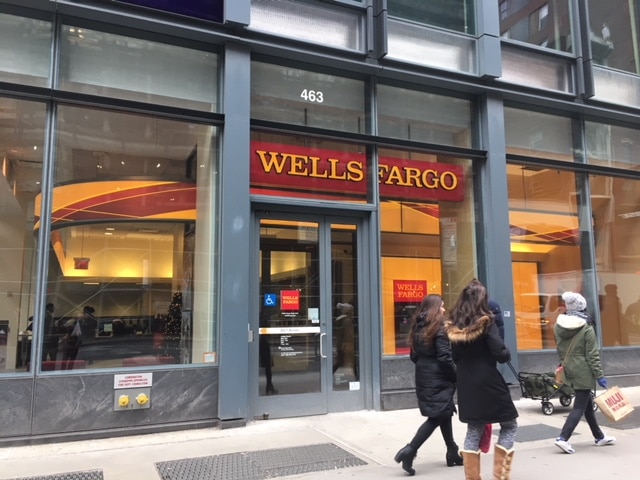
Wells Fargo Punished For Cheating


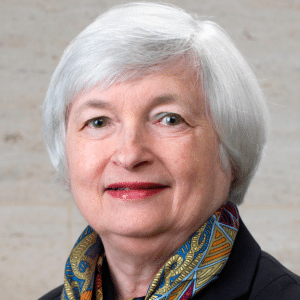
On the last day of her term as the chair of the Federal Reserve, Janet Yellen made sure that banking giant Wells Fargo gets punished, in a big way, for cheating customers.  The Fed said it will not allow the bank to expand until it improves its management, the way it takes risks and the oversight by managers and its board of directors. 

Wells Fargo employees cheated 3.5 million customers from January 2009 to September 2016.  They signed existing Wells Fargo customers up for credit cards and new accounts without asking permission or telling them they would have to pay additional fees. While the customers paid extra, employees got bonuses for their work. 

In its zeal to expand, Wells Fargo’s management apparently encouraged competition to expand accounts and ignored cheating and fraud. 

Wells-Fargo-punished-for-cheating-customers

Yellen said, “We cannot tolerate pervasive and persistent misconduct at any bank and the consumers harmed by Wells Fargo expect that robust and comprehensive reforms will be put in place to make certain that the abuses do not occur again,”

The Consumer Financial Protection Bureau (CFPB), which the Trump administration wants to do away with, in 2016 uncovered the fraud and ordered the bank to pay more than $185 million in fines and penalties.  $142 million went to pay restitution to Wells Fargo customers who were cheated.

The Comptroller of the Currency fined Wells Fargo $35 million and the settlement with the CFPB required the bank to pay the city of Los Angeles $50 million.

No one was charged with a crime, and the former C.E.O. of Wells Fargo, John Stumpf, blamed the cheating on 5,300 employees who were fired.  But Wells Fargo employees said they felt pressured to open accounts to keep their jobs.

 Does Wells Fargo owe you money?

If Wells Fargo owes you money under the settlement, it is required to reach out to you. It needs to do the work.

If you think Wells Fargo owes you money and you do not hear from the bank or receive the money, contact the CFPB at (855)-411-2372.


Consumer Policies Hurt Forgotten Americans

The Trump administration claims to represent “forgotten Americans.” And certainly, millions who say they feel forgotten voted for Trump. But actions by Republicans, Trump’s consumer policies and the rollback of protections created during the past ten years will end up hurting forgotten Americans and millions of others who take those protections for granted.

Janet Yellen, Chair of the Federal Reserve said on the P.B.S NewsHour, “There are some in Congress who would roll back regulations and that could be dangerous.”

A few of the latest examples include

Health Insurance

The Health and Human Services (HHS) Secretary Alex Azar approved a work requirement for adults in Indiana who qualify for Medicaid.

Consumer-Policies-Hurt-Forgotten-Americans


What about people who can’t work? The same approval was given to Kentucky. In addition, HHS okayed a so-called “lock-out” plan for Indiana that would knock people off the Medicaid rolls if they don’t file paperwork on time or miss a premium payment. They’ll have to wait six months to get Medicaid again.

Joan Alker with the Georgetown University Health Policy Institute Center for Children and Families says, “This is a forced period of uninsurance, which penalizes people for missing a premium payment or a paperwork deadline for coverage renewal.” Tens of thousands of people are likely to find themselves without coverage. Alker says, “Some of these folks may no longer need Medicaid, but for those who do, it will be very hard to get back on – resulting in gaps in coverage.”

The attempt to gut the Consumer Financial Protection Bureau (CFPB), which has instituted anti-fraud rules, sued big financial institutions and corrected swindles by getting money back for consumers. 

Credit Reports

Consumer-Policies-Hurt-Forgotten-Americans

The Financial Services Committee of the U.S. House of Representatives voted to give the credit bureaus a nice gift. 

They seem to have forgotten that consumer complaints about the Equifax, Experian and TransUnion top the lists of consumer watchdogs, including ConsumerMojo.com. They also seem to have forgotten the Equifax data breach that compromised the personal information of millions.

So now, they propose a law that would override state laws that require consumer consent for credit bureaus to get information from landlords, housing authorities and utilities.

Forty consumer advocacy and civil rights groups opposed the bill. But it passed anyway. It will go to the full House and if it passes, then the Senate.

Chi Chi Wu with the National Consumer Law Center says, “We hope that members of Congress remember their outrage against Equifax from just a few months ago as they vote on a bill that only benefits the credit bureaus.”

Consumer Financial Protection Bureau

A federal appeals court in Washington, D.C., upheld the structure and independence of the Consumer Financial Protection Bureau (CFP), which Trump and his team want to gut.

The court ruled that the director of the bureau can remain independent of the president, since that was the intent of Congress when it created the independent watchdog.  Congress does not approve its budget. The money comes from the Federal Reserve.

Nevertheless, recently Trump’s budget director and acting head of  the CFPB asked for a zero budget for the bureau.

 We’ll continue to add to our list. 


Voices Women’s March, New York 2018


An estimated 120,000 took to the streets in Manhattan for the 2018 Women’s March. Many started on the Upper West Side and wound their way down through Columbus Circle and on to Sixth Avenue. Others stood along the sidelines waving signs and cheering the marchers on.

We interviewed people along the way and found they marched in a show of solidarity and to send a clear message to the White House and Congress. People told us over and over that one year into his presidency, Donald Trump does not represent them or what they believe. Watch the video and find out what they think.


Women’s March Shows Solidarity

by Barbara Nevins Taylor 

Women marched with babies, children, husbands and friends, some of whom they’d never met before.

Women's-March-Shows-Solidarity

Men of every age marched too in a show of solidarity and to send a clear message to the White House and Congress. People told us over and over that one year into his presidency, Donald Trump does not represent them or what they believe.

Women's-March-Shows-Solidarity

“Everything about this administration goes against what we believe, and we need to say so,” Jennifer Eager of Riverhead, Long Island, said as she looked around the gathering crowd of thousands at Columbus Circle, outside of the Trump International Hotel.

Eager,  her teenage daughter and husband Matt carried signs to make what they think quite clear.

Women's-march-shows-solidarity

Matt Eager said, “Everything this administration is trying to accomplish is an affront to the American way.”

An estimated 120,000 took to the streets in Manhattan, according to Mayor Bill De Blasio’s office. Many started on the Upper West Side and wound their way down through Columbus Circle and on to Sixth Avenue.

Andrea Merkin, outside the Trump International with her daughter, said, “We need to engage. We’re all tired of what’s going on.” 

Women's-March-Shows-Solidarity

The New York Women’s March reflected the same feeling of good will and strong purpose as the 2017 Women’s March that brought record crowds of women to Washington, New York and other cities.  

As they marched down Sixth Avenue people chanted, “Hey, hey, ho, ho, Donald Trump has got to go.” From  the sidelines along the route a woman who gave her name only as Susan said, “It’s very important to be here to represent. We just can’t sit back on our laurels. Her friend Karen said, “It’s very clear that the demonstrators are showing what America stands for.”

Women's-March-Shows-Solidarity

Nancy, a San Franciscan in her early eighties, said, “I am very much against Trump for many reasons, including health care, being a racist, being someone I’m not proud of.” 

Megan Janowski brought her daughter to the march rather than shopping at the American Doll store. She said, “It’s our future and the way it’s going right now, it’s not looking too good.”

She and the other marchers believe speaking out can change policies and influence politics. 

Women's-March-Shows-Solidarity

Organizers of the Women’s March stressed the importance of using this collective energy to register people to vote, and to encourage voting, especially in the 2018 elections.

Cartoonist Mort Gerberg, who marched alongside his wife Judith this year and last in Washington, said, “We have been marching for civil rights and women’s rights for so long that my feet are worn down to my knees. But we have to keep going.”

Judith Gerberg said, “To save democracy we have to get people excited and one way is to march, another is to vote.” She, like many others, hopes to channel the distaste for Trump and Congress into concrete action. “Be sure to call your neighbors and your friends and be sure that they are voting at every election. The 2018 election is so important,” she reminded.

Women's-March-Shows-Solidarity

President Trump tweeted:

Consumer Protections Need Protection More Than Ever

Consumer protections need more protection than ever. Specifically, the Consumer Financial Protection Bureau (CFPB) needs your vote of confidence to continue doing work that shields against financial predators and slams them with big fines when they cheat.

If you think it was the right thing to expose Wells Fargo employees’ practice of opening fake accounts in the names of 1.5 million customers in order to bill them fees for services they never authorized, then you would agree the Consumer Financial Protection Bureau did its job.

The CFPB forced Wells Fargo to pay restitution and fines totaling $175 million.  The CFPB also went after other big banks including  J.P. Morgan Chase for illegal credit card practices, and that brought a $309 million fine. 

It has gone after Citibank, debt collectors, payday lenders, mortgage companies and the big credit bureaus like Equifax, Experian and TransUnion that collect our financial data, but often fail to respond to our complaints or inquiries adequately.

If you think the work the CFPB has done is important, you need to speak up now. 

The Trump administration is no fan of the bureau that protects “the little guy” Trump claims to represent. Trump appointed Mick Mulvaney, a persistent critic of the CFPB, as its acting leader. 

Consumer-Protections-Need-Protection-More-Than-Ever


Easing up on payday lenders.

On January 18, the CFPB, under Mulvaney, dropped a lawsuit against four online payday lenders who preyed on working families by making loans with up to 950 percent interest.

These loans are illegal in at least 14 states. All of the lenders are owned by the Habematolel Pomo of Upper Lake Indian Tribe of  Upper Lake, California. The lenders claimed only tribal law, not state law, applied to the loans.

But the National Consumer Law Center points out that “in 2014, the Supreme Court made clear that tribes ‘going beyond reservation boundaries’ are subject to any generally applicable state law.’” The loans to the borrowers were not made on the California reservation.”

National Consumer Law Center Associate Director Lauren Saunders said, “It’s outrageous that Acting Consumer Financial Protection Bureau Director Mick Mulvaney, who took more than $62,000 from payday lenders while a member of Congress, is now giving a free pass to lenders that are collecting on illegal loans that charge an obscene 950 percent interest.”

Mulvaney’s disrespect for consumers and their protection continued with his first request for funding for the bureau. Mulvaney asked for zero. In a letter to Janet Yellen, chair of the Federal Reserve, which provides the bureau’s funding, Mulvaney wrote, “This letter is to inform you that for the Second Quarter of Fiscal Year 2018, the Bureau is requesting $0.” He said the bureau had enough in its reserves to operate.

A recent CFPB press release suggested the bureau wants to hear from the financial foxes about how the CFPB is protecting the hens. The release quoted Mulvaney: “In this New Year, and under new leadership, it is natural for the Bureau to critically examine its policies and practices to ensure they align with the Bureau’s statutory mandate. Moving forward, the Bureau will consistently seek out constructive feedback and welcome ideas for improvement. Much can be done to facilitate greater consumer choice and efficient markets, while vigorously enforcing consumer financial law in a way that guarantees due process. I look forward to receiving public comments in response to this call for evidence and encourage all interested parties to participate.”

The subtext sounds like he means better protections for the large and small financial players, which have a history of cheating.

So, let the CFPB know what you think. You can do that here.

You can also contact your U.S. Senators. Phone the United States Capitol switchboard at (202) 224-3121. A switchboard operator will connect you directly with the Senate office you request. And contact your U.S. Representative through the switchboard at (202) 224-3121. 

Americans Put Trust In Some Professions And Rank Others Low

Americans trust people in some professions but not all. Who don’t they trust?  Gallup asked Americans to rate honesty and ethics in 22 professions.

82 percent of those polled find nurses’ ethics “very high,” landing them at the top of the “trust” list for the 16th year in a row. Conversely, 60 percent of Americans rate members of Congress as having low or very low ethics. Even lobbyists beat out our elected senators and representatives, with 58 percent of those polled giving them low or very low trust levels.

The poll rated six professions as “high” or “very high” for honesty and ethical standards. In addition to nurses, military officers, grade school teachers, medical doctors, police officers and pharmacists rate high on the list. Gallup, however, says “the honesty rating of pharmacists dropped five points since last year and is at its lowest point since 1994, possibly reflecting the current nationwide opioid crisis.”

Gallup also expressed surprise that high or very high trust in clergy members fell to 42 percent, the lowest rating for that group since it began the survey in 1977.  

The poll found an unsurprising schism in the way Republicans and Democrats see things and trust people. Perhaps it won’t shock you that Democrats rate journalists more honest than do Republicans. Only 12 percent of Republicans give TV and print reporters high and very high ratings for honesty and ethics, while over 40 percent of Democrats view them this way. Gallup says, “This partisan divide reinforces recent Gallup findings that Democrats’ trust in the media is much higher than that of Republicans.”

Republicans are much more likely than Democrats to rate police officers, military officers, clergy, pharmacists and judges “very high” or “high” on honesty and ethics. Gallup says that “hasn’t changed much in recent years.”

Statista, a group that gathers data, put together an easy-to-read chart that lays out plainly where Americans of all political stripes place their trust, or don’t.  

Infographic: America's Most And Least Trusted Professions  | Statista You will find more statistics at Statista

7 Favorite Audiobooks To Jumpstart 2018


by Barbara Nevins Taylor

I listen to audiobooks walking around, riding on the subway and when I’m in the car. I listen a lot. But it takes me a long time to find a book that will satisfy my need for a good story, good writing and a talented actor, or actors, whom I want in my head.  My 7 favorite audiobooks from the past few months have staying power to jumpstart 2018 while we wait for a new crop of audiobooks in the new year.

7-favorite-audiobooks-to-jumpstart-2017

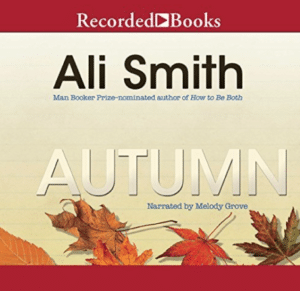
Autumn by Ali Smith may be my favorite audiobook. It’s a beautifully written and narrated book about the relationship between a young girl and a neighbor who helps her learn how to think. When she grows up, she still thinks about him and that turns out to be important for them both. Narrator Melody Grove fills each character with dignity and depth that keeps you listening. The book was short-listed for The Man-Booker Prize in 2017.

7-favorite-audiobooks-to-jumpstart-2018

7-favorite-audiobooks-to-jumpstart-2017

If action and crime are more to your liking, IQ and Righteous, the sequel, in this new series by Joe Ide are all-American crime mysteries. Ide’s hero, and ours, is Isiah Quintabe, an African-American teenager in Long Beach, California. This giantly smart kid finds himself on his own after his brother, who’d been raising him, is mysteriously killed. He begins to investigate small crimes for neighbors, who initially pay him with baked goods and other humble offers and he gains the nickname I.Q. In the first book, he graduates quickly to the scary, and often hilarious, investigation of a crime involving a hip-hop star. Narrator Sullivan Jones gives a pitch-perfect performance to make both audiobooks interesting and fun listening. The crimes are serious. But you will laugh.

7-favorite-audiobooks-to-jumpstart-2017


North Water, by Ian McGuire, takes the mystery thriller to another level.  The  brilliantly written 19th century adventure story takes you aboard a whaling ship that travels from England to near the Arctic Circle.  The imperfect hero, Patrick Sumner, is an Irish-born doctor, a former British Army surgeon. Because he grew up Irish and poor, he becomes the fall guy for a slaughter that takes place while he serves in the British Army in India during the siege of Delhi. When he returns home to England, he can’t get a job. So he signs on to the whaler Volunteer and heads off with a cast of characters that includes an evil human being who commits more than one murder. Sumner feels compelled to uncover the murderer and does the dangerous detective work at great risk. The often cruel and savage story portrays the worst and the best of humanity. Narrator John Keating turns the book into a perfect movie for the mind. 


7-favorite-audiobooks-to-jumpstart-2018

Days Without End, by Sebastian Barry, also ranks right up there on my list of great listens. The beautiful descriptive writing sounds and feels like poetry, and narrator Aidan Kelly’s flawless performance makes the audiobook compulsive listening.

Thomas McNulty, the central character, tells the story of his tumble into the U.S., in the 19th century as a refugee from the famine in Irleand and mass graves in Canada. He meets another boy, John Cole, who becomes his life-long companion. “We were two wood shavings of humanity in a rough world,” Thomas says describing the teenagers as they look for work.  A saloon owner hires Thomas dressed in a burlap sack, and John Cole, in a black suit, to wear dresses, look like girls and dance with miners.  But the sweet idyl comes to an end when they outgrow their pretty looks at sixteen and seventeen. They find their way to the U.S. Cavalry to fight in the Indian Wars. Barry casually unspools the loving relationship between Thomas and John, and then the family they create with their adopted Sioux daughter as they move from the Cavalry to fight for the North in the Civil War and then to begin life anew.  The sweeping history, filled with blood and gore and senseless revenge, makes you weep and smile and in the end you’re sorry to let it go. 


7-favorite-audiobooks-to-jumpstart-2018

Magpie Murdersby Anthony Horowitz, is a thriller within a thriller that keeps you listening. It begins as a conventional cozy British mystery with book editor Susan Ryeland trying to piece together the ending of a novel after a best-selling author, Alan Conway, dies. Narrators Samantha Bond and Allan Corduner take you on a nail-biting romp through London and the English countryside. 


Smile, written and narrated by Roddy Doyle, gives you very little to smile about. The powerful novel puts you in the life of a middle-aged Irish man, Victor Forde, who as the story unfolds recalls and describes his abuse at the hands of a Christian brother and the affect on his life. Much of the telling occurs in a bar in Victor’s new neighborhood, where he is confronted by a man called Fitzpatrick, who claims to be a boy from his past and challenges and forces up the memories. The story takes place mostly in Victor’s mind. Doyle brilliantly keeps the tension in the book moving between memory and what feels like reality until you learn otherwise. The title comes from line in Victor’s childhood when a second Christian brother sets the boy up for ridicule: “Victor Forde, I can never resist your smile,” he said.

Crime lovers. My bonus audiobook recommended from earlier last year.

7-favorite-audiobooks-to-jumpstart-2018

The Force, by Don Winslow and narrated by Dion Graham, takes you on a dark ride with cops in upper Manhattan. I couldn’t stop listening. It’s filled with twists and turns about cop corruption, racism, guns, drugs, the real dangers cops face, family and sex. It’s really good. Dion Graham’s performance is terrific and the cop talk sounds like the real thing. 

And for additional recommendations try these.

Nigerian Prince Scammer Arrested

A player in the Nigerian Prince scam was arrested in Slidell, Louisiana and it turns out he’s a Slidell hometown boy. Slidell police arrested 67-year-old Michael Neu and charged him with 269 counts of wire fraud and money laundering. Investigators suspect that Neu acted as the middle man in hundreds of “Nigerian Prince” internet and phone scams that conned money from victims in the United States.  The charges allege that Neu wired some of the money he collected to co-conspirators in Nigeria.

Nigerian Prince Scammer Arrested
Slidell Louisiana Police Arrest Michael Neu, Nigerian Prince Scammer. Slidell Police Photo

Slidell police posted the information about the arrest on the department’s Facebook page

They say the 18-month investigation continues, but poses a challenge because many of those involved live in other countries. 

 You probably know how the scam works.  Several of these emails blasted through the spam filter in the past couple of months. They generally say something like you are the beneficiary in a will and you stand to inherit a million dollars or more. To claim the money and prove you are the beneficiary, they ask you to send bank account or credit card numbers.  Or, this Nigerian prince has inherited money and needs to pay fees, or bribe officials to get the money and transfer it out of Nigeria with your help. He’ll split some of the big money with you. But first you have to send bank account, or credit numbers in fax given in the letter, or via email. 

While most people delete, delete, delete these emails, unfortunately some grasp for the ring they hope is made of gold. Once they give up their personal information, thieves work quickly to steal their money and then disappear.

Law enforcement officials find it hard to track the criminals. Even if they do, they often can’t bring them to justice or collect the money because they are not in the United States.

Previous investigations found Nigerian Prince scammers working out of coffee shops in Nigeria, London and Canada.  The FBI calls this the 419 Fraud because the scheme violates the 419 section of the Nigerian criminal code.  

The FBI offers these tips for dealing with 419 Scam.

If you receive a letter or e-mail from Nigeria asking you to send personal or banking information, do not reply in any manner.

Send the letter or message to the U.S. Secret Service, your local FBI office, or the U.S. Postal Inspection Service.

You can also register a complaint with the Federal Trade Commission’s Complaint Assistant.

If you know someone who is corresponding in one of these schemes, encourage that person to contact the FBI or the U.S. Secret Service as soon as possible.

Be skeptical of individuals representing themselves as Nigerian or foreign government officials asking for your help in placing large sums of money in overseas bank accounts.

Do not believe the promise of large sums of money in exchange for your cooperation. Guard your account information carefully.


Pay Taxes In Advance For 2018

updated December 28, 2017

Pay taxes for 2018? Who wants to think about that in the middle of the holiday glow? But the Trump-Republican tax overhaul threatens to hurt us and millions of other middle-income people and we want to limit the damage it can inflict. So we checked in with our accountant, Jake Fine, and he advised us to make the most of the last week of December. “Pay your real estate taxes for the first two quarters of  2018 before the end of this year,” he said.

The non-partisan Institute on Taxation and Income Policy points out the tax law will benefit “high-income households and foreign investors.” The group’s analysis says, “In the first year of the plan, the richest households will receive an average tax cut of $55,000.”

Pay Advance Taxes For 2018
Analysis and Chart by the Institute on Taxation and Economic Policy

It will also benefit  President Trump and his family while it hurts the middle class and those of us who own a home and live in high tax cities and states.

Instead of deducting the total amount of real estate tax we pay in New York City, we can now only deduct $10,000. We pay significantly more taxes and this will really hurt us and others like us. 

New York Governor Andrew Cuomo estimates the new law will increase taxes on New Yorkers by $14 billion. Cuomo issued an Executive Order instructing local governments to accept tax payments for 2018 in 2017.

Cuomo said, “As Washington wages an all-out assault on this state and this nation, I have authorized local governments to allow property owners to pay part or all of their taxes early. New York has made unprecedented progress reducing the burden of taxes on our middle-class families, and we will not allow this attack to roll back all that we have achieved. This Executive Order will allow property owners to deduct either part or the full amount of their payment from their federal taxes before the GOP tax bill goes into effect.”

The IRS issued an advisory clarifying the circumstances under which you can pre-pay your 2018 taxes in 2017 and get a deduction. Basically, you need to have an assessment and a bill from your county, town or city.  So it’s likely that you have been assessed for the first two quarters of 2018, but not for the rest of the year yet. If that’s the case, the IRS advisory says, “Taxpayers who prepay their 2018-2019 property taxes in 2017 will not be allowed to deduct the prepayment on their federal tax returns because the county will not assess the property tax for the 2018-2019 tax year until July 1, 2018.”

It’s wise to check with your county or city government to see if they will accept your taxes early. It’s also a good idea to check with your accountant or financial advisor to see what you need to do to reduce the tax burden Trump and the Republicans have piled on.


Giving A Puppy As A Surprise Holiday Gift


by Philip Raclyn, DVM

Maybe you’re thinking, “I can’t wait to see their expression when they see this adorable little puppy under the tree…” And it’s true: a puppy is bound to bring a smile to your child or loved one’s face. But as appealing as the idea may be, here are three important reasons why you should resist the impulse to give someone a puppy as a surprise holiday gift.

You’re Making an “Arranged Marriage”

You may have researched the breed, and think you know the kind of dog your child, spouse, or friend will enjoy, but all dogs, whether purebred or mutt, have individual personalities, quirks, and needs. You’re taking a big risk by choosing a “best friend” for someone else.

And while it’s hard to resist almost any puppy, not all adoptable pups are healthy, even-tempered, or properly socialized around people. It’s often hard to tell, particularly with shelter animals, if the puppy has physical or emotional issues that its new owner won’t be prepared for, or a temperament that doesn’t suit them.

giving-a-puppy-as-a-surprise-gift

You’re Making a Commitment for Someone Else

Adopting an animal is a huge commitment and caring for animals is an enormous responsibility. By “gifting” a pet, you are making that choice for someone else.

You are committing someone to both the time and the expense of caring for a pet. If it’s for your child, are you sure your child will be willing to walk and care for the pet? Or would they actually be happier with a toy puppy for the time being?

And if you’re gifting a puppy to a friend or a parent, are you sure they have the time and the financial ability to provide proper care for the dog and pay for food, training, vet visits, pet sitters, equipment, and dental care?

Animal shelters are filled beyond capacity with homeless animals, many of which were former “pets”—all because a child lost interest and no one else stepped in or because an adult owner discovered that they were unable to continue to care for their new dog.

You May Support Inhumane Puppy Mills

A shocking percentage of the puppies in both pet stores and shelters come from unscrupulous breeders who force dogs to continually breed in cramped, inhumane conditions.

This overbreeding and inbreeding produces puppies that are unhealthy, genetically flawed, and poorly socialized.

By purchasing one of their carelessly bred pups, or agreeing to adopt one of their rejects from a shelter, you are allowing unethical puppy mills and unlicensed breeders to continue to thrive.

What’s A Safe – and Ethical – Way to Gift a Puppy?

A life-long companion shouldn’t be a spur-of-the-moment decision, nor should it be a “blind date.”

The very best way to gift a “best friend” is to let your loved one choose their own puppy by visiting or calling a responsible, certified breeder who can tell you about the personalities and temperaments of the individual puppies he or she has carefully bred. And who can guarantee that the puppies are healthy and properly socialized. That’s why we’ve created The Puppy Project: to create a way to find responsible, humane, and expert breeders who are certified by The Veterinary Council for Breed Stewardship.

Or, if you want to gift a shelter puppy, make sure it’s from a good facility that lets folks not only spend time playing with the potential pet, but also – like the Humane Society – provide new pet adopters with 30 days to test the relationship.

If you think a new puppy is exactly what will bring a giant smile to someone special this holiday season, and that they are ready for the responsibility, by all means offer to make it happen.

A great way to do that is to find a wonderful dog toy or adorable dog sweater and put that under the tree with a gift certificate for a great breeder or well-run shelter. That way you can offer to help them choose the puppy that they want, one that will put a smile on their face, and the puppy’s, way longer than just the holiday season.

*This post first appeared on LinkedIn

Senate Tax Bill Forces Medicare Cuts

Brace yourself. The proposed Senate tax bill would force $25 billion in Medicare cuts in 2018 and maybe more in the future because it would trigger a rule called Pay-As-You-Go or PAYGO.  The rule requires mandatory Medicare cuts and cuts to other programs when new legislation raises the deficit. The Senate plan adds $1.5 trillion to the deficit and so if it becomes law, Medicare will suffer.

The Congressional Budget Office (CBO) lays out the gory details in a letter to Democratic House Whip Steny Hoyer. The CBO points out that the PAYGO limits  Medicare cuts to four percent, but that’s still a $25 billion cut. 

Social Security, Medicaid and Food Stamps are exempt from PAYGO. But other programs are not.  And raising the deficit with the tax bill means other programs, including student loans and farm subsidies, will also suffer.

While Congress pushes ahead with a tax cut plan that will benefit rich people, even conservative think tanks and some rich people urge against it.  Deficit hawks like those at the Peter G. Peterson Foundation say, “Tax reform should grow the economy, not the debt.” 

The Economic Policy Institute, which studies policy aimed at helping low and middle income workers, points out that the top 1 percent will benefit with a $32,500 tax cut but the bottom 20 percent will pay $10 more. Its report says that while 20 percent of people in the middle will get a tax cut, 66 percent of them will get a tax increase in 2027.

More than 400 millionaires and billionaires wrote to Congress to ask lawmakers not to cut their taxes. Under the umbrella of the Center for Responsible Wealth, the signers said, “We believe the key to creating more good jobs and a strong economy is not tax breaks for those of us who have plenty, but investing in the American people. Our civic institutions that help people meet basic living standards and protect the climate are critical to supporting our prosperity as a nation.”

The signers of the letter include: Rockefeller Brothers Fund chair Steven Rockefeller, financier George Soros, filmmaker Abigail Disney, former American Airlines CEO Robert L. Crandall, Seventh Generation founder Jeffrey Hollender, Hanna Andersson founder Gun Denhart, former Stride Rite CEO Arnold Hiatt, film producer Sarah Pillsbury, clothing retailer Eileen Fisher, and former US Labor Secretary Robert Reich. 

If you don’t like what Congress is doing, let your Senators and Representatives know.  Here’s how:

 Call the U.S. Capitol switchboard at (202) 224-3121and ask for them. You can find your U.S. Representative here.

And your U.S. Senators here


Who Protects Your Money?

Who protects your money? You do, of course. But your personal finances also got help in the past five years from the Consumer Financial Protection Bureau (CFPB). It has protected all of us from missteps and worse by big financial institutions like J.P. Morgan Chase, Wells Fargo, Citi, credit reporting companies and other pillars of our economy. It also went after less well-known financial predators including payday lenders, debt collectors and college loan servicing companies.

That’s why, whether you voted for Donald Trump and whether you’re a Republican or Democrat, you should worry that Trump installed Mick Mulvaney to lead the bureau that protects consumers.

Who-Protects-Your-Money?

Mulvaney, Trump’s budget director, called the CFPB a “joke…in a sick, sad way,” in a 2014 video interview with the Credit Union Times. The bureau came about as part of the Dodd-Frank Wall Street reforms after the economy nearly collapsed because of bad banking practices in 2008.

Now, in case you haven’t followed what the CFPB has done — and who follows everything? — here’s a quick reminder of a few of its standout actions.

The CFPB fined Wells Fargo $185 million for opening phony accounts for customers who didn’t know they were paying for extra services. The CFPB refunded more than $100 million to Wells Fargo customers. And the CFPB has gone after Wells Fargo to successfully retrieve money for other violations.

The Consumer Financial Protection Bureau has fined Chase repeatedly. In one instance, 2.1 million consumers received refunds from a CFPB imposed fine of $309 million because customers were charged for so-called credit monitoring that they didn’t receive. In another instance, Chase had to refund at least $50 million to consumers and pay a fine of $136 million to the CFPB and 47 state governments for illegally assigning credit card debt to debt collectors when customers didn’t owe money. These are just two examples of cases involving Chase.

In 2016, thanks to the CFPB, Citi refunded $5 million to individual consumers because Citibank sold credit card debt to debt collectors and inflated the interest rates. In another case, CitiMortgage and CitiFinancial Services paid a $28.8 million settlement because of mortgage loan servicing practices. 

The CFPB went to bat for students who took out loans to attend for-profit colleges and received worthless or questionable education. It sued Corinthian Colleges for predatory lending 

In total, companies have paid $11.9 billion to consumers because of illegal practices and 29 million consumers have benefited. The CFPB motto is clear: “We protect consumers from unfair, deceptive, or abusive practices and take action against companies that break the law.”

So if any of this is important to you, call your senators and congresspeople. Call the U.S. Capitol switchboard at (202) 224-3121and ask for them. You can find your U.S. Representative here.

And your U.S. Senators here


Tax Cut Winners And Losers


by Barbara Nevins Taylor

Do you lose with the tax cut? It depends how rich you are. Both the House and Senate plans have tax cut winners and losers. The rich do better under both the House and Senate tax plans, according to the non-partisan Tax Policy Center. Its report says, “The largest cuts in dollars and as a percentage of after-tax income would accrue to higher income people.” Researchers also found “. . . not all taxpayers would receive a tax cut under this proposal — at least 7 percent of taxpayers would pay higher taxes under the proposal in 2018, and at least 24 percent of taxpayers would pay more in 2027.”

So who wins and who loses under the plan the House of Representatives passed and the proposals under consideration by the Senate?

Losers

You stand to lose if you deduct  student loan interest, or tuition and fees. The proposed House plan eliminates those deductions. The Senate plan leaves things the same.

You lose, under the House tax plan, if you deduct out-of-pocket medical expenses. The Senate proposal, for now, leaves things the same.

You lose if you itemize deductions now. Both the House and Senate proposals repeal many itemized deductions.

If you deduct state and local taxes, you may find a big change. Under the House plan you could deduct up to $10,000 of your real estate taxes. But under the Senate plan you couldn’t deduct anything, not your property taxes not state and local income taxes. Nor could you deduct medical expenses or charitable donations.

If you deduct your mortgage interest, the Senate proposal would let you deduct interest on a house loan of up to $1 million. Under the House plan it’s $500,000 for a principle residence. So this hits many people who live in California, New York and New Jersey where real estate prices and taxes are high and many have second homes.

Winners

Corporations win as the tax rate would go down from 35 percent to 20 percent under both the House and Senate plans. 

You also win if you have an estate valued over over $5.6 million, or twice that for a couple. The top estate tax rate of 40 percent wouldn’t kick in under the House and Senate plans unless your estate is valued at $22.4 million for couples and $11.2 million for individuals.


7 Things About Health Insurance For 2018

You need to know 7 things about health insurance for 2018. The first is that the Affordable Care Act (ACA), or Obamacare, still offers health insurance for people who buy their own. Republicans in Congress tried and failed to do away with the ACA this year, and although Donald Trump has worked to undermine the system, it is still there and ready to use.

That means if your employer does not provide health insurance, you can sign up through the ACA.

However, a few things have changed.

1. The Affordable Care Act still exists and you can buy health insurance through Healthcare.gov, or your state healthcare exchange. Plans cover:

a. Pre-existing conditions

b. Essential health benefits and preventive services
Doctor visits
In-patient and out-patient hospital care
Prescription drugs
Pregnancy care and childbirth
Mental health services
(Some plans cover more)

 c. Preventive Services
 Shots
 Screening

2. You have less time to make a decision about the type of health plan you want. That’s because the Trump Administration reduced the time period for registration by six weeks. The enrollment period runs from November 1 to December 15, 2017 for the federal exchange. And the Healthcare.gov website will shut down for maintenance every Sunday from midnight until noon, except December 10. The plan you buy before the deadline will begin on January 1, 2018.

3. Automatic re-enrollment kicks in if you have a plan under the ACA and update or review it to make sure it’s still right for you. That’s why it’s important to go back to your exchange and compare plans. You have until December 15, 2017 to do that. You also need to update your income and household information to make sure that you get the savings and the premium tax credit you deserve.

4. If your insurer wrote to tell you it is not offering a plan in your state this year, Healthcare.gov or your state exchange will match you with another insurer.

5. Penalties still exist. If you earn enough to pay federal income tax, you have to have insurance or you will pay a fine at tax time. That fine is 2.5 percent of your income, or $695, whichever is greater.

6. Shop around. Prices went up in large part because President Trump cut subsidies to insurers and they raised premiums to offset their losses. The premiums are higher on silver-level plans in some states. And Kaiser Health News reports that the highest-level gold plans, which cover 80 percent of costs, may have in some cases lower premiums than silver plans. So you really have to pay attention and make sure that you get the best deal.

7. Beware of insurance sold outside of the marketplaces. Apparently, some insurers began selling plans with limited benefits outside of the marketplace. These do not cover everything and may not cover pre-existing conditions. If you buy one of these cheaper plans that offers less you may still have to pay the fine because it doesn’t meet the federal requirements.

West Side Highway Terror Attack Hits Home

Maddening, infuriating, awful, thoughts, words pile up and out when you hear about a terror attack. For us the West Side Highway terror attack hits home. We walk from our  house in the Village to a beautiful path along the Hudson River down to the Battery and the beginning of Manhattan island. When we ride our bikes south, we ride on the portion the terrorist targeted.

Crumpled bicycles lay on the path just below Houston Street where, say news reports, Sayfullo Saipov from Uzbekistan drove his truck aimed at bikers heading toward him. Sally had dismounted her bicycle and stood near the police tape upset and bewildered. “My daughter is locked down in Stuyvesant High School. I hope she’s okay. I hope everyone’s okay.” But all was not okay.


The 29-year-old killer, reported to have a Florida driver’s license and perhaps living in New Jersey, drove a rented Home Depot truck at high speed for about 15 blocks on the narrow path. He mowed down people in his way almost right to the door of Stuyvesant High School, where he rammed into a school bus injuring two two children and two adults. 

The driver then came out of the truck shouting “Allahu Akbar,” Arabic for “God is great.” He brandished what appeared to be two handguns. A uniformed police officer shot him in the abdomen. Police recovered a pellet gun and a paint ball gun.

Sally didn’t know that the NYPD had reported eight people killed and at least a dozen injured and I didn’t have the heart to tell her. 

At a late afternoon news conference Mayor Bill de Blasio, Governor Andrew Cuomo and NYPD Commissioner James O’Neal stood side by side grim faced. Mayor de Blasio said, “A very painful day in our city….This was an act of terror, a particularly cowardly act of terror aimed at innocent civilians.” He said, “We know that this action was intended to break our spirit. But we also know New Yorkers are strong. New Yorkers are resilient and our spirit will never be moved by an act of violence an action to intimidate us.”

The killing spree ended within a few blocks of the site of the World Trade Tower and the memorial to those killed on September 11, 2001. 

Commissioner O’Neal called it a, “A tragedy of the greatest magnitude.”

The wounded suspect was taken to the hospital and is expected to survive.