All posts by Barbara Nevins Taylor

Getting Business and First Class Flights For Less

by Barbara Nevins Taylor

When we began to plan our vacation we immediately looked around for relatively affordable business class flights. We felt willing to pay extra for a long overnight flight. But price did matter.

I discovered AARP Travel, and to my delight it offered a variety of regular and business class flights that seemed much cheaper than those listed on other sites.

Expedia actually powers the site for AARP, so it’s easy to use. After I entered my destination and dates I got a range of airlines to choose from and tickets, all roundtrips, for about $2100 per person. But the longer I procrastinated, the fewer options I had.

Finally, Nick and I agreed to pull the trigger on our trip. That meant we had to pick a flight immediately since we were about six weeks from our travel time. We lucked out. Swiss International Airlines, formerly SwissAir, offered a good deal if we added a stop in Zurich. The price for two: $4090.12.

On our travel date, we checked in at the lounge to await our flight from JFK to Venice via Zurich and Nick went to check the departure time. Amazingly, he came back to say, “We’ve been upgraded to first class. I think it was my blue blazer and straw hat.” Whatever. Lucky us!

Swiss International’s first class has seats that seem like self-contained boxes. Even though we sat side by side, we felt cossetted in our own little pods.

Switzerland prides itself on service and boasts excellent training for chefs and hoteliers. So it delighted us to discover that we benefited as passengers on the Swiss national airline, now owned in common with Lufthansa.

The flight attendants actually stopped to chat. They were gracious and eager to please, and charmed us. The food on the flight surpassed the usual gop; it looked and tasted more like what you would order in a good restaurant anywhere in the world.

But the sleeping arrangement was the best. The chairs in the pods folded down completely and the flight attendants laid down quilted pads and gave us warm white covers. And in our cubbies, we found packaged sleep clothes by Zimmerli of Switzerland, whose website proclaims, “The world’s finest underwear since 1871.”

The black sweatpants and pullover tops felt comfy and easy to sleep in.

We caught a couple hours of sleep, ate some yoghurt and fruit and enjoyed the scenery over the snow-covered alps.

We landed in Zurich and spent about an hour waiting for our next flight to Venice. All in all, Swiss International Airlines gets our five stars.

You can read about our trip to the Balkans here.


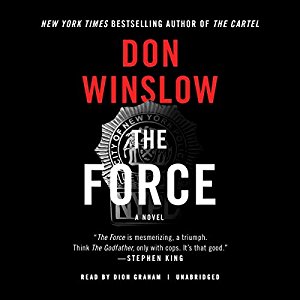
“The Force” Audiobook Review


by Barbara Nevins Taylor

I was so wrung out when the narrator Dion Graham ended The Force, I found my husband and said, “Now, I’m ready for a fairy tale.”

The Don Winslow novel takes you on a dark and harrowing cop ride-along through the streets of the Upper West Side and the territory cops call Manhattan North.  Denny Malone, a wildcat, corrupt NYPD sergeant and his band of brothers operate a task force with few rules and even fewer restraints. If you think you can imagine how bad things can get, just keep listening.

Winslow fills the twists and turns in the plot with racism, guns, drugs and the dangers for cops and real people caught in the cross-hairs of drug dealers and what they peddle. Winslow even throws in a ripped-from-the-headlines corruption investigation against his fictional mayor. The real investigation against New York’s current mayor was ultimately dropped by local and federal prosecutors.  

Narrator Graham makes Malone, his wife Sheila, girlfriend Claudette and Malone’s team and their wives so believable that you wince at every misstep and hope for redemption somewhere along the line. 

As a reporter who has covered the federal courts, prosecutors, the NYPD, the FBI and the drug scene, I can tell you that it all feels and sounds real including the Staten Island backyard barbecue.  I had to keep telling myself: Sure, some prosecutors serve themselves first. Sure, some cops take every opportunity to go rogue. But most I’ve known stay clean and straight. 

Don Winslow writes fiction that reads and sounds pitch-perfect. A criminal comes out of a housing development with his hands held high, “What you want?” he asks Malone. “My lawyer’s on the way.” Malone looks around at the gathering crowd and thinks, “It has to be 20 people holding their cell phones up. It looks like a rock concert.”

Every chapter keeps you spinning with some crazy New York street thing and (no spoiler alert) Malone’s steady descent into hell. Some things do pull him back, and while you may hate him, you feel for him. 

Characters up and down the chain of command, the prosecutor and the mayor all live in netherworlds of deals and easy rule breaking. It’s hard to separate them from the drug dealers and that feels like Winslow’s point. 

The author of the best-selling and prophetic The Cartel, in which a drug lord escapes from prison, took out a full-page ad in the New York Times recently to criticize President Donald Trump and Attorney General Jeff Session for their call for harsher penalties for drug crimes.  He called them “woefully ignorant.” 

If you like your fiction hard-boiled and like reading and listening to stories about cop life, make a date with the audiobook version of The Force.


Gay Pride In The Village


by Barbara Nevins Taylor

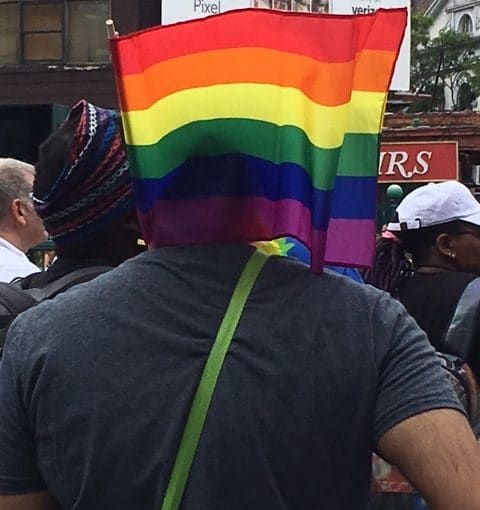
People gathered near the Stonewall Inn and began celebrating gay pride in the Village early on Sunday. They didn’t wait for the official parade to kick off at 36th Street and Fifth Avenue.

They let the parade come to them as it headed downtown and wound its way through the streets bounded by barricades, police officers and garbage trucks strategically placed for security. 

The route took marchers past the Stonewall Inn on Christopher Street, the historic heart of the gay liberation movement.

Gay pride first went public at the Stonewall Inn and the history provides a dramatic story.

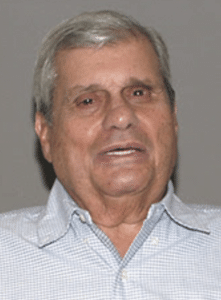
In the late 1967 Tony Lauria, connected to the Genovese crime family and reportedly working under Matty “The Horse” Ianniello, bought the Stonewall.

Gay-pride-in-the-village
F.B.I mugshot

He turned it into a gay nightclub that attracted drag queens and young people from the suburbs who came to dance and drink. The club had no liquor license because the New York State Liquor Authority refused to grant licenses to gay bars. So the Mafia stepped in and ran the illegal bars that catered to gay people. The NYPD Morals Squad made regular raids and arrested workers and patrons.

On June 28, 1969, during a raid, police hauled people out of the Stonewall into waiting paddy wagons. About 200 people on the street gathered to watch as young gay men vamped as they went into the vans.  A woman under arrest and forced into one of the vans reportedly yelled to the crowd, “Why don’t you guys do something?”

The crowd responded. First they threw coins at the police, according to an account by Lucian K. Truscott, IV, then a reporter for  the New York Times. He was drinking at the Lion’s Head nearby and came out when he heard the commotion. He said the crowd then started throwing bottles and escalated to heaving cobblestones through the window of the bar after frightened officers retreated inside to await reinforcements.

The chief of the Morals Squad, Seymour Pine, said that he raided the Stonewall to stop illegal liquor sales and to break up a Mafia blackmail ring that targeted gay Wall Streeters.

Nevertheless, the early morning riot led to six days of protests outside the Stonewall and marked the beginning of the gay civil rights movement. 

In 2016, President Barack Obama named the Stonewall Inn a National Historic Landmark to honor its place in the fight for civil rights for all. 

The Stonewall Inn and the park across the street now attract tourists from around the world.


Audiobooks For Summer Listening


by Barbara Nevins Taylor

Every time a great audiobook narration flows through my earbuds and a story unfolds like a movie, I want to tell the world.   

So for June Audiobook Month, I put together a list of the best books I’ve listened to in the past six months. Some are new and others were published and recorded a while ago. But each will make great summer listening. I hope you enjoy. 

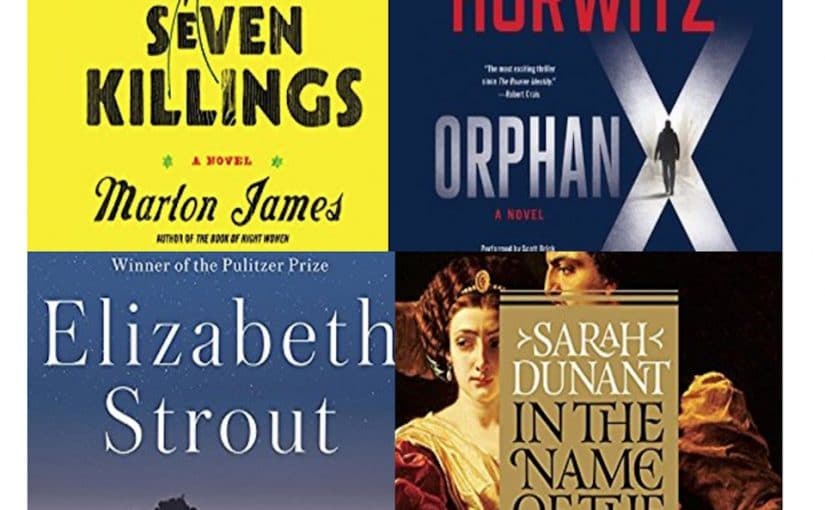
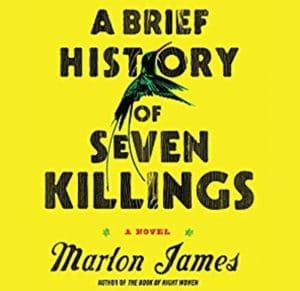
A Brief History of Seven Killings, by Marlon James, narrated by Robertson Dean, Cherise Boothe, Dwight Bacquie, Ryan Anderson, Johnathan McClain, Robert Younis, Thom Rivera

This tour de force won The Man Booker prize in 2015. A great read, I’m sure. But the seven actors who  perform the story take it to another place entirely, and lead you on a mesmerizing trip that starts in Jamaica in the 1970s.

The tough language, patois and raw brutality may put some off. But if you can deal with it, you’ll find yourself starting out in the Kingston ghettoes in 1976, in the middle of a story about Caribbean politics, the consequences of C.I.A. overreach, Cuba, the drug trade and murderers who kill as easily as they breathe.

In vivid street talk, each of the central characters tells his or her story in the first person during alternating chapters. So you get into the heads of  Jamaican gangsters, C.I.A. agents and operatives, a writer-reporter for Rolling Stone, a young Jamaican woman who inadvertently gets involved and a few new characters as the story goes on.

James begins with the re-election campaign of Michael Manley and plans for a reggae concert to ease tensions between political groups. “The singer,” Bob Marley, looms large in the minds of the politicians, the gangsters and the C.I.A. Guess who doesn’t want the concert to occur?

A political plot aimed to unseat Manley leads the gangsters to shoot Marley, his wife Rita and his manager. It doesn’t end there. The characters continue their brutal tale of what follows during the next fifteen years in Jamaica, Miami and New York. If you’re like me, you’ll find yourself repelled but in awe of the Jamaican bad men, the performers, the writer Marlon James and wishing the story would go on forever. 


Anything Is Possible, by Elizabeth Strout, narrated by Kimberly Farr

Elizabeth Strout’s characters live on a different planet from those who people the Marlon James novel. Her beautifully crafted stories of midwestern angst take you into the lives of people in small towns who slowly discover surprising things about themselves and their neighbors. Anything Is Possible follows the people who made Lucy Barton’s life hell in Strout’s 2016 novel, My Name Is Lucy Barton. It tells the story of a novelist who comes to terms with how growing up in a small town, in an impoverished abusive family, shaped her. In Anything Is Possible we get the flip side of the story, the truth behind the lives of those who made Lucy Barton feel small: the gay father of a friend, the mom who runs off to live with a younger lover in Italy, the aching loneliness of a man seeking sexual fulfillment and more. Kimberly Farr performs the story and characters with pitch perfect accuracy.  Her narration draws you into the people who’ve hidden aching secrets that come bubbling up to the surface in the most unexpected ways.


In the Name of the Family, by Sarah Dunant, narrated by Nicholas Boulton

If you like soapy, well-researched historical novels, Sarah Dunant does it perfectly. Her In the Name of the Family follows the Borgia family during the last years of Papa Borgia’s reign as Pope Alexander VI. She tells the story through the eyes of Lucrezia, Cesare, Pope Alexander VI and Niccolo Machiavelli. The rich cast of characters romps through late 15th century Italy, particularly Rome and Ferrara and the countryside in between. The Pope, to consolidate his political power, sends Lucrezia off to marry the heir to the Duke of Ferrera. She struggles to make the marriage to an indifferent husband work. While Cesare battles enemies and the pox, and Machiavelli, traveling with Cesare representing the rulers of Florence, tries to keep tabs on what the Borgias plan to do next. Whether they go to war against Florence concerns his masters most. Nicholas Boulton makes it all believable, fun and compelling listening. 


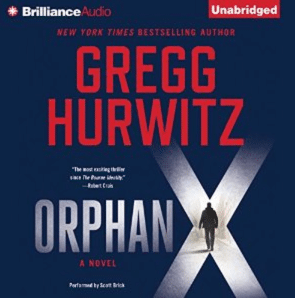
Orphan X, by Gregg Hurwitz, narrated by Scott Brick

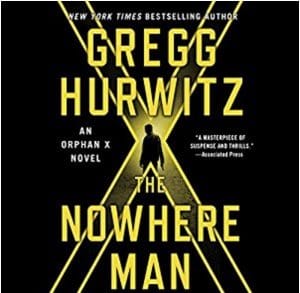
Gregg Hurwitz writes a thriller that keeps you on the edge as you worry about whether the hero will survive. They all do, don’t they? Yes. But. And the but counts here. Orphan X and the sequel The Nowhere Man really do make you wonder how Evan Smoak will get out of the mess Hurwitz puts him in. Narrator Scott Brick makes you feel for Evan as you join him on a roller coaster of violence that descends into the mundane domestic life of a California bachelor trying to hide his true identity in a high-rise condo filled with nosy neighbors, a single mom and a boy who needs a friend.

Smoak understands loneliness. As a child he was plucked out of an orphanage and trained in a clandestine U.S. program to become a black ops assassin. But his handler veered off script, treated him like a son and provided a humanist, literate education while teaching him to kill. That sets Evan Smoak apart from other orphans trained in the program by less loving tutors.  We meet him after he breaks from the government to work on his own and use his cunning and combat skills to help people in need. 

The Nowhere Man picks up where Orphan X left off and fills in more back story.  Both audiobooks provide your money’s worth of fun, excitement and compulsive listening. 

You can find more audiobooks in Audiobooks for Summer Listening Part 2

Audiobooks For Summer Listening Part 2


by Barbara Nevins Taylor

From historical romance to action-adventure and literary novels, I like well-written stories with great narrators. And a few of my recent favorites cover a range of genres.

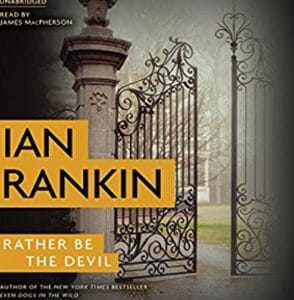
Rather Be The Devil, by Ian Rankin, narrated by Michael Page

You can count on Ian Rankin to deliver a solid police procedural, even when his Detective John Rebus retires. Rebus inserts himself into an investigation to help solve a string of murders in Edinburgh. Of course the new people in charge don’t want him around.  The story gives a great push and pull between Rebus and authority as the entertaining and surprising story unfolds.

Michael Page performs strong characterizations as he and Rankin keep you listening. 

Victoria, by Daisy Goodwin, narrated by Anna Wilson-Jones

Daisy Goodwin tells a vivid, detailed and romantic story about the 18-year-old Alexandrina Victoria as she becomes queen and finds her way through the thickets of  political intrigue and love. Goodwin’s research and rich storytelling skills make it fresh and exciting. As you listen to Anna Wilson Jones’ narration, you travel through this coming of age tale cringing and occasionally fearing for this willful young woman and the possibilities that she will make the wrong decisions. 

The audiobook gives you insight into life in the royal quarters during the 19th century, the role of Victoria’s first Prime Minster Lord Melbourne as her political tutor and her reliance on him. Clearly she loves him, at least in this book. But much to her chagrin, he keeps her at an emotional arms length and eventually she moves on to a romance with her cousin Prince Albert. I bet a sequel follows and I will listen. 


 The Dry, by Jane Harper, narrated by Steven Shanahan

In this mystery thriller set in a parched, remote area of Australia, federal agent Aaron Falk returns home to Kiewarra from Melbourne to attend the funeral of a childhood friend. The richly layered and well-written story surprises the listener with one slow and well-timed reveal after another. Jane Harper keeps you listening with the pages turning in your mind. Steven Shanahan’s Australian accent takes a little bit to get used to, but he and the author reward you if you stick with it. And it doesn’t take very long for a listener to warm up to the accent and the story to get rolling.

Falk, we learn, was forced to leave Kiewarra with his dad when he was a teenager. He planned to come back for only eighteen hours, but gets drawn into an investigation of a murder that sent him packing in the first place. He takes a leave of absence and teams up with the town’s only cop and for what happens after that, you just have listen. The town and its people have a lot of secrets.


The Handmaid’s Tale, by Margaret Atwood, narrated by Claire Danes

Yes. Hulu has the series based on the 1986 book by Margaret Atwood. But this audiobook version of Margaret Atwood’s frighteningly realistic dystopian novel compels you to listen, even as you feel repulsed by the repression.

Claire Danes’ quiet narration and her embodiment of Offred, the handmaid who leads us through the horror of an oppressive anti-woman regime, feels just right. 

I didn’t read the book when it was first published because I’m too optimistic and couldn’t buy into the nightmare vision of the world. In our political climate today, it sadly and horribly seems important to listen, read or watch The Handmaid’s Tale

My Dad The Newsman And Trump Truth

I can hear the growl in our father’s voice now and picture him leaning back in his chair, his feet in brown suede Gucci loafers propped atop his desk. I see him, hear him, arguing with producers at CBS News in New York as he tries to explain why people in the red state South would still believe Donald Trump, even after former F.B.I. Director James Comey said Trump lied and tried to smear him and the F.B.I.

He wouldn’t like it, but as head of the CBS News Atlanta bureau he would have understood and attempted to interpret why many Southerners would resist what his news colleagues saw as obvious truth: Comey’s testimony before the Senate Intelligence Committee that Russia had — and would again — attempt to damage our democracy and that the President had never asked about the Russian meddling.

Our dad, Zeke Segal, grew up in Queens, New York, went to Yale and then the army, gave up dreams of becoming a playwright, worked in radio and then launched a long and great career as a TV news executive at CBS.  Landing in Atlanta as the bureau chief, he was an unlikely interpreter of the Southern psyche. But he listened to people, to the reporters, photographers and producers who worked with him. And he heard the undercurrents and recognized discontent before it bubbled to the surface.

So he probably wouldn’t have found it surprising that Donald Trump, another guy from Jamaica, Queens, appealed to people who felt shut out and disenfranchised by Washington. He would have admired Trump’s raw genius for seizing on the anger and fear of so many Americans, and exploiting their troubles to his advantage.

But he would have hated the lying, the attacks on reporters, the U.S. Constitution and the values that make the United States, as James Comey said, “the shining city on the hill.”

He hated it when the world began to use the term “media” to lump together the disparate groups of people who gather news.

“What does media mean?” he’d ask, his face twisting in disapproval. “You’re a reporter, a producer, an editor, a journalist. What’s that bullshit?” 

You can imagine what he would say about calling the people who appear on news programs, expressly to lie for Trump, surrogates. 

He was a report-only-what-you-know newsman, someone who hated embellishment, and he was more than willing to put the spotlight on people who abused their power.

So my head fills with rants that I hear him muttering from the grave and I don’t try to push them away. I’m right there with him.

 I also know how proud he would feel about the state of journalism in this age of awful Trumpism. 

He would applaud responsible news organizations, their reporters, producers and editors, for digging deep to reveal the truth and pushing back with facts against the falsehoods that come out of this White House.

He’d also love it that 19.5 million Americans, according to Nielsen, tuned in across 10 networks to watch James Comey testify. He’d applaud the surging interest in quality journalism since Trump’s election, with The New York Times, reportedly adding 600,000 digital subscribers and subscriptions significantly increased at other national papers like the Wall Street Journal and the Washington Post.

Zeke Segal would raise his glass of red wine and use an expletive to say, “That   …….ing Trump made news great again.”


Dreamers With Deferred Action Safe For Now

Dreamers who fall under the Deferred Action For Childhood Arrivals program can breathe a sigh of relief. Donald Trump reversed his campaign pledge to end it and deport young immigrants. In a press release, Homeland Security Director John Kelly said, “The June 15, 2012 memorandum (by President Obama) that created the Deferred Action For Childhood Arrivals (DACA) will remain in effect.

But the good news came at the end of a news release describing a memo rescinding Deferred Action for Parents of Americans and Lawful Residents (DAPA). That program, created by President Obama on November 20, 2014, gave immigrants whose children have legal status in the U.S. the opportunity to come out of the shadows, get work permits and apply for legal employment.

The Trump administration action officially killed that program. But it never went into effect because legal challenges from 26 states held up its implementation and the Supreme Court allowed a Texas federal judge’s order against it to remain in place.

Steven Choi, Executive Director of the New York Immigration Coalition, said, “After months of senseless and cruel threats, the Department of Homeland Security’s decision to maintain DACA is a huge victory for the 800,000 young people who grew up in this country and have legal permission to live here. Now we need a comprehensive and efficient pathway to citizenship for DREAMers free from needless government red tape.”

But Choi also acknowledge the dissolution of the program for parents. He said, “Although the administration has disappointingly abandoned DAPA, this is an important acknowledgement of the values that truly make America great: opportunity and justice for all.”

The bottom line is that with DACA in place, young undocumented immigrants can continue to apply for Deferred Action and get the benefit of a legally sanctioned existence in the U.S.

Bernie Sanders Condemns Shooting

The man who opened fire on Republican congressmen and staffers playing softball in Alexandria, Virginia was a rabid Bernie Sanders fan.  Senator Sanders went to the well of the Senate to denounce the shooter and the political anger that apparently motivated the shootings.

66-year-old James T. Hodgkinson featured Sanders on his Facebook page and filled it with angry posts denouncing  Trump, Hilary Clinton, John McCain, the DNC and Republicans. The Facebook page has since been taken down. 

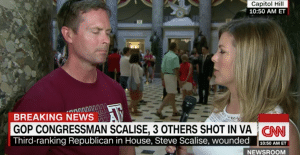
The former construction inspector from Belleville, Illinois was the lone shooter, according to law enforcement officials. He opened fire in a park where Republican members of Congress held a morning baseball practice and wounded five people, including House Majority Whip Steve Scalise (LA).

Illinois Representative Rodney Davis was at bat when the shooting started. He told CNN this could be the first rhetorical political attack.

He told Brianna Keilar, “This hatefulness that we see in this country today, over policy differences, has got to stop.” He said, “I believe there is such a hatefulness in what we see in American politics and policy discussions right now. In social media and the 24-hour news cycle.  We can disagree about how to govern. That’s what makes this country great….”  “I think Republicans and Democrats have to use this day to say, ‘Stop.’ We can work together. We have our differences. But let’s not let it lead to such hate.”

Before Hodgkinson’s Facebook page came down, political partisans filled it with diatribes against him and hateful comments about Democrats, Sanders and liberals.


VA Official Downplays Health Risk Of Agent Orange

ProPublica and The Virginia Pilot collaborated to report this story about the VA and the chemical herbicide Agent Orange, used in Vietnam, and a government official questioning whether exposure to it caused health problems.  Former Marine First Lieutenant Peter Owen Bannon wrote his personal story for ConsumerMojo.com about Vietnam, Agent Orange and the long term consequences. You can read that here

Veterans Affairs Official Downplays Agent Orange Risks, Questions Critics

by Charles Ornstein ProPublica, June 12, 2017, 8 a.m.

A key federal official who helps adjudicate claims by veterans who say they were exposed to Agent Orange has downplayed the risks of the chemical herbicide and questioned the findings of scientists, journalists and even a federal administrative tribunal that conflict with his views.

Jim Sampsel, a lead analyst within the Department of Veterans Affairs’ compensation service, told a VA advisory committee in March that he believes much of the renewed attention to Agent Orange — used during the Vietnam War to kill brush and deny cover to enemy troops — is the result of media “hype” and “hysteria,” according to a transcript of the meeting released to ProPublica.

“When it comes to Agent Orange, the facts don’t always matter,” said Sampsel, himself a Vietnam veteran who also handles Gulf War-related illness questions. “So we have to deal with the law as written.”

Part of Sampsel’s job entails reviewing evidence to determine whether a veteran or group of veterans came in contact with Agent Orange outside of Vietnam. By law, veterans are presumed to have been exposed to Agent Orange if they served or stepped foot in Vietnam; they have to prove exposure if they served at sea or in another country during the war. They also must have a disease that the VA ties to exposure to the herbicide.

“From my point of view, I will do anything to help veterans, any legitimate veteran, and I’ve done it plenty of times,” he told the Advisory Committee on Disability Compensation, a group that advises the VA. “Unfortunately when it comes to this Agent Orange, we have to have a lot of denials.”

Sampsel also offered a window, for the first time, into ongoing internal deliberations at the VA about adding new diseases to the list of those connected to Agent Orange exposure. He suggested that despite increasing evidence tying the herbicide to hypertension, or high blood pressure, the VA is not going to extend benefits to veterans with that condition.

Reached by phone, Sampsel said, “You’re going to try to frame me, too,” before referring a reporter to the VA’s media relations office. ProPublica and The Virginian-Pilot examined the effects of Agent Orange on veterans and their offspring in a series of articles in 2015 and 2016, raising questions about the VA’s handling of the matter.

The VA provided two written statements in response to questions for this article. Initially, a spokesman said that Sampsel was speaking as an individual at the meeting, and not for the VA.

“The objective of a federal advisory committee is to have open and public discussion of the issues for which it is chartered from the experts who understand and bring their own unique perspectives,” the statement said. “The March 2017 meetings were no exception and Mr. Sampsel’s comments did not fully or accurately reflect VA’s position concerning these issues.”

The VA said no decisions have been made about which new diseases to add to its list of those linked to Agent Orange exposure.

Asked whether it continued to support Sampsel, the VA said in a subsequent statement that he “is highly dedicated and respected within and outside of VA for the work he has done to establish many of the present policies that provide veterans, their families and survivors the benefits they are entitled to under the law.” The department also questioned the quotes a reporter asked about from the advisory committee meeting. “Taking quotes out of context without fully understanding the law, science, reasons or intent behind those words is a disservice to the advisory committee and the veteran community at large as well as Mr. Sampsel.” (Read the full transcript.)

Veteran advocates said they were furious to learn a VA official charged with objectively weighing evidence related to Agent Orange had shared controversial personal views.

Rick Weidman, legislative director for Vietnam Veterans of America, said he met with VA Secretary David Shulkin last week and told him, among other things, that Sampsel and others in the Veterans Benefits Administration need to be replaced. “Where they are now is doing active evil,” Weidman said. He added that he doesn’t expect Sampsel and other VA employees to necessarily be advocates “but we do expect them to be neutral and honest arbiters of science — and they are not.”

Although Agent Orange hasn’t been used in more than 40 years, it remains controversial because it contained dioxin, one of the world’s most toxic chemicals. Its effects can take decades to show up. Scientists continue to associate exposure to Agent Orange with diseases, and the VA continues to weigh whether to extend benefits to groups who say they were exposed to it outside of Vietnam.

Members of Congress who are leaders on veterans’ issues said the VA has an obligation to care for vets injured by Agent Orange. “I strongly believe we must do everything in our power to ensure veterans struggling with negative health effects as a result of exposure to Agent Orange receive the care and compensation they deserve; we owe nothing less to these brave men and women who have sacrificed more than enough for our country,” Rep. Tim Walz, D-Minn., the ranking Democrat on the House Committee on Veterans’ Affairs, said in a statement.

Among Sampsel’s statements:

  • He said he believes Agent Orange contained “very, very small amounts” of dioxin, which was quickly destroyed by sunlight and the open air. “That’s not commonly acknowledged by advocates,” he said. Moreover, Sampsel said, U.S. planes did not spray it when American troops were in the area.

    In fact, a report by the Aspen Institute notes that on leaf and soil surfaces, dioxin will last one to three years and that dioxin under the surface could have a half-life of more than 100 years. Moreover, scientists have said that there are numerous ways in which American troops may have been exposed to the herbicide and some disagree that few troops were exposed.

  • Sampsel pushed back against claims that veterans who served outside of Vietnam were exposed to Agent Orange. “When we get to outside of Vietnam, there’s a lot of controversy about Agent Orange use. And primarily it’s media hype, in my opinion.”

    In fact, veterans who served in Thailand, near the Korean demilitarized zone, in Okinawa, Japan, and aboard ships off the coast of Vietnam contend they were exposed in a variety of ways. Some have produced memos, photos and testimonials that have been enough to convince the Board of Veterans Appeals, the VA’s tribunal, that there was sufficient evidence to prove exposure and that they were entitled to benefits.

  • Sampsel criticized the Board of Veterans Appeals for its decisions. “BVA is, can do anything they want. I don’t know if everybody understands BVA. BVA has caused a lot of, what I would call misinformation about Agent Orange issues.”

    A member of the advisory panel, Thomas J. Pamperin, responded to Sampsel at the March meeting: “A decision by the Board of Veterans Appeals is the secretary’s final decision. I mean, we can’t distance ourselves from the Board of Veterans Appeals. It is part of the VA.”

    And in its statement, the VA said it, too, respects the BVA. “BVA is the highest appellate authority in VA,” it said. “They are attorneys who review the evidence of record and make decisions.” While the VA may not always agree with a decision, “their decisions are final and are implemented when issued.”

  • Sampsel criticized the prestigious Institute of Medicine, a congressionally chartered research organization hired by the VA, which in 2015 determined that the evidence suggested that a group of Air Force reservists could have been exposed to Agent Orange years after the Vietnam War when they flew aboard the C-123 planes that had been used to spray the herbicide.

    “One scientist from Harvard or somewhere said that dried, solidified TCDD dioxin never stops emanating molecules into the air,” Sampsel said. “Hardly anybody bought that at the time, but the IOM went with it.”

    He added a bit later: “I don’t think the science supports it. Most scientists don’t think the science supports it, but the law is what it is.”

    The Institute of Medicine, now called the National Academy of Medicine, found that the dioxin present on the aircraft could have exposed reservists who flew the planes years later. In its report, it said one contention of the VA and its expert, Alvin Young, was “inaccurate,” another “appears to be conjecture and not evidence-based” and a third was based on a study funded by Dow Chemical Co., one of the herbicide’s makers.

    In its statement, the VA said the Institute of Medicine “provides a valuable service to VA.”

  • Sampsel favorably cited Young, an Air Force officer, federal official and later the government’s go-to consultant, who has guided the stance of the military and the VA on Agent Orange and whether it has harmed service members. “I’m not the scientist,” Sampsel said at one point. “But I know that Dr. Alvin Young and the majority, the vast majority, of scientists don’t think that anybody gets any harmful effects from something that’s in the soil, buried in the soil.”

    But ProPublica and The Virginian-Pilot reported last fall that critics say Young’s work is compromised by inaccuracies, inconsistencies or omissions of key facts, and relies heavily on his previous work, some of which was funded by Monsanto Co. and Dow Chemical Co., the makers of Agent Orange. Young also served as an expert for the chemical companies in 2004 when Vietnam vets sued them. In an interview at the time, Young defended his work.

  • Sampsel said Young’s research showed that Agent Orange “never went to the Philippines, never went to Okinawa, never went to Guam,” as some veterans contend.

    A member of the panel interjected because he felt that Sampsel was being overly broad.

    “I’m sorry. I’m sorry. Yes, yes. You’re, you’re absolutely correct,” Sampsel said, noting he should have said there was currently no evidence. “And if evidence does show up, we’ll certainly change our policy. … You’re right.”

During his presentation, Sampsel also summarized internal deliberations within the VA about which diseases should be formally linked to Agent Orange. Last year, the Institute of Medicine said there is now evidence to suggest that Agent Orange exposure may be linked to bladder cancer and hypothyroidism. It also confirmed, as previous experts have said, that there is some evidence of an association with hypertension, stroke and various neurological ailments similar to Parkinson’s Disease.

Since then, a VA-led study has found stronger evidence to link hypertension to Agent Orange exposure. The VA has been reviewing the matter since last year to decide whether to cover the diseases.

Sampsel said the Veterans Health Administration had recommended that the VA acknowledge the connection between Agent Orange and hypertension, but that benefits officials at the VA worked to kill that effort and believe they succeeded.

“I believe the secretary, the information I got recently, is not going to go with hypertension. As to the other ones, there’s the likelihood that they’ll become added to the list,” Sampsel said.

The VA, in its statement, said it could not comment on internal discussions “other than to say those deliberations are underway.” But it did note that no recommendations had gone to the secretary for his consideration.

If the VA ultimately decides to add hypertension to its list of covered diseases, it could be costly. Hypertension is the most common ailment among veterans seeking health care at the VA — indeed it is one of the most common ailments among older adults generally.

ProPublica is a Pulitzer Prize-winning investigative newsroom. Sign up for their newsletter.

Trump AdministrationTo Gut Consumer Financial Protections


While Donald Trump ran as the champion of the working man and woman, his administration appears ready to gut the bureau that protects Americans from financial predators. A report from the Treasury Department says the Consumer Financial Protection Bureau (CFPB) over-reached and should have its authority reduced.

This is the same agency that in recent days urged retailers to make their credit card policies more transparent. The bureau found that retail store credit card promotions that defer payment often result in consumers paying more because they don’t understand the deadlines and penalties involved.

You may remember that the CFPB also exposed how Wells Fargo employees falsely opened credit card accounts for 1.5 million consumers, and was forced to pay restitution and fines totaling $175 million. 

The bureau also regularly goes after banks like J.P. Morgan Chase for illegal credit card practices, and that brought a $309 million fine. It also took action against Chase for allegedly charging African Americans and Hispanics more for their mortgages. The bank didn’t admit guilt, but paid a fine and restitution of $55 million.  Chase was also fined $50 million for illegal debt collection practices. 

It ordered Citibank to pay $770 million for illegal credit card practices.  It also ordered Citibank to pay $28.8 million for failing to provide clear information to consumers struggling to save their homes from foreclosure, and another $8 million for debt collection fraud.

The list of CFPB action against Chase, Citibank, Wells Fargo and other big financial institutions goes on.  The bureau came to life as part of the Dodd-Frank reforms after bad banking practices caused the 2008 financial crisis.

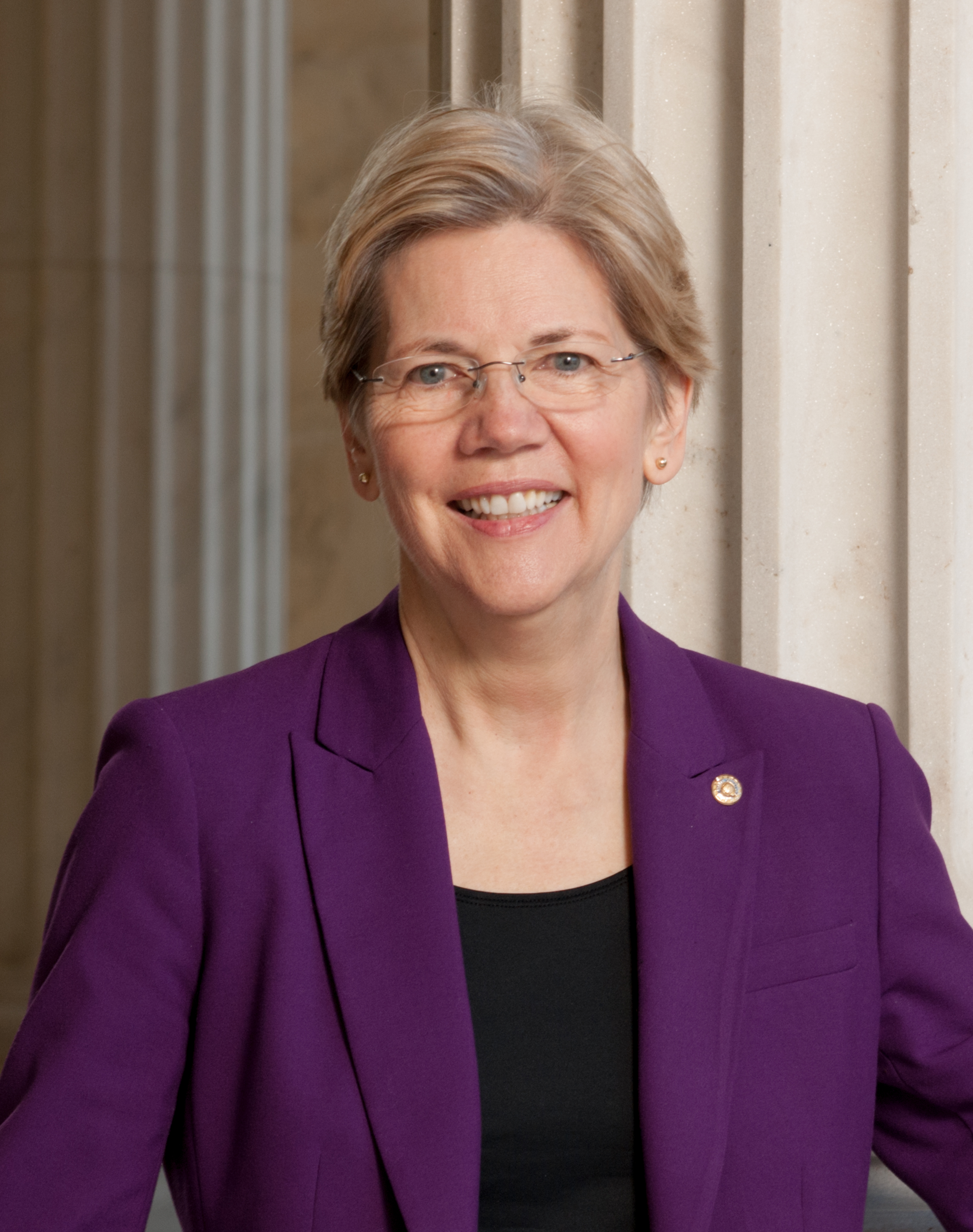
Massachusetts-Senator-Elizabeth-Warren
Massachusetts Senator Elizabeth Warren, Senate Photo, Public Domain

Massachusetts Senator Elizabeth Warren advocated early on for the establishment of a government financial watchdog.  After the Treasury issued its report she called the recommendations to weaken the CFPB “radical” and said, “it would make it easier for big banks to cheat their consumers and spark another financial meltdown.” 

Since its creation, the CFPB has gone after big banks repeatedly for dishonest practices. It has advocated for reform of  student loan and debt collection.  It has tried to stop predatory lending and filed legal action against debt collectors who harass and intimidate consumers even when they don’t owe any money. 

The lengthy catalog of accomplishments, on behalf of American consumers, theoretically should make those who govern feel good about themselves. The bureau’s work retrieved $11.8 billion dollars in fines and payback for more than 29 million consumers.

So why get rid of it?  Well, the big bankers don’t like it. The lobbyists and the people in the Trump Administration, who don’t have consumers’ interests on their agenda, include Treasury Secretary Steven Mnuchin.

Just take a look at his background. The former Goldman Sachs banker bought IndyMac, a failed mortgage lender, during the financial crisis. He changed the name to OneWest and aggressively foreclosed on homeowners in arrears and earned the nickname the “foreclosure king.” 

Now the Treasury report, under his name, oddly says, “The CFPB’s structure renders it unaccountable to the American people.” The report criticizes the CFPB for what it calls “over reaching” and attempting to get auto dealers, college lenders and servicing agencies and others on the fringes of lending and banking to stop predatory practices and help consumers. 

So the Treasury Department wants to put the brakes on the CFPB, restructure it to weaken the power of the director and appoint a commission to oversee its work.

If you disagree with gutting the CFPB, contact your U. S. senator and representative and let them know what you think.

Here’s where to find your representative: http://www.house.gov/htbin/findrep

Here’s where to find your senator:

https://www.senate.gov/senators/contact/


How People In Red States Lose With Trumpcare


So here’s the truth. Republican Congresspeople passed a bill that would hurt a lot of people if it goes into effect. This has nothing to do with whether you vote Republican, hate Obama and on and on. These alleged representatives of the people voted for a bill they call the American Health Care Act that repeals a big portion of the Affordable Care Act and works against millions of Americans who don’t make a lot of money.

Twenty Republicans voted against the bill. No Democrat voted for it. Florida Republican Congresswoman Ileana Ros-Lehtinen voted against it. Before the vote she said, “The bill’s consequences for South Florida are clear: too many of my constituents will lose insurance and there will be less funds to help the poor and the elderly with their healthcare.”

For this bill to become law, the Senate will have to approve it. And if approved as it stands people will lose insurance. Ultimately that number adds up to 24 million Americans.

The big losers:

People who got insurance because Medicaid was expanded in many states. Poor people without children will lose insurance. The Congressional Budget Office projects that 14 million people will lose insurance in 2018.

People who need what’s called “essential services” under the Affordable Care Act would lose, too. That means the House approved a rollback for maternity and emergency care. 

Older people will lose as well.  People too young for Medicare will have to pay more for their insurance and may face unaffordable deductibles as high as $25,000.

People with pre-existing conditions may find themselves unable to get insurance. The Affordable Care Act prevents insurers from denying you coverage if you have a pre-existing condition like diabetes.

But the Republicans got rid of that idea. Their bill sets up a high risk pool with about $23 billion to help people with pre-existing conditions get insurance. Healthcare analysts at Avalere say it falls short and will cover only 110,000 people in the country with pre-existing conditions. Consider that 2.2 million people covered today have pre-existing conditions.

If you don’t have insurance continuously for at least 63 days, and you have a pre-existing condition, it looks like you will have a tough or an impossible time getting insurance.

Under this new American Health Care Act, states can opt out of certain provisions.  And that, says Avalere’s Caroline Pearson, poses a big problem. “If any large states receive a waiver (to opt out), many chronically ill individuals could be left without access to insurance.

Planned Parenthood, which provides healthcare services to women,  will lose about 30 percent of its funding for one year unless it stops providing abortion services.  After that who knows.

Winners:

Yes, winners. Rich people who earned over $200,00 for an individual and $250,000 as a couple will not have to pay a .09 percent increase on the Medicare payroll tax and a 3.8 percent tax on investments that helped fund the Affordable Care Act.

Young middle-class people without pre-existing conditions will also pay less.

Democratic Senator Bernie Sanders said,  “The bill that Republicans passed today is an absolute disaster. It really has nothing to do with health care. It has everything to do with an enormous shift of wealth from working people to the richest Americans . . .  Our job now is to rally millions of Americans against this cruel bill to make sure that it does not pass the Senate. Instead of throwing tens of millions of people off of health insurance, we must guarantee health care as a right to all.”
The Big Lie About Internet Regulation

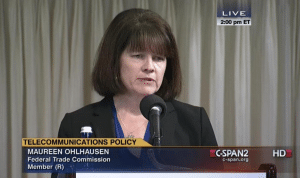
The Federal Trade Commission (FTC) until very recently served and protected consumers. But a bizarre statement, what looks like an outright lie, about the Internet and consumer rights from the Acting Federal Trade Commission Chairman Maureen Ohlhausen turned the notion of protection on its head. 


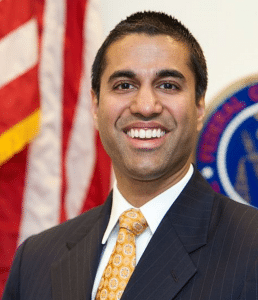
Ohlhausen praised a proposal by Trump’s Federal Communications Chair Ajit Pai to stop treating the Internet as a public utility.  Pai wants to abolish the so-called net neutrality rule. The Obama Administration pushed for net neutrality in 2015 to make sure everyone has equal access to the Internet. The regulation on the books prevents the unfair creation of fast and slow lanes that would allow big companies to favor their streaming services over anyone else’s. 

But Pai, a former Verizon attorney, thinks the government should not treat high-speed Internet like a utility. (The government regulates utilities.) 

Federal Communications Commission Photo, Official Portrait Ajit Pai, Public Domain

While Pai didn’t flesh out his plan for change, in a speech on April 26, 2017, at the Newseum, he made it clear that he opposes regulation. He said, “Without the overhang of heavy-handed regulation, companies will spend more building the next generation networks. As those networks expand, more Americans, especially low-income rural and urban Americans, will get high-speed Internet access for the first time.”

Ohlausen said, “I welcome Chairman Pai’s announcement as an important step toward restoring the FTC’s ability to protect broadband subscribers from unfair and deceptive practices, including violations of their privacy. Those consumer protections were an unfortunate casualty of the FCC’s 2015 decision to subject broadband to utility-style regulation. I look forward to working with Chairman Pai and other stakeholders to return to broadband subscribers the consumer protections they deserve.”

 Pai’s proposed changes and their endorsement by the leader of the FTC stand in stark contrast to the thoughts of those who pushed for an open Internet uncontrolled by big companies like Verizon, AT&T and the rest of corporate America that has a financial interest in corporations controlling the Internet.  

David Segal of DemandProgress.org called Pai’s statement “outrageous.”

Segal said, “The announcement is outrageous because the FCC’s 2015 Open Internet Order, classifying internet provision under Title II, is a commonsense measure to safeguard the open internet that so many depend on and that has been upheld by the courts. Millions of Americans as well as internet companies, startups and innovators have supported the order. The order’s main opponents are large ISPs that have made it clear they want to subvert the public interest by manipulating internet traffic to benefit corporate bottom lines.” 
American Library Association Director Julie Todaro also spoke out against a rollback. She said, “The American Library Association (ALA) and the Association of College & Research Libraries (ACRL) firmly believe that preserving an open Internet is essential to all Americans’ freedom of speech, educational achievement, and economic growth.” 

Getting back to the FTC and its mission. The press release praising the notion of dismantling consumer protections ended with a statement that essentially said black is white: 

“The FTC is the nation’s primary consumer protection agency and the most active consumer privacy and data security enforcer in the world.” 

How The Justice Department Insulted New York

If you live in New York City and ride the subways, walk the streets and look around, you often feel a sense of elation about how, for the most part, this jumble of millions manages to get along. 

I grew up here. I lived and worked here in the bad-old 1980’s, when you felt scared and had reason to worry about someone attacking you on the subway or the street. But that was then. Since 1993 we have seen a steady decline in crime and fear. 
That’s why Attorney General Jeff Sessions and his Justice Department seem incredibly misinformed about the state of crime in the nation’s most exciting and diverse city.  

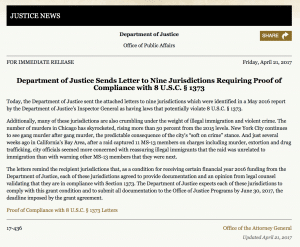
The out-of-touch Justice Department under Sessions and his boss Donald Trump sent a letter to New York and other jurisdictions considered “sanctuary cities” that threatens to withhold Justice Department funding if they don’t comply with orders to turn over information about undocumented immigrants.

This letter said, in part, “New York City continues to see gang murder after gang murder, the predictable consequence of the city’s ‘soft on crime'” stance.

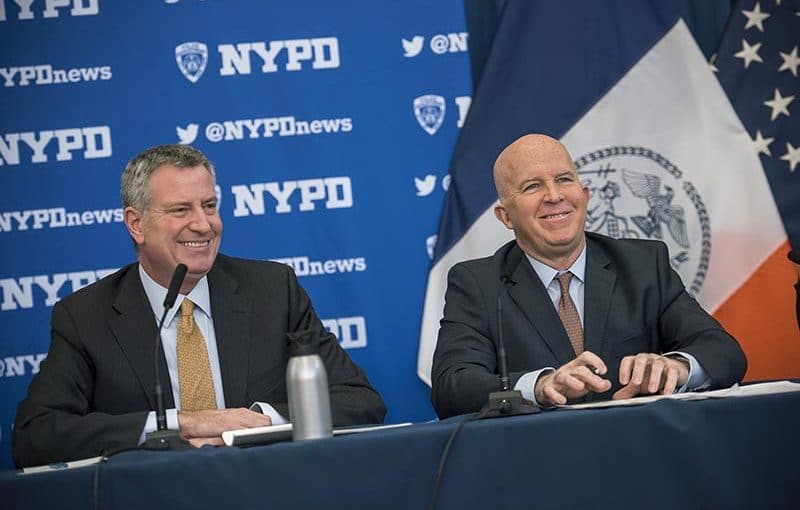
New York Mayor Bill De Blasio and NYPD Commissioner James O’Neill reacted swiftly and angrily.

The mayor called it an “unacceptable statement that denigrates the people of New York and the men and women of the NYPD.” He called it “. . . an outrageous statement that ignores a quarter-century of progress in this city in bringing down crime.

He went on to say, “We just had the safest three months in the history of New York City – that didn’t happen by being soft on crime.”

NYPD Commissioner O’Neill was even angrier. He said, “. . . when I read that statement by DOJ this afternoon, my blood began to boil.” He pointed out that since 1993 overall crime is down 76 percent. In 2017, murders and shootings are down. 

He said, “This is really insulting. Look at not only the hard work of the NYPD . . . What about the federal agencies? What about the FBI? The ATF? The DEA? The US Marshal Service? — the hard work they do every day.”

 He pointed out that NYPD officers make sacrifices.

The commissioner said, “Cops are hurt every day. Cops are killed in the line of duty. This is insulting to the memory of Sergeant Paul Tuozzolo, Randolph Holder, Brian Moore, Joe Liu, Rafael Ramos. I find this statement to be absolutely outrageous.”

How eBay Scammers Tried To Get Me

by Barbara Nevins Taylor

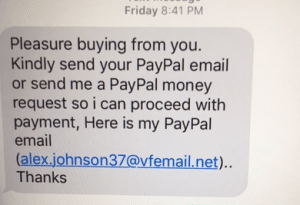
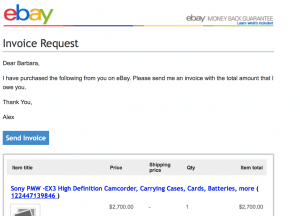
A few hours after I listed a SONY EX 3 video camera on eBay. I received a surprising text message. Someone wanted to pay the price I asked. 

Sure enough when I checked eBay, Alex Johnson had messaged me there too, and eBay marked my item as sold. I felt triumphant and excited.


But I also felt wary. 

I wanted to make the sale, but something seemed strange. Why did he text message me? And how did he get my phone information?

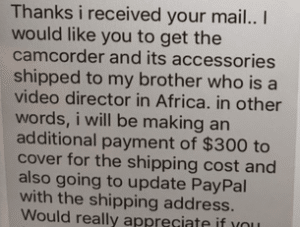
Nevertheless, I responded. I didn’t know the shipping cost because I didn’t know the weight of the camera when I put it in its big Thermadyne case. I explained that in an email. Then he mentioned shipping to Africa.

“Mmm,” I heard myself say. Shipping to Africa. The flash, flash, flash went off in my brain. I remembered all the stories I reported about people who fell for scams to ship something to Africa

And then, I realized Alex didn’t ask whether the camera shot video in the NTSC or PAL mode. Maybe this is too technical, but television stations in the U.S. use video shot in the NTSC format. NTSC has 625 lines of resolution. In Africa, Europe and parts of Asia they use PAL, with 525 lines of resolution. Alex’s failure to ask about this made me more suspicious. And then I asked where his brother lived. 

The next text told the tale.

Nigeria. I hate to feel a prejudice, but my scam detector was signaling Code Red. Nigerian scammers have flooded our in-boxes since the Internet began with unclaimed funds looking for a home or royalty needing our help to reclaim their inheritance of millions. So I wasn’t buying this one, or selling to this guy.

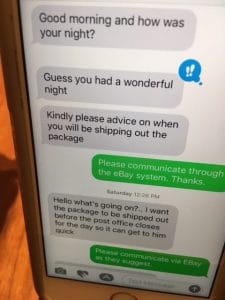
The next morning, I received two very creepy texts.

I told him not to message me anymore.

That afternoon, I reported the mini-drama to eBay and the two staffers I spoke with confirmed it sounded like a scammer. They suggested that I de-list the item and fix mistakes I made when I filled out my seller profile.

I had neglected to check the section in the drop down menu that said I would only sell to someone who linked an eBay account to PayPal. And I also allowed buyers to make the “best offer.” Apparently changing these things help block scammers. 

So I re-listed. 

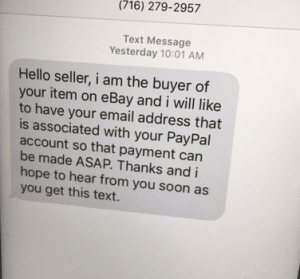
And the next day, it happened again. This time a Caleb Brown texted, 

 And I called eBay again. This time they got to the bad guy first. They had put a note on the listing that said: 

So I de-listed and started over again.  And fixed my third mistake. I added my PayPal email address.

This time, the scammers haven’t texted or called and I don’t yet have an offer. 

Student Loan Borrowers Lose Protection

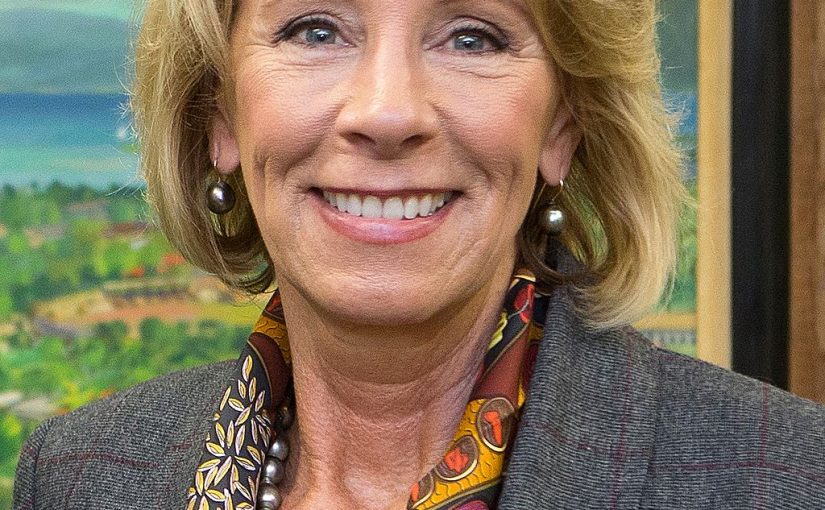
Student loan borrowers and especially those in default now will have a tougher time, thanks to Education Secretary Betsy DeVos. She withdrew protections put in place by the Obama Administration aimed at making loan servicers more accountable and blocking high fees. 

In a memo to the Federal Student Aid Office, which oversees $11 trillion in student debt, DeVos told the staff to forget the Obama policies because they “have a lack of consistent objectives.” While she failed to explain what she meant, she did eliminate the protections that require accountability from loan services. These protections insist that borrowers get accurate information and prevent interest rates as high as 16 percent on loans. 

Advocates angrily denounced the move. The National Consumer Law Center’s Student Loan Borrower Assistance Project Director Persis Yu said, “It’s simply mind-boggling that the Department of Education would take away basic rights for borrowers.”

Recently, the Consumer Financial Protection Bureau (CFPB) sued Navient, once part of the government-backed Sallie Mae, for illegally cheating borrowers and failing to provide accurate information that would help them repay their loans. The CFPB charged the company with creating obstacles for repayment and causing borrowers to pay more than they should. 

Persis Yu said, “As the CFPB lawsuit against Navient demonstrates, problems with servicing are widespread and servicers’ practices can create obstacles to repayment resulting in costly problems for borrowers. Today’s action by Secretary DeVos could make it easier for the Department to hire servicers with a track record of harming borrowers.”

Here’s the memo from Education Secretary Besty De Vos announcing the policy change:

April 11, 2017

To: James W. Runcie, Chief Operating Officer Federal Student Aid

From: Betsy DeVos, Secretary, U.S. Department of Education

SUBJECT: Student Loan Servicer Recompete

As the Department strives toward our stated goal of increasing college access, affordability and quality, it is imperative to exercise due diligence in acquiring new federal student loan servicing capabilities. Our mission in the student loan servicing procurement process is to provide high quality customer service to federal loan borrowers in a cost-efficient and effective manner. I write today to reiterate the importance of the task ahead and reaffirm the Department’s commitment to achieving its mission.

Unfortunately, this process has been subjected to a myriad of moving deadlines, changing requirements and a lack of consistent objectives. We now find ourselves in a situation where we must promptly address not only these shortcomings but also any other issues that may impede our ability to ensure borrowers do not experience deficiencies in service. This must be done with precision, timeliness and transparency. As we move forward with this procurement, I am withdrawing (1) the June 30, 2016 memorandum to you from former Secretary John King, (2) the July 20, 2016 memorandum to you from former Under Secretary Ted Mitchell, and (3) the October 17, 2016 addendum to the July 20, 2016 memorandum to you from former Under Secretary Mitchell, to negate any impediment, ambiguity or inconsistency in the approach needed to accomplish this critical mission.

I greatly appreciate the work and effort you and your team have put forward thus far. Our work continues in earnest today. The student loan servicing procurement affords us a significant opportunity to improve outcomes and experiences for federal student loan borrowers, as well as demonstrate sound fiscal stewardship of public dollars. We must create a student loan servicing environment that provides the highest quality customer service and increases accountability and transparency for all borrowers, while also limiting the cost to taxpayers.

We have a duty to do right by both borrowers and taxpayers, and I look forward to working with your team at FSA, as well as others, in order to acquire new federal student loan capabilities that will provide borrowers with the tools necessary to efficiently repay their debt.