All posts by Barbara Nevins Taylor

What Can You Find In White House Financial Disclosures?


This post comes from ProPublic. The news organization wants your help to dig into the financial disclosure forms the Trump White House dumped on Friday March 31. Pro Public put the documents in a Google Drive folder. As you read this post, you’ll see that they ask you to go through the documents and if you spot something that ProPublica, The New York Times and AP missed let ProPublica know.  

The White House Wouldn’t Post Trump Staffers’ Financial Disclosures. So We Did.

by Ariana Tobin and Derek Kravitz ProPublica, April 1, 2017, 11:38 a.m.

In a remarkable Friday night news dump, the Trump administration made dozens of White House staffers’ financial disclosure forms available. But they did it with an extra dose of opacity.

These are important disclosures from the people who have the president’s ear and shape national policy. They lay out all sorts of details, including information on ownership of stocks, real estate and companies, and make possible conflicts of interest public.

But the White House required a separate request for each staffer’s disclosure. And they didn’t give the names of the staffers, leaving us to guess who had filed disclosures, a kind of Transparency Bingo.

Since the White House wasn’t going to post the documents publicly, we did.

We teamed up with The New York Times and The Associated Press, requested docs for every staffer we know and put them in this public Google Drive folder.

We’re continuing to look through them. And we want your help: If you see anything that merits a closer look, comment on the thread below or fill out our Google Form.

Among the things we’ve learned already:

Steve Bannon, President Trump’s hand-picked chief strategist, earned more than $500,000 last year through businesses connected to Republican donors Robert Mercer and his daughter, Rebekah. The companies include the conservative website Breitbart News Network; the data-crunching firm Cambridge Analytica; the conservative nonprofit Government Accountability Institute; and the entertainment production company Glittering Steel. (Per an agreement with White House ethics attorneys, Bannon is selling his stakes in Cambridge Analytica and Glittering Steel. He made somewhere between $1.3 million and $2.3 million last year, according to the filings.)

Jared Kushner, the president’s son-in-law and a White House senior adviser, resigned his positions in 266 different business entities in order to comply with federal ethics rules, White House officials said Friday. He and his wife Ivanka’s financial disclosure shows the scale of their wealth, largely through the family-run Kushner Companies: real estate and investments worth as much as $741 million.

And Kushner is holding onto more than 100 real-estate assets, including a Trump-branded rental building in Jersey City, New Jersey, which was financed with millions from wealthy Chinese investors through a visa program.

As part of Kushner’s financial disclosure, Ivanka Trump, who recently took an official post in the White House, had to disclose her assets. Ivanka Trump’s branded companies, including her clothing and jewelry lines, brought in more than $5 million in 2016 and are valued at more than $50 million. Her stake in the Trump International Hotel in Washington, D.C., which opened in September, brought in income of between $1 million and $5 million. (She is putting her companies in a trust that she won’t manage while her father serves as president.)

There are other tidbits, too. Gary Cohn, the former Goldman Sachs investment banker who now serves as director of the National Economic Council, has assets worth at least $253 million, including million-dollar or more stakes in several private companies. Omarosa Manigault, the reality-TV star who took a job as a White House communications staffer, has a 33 percent stake in a trust worth between $1 million and $5 million established by her late fiancée, the Oscar-nominated actor Michael Clarke Duncan, who died in 2012. Reed Cordish, a Trump family friend and Maryland real-estate developer who now oversees technology initiatives at the White House, reported assets of at least $197 million, including partnerships in Baltimore casinos.

So far, we’ve received less than half of the roughly 180 financial disclosures White House officials said they have processed. But the moment we get them, you will, too.

ProPublica is a Pulitzer Prize-winning investigative newsroom. Sign up for their newsletter.

Trump University Payout For Victims


by Barbara Nevins Taylor

Donald Trump didn’t say, “Sorry,” and he didn’t admit guilt. But student victims of the defunct Trump University will get $25 million dollars, as much as 90 percent of their money back, thanks to settlements approved by a San Diego, California judge.

This ends seven years of legal wrangling with about 3,730 former students who claimed that Trump University swindled them out of thousands of dollars with high pressure sales tactics and phony claims about what they would learn. Attorneys filed two class action lawsuits in San Diego, and New York Attorney General Eric Schneiderman brought a civil lawsuit against the so-called university in New York. The judge’s ruling settles all of them.

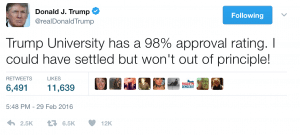
Trump had refused to settle and tweeted about it.

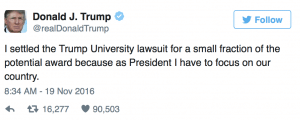
But in November 2016, after he was elected president, he agreed to the $25 million deal.

Sherri Simpson, a former student from Florida, held things up with a challenge. Her attorney argued that the settlement would prevent her and others from suing President Trump individually. Simpson, also an attorney, said she wanted to sue Trump using racketeering charges and she wanted an apology.

Trump lawyers asked the judge to rule on her objection and close the case. In his final ruling, Judge Gonzolo P. Curiel wrote, “The court finds that the amount offered in settlement is fair, adequate and reasonable.”

Lawyers for the former students said they will not accept fees and praised the settlement for the amount of money individuals will receive. One lawyer said that Sonny Low, the named plaintiff in the lawsuit, still had $9,000 in credit card debt because of Trump University and the settlement will help him and others significantly.

Some students paid as much as $35,000 for the program, which some instructors told the court was fraudulent. 

In New York, Attorney General Schneiderman praised the settlement, saying it “will provide relief — and hopefully much-needed closure — to the victims of Donald Trump’s fraudulent university. Trump University’s victims waited years for compensation, while President Trump refused to settle and fought us every step of the way — until his stunning reversal last fall.”

Schneiderman will distribute $4 million of the $25 million settlement.

The case against Trump University also highlights serious problems with for-profit colleges that often take students’ money for worthless degrees and leave them deeply in debt. 


Hassle To Get Your Free Credit Report

by Barbara Nevins Taylor

updated September 16, 2017

The hassle to get your free credit report from annualcreditreport.com increased substantially during the first week of September 2017. You may find it more difficult, than ever, to get your free credit report online because the Equifax Security lapse allowed hackers to get hold of personal information, including Social Security numbers, driver’s license numbers, bank, credit card and other information you don’t want thieves to have.

Federal law says that every year you can get a free credit report from each of the three major credit reporting companies: Experian, Equifax and TransUnion. You do that through the annualcreditreport.com link. 

But the system doesn’t always work smoothly. We explained in a previous post, Why Your Credit Report May Not Be Available Online, that any kind of alert will put a red flag on your account. The credit bureaus told ConsumerMojo they want to make sure they release information only to you. That seems ironic now. The Equifax hack serves as a giant red flag.

The credit bureaus also have a history of slowing down the online experience. They bombarded us with ads before we could get to the free credit report application.

The Consumer Financial Protection Bureau, which Republicans in Congress want to dismantle, fined Experian, in March, for piling on and making you visit a site filled with ads before you could get your report.

The CFPB fined Experian $3 million for that and also for selling credit scores, which it claimed lenders used to make decisions about whether you would qualify. The CRPB said, “In fact lenders did not use Experian’s scores to make those decisions.”

Companies compile credit scores based on your financial activity and create a number using from the lowest of 300 to the highest of 850. The CFPB points out that not all lenders use single scores.  As a way to sell scores to unsuspecting people, some companies create “education credit scores,” theoretically to inform consumers. But lenders rarely use them.

But most lenders do use the FICO Score, created by the Fair Isaac company. You can get that score for free through the Open Access program available with some credit card companies, lenders and non-profit credit counseling services.

Courtesy Wikimedia

Experian developed something it called the “Plus Score” and marketed that to consumers from at least 2010 to 2014, claiming lenders used it.  Again, lenders didn’t and in some cases, the scores from Experian varied significantly from those that lenders used, according to the CFPB.

CFPB Director Richard Cordray said, “Consumers deserve and should expect honest and accurate information about their credit scores, which are central to their financial lives.

Complaints about getting credit reports top the monthly complaints to the CFPB, as well as to ConsumerMojo.com and other consumer activists.

The National Consumer Law Center applauded the move by the CFPB.  Its attorney Chi Chi Wu said, “American consumers are so much better off for the Consumer Financial Protection Bureau’s efforts to clean up the credit reporting industry.”

The CFPB took similar actions against Equifax and TransUnion. If you have a complaint about a credit reporting company let the CFPB know: https://www.consumerfinance.gov/complaint/https://www.consumerfinance.gov/complaint/

In the meantime, if you think you got caught in the Equifax hack we explain what you can do here

Will You Lose Your Health Insurance?

The Congressional Budget Office (C.B.O.) gave Congress, and the rest of us, the low-down on what the Trumpcare plan will cost regular people. 14 million will lose their insurance as early as 2018. That number would rise to 21 million by 2020 and 24 million in 2026.

People in 31 states and Washington, D.C., that have expanded Medicaid under the Affordable Care Act, will lose out under the proposed American Health Care Act developed by Republican House Speaker Paul Ryan.

The Association of American Medical Colleges issued a statement condemning the plan. Its C.E.O. Darrell G. Kirch, M.D. said, “These are people, not numbers — people who all too often will be left without access to regular care, putting their health at risk. Many of them will come to our nation’s teaching hospitals, but they may wait until they are in crisis and the costs and complexity of treatment have increased.”

 The C.B.O. numbers seem startling. 48 million people under 65 will go uninsured in 2020 if this legislation passes. 

Average premiums for people who buy health insurance on their own would go up 15 to 20 percent, according to the C.B.O.

Younger people would do better under the Trumpcare plan because the insurance would rate payments by your age. By 2026 premiums would cost 20 to 25 percent less for a 21-year-old, eight to ten percent lower for a forty-year old, but 20-25 percent higher for a 64-year-old.

A 21-year-old who earns $26,000 a year and has an insurance policy that costs $5,100 a year now pays $1700 because of tax credits. Under the proposed plan the cost would drop to $1,450.

But a 64-year-old who earns $26,000 and now pays $1700 with tax credits would pay $14,600.

Even before the C.B.O. analysis laid out the numbers, the A.A.R.P. reacted angrily to the proposal. Executive Vice President Nancy LeaMond said, “Before people even reach retirement age, big insurance companies could be allowed to charge them an age tax that adds up to thousands of dollars more per year. Older Americans need affordable health care services and prescriptions. This plan goes in the opposite direction increasing insurance premiums for older Americans and not doing anything to lower drug costs.”


You can find the full C.B.O. report CBO Healthcare Report


Did You Fall For One Of The Top Scams Of 2016?


by Barbara Nevins Taylor

Good news on the scam front, sort of.  Reports of identity theft dropped slightly in 2016, according to the Federal Trade Commission‘s (FTC) annual roundup. Debt collection and imposter scams that use the telephone to invade your life like, “I’m calling from the IRS and I’m going to arrest you if you don’t pay immediately,” topped the list of ripoffs. 

Grandparent Scam

These imposters scams also include “The Grandparent Scam,” where someone calls and tells you that your grandchild needs money immediately. They direct you to go out and get a pre-paid card and send them money, or wire transfer money that you will never see again 

Computer Tech Scam

In another variation, a scammer calls and poses as a computer technician and scares you about some fake problem. They ask you to give them access to your computer so they can fix things, then they install malware or make changes that allow them to steal personal and financial information.

Sometimes these tech scammers ask for credit card information to bill your phony services, or they ask you to visit websites that ask for your credit card number and other personal information.

Warning

The FTC’S Acting Director of Consumer Protection, Thomas Pahl, says, “Our latest data shows that imposter scams are a growing and serious problem.”

58 percent of those who reported losing money in one of these scams say they sent money through a wire transfer.  77 percent say the scammer made the first contact through a telephone call to their home.  We also know now that scammers target mobile phones, too. So that’s something else to worry about.

The FTC urges everyone to view skeptically any caller who asks for money via wire transfer. The government will never ask you to send money that way and it is illegal for telemarketers to ask for a wire transfer. 

The agency based the Top 10 List on more than 3.1 million consumer complaints. The most complaints came from Florida, Georgia and Michigan.

Top 2016 Scams 

Debt Collection

Imposter Scams

Identity Theft

Telephone and Mobile Services 

Banks and Lenders

Prizes, Sweepstakes and Lotteries

Shop-At-Home and Catalog Sales

Auto Related Complaints

Credit Bureaus

Television and Electronic Media

Listen to an IRS call

If one of these scammers contacts you, report it to the Federal Trade Commission, FTC.gov/complaint.

Phony ICE Agents And Rumors Terrify Immigrants


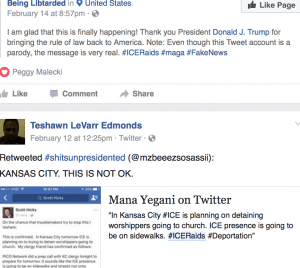
Facebook and Twitter helped fuel rumors of immigrant roundups and created panic in immigrant communities. It turns out many rumors are just rumors.

In Brooklyn, City Council member Jumaane  Williams and his staff checked out rumors that U.S. Immigration and Customs Enforcement (ICE) agents made stops at Bobby’s department stores on Utica Avenue and Church Avenue, Kings County Hospital, and stopped commuter vans and cabs. 

All untrue, according to Williams, who found none of it happened. He said, “My staff and I have followed up on as many of the rumors as we can. We have spoken to owners of the commuter van lines, as well as the management at Bobby’s department store, and have confirmed that at this time there have not been general indiscriminate stops made by ICE agents over the past few days.

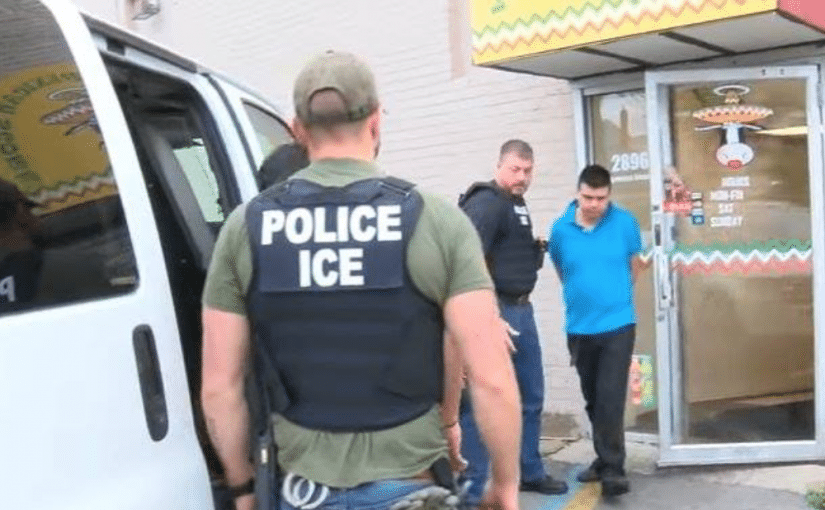
However, they did discover reports of scammers posing as immigration agents demanding money from immigrants. New York Attorney General Eric Schneiderman issued an emergency alert to warn against people posing as immigration agents.  

Schneiderman described a case in Queens where an immigrant was approached by four men wearing clothes that seemed like ICE uniforms. They threatened the man and told him they would detain him unless he gave them all his money.

The attorney general urged anyone approached by one of these scammers to call a special immigration fraud hotline run by his office: 866-390-2992 or email Civil.Rights@ag.ny.gov.

Council member Williams asks people to report actual ICE activity in Brooklyn to his office. Email: vandre@council.nyc.gov.

 Williams said, “Concerns about immigration checkpoints and raids, whether rumors or not, is evidence of the mass hysteria that has taken hold of communities across the country because of Trump. This administration from day one has done everything in its power to marginalize people, create a culture of fear, and divide Americans. The President’s erratic behavior only makes it more difficult for our communities, as evidenced by his recent announcement about the possibility of deploying 100,000 National Guard troops for immigrant roundups.”

Also know that the NYPD does not ask people about their immigration status and is not working with ICE.


Who Do You Love?

Cartoonist Mort Gerberg captured true love in his Valentine’s Day cartoon, but most of us can see past our reflection in the mirror. We love other people as much as we love ourselves. Love fuels the dreams and nightmares of literature and so we offer a few poems of love.

My Love,

by Langston Hughes

I love to see the big white moon,

A-shining in the sky;

I love to see the little stars,

When the shadow clouds go by.

I love the raindrops falling

On my roof-top in the night;

I love the soft wind’s sighing,

Before the dawn’s gray light.

I love the deepness of the blue,

In my Lord’s heaven above;

But better than all these things I think

I love my lady love.


My Heart, When The First Black-Bird Sings

by Robert Louis Stevenson

My heart, when the first blackbird sings,

My heart drinks in the song:

Cool pleasure fills my bosom through

And spreads each nerve along.

My bosom eddies quietly,

My heart is stirred and cool

As when wind-moved briar sweeps 

A stone into a pool

But unto thee, when thee I meet,

My pulse thickens fast,

As when the maddened lake grows black

And ruffles in the blast. 


[i carry your heart with me(i carry it in]

 by E. E. Cummings

i carry your heart with me (i carry it in my heart) i am never without it (anywhere i go you go,my dear; and whatever is done

by only me is your doing, my darling)

                                                      i fear

no fate (for you are my fate,my sweet)i want

no world(for beautiful you are my world,my true)

and it’s you are whatever a moon has always meant

and whatever a sun will always sing is you

here is the deepest secret nobody knows

(here is the root of the root and the bud of the bud

and the sky of the sky of a tree called life;which grows

higher than soul can hope or mind can hide)

and this is the wonder that’s keeping the stars apart 

i carry your heart (i carry it in my heart)


Sonnets from the Portuguese: 43 How do I love thee? Let me count the ways

by Elizabeth Barrett Browning

How do I love thee? Let me count the ways.

I love thee to the depth and breadth and height

My soul can reach, when feeling out of sight

For the ends of being and ideal grace.

I love thee to the level of every day’s

Most quiet need, by sun and candle-light.

I love thee freely, as men strive for right;

I love thee purely, as they turn from praise.

I love thee with the passion put to use

In my old griefs, and with my childhood’s faith.

I love thee with a love I seemed to lose

With my lost saints. I love thee with the breath,

Smiles, tears, of all my life; and, if God choose,

I shall but love thee better after death.

Thinking About A Settlement Advance


by Barbara Nevins Taylor


A settlement advance for an accident or lawsuit may sound like a good idea. But you might want to think twice. Deals to get money upfront may seem attractive, but high fees can take a big chunk out of your payout and leave you with far less money than you deserve.

The latest cautionary tale about a settlement advance involves 9/11 first responders and former NFL football players. A lawsuit claims they were scammed while they waited to get settlement money for serious illnesses. The Consumer Financial Protection Bureau (CFPB) and the New York State Attorney General say RD Legal Funding, and owner Roni Derscovitz, preyed on these people and “. . . swooped in with a “deal,” offering the victims an upfront payment” for some of the money they had not yet received.”

CFPB Director Richard Cordray said, “We allege that this company and its owner lined their pockets with funds intended to cover medical care and other critical expenses for people who are sick and sidelined.” 

Many of the first responders, police officers, firefighters, emergency medical technicians and others suffer from cancer, memory loss, post traumatic stress disorder and other debilitating illnesses. The former NFL players struggle with Parkinson’s disease and Alzheimers. They all need the money they were awarded and expected to receive under the settlement advance concept.

But the New Jersey-based RD Funding’s confusing contracts allegedly masked the amounts of money they would have to repay on the advances. The victims often had to pay back twice what the company advanced within a matter of months, according to the lawsuit.  It claims the scheme cost people with long-term serious illnesses millions of dollars.

They offer the example of a 9/11 first responder awarded $65,000 from the Zadroga Fund. That’s the pool of money Congress allocated for first responders injured during the aftermath of the World Trade Center attack. RD advanced her $18,000 while she waited for payment from the fund. But six months later, she had to repay $33,000 to RD Legal. That means she paid $15,000 to RD beyond the money the company advanced to her. 

The CFPB and the Attorney General allege RD Funding:

  • Lied about the terms of deals.
  • Lied about speeding up victims’ claims for faster payouts.
  • Deceived victims about when they would get the money.
  • Illegally collected money from victims. 

The CFPB and the New York Attorney General aim to get money back for victims. New York A.G. Eric Schneiderman called the practices “shameful.” He said, “My office will do everything it can to end the fraudulent practices employed by RD Legal, and recoup the illegal amounts charged by this company.”

The lawsuit asks the court to shut down RD Funding and return money to the victims.

We’ll stay on top of this to find out how it plays out.

Dodd-Frank 

In the meantime, you should know that the lawsuit was brought under Dodd-Frank laws and regulations put into effect to curb the worst Wall Street practices including predatory lending.

Republicans in Congress and President Trump want to dismantle Dodd-Frank and the Consumer Financial Protection Bureau.  If you want to maintain consumer protections, call your representative and senators in Washington. 

Here’s where to find your representative: http://www.house.gov/htbin/findrep

Here’s where to find your senators: https://www.senate.gov/senators/contact/


Who Gets A Refund From RushCard?

Thanks to the Consumer Financial Protection Bureau (CFPB), thousands of RushCard holders who couldn’t access their money in 2015 will split $10 million in restitution. UniRush and Mastercard, which processed money for the pre-paid RushCard will also pay a $3 million dollar civil fine.

Creative Commons License via Flickr

Here’s who gets a refund from RushCard, founded by hiphop mogul Russell Simmons,  and how the division of that $10 million shakes out.

  • $25 for a cardholder denied a transaction on October 12, 2015.
  • $150 to anyone who had their card put in possible fraud status.
  • $100 to anyone who received notification falsely that no money was in their account.
  • $100 to anyone whose payments didn’t get processed for the week under review.
  • $250 to anyone whose direct deposit was improperly returned to the funding source, or improperly recorded.
  • $150 to anyone who had trouble with their bank because of delayed processing.
  • $150 to anyone who couldn’t access their money.
  • $150 to anyone who did not have their lost or stolen card immediately replaced.
  • $50 to anyone whose card-to-card transfers did not get processed immediately.

Obviously some people will get multiple refunds because they had multiple problems.

How RushCard holders get their money

UniRush and Mastercard have 60 days to submit a plan to the CFPB for refunding money. Once that’s approved, they must notify you by mail and then send you a refund in the form of a certified bank check.

If you don’t hear from them or have a problem contact the CFPB 

Or call 855-411-2372.

The Consumer Financial Protection Bureau does great work, yet the Republicans in Congress and the Trump administration want to roll back the rules it made to protect you. 

Call your U.S. senator and representative to tell them you need regulations to protect you.

Here’s where to find your representative: http://www.house.gov/htbin/findrep

Here’s where to find your senator:

https://www.senate.gov/senators/contact/

Here’s how to contact the White House: https://www.whitehouse.gov/contact#page 


Put Politics Aside, Save What Helps Real People


by Nick Taylor

The axe can fall anytime now on a government office that looks out for real people. That’s something that should concern all of us, regardless of our politics. Scams, rip-offs and bad practices can hurt Republicans and Democrats alike. 

The Consumer Financial Protection Bureau  (CFPB) has gone after financial predators of all kinds since the Obama administration and Congress created it in 2010.

Who uncovered the scam that Wells Fargo employees created fake accounts that cost consumers money? The CFPB. Who fined JP Morgan Chase for predatory mortgage lending practices? The CFPB. Who went after other big banks, smaller predatory lenders and stays on top of the credit reporting companies, debt collectors, for-profit schools and other companies and institutions that rip consumers off? The CFPB.

Just this week, the CFPB moved against what it called “a ring of law firms and attorneys who collaborated to charge illegal fees to consumers seeking debt relief.” They “exploited consumers who were already suffering financial difficulties by tricking them into paying steep, illegal fees,” according to CFPB Director Richard Cordray. It’s the second time the bureau has taken aim at the debt reduction scammers.

The new defendants in the CFPB’s federal court complaint are Howard Law, P.C., the Williamson Law Firm, LLC, and Williamson & Howard, LLP, and attorneys Vincent Howard and Lawrence Williamson.

 A previous operation run by the two lawyers, Morgan Drexen, Inc., closed in 2015 after being sued by the bureau. The latest complaint says the defendants violated the Telemarketing Sales Rule.

Consumers who wanted help received two contracts from the attorneys. One promised debt settlement services, but the other was for bankruptcy-related services the bureau says the debtors hadn’t asked for. The bankruptcy contract let the lawyers collect illegal upfront fees amounting to tens of millions of dollars, according to the bureau, and often failed to settle any debts.

Mastercard and UniRush to $10 million to Consumers

Later in the week, the bureau ordered Mastercard and UniRush to pay RushCard users $10 million for foul-ups that kept cardholders from using their own money when a Mastercard unit started processing payments to RushCard holders in October 2015.  

RushCard is a reloadable prepaid debit card. If payments don’t go into it, many users lack the funds to pay for necessities including food and rent. CFPB director Cordray said the two companies’ preventable failures “cut off tens of thousands of vulnerable consumers from their own money, and threw some into a personal financial crisis.” 

In addition to the $10 million in restitutions, the CFPB ordered the companies to pay $3 million into its Civil Penalty Fund.  We’ll tell you at the end of this post who gets a RushCard refund.


In the meantime, these continued examples show the valuable work the CFPB does fighting for consumers against predatory and just plain sloppy business models, and why the bureau should keep up its good work. But as we reported on ConsumerMojo last November, Republicans are gunning for Cordray, and would like to gut the agency entirely. That’s because they favor business interests over individuals, and those interests give to their campaigns.

Payday and other short-term lenders are particularly troubling. These companies make loans to people in distress. Military families and others who need money to get them over a hump offer up auto titles and other slim collateral in exchange for cash at high interest rates. Often the borrowers can’t pay on time, and the lenders are only too happy to extend their deadlines, adding fees and interest in the process.

Helping families in distress is a good thing. Taking advantage of them with fees and rates that amount to usury, and making loan after loan to take them deeper into debt they can’t afford is a bad thing.

Predatory lending by big banks had a lot to do with the financial crisis that started in 2008 and almost brought down the U.S. economy. Convincing people to take mortgages they couldn’t afford cost millions their savings, home equity, and even their homes. The big banking institutions that helped cause the crisis by bundling bad mortgages and selling them to gullible investors got bailed out.

The CFPB was one answer to the crisis.  It was created as a watchdog against schemes, scams and just plain sloppiness that victimize consumers of financial products. It’s done a fine job. The bureau has levied fines on big banks as well as unscrupulous debt collectors and credit repair companies, and returned some $12 billion to consumers.

Cordray is a presidential appointee whose term runs until the middle of next year. He originally could be fired only for cause, but a recent court ruling changed that to say he could be fired at will.

That’s what Republicans in Congress would like President Trump to do. How he responds will say a lot about the promises he made to working class Americans during his campaign.

Will he keep those promises, or will he side with Congressional Republicans whose definition of freedom includes the freedom of businesses to fleece consumers?

Who gets a RushCard refund? We’ll tell you here.

Can You Get a Refund From DeVry University?

Bad news about the worth of a for-profit higher education continues to pile up. The latest involves DeVry University, one of those schools that advertise heavily on the New York City subways and elsewhere. DeVry University and its parent company will pay $2.25 million to students who didn’t get what the school promised them, thanks to a lawsuit and settlement with New York Attorney General Eric T. Schneiderman.

This settlement comes at a time when the Trump administration may relax vigilance on the for-profit higher education business that rakes in $32 billion a year from taxpayers in student grants and loans. The Obama administration, with the Consumer Financial Protection Bureau, and state officials like Schneiderman, have pursued the false claims of many of these schools that often leave students with worthless degrees and deeply in debt.

Before his inauguration, Donald Trump settled a $25 million dollar lawsuit for Trump University, which made false promises and cost students thousands of dollars.

Trump’s Education Secretary nominee, Betsy DeVos, has a history of supporting for-profit schools and refused at her Senate confirmation hearing to say whether she would crackdown on abuses by these operations.


Back to DeVry, which runs 55 schools across the country and an online program from its Illinois headquarters. The lawsuit says, it falsely advertised that 90 percent of its graduates get good paying jobs in their fields of study and claimed higher rates of placement and higher salaries than other colleges and universities.

As a result the settlement DeVry will have change its pitch to prospectives and pay $500,000 in penalties in addition to restitution to graduates.

Can you get a refund from DeVry University?

If you didn’t get a job within six months in the field in which you studied at DeVry you may qualify for reimbursement.

The New York Attorney General’s lawsuit helps only New York residents. But the Federal Trade Commission also sued DeVry and that case may help others around the country. We’ll keep you updated on that.

Here’s who qualifies, in New York, for restitution from DeVry.

  • Graduates of associates and bachelor’s degree programs at DeVry campuses in New York who started school in July 2008 and September 2015 
  • New York residents who graduated from DeVry online associates or bachelor’s programs and began studying in July 2008 and September 2015.

Again, you should get the forms in the mail and make sure you fill out the portion that asks about your employment up to six months after graduation. 


The Statute of Liberty Sheds A Tear


by Barbara Nevins Taylor

We can feel it. The Statue of Liberty, America’s beacon of hope and promise to the world, sheds a tear. President Donald Trump closed the doors to immigrants for the next 120 days and barred Syrian refugees indefinitely. He also barred entry for citizens of seven predominately Muslim countries: Iraq, Iran, Libya, Somalia, Sudan, Yemen and Syria.

This is not the America we know and love. This is not the country that welcomed my grandparents from Eastern Europe, my husband’s dad from Great Britain and our friends from all around the globe.

We apologize to you for what we hope is a temporary blip in national policy and we know that we are not alone.

Immediately after Trump issued his executive order, reports came in about travelers detained at airports across the U.S. This reckless act also serves to block green card holders who have worked in the United States and are traveling abroad.

Bloomberg News reported that Alphabet, Google’s parent company, said that the order will affect more than 100 of its employees. Google C.E.O. Sundar Pichai asked employees with work visas who were traveling overseas to come home immediately.

New York Governor Andrew Cuomo released the following statement: “I never thought I’d see the day when refugees, who have fled war-torn countries in search of a better life, would be turned away at our doorstep.

“We are a nation of bridges, not walls, and a great many of us still believe in the words ‘Give me your tired, your poor, your huddled masses…’ This is not who we are, and not who we should be.

“I have directed the Port Authority, the Department of State, and my Counsel’s Office to jointly explore all legal options to assist anyone detained at New York airports, and ensure that their rights are protected. “America is a nation of laws and those laws provide rights that must be respected and followed regardless of political ideology.”

What Protestors Say And What Trump Did


by Barbara Nevins Taylor

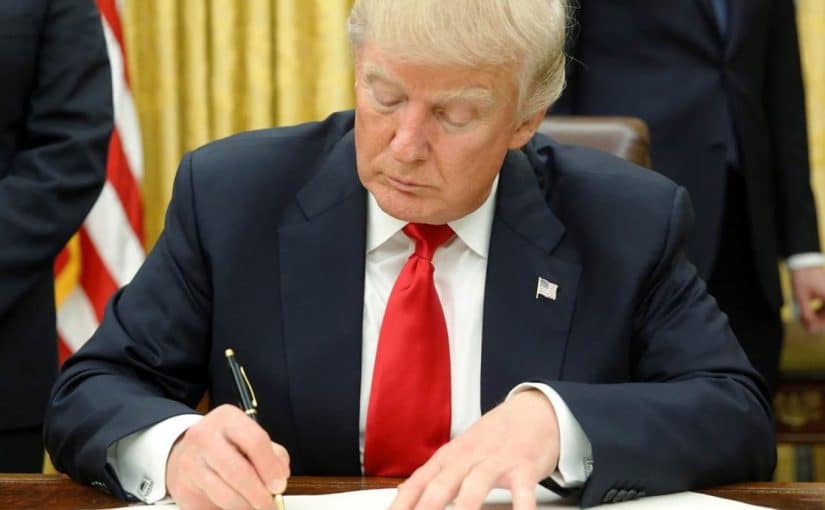
We wonder now how people who oppose Donald Trump’s policies will channel their energies into effective action.  After the Women’s Marches, Trump issued a flurry of executive orders that can create chaos for people who need health insurance, deny a woman’s right to choose, threaten immigrants with deportation and separate America from its traditional and new allies. 

WATCH THE VIDEO OF THE WOMEN’S MARCH

Here’s the list of his executive orders so far:

1. Provide Relief From The Affordable Care Act

This allows federal officials to waive any rules or restrictions of the Affordable Care Act that “impose a financial or regulatory burden” on states or people.

2. Freezes All Regulations

This gives his administration to delay implementation of regulations until his administration reviews them, or beyond.

3. Blocks Taxpayer Money To Fund Birth Control Projects Abroad

This reinstates the “Mexico City Abortion” policy that blocks the use of taxpayer money to fund foreign non-governmental groups that promote abortion.

4. Ends The Trans-Pacific Partnership

The Senate never ratified the agreement between the U.S. and 11 Pacific countries. But Trump nixed it anyway.

5. Freezes The Federal Work Force

6. Approved Pipelines

Environmentalists and President Obama opposed the Dakota Access Pipeline and the Keystone XL Pipeline. Trump’s executive order asks for expedited review and construction of the Dakota Access Pipeline and asks TransCanada to resubmit an application for the Keystone XL Pipeline. Both pipelines would carry oil from Canada down across the U.S. to the Gulf of Mexico.

7. Speeds Review of Infrastructure Projects

Trump claims that projects have been delayed by “agency processes and procedures.” So he wants to speed them up.

8. Use American-Made Steel And Metal

Trump asked the Secretary of Commerce to draw up a Made-In-America plan to try to  use American-made steel and metal when possible in pipelines and infrastructure projects.

9. Effort To Streamline Domestic Manufacturing

Trump asked the Secretary of Commerce to work with manufacturers and create a plan to streamline permitting for manufacturers.

10. Wants To Build A Wall

Trump plans to begin building a wall along the border between Mexico and the U.S. He will add 5,000 more border patrol agents if money is available and construct detention facilities near the border.  He will also review all funding to Mexico.

11. Pursues Undocumented Immigrants

  • He will block federal funds to sanctuary cities that don’t cooperate with federal agents to arrest undocumented immigrants.
  • He will create a priority list of immigrants for deportation targeting those who have been arrested, apparently even for minor crimes.
  • If money is available, he’ll hire 10,000 immigration officials.
  • His administration will create a weekly list of crimes committed by immigrants.
  • He’ll create an “Office for Victims of Crimes Committed by Removable Aliens.”
  • He’ll reinstate the Secure Communities Program that allows local law enforcement officials to act as federal agents.


Citi May Owe You Money Because Of Bad Mortgage Practices


In the despicable category,  companies run by big banks like Citi take advantage of struggling homeowners who try to hang on to their homes. Now CitiMortgage and CitiFinancial Servicing will pay the price, a whopping $28.8 million in a settlement with the Consumer Financial Protection Bureau (CFPB).

CFPB Director Richard Cordray said, “Citi’s subsidiaries gave the runaround to borrowers who were already struggling with their mortgage payments and trying to save their homes. Consumers were kept in the dark about their options or burdened with excessive paperwork. This action will put money back in consumers’ pockets and make sure borrowers can get help they need.”

About 20,000 borrowers learned that they could defer their payments, but they weren’t told that the interest would add up and come due immediately at the end of the deferment period. This added to their loans and violated deceptive lending laws.

CitiFinancial Servicing did not cancel credit insurance bought by 7,800 consumers whose loans went into default. Instead, between July 2011 and April 30, 2015, it continued to collect the money.

On the other hand, it prematurely canceled credit insurance for some customers.

And then, it sent inaccurate information to the credit reporting companies.

As a consequence of all this, the CFPB order CitiFinancial Servicing to pay $4.4 million in restitution to consumers and pay a $4.4 million civil penalty.

CitiMortgage will pay $17 million in restitution directly to 41,000 consumers who received confusing information about what documents they needed to provide to pay off their mortgages. The CFPB said, “Many of these documents had nothing to do with a borrower’s financial circumstances and were not actually needed.”

The CFPB ordered CitiMortgage to freeze foreclosures imposed during its bad practices and to pay a civil fine of $3 million.

 If you think CitiMortgage or CitiFinancial Servicing misled you, sit tight. The companies should notify you within 60 days. If you don’t hear from them you can contact the Consumer Financial Protection Bureau: http:www.consumerfinance.gov, or call 855-411-2372.

We will point out that the Consumer Financial Protection Bureau may come under fire from the Trump Administration. Republicans have criticized the bureau’s work and want to take away some of its power or kill it entirely. 

If you think this valuable bureau should continue, contact your U.S. representative or your U.S. senator. 

Here’s where to find your representative: http://www.house.gov/htbin/findrep

Here’s where to find your senator:

https://www.senate.gov/senators/contact/


On The Women’s March To Washington

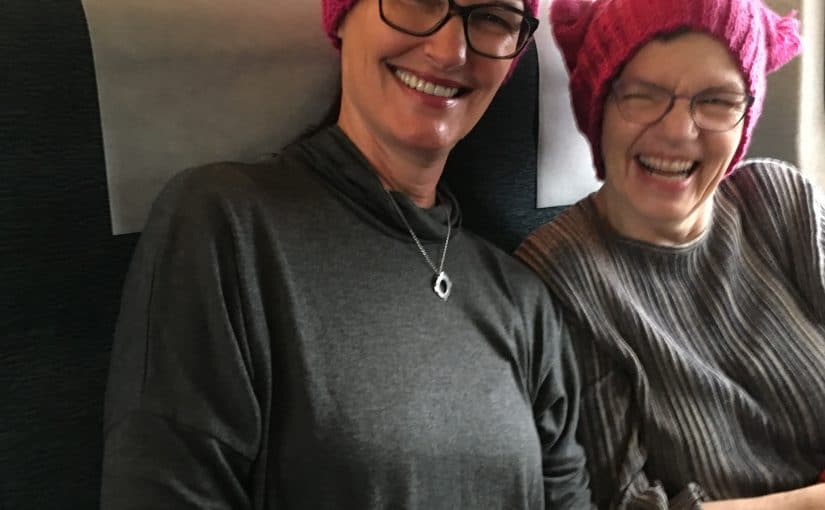
The Amtrak train to Washington was filled with women and men determined to challenge Donald Trump’s dark and retrograde views of America.

Andrea Kihlsted put on her pink pussy hat, to show defiance and to mock Donald Trump’s vulgar comment about women caught on an “Access Hollywood” tape. “What’s happening with Trump’s election is the most disturbing thing in my 71 years,” she said. “I think it has a serious chance of undermining our democracy.  I haven’t done much since the Vietnam war. But since the election, he has done nothing positive. He was a buffoon before. Now he is dangerous.” 

Her seat mate Karen Kendrick said, “I think for me, ‘Make America Great Again’ really means make America white again. And if you are black, Hispanic or Muslim or other, I’m going to stand up and support you. You are not alone.” 

Virgina Kallianes, an attorney, traveled with four other women from New York. She said,” I’ve been doing this for 30 years. This is the absolute worst case scenario. I’m just horrified and disgusted. The issues Trump’s election raise affect everyone. I’m talking about economics, minorities, civil rights.

“But I’m concerned about the fact that he got elected and what it says about our society and the approval of Trump’s misogynistic, racist views. He gave permission for people to come out from under a rock.” 

 Judy La Pook, part of Virginia’s group, said, “We’ve been fighting since the 1970s for reproductive rights. Now decades later we are fighting for something we thought we already won. It is very discouraging. But we have to do it. 

Sitting nearby, Marilyn Elson quietly knitted a burgundy pussy hat. She said, “I’m going to Washington because it is a human right to choose what you want to do with your own body and taking away that right is something that women and men can not let him do.

Carl Mulert and a friend traveled together. He said, “I’m going because that man is not my president. I hope he notices that he works for us and that we are his employer. All of us who are marching are his employer and he is answerable to us.”

On the march itself, women men and children echoed what everyone on the train said.

SEE WHAT TRUMP HAS DONE SINCE. WATCH THE VIDEO


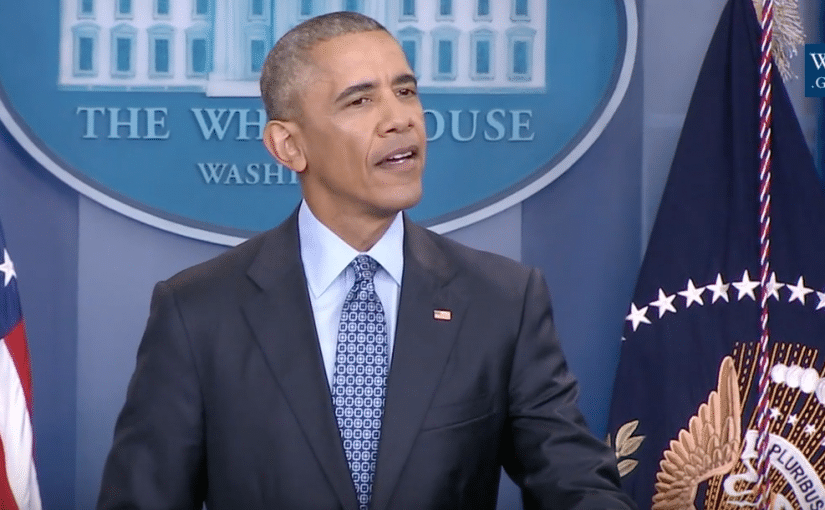
President Obama’s Last News Conference


“There is a core decency in this country,” President Obama said at his final news conference. “There are a lot more good people than bad in this country” 

His last meeting with reporters displayed his optimism and it’s worth watching and reading.


THE PRESIDENT:  Good afternoon, everybody.  Let me start out by saying that I was sorely tempted to wear a tan suit today — (laughter) — for my last press conference.  But Michelle, whose fashion sense is a little better than mine, tells me that’s not appropriate in January.


I covered a lot of the ground that I would want to cover in my farewell address last week.  So I’m just going to say a couple of quick things before I start taking questions.


First, we have been in touch with the Bush family today, after hearing about President George H.W. Bush and Barbara Bush being admitted to the hospital this morning.  They have not only dedicated their lives to this country, they have been a constant source of friendship and support and good counsel for Michelle and me over the years.  They are as fine a couple as we know.  And so we want to send our prayers and our love to them.  Really good people.


Second thing I want to do is to thank all of you.  Some of you have been covering me for a long time — folks like Christi and Win.  Some of you I’ve just gotten to know.  We have traveled the world together.  We’ve hit a few singles, a few doubles together.  I’ve offered advice that I thought was pretty sound, like “don’t do stupid…stuff.”  (Laughter.)  And even when you complained about my long answers, I just want you to know that the only reason they were long was because you asked six-part questions.  (Laughter.)   


But I have enjoyed working with all of you.  That does not, of course, mean that I’ve enjoyed every story that you have filed.  But that’s the point of this relationship.  You’re not supposed to be sycophants, you’re supposed to be skeptics.  You’re supposed to ask me tough questions.  You’re not supposed to be complimentary, but you’re supposed to cast a critical eye on folks who hold enormous power and make sure that we are accountable to the people who sent us here. 


And you have done that.  And you’ve done it, for the most part, in ways that I could appreciate for fairness even if I didn’t always agree with your conclusions.  And having you in this building has made this place work better.  It keeps us honest.  It makes us work harder.  It made us think about how we are doing what we do and whether or not we’re able to deliver on what’s been requested by our constituents. 


And for example, every time you’ve asked “why haven’t you cured Ebola yet,” or “why is that still that hole in the Gulf,” it has given me the ability to go back to my team and say, “will you get this solved before the next press conference?”  (Laughter.)  


I spent a lot of time in my farewell address talking about the state of our democracy.  It goes without saying that essential to that is a free press.  That is part of how this place, this country, this grand experiment in self-government has to work.  It doesn’t work if we don’t have a well-informed citizenry.  And you are the conduit through which they receive the information about what’s taking place in the halls of power.


So America needs you, and our democracy needs you.  We need you to establish a baseline of facts and evidence that we can use as a starting point for the kind of reasoned and informed debates that ultimately lead to progress.  And so my hope is, is that you will continue with the same tenacity that you showed us to do the hard work of getting to the bottom of stories and getting them right, and to push those of us in power to be the best version of ourselves.  And to push this country to be the best version of itself.


I have no doubt that you will do so.  I’m looking forward to being an active consumer of your work rather than always the subject of it.  I want to thank you all for your extraordinary service to our democracy. 


And with that, I will take some questions.  And I will start with Jeff Mason — whose term apparently is not up.  I thought we’d be going out together, brother, but you got to hang around for a while.  (Laughter.) 


Q    I’m staying put.


THE PRESIDENT:  Jeff Mason, Reuters.


Q    Thank you, sir.  Are you concerned, Mr. President, that commuting Chelsea Manning’s sentence will send a message that leaking classified material will not generate a tough sentence to groups like WikiLeaks?  How do you reconcile that in light of WikiLeaks’ connection to Russia’s hacking in last year’s election?  And related to that, Julian Assange has now offered to come to the United States.  Are you seeking that?  And would he be charged or arrested if he came here?


THE PRESIDENT:  Well, first of all, let’s be clear, Chelsea Manning has served a tough prison sentence.  So the notion that the average person who was thinking about disclosing vital, classified information would think that it goes unpunished I don’t think would get that impression from the sentence that Chelsea Manning has served.


It has been my view that given she went to trial, that due process was carried out, that she took responsibility for her crime, that the sentence that she received was very disproportional — disproportionate relative to what other leakers had received, and that she had served a significant amount of time, that it made it sense to commute — and not pardon — her sentence.


And I feel very comfortable that justice has been served and that a message has still been sent that when it comes to our national security, that wherever possible, we need folks who may have legitimate concerns about the actions of government or their superiors or the agencies in which they work — that they try to work through the established channels and avail themselves of the whistleblower protections that had been put in place.


I recognize that there’s some folks who think they’re not enough, and I think all of us, when we’re working in big institutions, may find ourselves at times at odds with policies that are set.  But when it comes to national security, we’re often dealing with people in the field whose lives may be put at risk, or the safety and security and the ability of our military or our intelligence teams or embassies to function effectively.  And that has to be kept in mind.


So with respect to WikiLeaks, I don’t see a contradiction.  First of all, I haven’t commented on WikiLeaks, generally.  The conclusions of the intelligence community with respect to the Russian hacking were not conclusive as to whether WikiLeaks was witting or not in being the conduit through which we heard about the DNC emails that were leaked.


I don’t pay a lot of attention to Mr. Assange’s tweets, so that wasn’t a consideration in this instance.  And I’d refer you to the Justice Department for any criminal investigations, indictments, extradition issues that may come up with him.


What I can say broadly is that, in this new cyber age, we’re going to have to make sure that we continually work to find the right balance of accountability and openness and transparency that is the hallmark of our democracy, but also recognize that there are adversaries and bad actors out there who want to use that same openness in ways that hurt us — whether that’s in trying to commit financial crimes, or trying to commit acts of terrorism, or folks who want to interfere with our elections. 


And we’re going to have to continually build the kind of architecture that makes sure the best of our democracy is preserved; that our national security and intelligence agencies have the ability to carry out policy without advertising to our adversaries what it is that we’re doing, but do so in a way that still keeps citizens up to speed on what their government is doing on their behalf.


But with respect to Chelsea Manning, I looked at the particulars of this case the same way I have for the other commutations and pardons that I’ve done, and I felt that in light of all the circumstances that commuting her sentence was entirely appropriate.


Margaret Brennan.


Q    Mr. President, thank you.  The President-elect has said that he would consider lifting sanctions on Russia if they substantially reduced their nuclear stockpile.  Given your own efforts at arms control, do you think that’s an effective strategy?  Knowing this office and Mr. Trump, how would you advise his advisors to help him be effective when he deals with Vladimir Putin?  And given your actions recently on Russia, do you think those sanctions should be viewed as leverage?


THE PRESIDENT:  Well, a couple of things.  Number one, I think it is in America’s interest and the world’s interest that we have a constructive relationship with Russia.  That’s been my approach throughout my presidency.  Where our interests have overlapped, we’ve worked together.  At the beginning of my term, I did what I could to encourage Russia to be a constructive member of the international community, and tried to work with the President and the government of Russia in helping them diversify their economy, improve their economy, use the incredible talents of the Russian people in more constructive ways. 


I think it’s fair to say that after President Putin came back into the presidency that an escalating anti-American rhetoric and an approach to global affairs that seemed to be premised on the idea that whatever America is trying to do must be bad for Russia and so we want to try and counteract whatever they do — that return to an adversarial spirit that I think existed during the Cold War has made the relationship more difficult.  And it was hammered home when Russia went into Crimea and portions of Ukraine.


The reason we imposed the sanctions, recall, was not because of nuclear weapons issues.  It was because the independence and sovereignty of a country, Ukraine, had been encroached upon, by force, by Russia.  That wasn’t our judgment; that was the judgment of the entire international community.  And Russia continues to occupy Ukrainian territory and meddle in Ukrainian affairs and support military surrogates who have violated basic international law and international norms.


What I’ve said to the Russians is, as soon as you’ve stop doing that the sanctions will be removed.  And I think it would probably best serve not only American interest but also the interest of preserving international norms if we made sure that we don’t confuse why these sanctions have been imposed with a whole set of other issues.


On nuclear issues, in my first term we negotiated the START II treaty. and that has substantially reduced our nuclear stockpiles, both Russia and the United States.  I was prepared to go further.  I told President Putin I was prepared to go further.  They have been unwilling to negotiate.  If President-elect Trump is able to restart those talks in a serious way, I think there remains a lot of room for our two countries to reduce our stockpiles.  And part of the reason we’ve been successful on our nonproliferation agenda and on our nuclear security agenda is because we were leading by example. 


I hope that continues.  But I think it’s important just to remember that the reason sanctions have been put in place against Russia has to do with their actions in Ukraine.  And it is important for the United States to stand up for the basic principle that big countries don’t go around and invade and bully smaller countries.  I’ve said before, I expect Russia and Ukraine to have a strong relationship.  They are, historically, bound together in all sorts of cultural and social ways.  But Ukraine is an independent country.


And this is a good example of the vital role that America has to continue to play around the world in preserving basic norms and values, whether it’s advocating on behalf of human rights, advocating on behalf of women’s rights, advocating on behalf of freedom of the press. 


The United States has not always been perfect in this regard.  There are times where we, by necessity, are dealing with allies or friends or partners who, themselves, are not meeting the standards that we would like to see met when it comes to international rules and norms.  But I can tell you that in every multilateral setting — in the United Nations, in the G20, in the G7 — the United States typically has been on the right side of these issues.  And it is important for us to continue to be on the right side of these issues, because if we, the largest, strongest country and democracy in the world, are not willing to stand up on behalf of these values, then certainly China, Russia, and others will not.


Kevin Corke.


Q    Thank you, Mr. President.  You have been a strong supporter of the idea of a peaceful transfer of power, demonstrated not terribly far from the Rose Garden.  And yet, even as you and I speak, there are more than five dozen Democrats that are going to boycott the inauguration of the incoming President.  Do you support that?  And what message would you send to Democrats to better demonstrate the peaceful transfer of power?


And if I could follow, I wanted to ask you about your conversations with the President-elect previously.  And without getting into too much of the personal side of it, I’m just curious, were you able to use that opportunity to convince him to take a fresh look at some of the important ideas that you will leave this office with — maintaining some semblance of the Affordable Care Act, some idea of keeping DREAMers here in the country without fear of deportation.  Were you able to use personal stories to try to convince him?  And how successful were you?


THE PRESIDENT:  Well, I won’t go into details of my conversations with President-elect Trump.  As I’ve said before, they are cordial.  At times they’ve been fairly lengthy and they’ve been substantive.  I can’t tell you how convincing I’ve been.  I think you’d had to ask him whether I’ve been convincing or not.


I have offered my best advice, counsel about certain issues both foreign and domestic.  And my working assumption is, is that having won an election opposed to a number of my initiatives and certain aspects of my vision for where the country needs to go, it is appropriate for him to go forward with his vision and his values.  And I don’t expect that there’s going to be enormous overlap. 


It may be that on certain issues, once he comes into office and he looks at the complexities of how to, in fact, provide health care for everybody — something he says he wants to do — or wants to make sure that he is encouraging job creation and wage growth in this country, that that may lead him to some of the same conclusions that I arrived at once I got here.


But I don’t think we’ll know until he has an actual chance to get sworn in and sit behind that desk.  And I think a lot of his views are going to be shaped by his advisors, the people around him — which is why it’s important to pay attention to these confirmation hearings.


I can tell you that — and this is something I have told him — that this is a job of such magnitude that you can’t do it by yourself.  You are enormously reliant on a team.  Your Cabinet, your senior White House staff, all the way to fairly junior folks in their 20s and 30s, but who are executing on significant responsibilities. 


And so how you put a team together to make sure that they’re getting you the best information and they are teeing up the options from which you will ultimately make decisions, that’s probably the most useful advice, the most constructive advice that I’ve been able to give him.  That if you find yourself isolated because the process breaks down, or if you’re only hearing from people who agree with you on everything, or if you haven’t created a process that is fact-checking and probing and asking hard questions about policies or promises that you’ve made, that’s when you start making mistakes.  And as I indicated in some of my previous remarks, reality has a way of biting back if you’re not paying attention to it.


With respect to the inauguration, I’m not going to comment on those issues.  All I know is I’m going to be there.  So is Michelle.  And I have been checking the weather, and I’m heartened by the fact that it won’t be as cold as my first inauguration — (laughter) — because that was cold. 


Jen Rodriguez.


Q    Right here, Mr. President.  Thank you very much.  You have said that you would come back to fight for the DREAMers.  You said that a couple of weeks ago.  Are you fearful for the status of those DREAMers, the future of the young immigrants and all immigrants in this country with the new administration?  And what did you mean when you said you would come back?  Would you lobby Congress?  Maybe explore the political arena again?  And if I may ask you a second question — why did you take action on “dry foot, wet foot” a week ago?


THE PRESIDENT:  Well, let me be absolutely clear.  I did not mean that I was going to be running for anything anytime soon.  (Laughter.)  What I meant is that it’s important for me to take some time to process this amazing experience that we’ve gone through; to make sure that my wife, with whom I will be celebrating a 25th anniversary this year, is willing to re-up and put up with me for a little bit longer.  I want to do some writing.  I want to be quiet a little bit and not hear myself talk so darn much.  I want to spend precious time with my girls. 


So those are my priorities this year.  But as I said before, I’m still a citizen.  And I think it is important for Democrats or progressives who feel that they came out on the wrong side of this election to be able to distinguish between the normal back-and-forth, ebb and flow of policy — are we going to raise taxes or are we going to lower taxes; are we going to expand this program or eliminate this program; how concerned are we about air pollution or climate change.  Those are all normal parts of the debate.  And as I’ve said before, in a democracy, sometimes you’re going to win on those issues and sometimes you’re going to lose. 


I’m confident about the rightness of my positions on a lot of these points, but we got a new President and a Congress that are going to make their same determinations.  And there will be a back-and-forth in Congress around those issues, and you guys will report on all that. 


But there’s difference between that normal functioning of politics and certain issues or certain moments where I think our core values may be at stake.  I put in that category, if I saw systematic discrimination being ratified in some fashion.  I’d put in that category, explicit or functional obstacles to people being able to vote, to exercise their franchise.  I’d put in that category, institutional efforts to silence dissent or the press. 


And for me, at least, I would put in that category, efforts to round up kids who have grown up here and for all practical purposes are American kids and send them someplace else when they love this country; they are our kids’ friends and their classmates, and are now entering into community colleges or, in some cases, serving in our military.  The notion that we would just arbitrarily, or because of politics, punish those kids when they didn’t do anything wrong themselves I think would be something that would merit me speaking out.  It doesn’t mean that I would get on the ballot anywhere.


With respect to “wet foot, dry foot,” we underwent a monumental shift in our policy towards Cuba.  My view was, after 50 years of a policy not working, it made sense for us to try to reopen diplomatic relations, to engage a Cuban government, to be honest with them about the strong disagreements we have around political repression and treatment of dissenters and freedom of press and freedom of religion, but that to make progress for the Cuban people, our best shot was to suddenly have the Cuban people interacting with Americans, and seeing the incredible success of the Cuban American community, and engaging in commerce and business and trade, and that it was through that process of opening up these bilateral relations that you would see over time serious and significant improvement.


Given that shift in the relationship, the policy that we had in place was “wet foot, dry foot,” which treated Cuban emigres completely different from folks from El Salvador, or Guatemala, or Nicaragua, or any other part of the world, one that made a distinction between whether you got here by land or by foot — that was a carryover of a old way of thinking that didn’t make sense in this day and age, particularly as we’re opening up travel between the two countries. 


And so we had very lengthy consultations with the Department of Homeland Security.  We had some tough negotiations with the Cuban government.  But we arrived at a policy which we think is both fair and appropriate to the changing nature of the relationship between the two countries.


Nadia Bilbassy.


Q    Thank you, sir.  I appreciate the opportunity, and I want you and your family best of luck in the future.


THE PRESIDENT:  Thank you.


Q    Mr. President, you have been criticized and even personally attacked for the U.N. Security Council resolution that considered the Israeli settlements illegal and an obstacle to peace.  Mr. Trump promised to move the embassy to Jerusalem.  He appointed an ambassador that doesn’t believe in the two-state solution.  How worried are you about the U.S. leadership in the Arab world and beyond as an honest broker?  Will this ignite a third intifada?  Will this even protect Israel?  And in retrospect, do you think that you should have held Israel more accountable, like President Bush, Senior, did with the loan guarantees?  Thank you.


THE PRESIDENT:  I continue to be significantly worried about the Israeli-Palestinian issue.  And I’m worried about it both because I think the status quo is unsustainable, that it is dangerous for Israel, that it is bad for Palestinians, it is bad for the region, and it is bad for America’s national security. 


And I came into this office wanting to do everything I could to encourage serious peace talks between Israelis and Palestinians.  And we invested a lot of energy, a lot of time, a lot of effort, first year, second year, all the way until last year.  Ultimately, what has always been clear is that we cannot force the parties to arrive at peace.  What we can do is facilitate, provide a platform, encourage.  But we can’t force them to do it.


But in light of shifts in Israeli politics and Palestinian politics; a rightward drift in Israeli politics; a weakening of President Abbas’s ability to move and take risks on behalf of peace in the Palestinian Territories; in light of all the dangers that have emerged in the region and the understandable fears that Israelis may have about the chaos and rise of groups like ISIL and the deterioration of Syria — in light of all those things, what we at least wanted to do, understanding that the two parties wouldn’t actually arrive at a final status agreement, is to preserve the possibility of a two-state solution.  Because we do not see an alternative to it.


And I’ve said this directly to Prime Minister Netanyahu.  I’ve said it inside of Israel.  I’ve said it to Palestinians, as well.  I don’t see how this issues gets resolved in a way that maintains Israel as both Jewish and a democracy, because if you do not have two states, then in some form or fashion you are extending an occupation, functionally you end up having one state in which millions of people are disenfranchised and operate as second-class occupant — residents.  You can’t even call them citizens, necessarily. 


And so the goal of the resolution was to simply say that the settlements — the growth of the settlements are creating a reality on the ground that increasingly will make a two-state solution impossible.  And we believed, consistent with the position that had been taken with previous U.S. administrations for decades now, that it was important for us to send a signal, a wake-up call, that this moment may be passing, and Israeli voters and Palestinians need to understand that this moment may be passing.  And hopefully that, then, creates a debate inside both Israeli and Palestinian communities that won’t result immediately in peace, but at least will lead to a more sober assessment of what the alternatives are.


So the President-elect will have his own policy.  The ambassador — or the candidate for the ambassadorship obviously has very different views than I do.  That is their prerogative. That’s part of what happens after elections.  And I think my views are clear.  We’ll see how their approach plays itself out.


I don’t want to project today what could end up happening, but obviously it’s a volatile environment.  What we’ve seen in the past is, when sudden, unilateral moves are made that speak to some of the core issues and sensitivities of either side, that can be explosive.  And what we’ve tried to do in the transition is just to provide the context in which the President-elect may want to make some of these decisions.


Q    Are you worried that this (inaudible) —


THE PRESIDENT:  Well, that’s part of what we’ve tried to indicate to the incoming team in our transition process, is pay attention to this, because this is volatile stuff.  People feel deeply and passionately about this.  And as I’ve said I think many times, the actions that we take have enormous consequences and ramifications. 


We’re the biggest kid on the block.  And I think it is right and appropriate for a new President to test old assumptions and reexamine the old ways of doing things.  But if you’re going to make big shifts in policy, just make sure you’ve thought it through, and understand that there are going to be consequences, and actions typically create reactions, and so you want to be intentional about it.  You don’t want to do things off the cuff when it comes to an issue this volatile.


Chris Johnson.


Q    On LGBT rights —


THE PRESIDENT:  I’m sorry, where is Chris?


Q    I’m right here in the back.


THE PRESIDENT:  I’m sorry, didn’t see you.


Q    On LGBT rights, we’ve seen a lot of achievements over the past eight years, including signing hate crimes protection legislation, “don’t ask, don’t tell” repeal, marriage equality nationwide, and ensuring transgender people feel visible and accepted.  How do you think LGBT rights will rank in terms of your accomplishments and your legacy?  And how confident are you that progress will endure or continue under the President-elect?


THE PRESIDENT:  I could not be prouder of the transformation that’s taken place in our society just in the last decade.  And I’ve said before, I think we made some useful contributions to it, but the primary heroes in this stage of our growth as a democracy and a society are all the individual activists, and sons and daughters and couples who courageously said, this is who I am and I’m proud of it. 


And that opened people’s minds and opened their hearts.  And, eventually, laws caught up.  But I don’t think any of that would have happened without the activism — in some cases, loud and noisy, but in some cases, just quiet and very personal. 


And I think that what we did as an administration was to help the society to move in a better direction, but to do so in a way that didn’t create an enormous backlash, and was systematic and respectful of the fact that, in some cases, these issues were controversial. 


I think the way we handled, for example, “don’t ask, don’t tell” — being methodical about it, working with the Joint Chiefs, making sure that we showed this would not have an impact on the effectiveness of the greatest military on Earth — and then to have Defense Secretary Bob Gates and Chairman Mike Mullen and a Joint Chiefs who were open to evidence and ultimately worked with me to do the right thing — I am proud of that.  But, again, none of that would have happened without this incredible transformation that was happening in society out there.


You know, when I gave Ellen the Presidential Medal of Freedom, I meant what I said.  I think somebody that kind and likeable projecting into living rooms around the country — that changed attitudes.  And that wasn’t easy to do for her.  And that’s just one small example of what was happening in countless communities all across the country.


So I’m proud that in certain places we maybe provided a good block downfield to help the movement advance.


I don’t think it is something that will be reversible because American society has changed; the attitudes of young people, in particular, have changed.  That doesn’t mean there aren’t going to be some fights that are important — legal issues, issues surrounding transgender persons — there are still going to be some battles that need to take place.


But if you talk to young people of Malia, Sasha’s generation, even if they’re Republicans, even if they’re conservative, many of them would tell you, I don’t understand how you would discriminate against somebody because of sexual orientation.  That’s just sort of burned into them in pretty powerful ways.


April Ryan.


Q    Thank you, Mr. President.  Long before today you’ve been considered a rights President.  Under your watch, people have said that you have expanded the rubber band of inclusion.  And with the election and the incoming administration, people are saying that rubber band has recoiled and maybe is even broken.  And I’m taking you back to a time on Air Force One going to Selma, Alabama, when you said your job was to close the gaps that remain.  And with that, what gaps still remain when it comes to rights issues on the table?  And also what part will you play in fixing those gaps after — in your new life?


And lastly, you are the first black President.  Do you expect this country to see this again?


THE PRESIDENT:  Well, I’ll answer the last question first.  I think we’re going to see people of merit rise up from every race, faith, corner of this country, because that’s America’s strength.  When we have everybody getting a chance and everybody is on the field, we end up being better.


I think I’ve used this analogy before.  We killed it in the Olympics in Brazil.  And Michelle and I, we always have our — the Olympic team here.  And it’s a lot of fun, first of all, just because anytime you’re meeting somebody who is the best at anything, it’s impressive.  And these mostly very young people are all just so healthy-looking, and they just beam and exude fitness and health.  And so we have a great time talking to them.


But they are of all shapes, sizes, colors — the genetic diversity that is on display is remarkable.  And if you look at a Simone Biles, and then you look at a Michael Phelps, they’re completely different.  And it’s precisely because of those differences that we’ve got people here who can excel at any sport. 


And, by the way, more than half of our medals came from women.  And the reason is, is because we had the foresight several decades ago, with something called Title 9, to make sure that women got opportunities in sports, which is why our women compete better — because they have more opportunities than folks in other countries. 


So I use that as a metaphor.  And if, in fact, we continue to keep opportunity open to everybody, then, yes, we’re going to have a woman President, we’re going to have a Latino President, and we’ll have a Jewish President, a Hindu President.  Who knows who we’re going to have?  I suspect we’ll have a whole bunch of mixed-up Presidents at some point that nobody really knows what to call them.  (Laughter.)  And that’s fine. 


But what do I worry about?  I obviously spent a lot of time on this, April, at my farewell address on Tuesday, so I won’t go through the whole list.  I worry about inequality, because I think that if we are not investing in making sure everybody plays a role in this economy, the economy will not grow as fast, and I think it will also lead to further and further separation between us as Americans — not just along racial lines.  There are a whole bunch of folks who voted for the President-elect because they feel forgotten and disenfranchised.  They feel as if they’re being looked down on.  They feel as if their kids aren’t going to have the same opportunities as they did. 


And you don’t want to have an America in which a very small sliver of people are doing really well and everybody else is fighting for scraps, as I said last week.  Because that’s oftentimes when racial divisions get magnified, because people think, well, the only way I’m going to get ahead is if I make sure somebody else gets less, somebody who doesn’t look like me or doesn’t worship at the same place I do.  That’s not a good recipe for our democracy.


I worry about, as I said in response to a previous question, making sure that the basic machinery of our democracy works better.  We are the only country in the advanced world that makes it harder to vote rather than easier.  And that dates back — there’s an ugly history to that that we should not be shy about talking about. 


Q    Voting rights?


THE PRESIDENT:  Yes, I’m talking about voting rights.  The reason that we are the only country among advanced democracies that makes it harder to vote is it traces directly back to Jim Crow and the legacy of slavery.  And it became sort of acceptable to restrict the franchise.  And that’s not who we are.  That shouldn’t be who we are.  That’s not when America works best.


So I hope that people pay a lot of attention to making sure that everybody has a chance to vote.  Make it easier, not harder.  This whole notion of election — of voting fraud, this is something that has constantly been disproved.  This is fake news — the notion that there are a whole bunch of people out there who are going out there and are not eligible to vote and want to vote.  We have the opposite problem.  We have a whole bunch of people who are eligible to vote who don’t vote.  And so the idea that we’d put in place a whole bunch of barriers to people voting doesn’t make sense. 


And then, as I’ve said before, political gerrymandering that makes your vote matter less because politicians have decided you live in a district where everybody votes the same way you do so that these aren’t competitive races, and we get 90 percent Democratic districts, 90 percent Republican districts — that’s bad for our democracy, too.  I worry about that. 


I think it is very important for us to make sure that our criminal justice system is fair and just.  But I also think it’s also very important to make sure that it is not politicized, that it maintains an integrity that is outside of partisan politics at every level. 


I think at some point we’re going to have to spend — and this will require some action by the Supreme Court — we have to reexamine just the flood of endless money that goes into our politics, which I think is very unhealthy. 


So there are a whole bunch of things I worry about there. And as I said in my speech on Tuesday, we got more work to do on race.  It is not — it is simply not true that things have gotten worse.  They haven’t.  Things are getting better.  And I have more confidence on racial issues in the next generation than I do in our generation or the previous generation.  I think kids are smarter about it.  They’re more tolerant.  They are more inclusive by instinct than we are.  And hopefully my presidency maybe helped that along a little bit.


But, you know, we — when we feel stress, when we feel pressure, when we’re just fed information that encourages some of our worst instincts, we tend to fall back into some of the old racial fears and racial divisions and racial stereotypes. And it’s very hard for us to break out of those, and to listen, and to think about people as people, and to imagine being in that person’s shoes. 


And by the way, it’s no longer a black and white issue alone.  You got Hispanic folks, and you got Asian folks, and this is not just the same old battles.  We’ve got this stew that’s bubbling up of people from everywhere.  And we’re going to have to make sure that we, in our own lives, in our own families and workplaces, do a better job of treating everybody with basic respect.  And understanding that not everybody starts off in the same situation, and imagining what would it be like if you were born in an inner city and had no job prospects anywhere within a 20-mile radius, or how does it feel being born in some rural county where there’s no job opportunities in a 20-mile radius — and seeing those two things as connected as opposed to separate. 


So we got work to do.  But, overall, I think on this front, the trend lines ultimately, I think, will be good.


Christi Parsons.  And Christi, you are going to get the last question.


Q    Oh, no.  (Laughter and groans.)


THE PRESIDENT:  Christi is — I’ve been knowing her since Springfield, Illinois.  When I was a state senator, she listened to what I had to say.  (Laughter.)  So the least I can do is give her the last question as President of the United States. 


Go on.


Q    217 numbers still work. 


THE PRESIDENT:  There you go.  Go ahead.


Q    Well, thank you, Mr. President.  It has been an honor.


THE PRESIDENT:  Thank you.


Q    And I have a personal question for you, because I know how much you like this.  The First Lady puts the stakes of the 2016 election in very personal terms in a speech that resonated across the country, and she really spoke the concerns of a lot of women, LGBT folks, people of color, many others.  And so I wonder now how you and the First Lady are talking to your daughters about the meaning of this election and how you interpret it for yourself and for them.


THE PRESIDENT:  You know, every parent brags on their daughters or their sons.  If your mom and dad don’t brag on you, you know you got problems.  (Laughter.)  But, man, my daughters are something, and they just surprise and enchant and impress me more and more every single day as they grow up.  And so these days, when we talk, we talk as parent to child, but also we learn from them. 


And I think it was really interesting to see how Malia and Sasha reacted.  They were disappointed.  They paid attention to what their mom said during the campaign and believed it because it’s consistent with what we’ve tried to teach them in our household, and what I’ve tried to model as a father with their mom, and what we’ve asked them to expect from future boyfriends or spouses. 


But what we’ve also tried to teach them is resilience, and we’ve tried to teach them hope, and that the only thing that is the end of the world is the end of the world.  And so you get knocked down, you get up, brush yourself off, and you get back to work.  And that tended to be their attitude. 


I think neither of them intend to pursue a future of politics — and, in that, too, I think their mother’s influence shows.  (Laughter.)  But both of them have grown up in an environment where I think they could not help but be patriotic, to love this country deeply, to see that it’s flawed but see that they have responsibilities to fix it.  And that they need to be active citizens, and they have to be in a position to talk to their friends and their teachers and their future coworkers in ways that try to shed some light as opposed to just generate a lot of sound and fury.


And I expect that’s what they’re going to do.  They do not — they don’t mope.  And what I really am proud of them — what makes me proudest about them is that they also don’t get cynical about it.  They have not assumed because their side didn’t win, or because some of the values that they care about don’t seem as if they were vindicated, that automatically America has somehow rejected them or rejected their values.  I don’t think they feel that way. 


I think that they have, in part through osmosis, in part through dinnertime conversations, appreciated the fact that this is a big, complicated country, and democracy is messy and it doesn’t always work exactly the way you might want, it doesn’t guarantee certain outcomes.  But if you’re engaged and you’re involved, then there are a lot more good people than bad in this country, and there’s a core decency to this country, and that they got to be a part of lifting that up. 


And I expect they will be.  And in that sense, they are representative of this generation that makes me really optimistic. 


I’ve been asked — I’ve had some off-the-record conversations with some journalists where they said, okay, you seem like you’re okay, but really, really, what are you thinking?  (Laughter.)  And I’ve said, no, what I’m saying really is what I think.  I believe in this country.  I believe in the American people.  I believe that people are more good than bad.  I believe tragic things happen, I think there’s evil in the world, but I think that at the end of the day, if we work hard, and if we’re true to those things in us that feel true and feel right, that the world gets a little better each time. 


That’s what this presidency has tried to be about.  And I see that in the young people I’ve worked with.  I couldn’t be prouder of them.  And so this is not just a matter of “No Drama Obama” — this is what I really believe.  It is true that behind closed doors I curse more than I do publicly.  (Laughter.)  And sometimes I get mad and frustrated, like everybody else does.   But at my core, I think we’re going to be okay.  We just have to fight for it.  We have to work for it, and not take it for granted.  And I know that you will help us do that.


Thank you very much, press corps.  Good luck.
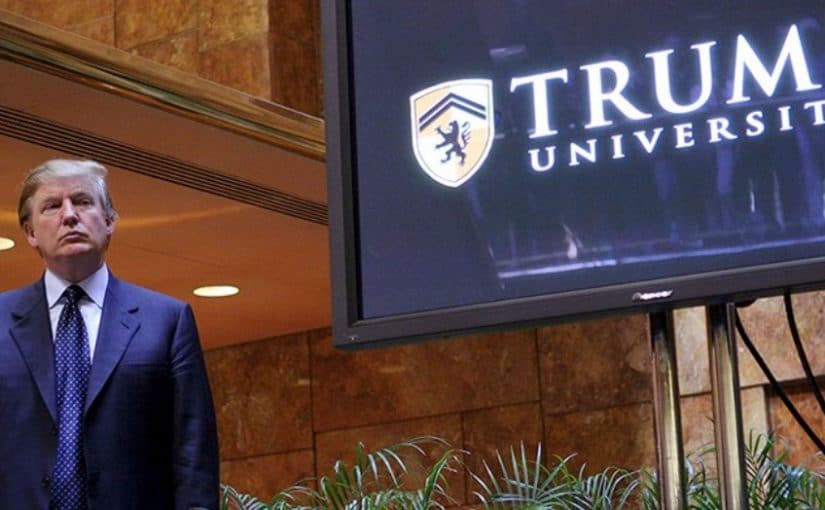
 at the end of the day, if we work hard, and if we’re true to those things in us that feel true and feel right, that the world gets a little better each time. 


That’s what this presidency has tried to be about.  And I see that in the young people I’ve worked with.  I couldn’t be prouder of them.  And so this is not just a matter of “No Drama Obama” — this is what I really believe.  It is true that behind closed doors I curse more than I do publicly.  (Laughter.)  And sometimes I get mad and frustrated, like everybody else does.   But at my core, I think we’re going to be okay.  We just have to fight for it.  We have to work for it, and not take it for granted.  And I know that you will help us do that.


Thank you very much, press corps.  Good luck.