All posts by Barbara Nevins Taylor

Did Chase Cheat You On A Mortgage?

If you live in the New York area and got a mortgage from J.P. Morgan Chase between 2006 and 2009, there’s a chance the bank charged you higher rates and fees than it should have.

Chase didn’t admit guilt. But the bank apparently agreed to pay $55 million for allegedly charging African-Americans and Hispanics more for mortgages.

A lawsuit filed by Preet Bharara, the U.S. Attorney in the Southern District of New York, alleged that the average black or Hispanic homebuyer paid about $1,000 more in fees and interest for mortgages than other borrowers.

The bank allowed mortgage brokers to set fees without regard to the credit worthiness of the buyers. So even if you qualified for a lower rate you may not have gotten it, according to the complaint.

 “Even when Chase had reason to know there were disparities, however, Chase did not act to determine the full scope of these wholesale pricing disparities, nor did it take prompt and effective action to eliminate those disparities, nor did it engage in adequate efforts to remedy the impact of those disparities upon the borrowers,” the U.S. Attorney wrote in the complaint.

The $55 million payout should include restitution for homebuyers. We’ll keep you updated on how this money should come back to you, if you think you were overcharged. 

Modern Heroes

What makes a hero? The definitions in Merriam-Webster and the Oxford dictionaries go first and second to Greek classicism and the third definition gets to the heart of it.  

c : a person admired for achievements and noble qualities

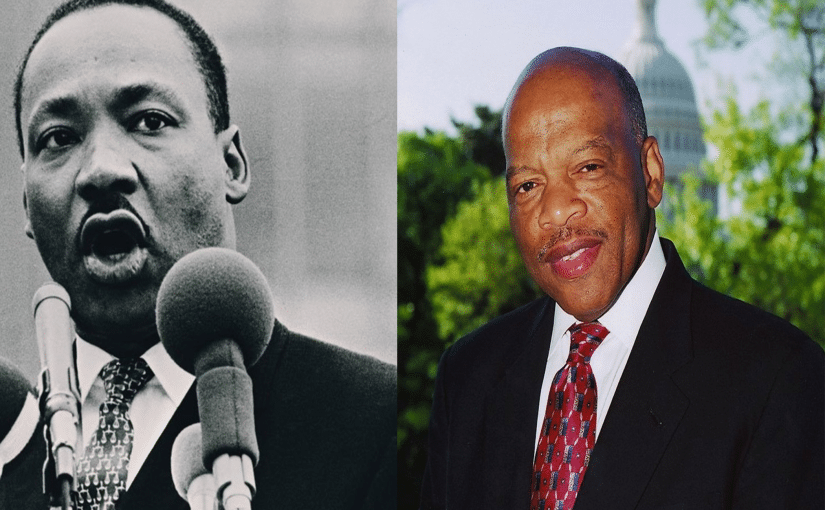
Our world has too few real heroes who act with nobility. Martin Luther King, Jr. was a hero and his friend and colleague, Georgia Representative John Lewis, acts with same kind of integrity and purpose to try to do the right thing. 


Bernie Sanders On Free College Tuition Plan

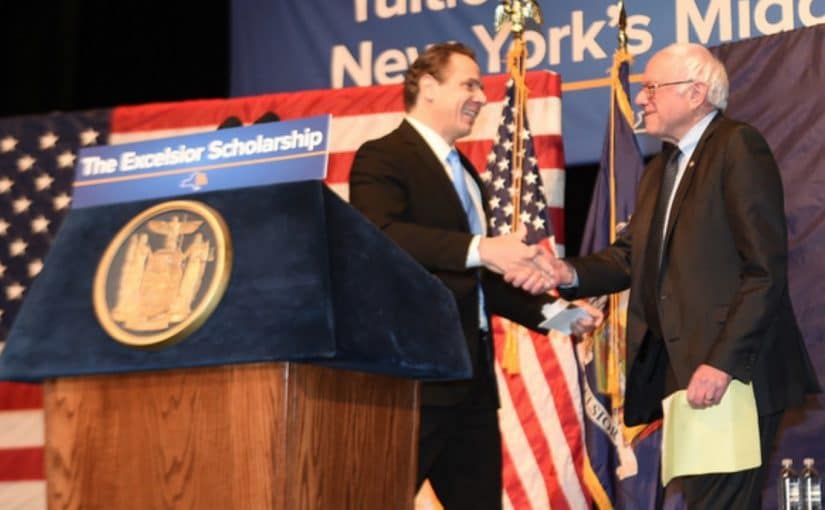
Bernie Sanders endorsed a plan by New York Governor Andrew Cuomo to provide free tuition to middle class college students at CUNY and SUNY schools.

The Excelsior Scholarship could begin for students, with family income of $125,000 or less, in the fall of 2017. But first the New York State legislature must approve the idea.

Did Credit Bureaus Rip You Off?

We hear it all the time. People scream in frustration because of credit bureau practices. Now the Consumer Financial Protection Bureau (CFPB) dealt a walloping blow to two of the big three — Equifax and TransUnion. The CFPB ordered them to refund more than $17.6 million dollars to consumers and pay a fine of $5.5 million to the CFPB for deceiving consumers about the worth and the cost of credit scores they sold.

CFPB Director Richard Cordray said, “TransUnion and Equifax deceived consumers about the usefulness of the credit scores they marketed, and lured consumers into expensive recurring payments with false promises. Credit scores are central to a consumer’s financial life and people deserve honest and accurate information about them.”

Credit reporting agencies like TransUnion and Equifax collect credit information, including a borrower’s payment history, debt load, maximum credit limits, names and addresses of current creditors, and other elements of their credit relationships.

Financial companies like FICO use credit report information to calculate credit scores. They then sell those scores to lenders and businesses who assess your worthiness to get a loan or make a purchase.

But TransUnion and Equifax, through their subsidiaries, also sell credit-related information to consumers like credit scores, credit reports and credit monitoring.

The tricky part comes next.

The CFPB points out that lenders use a variety of scores to make decisions.

TransUnion sold scores to consumers based on a model from VantageScore Solutions, LLC. The CFPB says, “VantageScores are not typically used for credit decisions.”

Equifax sells scores to consumers based on its own model, the Equifax Credit Score. The CFPB describes it as “an educational” credit score that also is typically not used by lenders to make credit decisions.

Between July 2011 and March 2014, both companies advertised and sold their “credit scores” to consumers claiming lenders used their scores to make decisions. The CFPB says they lied.

“In fact, the scores sold by TransUnion and Equifax were not typically used by lenders to make those decisions. Deceiving consumers into enrolling in subscription programs, in their advertising, TransUnion and Equifax falsely claimed that their credit scores and credit-related products were free or, in the case of TransUnion, cost only $1. In reality, consumers who signed up received a free trial of seven or 30 days, after which they were automatically enrolled in a subscription program,” the CFPB explained.

And it got worse because unless you cancelled during the trial period, they charged you a $16 recurring fee every month.

If you went to AnnualCreditReport.com and tried to get your free credit report from 2011 to 2014, you probably saw a lot of Equifax adds for the things they want to sell you. This violated the Fair Credit Reporting Act that prohibits that kind come-on until you actually get your free report. 

Because of the CFPB investigation, TransUnion and Equifax will stop the deceptive practices and pay more than $17.6 million in total restitution.

TransUnion will pay $13.9 million in restitution and $3 million to the CFPB’s civil penalty fund.

Equifax will pay $3.8 million in restitution and $2.5 million to the fund.


How Do you Get a Refund from TransUnion or Equifax?

The companies must send letters to notify you. They have about 60 days to work out a plan for repayment and then 30 days to send you a letter and the money. They must allow you to cancel any questionable deal.

Plan For Free Tuition At CUNY And SUNY


Middle class students in New York State got potentially good news from Governor Andrew Cuomo. Free tuition for students who normally don’t qualify for financial aid because of their family’s income could become a reality in the state and allow hundreds of thousands to graduate without debt.

Governor Cuomo proposed a new state scholarship for students with a family income of up to $125,000 that will cover the cost of their education at State University of New York (SUNY) and City University of New York (CUNY) schools.  Since the mid-seventies, and the advent of tuition for all at CUNY, only low-income students qualified for state scholarships for a free ride at state and city schools. In 2011 at CUNY schools, 48 percent of students received Pell Grants, payments that paid for all tuition.

But Cuomo’s proposal to create the Excelsior Scholarship has the potential to benefit 940,000 families almost immediately.  Average tuition at SUNY and CUNY hovers around the $6,400 range annually.  A tuition break would allow graduates to move on with their lives without struggling to pay yesterday’s bills.

At a news conference with Vermont Senator Bernie Sanders, Cuomo said, “New York is making a major investment in our greatest asset — our people — and supporting the dreams and ambitions of those who want a better life and are willing to work hard for it.”

Senator Sanders, who graduated from New York City public schools and attended Brooklyn College for a year, praised the initiative and said,  “If the United States is to succeed in a highly global economy, we need the best workforce in the world.”

The plan needs the approval of New York’s Assembly and Senate and Sanders had a message for those elected officials: “I urge New York legislators to pass this enormously important proposal, and become a model for the nation.”

If the legislature agrees, the program could go into effect during the fall of 2017.

We’ll keep an eye on how this develops. 

Here’s a clip of Bernie Sanders at the news conference: 

Robert Frost, A Cactus Flower And Love Letter to 2017


by Barbara Nevins Taylor

We awoke to find that 2017 began with a burst of beauty in our home. The cactus flower spread in brilliant color, almost in full bloom, offering a sweet message for us to share.

But I wanted to put more on the page and looked through the titles on my shelves. I reached for a book of poems by Robert Frost. It fell open to a long-time favorite. When I scanned the lines, reciting some from memory, the poem seemed perfect.  It reads like a love letter to optimism, risk-taking and just what we need for the year ahead.


                 The Road Not Taken

Two roads diverged in a yellow wood,

And sorry I could not travel both

And be one traveler, long I stood

And looked down one as far as I could

To where it bent in the undergrowth:


Then took the other as just as fair,

And having perhaps the better claim,

Because it was grassy and wanted wear:

Though as for that, the passing there

Had worn them really about the same,


And both that morning equally lay

In leaves no step had trodden black.

Oh, I kept the first for another day!

Yet knowing how way leads on to way,

I doubted if I should ever come back.


I shall be telling this with a sigh

Somewhere ages and ages hence:

Two roads diverged in a wood, and I 

took the one less traveled by,

And that has made all the difference.

Here’s a short clip of a video of Frost struggling with his own copy at President John F. Kennedy’s inauguration on January 20, 1961.


Christmas Lights on Fifth Avenue

We went to look at the Rockefeller Center Christmas tree and noticed that a lot of people were looking in the opposite direction.

They had their eyes and cameras trained on the spectacular light show that took up the entire front of Saks Fifth Avenue. We found it irresistible. 

It’s a whole new twist on window shopping. 

Enjoy!


Best 2016 Books and Audiobooks

We can complain about 2016 as a strange and perhaps horrible year, but some things made it shine. I escape often into the world of books where I found outstanding writers and narrators who created pleasure for me and other readers and listeners. They deserve praise for providing much-needed distraction.

Zadie Smith, Lee Child, Ian McEwan, Michael Connally, Edna O’Brien, Han Kang, Delia Ephron, Ann Patchett, Deborah Levy, Tana French, Carl Hiaason, and Elizabeth Strout top the list of the writers whose books stand out for me in 2016.

I’m grateful to these writers who told stories that entertained and stimulated new ideas. And the narrators Pippa Bennett-Warner, Hope Davis, Juliet Stevenson, Titus Welliver, Janet Song, Steven Park, Talia Balsam. Katie Finneran, John Slattery, Darren Goldstein and Kimberly Farr made the books even more special.  

LISTEN

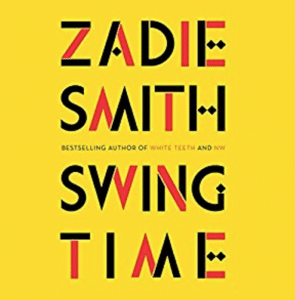
Swing Time
swing-time

When the  epilogue ended and the music cued signalling I had finished Zadie Smith’s Swing TimeI almost shouted, “Oh. No.” Smith’s sharp observation about class and color, her great ear for dialogue and Pippa Bennet-Warner’s brilliant performance made the book compulsive listening.

Swing Time, like Elena Ferrante’s My Brilliant Friend tells the story of two best friends, their love, their competition and the kind of understanding that binds them.

The narrator takes us back to 1982 when she was seven and her friendship with Tracy, another mixed race girl, begins. She says, “Our shade of brown was exactly the same. As if one piece of tan material had been cut to make us both.” The girls live in adjacent housing estates on the outskirts of London and bond at dancing class. Tracy has the talent. But the narrator, smarter in her way, has better parents. Tracy’s white slovenly mom gets beaten by her wandering father whenever he returns. The narrator’s loving father, a postman, adores her and her ambitious West Indian mother who wants to elevate the family. The mom dedicates herself to reading and learning. She earns a spot in a university, becomes a community activist, then a councilor and then a member of Parliament, leaving her husband behind.

Dance plays a central role. The girls watch movie musicals as they study the moves of Fred Astaire in Swing Time, the Nichols Brothers and an African-American dancer called Jenny LeGrand. The story follows them as Tracy moves on to a dance academy and then to the professional chorus, which she never gets beyond. She also remains stuck in the housing estate.

The narrator leaves to go to university and becomes a personal assistant to a Madonna-like pop star. Her life broadens as her job takes around the world. She visits Gambia repeatedly where the pop star sets up a foundation to educate girls. Yet she remains detached, a woman without strong feelings, failing to make real choices, watching the world go by. 

In their late teens and early twenties Tracy and the narrator drift apart. Nearly a decade passes before the narrator seeks her out. I won’t spell out the rest, but if you’re like me you’ll find points in the narrative where you want to shake this thirty-something woman awake and scream at her to grow up.

But then again, I remembered being almost as selfish and self-concerned at that age.

In the end, I cared about and loved Swing Time.

LISTEN:
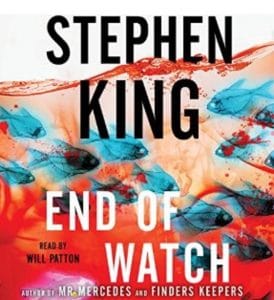
End of Watch mashes up the detective genre, police procedurals, the supernatural and everything fans of Stephen King love. Retired Chicago detective Bill Hodges and his partner Holly Gibney try to stop the evil doings of Brady Hartsfield, whom Gibney labels an “architect of suicide.” Hartsfield lies in a hospital’s traumatic brain injury unit and still manages to do close to his worst.

I won’t spoil the plot, but King respects his characters and imbues them with the rich detail and emotion that quashes any queasiness you may have about the reality-stretching situations. I didn’t listen or read the first three books, but Holly Gibney seems to suffer from Asperger Syndrome and figures out the complicated stuff. Her warm relationship with the no-nonsense Bill Hodges and their young friend and sometime sidekick Jerome Robinson makes you smile and root for them all the way.

Narrator Will Patton magically brings the characters and the story to life and keeps you listening.

 READ:

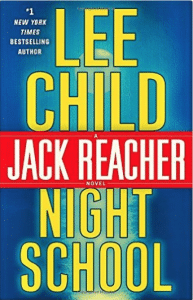
Night School
night-school

In Night School Lee Child puts Jack Reacher back in the Army as a major. Reacher gets called up to help an elite team that includes the National Security Agency (NSA), the CIA and the FBI to figure out what Jihadi terrorists in Berlin are planning.

It becomes a race to discover what an AWOL soldier stole and plans to sell to Al Qaeda for $100 million. Reacher stays one step ahead of everyone else and he and his Sergeant Frances Nagley get in enough trouble to make this an exciting read as the plot turns in unexpected ways.

Of course, Reacher finds his kind of romance, a relationship with an NSA official. Child describes Reacher’s attraction with his typical minimalism: “the black dress, the pearls.” Somehow that sketches it all in.

I found it satisfying and fun to read and liked having Reacher back in the army.

 LISTEN:

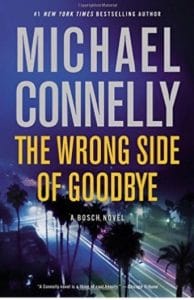
The Wrong Side of Goodbye
the-wrong-side-of-goodbye

While we’re in action mode, Michael Connelly’s The Wrong Side of Goodbye has all the good grit and drama you want from a police procedural. His Harry Bosch, an outsider once with the L.A.P.D., now works part-time for the San Fernando Police Department and takes private cases on the side. 

Titus Welliver narrates the story in just the right way. His deep, slow interpretation draws you into Bosch’s weary and leery world where everyone including his police colleagues and his private clients have secret agendas. His warm relationship with his daughter makes Harry more than stick figure. 

I enjoyed spending time with Bosch.

READ:

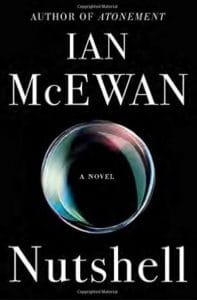
Nutshell
nutshell

Nutshell by Ian McEwan. What a book. I hugged it close when I finished reading. McEwan tells a magical tale of a fetus who eavesdrops on his mother’s plan to kill his father. The Hamlet-like unborn has learned about life, literature, music and the world through the podcasts, audiobooks and BBC broadcasts his mother listens to for self-improvement.

His father John, a poet and small-time poetry publisher, lives elsewhere while his beautiful green-eyed mother and father’s brother Claude have sex in the family home. Claude and the mom plot the murder, while our narrator worries about his father and his own future, and tries to stop the murder. Throughout the fetus in the nutshell talks about Keats and James Joyce’s Ulysses, politics and climate change. 

The title comes from a line in Hamlet, “Oh God, I could be bounded in a nutshell and think myself a king of infinite space – were it not that I have bad dreams.”

It is all beautiful, literate, strange and clever as McEwan explores innocence and evil and I bet you, too, will feel sorry when he wraps up this short book.

LISTEN:

The Little Red Chairs


The Little Red Chairs, written by Edna O’Brien and masterfully narrated with depth, sensitivity and understanding by Juliet Stevenson, brings you into the world of Fidelma McBride, the beauty in a small Irish village.  A stranger from the Balkans comes to town and sets up a holistic medical practice. He bewitches all of the women, especially Fidelma, who falls in love with him. 

She and others don’t now that he’s a Bosnian war criminal. When people from his past come to even the score with him, Fidelma McBride finds herself in the crosshairs with awful consequences.

O’Brien takes us on a journey of discovery with Fidelma as she works to rebuild her life, discover what really matters and who this evil man really was.

The richly woven story moves from Ireland to London and to the war crimes tribunal in the Hague. It explores the meaning of home, the life of immigrants, love and evil. Everything about The Little Red Chairs and Juliet Stevenson’s performance feels perfect.


 

Best 2016 Books And Audiobooks 2

Our list of favorite books and audiobooks of 2016 continues. If you missed the first half of the list you can find it here. 

But here’s where the list goes on:

LISTEN:

Commonwealth


commonwealth

Ann Patchett uses a blended family after a divorce and a multi-generational story filled with rich characters to examine family life and how we grow and change.

Hope Davis narrates with a deep understanding of her characters and enriches the storytelling. 

Patchett begins her tale at a christening party in California for the youngest child. The story moves seamlessly from the past to the present, from California to Virginia and back again, through divorce, remarriage, trouble, tragedy and pleasure. Her interesting characters, maybe especially because of their flaws remind us of our humanity, keep you listening. 

LISTEN

Siracusa

siracusa


Full disclosure: We recently spent time in Siracusa on the island of Ortigia and loved it. The action takes place here and at least one character hates it. But this pleasurable and unsettling Delia Ephron romp will give you a taste of a magical place on the Ionian Sea in southern Sicily.

 Talia Balsam, Katie Finneran, John Slattery and Darren Goldstein play two couples on vacation who don’t always share the same vision of fun.  One couple brings their child and she turns into a monster. I won’t give the plot away, but this comes pretty close to a vacation from hell. Stuff happens and the narrators make it real.

LISTEN:

The Vegetarian

vegetarian

The Vegetarian won the Man Booker Prize. Yet descriptions fail to do it justice. The experience of The Vegetarian surpasses a plot summary, which I suspect may turn you off and keep you away.  But here I go anyway.

Han Kang tells the story of a troubled young woman, successful at her career but pushing against her husband and her traditional Korean family. Her husband’s insensitivity and her father’s casual brutality help pitch her into madness, which may have lurked below her surface for years. She seems to welcome insanity as an escape from the restrictions of her society. The narrative twists away from the woman and turns to her brother-in-law, sexual obsession and identity.

The beauty of the writing and the delicacy of the storytelling make the book compelling listening. Janet Song and Stephen Park turn the literature into a movie for the mind. 

Hot Milk 

The Man Booker prize committee short-listed Hot Milk in 2016 and it deserved the recognition. Deborah Levy tells the story of a young woman taking care of her hypochondriacal mother, and trying to figure out her own life.

She accompanies her mom, who seeks a cure from mysterious ailments, to a clinic in Andalusia, Spain. While her mother visits the doctor, she gets involved with assorted people who encourage her to breathe life into herself. 

The elegant, insightful writing makes the book a must-read.


READ:

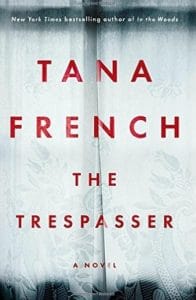
The Trespasser


You can count on Tana French to deliver a police procedural that feels like a psychological thriller with surprising twists and turns that make it hard to put down.

Detective Antoinette Conway, a mixed-race woman and the double outsider in the Dublin Murder Squad, is the title character of The Trespasser. She tells about her absent father, who may be an Egyptian prince, a Saudi Arabian medical student or a Brazilian guitarist, according to her mother’s whims.

Conway and her partner Stephen Moran begin to investigate the murder of a young woman, also haunted by an absent father. And it becomes a story about outsiders and a search for identity within the murder squad and the world.  

Solving the murder and finding the real killer pits Conway and Moran against their own squad and while you root for them, you realize that could lose.

Razor Girl

Carl Hiassen delights with a twisted tale of crazy people who come together with disastrous, hilarious and ultimately rewarding — for the reader and listener — results.

The Razor Girl hero, a by-the-book sheriff’s deputy busted down to a health inspector on restaurant roach patrol, just wants to do the right thing. He hopes to marry his Latina girlfriend, a coroner who gets sick of Miami violence and goes off to work in Norway.

This believable and likable guy bumps up against a cast of characters in Key West that includes a fake Cajun reality TV star, a Hollywood agent, Mafiosi, a less than savory lawyer, a conman developer and a woman who makes a living inviting car crashes while shaving her pubic area. A couple of giant rats, the four-legged kind, make an appearance too. 

John Rubinstein brings it all together and makes you want to keep listening. Razor Girl stands out as the perfect book for a long car trip.

LISTEN: 

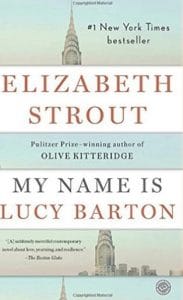
 My Name Is Lucy Barton

My Name is Lucy Barton was the first book I listened to in 2016 and it has stayed with me. In this elegantly written story, Lucy Barton peels back her personal layers and discovers the truth about herself. She married, moved away from the Midwest and her poverty-stricken, sometimes abusive family, had children of her own and began a successful writing career.

But when she lands in a Manhattan hospital with a mystery ailment, she has plenty of time to think. Her estranged mother comes from the Midwest to sit with her and they talk and talk.                                                     

The subtle insight and journey of self-discovery reminds us how long it can take to get comfortable in your own skin. But when it happens, oh girl, how sweet you feel.


Fed Up With Telemarketing Calls?


by Barbara Nevins Taylor

Will it help? Who knows. But for those of us fed up with telemarketing calls, the latest action in New York State may offer some relief.

Even after we list our numbers on the National Do-Not-Call Registry, telemarketers press on. They often use phony names on caller ID or mask their names in some way to get us to answer our phones. 

So we can cheer a little that New York Governor Andrew Cuomo took a step that swats at the scammers.

Cuomo signed legislation to require telemarketers to identify themselves accurately. If only this were enough to make them stop.

We know scammers in the U.S., India and across the globe find ways to circumvent the law. So we can’t cheer without qualification. But it may put a crimp in the activity of telemarketing businesses that fall under state and federal regulations.

HOW TO PUT YOUR NUMBERS ON THE DO-NOT-CALL REGISTRY

If you haven’t put your landline and mobile phone on the National Do-Not-Call Registry go to: 

https://www.donotcall.gov

or call:  1-888-382-1222 (TTY 1-866-290-4236). 

Once you register your phone number, telemarketers have up to 31 days from the date you register to stop calling you. 

Some get exemptions from the law and can call you:

  • Political organizations (you probably know this from the 2016 Presidential campaign.)
  • Charities
  • Pollsters or those conducting surveys.
  • Companies that you have done business with may call you for up to 18 months after you register unless you ask them to place your number on their own do-not-call list.

FILE A COMPLAINT FOR EACH UNWANTED CALL

If you continue to get calls after you list your number, file a complaint. Yes. It’s annoying and unfair that the burden falls on you. But take the step to stop and penalize them. The Federal Trade Commission (FTC) can fine a telemarketer $11,000 for every unwanted call they make.

Here’s how to file a Do-Not-Call Registry Complaint.

Go to:

https://www.donotcall.gov

or call 1-888-382-1222 (TTY 1-866-290-4236).


Last Chance to Switch Medicare Plans

December 7, anniversary of  the attack on Pearl Harbor and the last chance to review your Medicare choices. You can switch your 2017 coverage in or to a Medicare Advantage plan also known as Medicare Part C.  

Keep in mind, loyalty doesn’t pay in the medical insurance world. Insurers change their offerings every year and that’s why it makes sense to compare plans every year although you might not want to do it.

Joe Baker of the Medicare Rights Center says, “Even people who are currently happy with their plan should review.” 

WHAT MEDICARE ADVANTAGE OFFERS

Medicare Advantage typically includes a lot of extras including vision, dental, and wellness programs including gym memberships and some include prescription drugs.

You pay the regular Part B premium of $134.00 a month and then you want to compare prices. Insurers have different requirements. Some may charge a monthly premium and others may charge different fees.  

You do want to make sure that you pick a plan that works for you. Medicare Advantage comes in several forms with different options. You can choose: 

Health Maintenance Organization, or HMO – It will require you to choose doctors and providers from a specific network and you must get a referral to see a specialist.

Preferred Provider Organization, or PPO – You pay less if you use doctors and hospitals in the insurers network. And you pay more for those you use out of network.

Private-Fee-For-Service plan, or PFFS – You can go to any doctor or hospital as long as they accept the plan’s fees and the plan determines how much it will pay.

WHO SHOULD USE MEDICARE ADVANTAGE 

Experts say a Medicare Advantage program can work for you if the doctors, hospitals and medical providers accept the insurance, and if you don’t travel often. Generally, the plans do not cover doctors out-of-state or out of the country. 

HOW TO FIND A PLAN

Medicare.gov offers a tool that will help you compare the plans available to you. It also provides ratings for plans and gives a plan one to five stars based on what it offers and how it actually works for consumers.

Star Ratings

You can also call Medicare directly at 1-800-633-4227 and say “agent” if you need additional help.

 It’s also a good idea to review the medications the insurer plans to cover in 2017. They may drop your medication and that’s a pretty good reason to seek out another company. The booklet they sent you announcing changes should include the “formulary.” That’s what insurers call their list of covered medications.

Make sure your medication appears on the list.


Protect The Consumer Watchdog

by Barbara Nevins Taylor

Sometimes you have to stand up for the people who stand up for you and this seems like one of those times. The Consumer Financial Protection Bureau (CFPB) needs our help.  The Obama administration created the bureau after the 2008 financial collapse and gave it the mission of making sure that financial institutions including banks, lenders, credit reporting bureaus and debt collectors treat consumers fairly.

Sounds like a no-brainer, a good thing especially since it investigated big banks like Wells Fargo, which made up fake accounts for consumers and charged them for it. As a result of that investigation, Wells Fargo paid more than $185 million dollars in fines and penalties. 

When Chase sold consumer debt that had already been paid and then used illegal robo-signing to make it seem as consumers owed, the CFPB investigated and fined the bank more than $215 million in 2015. It also ordered Chase to refund more than $309 million for illegal credit card practices in 2013.  

The bureau also rewrote mortgage lending rules so that banks won’t lend to people who can’t afford to pay their loans. That was a key problem that led to the financial crisis.

It also got the major credit reporting bureaus to become slightly more responsive when people dispute errors on the reports. The situation still is not perfect. And credit reporting agencies remain the most complained-about companies on the CFPB list.

The bureau also continues to go after unscrupulous debt collectors, credit repair companies, auto title lenders, pawnbrokers and credit unions that defraud consumers. 

The bureau plans a new rule governing payday lending and launched an investigation into pension advance schemes that catapult many deeper into debt. 

Since its creation the bureau has retrieved $11.7 billion in refunds for consumers and fines against companies that cheated them. Twenty-seven million consumers benefited directly.  The CFPB also listened to more than one million consumer complaints and responded trying to help.

So what’s bad here? Very little for consumers, but members of Congress think differently. The same people we elect to make laws to protect Americans, at least the current crop, favor fewer regulations that protect consumers.

What’s At Stake

Right now the bureau is led by a director appointed by the President. But Republicans in Congress think a commission should guide it and that would dilute its power.

richard-cordray

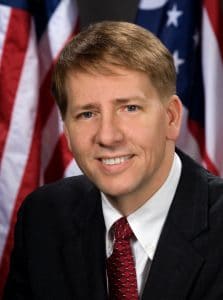
The director of the CFPB, Richard Cordray, may run for governor of Ohio and he’ll probably step down. But his replacement could have a significant impact and guide the agency to help consumers in the same way that he has. 

Take Action

So if you care about protecting consumers, why not let your Congressperson, or Senator know that the bureau matters? You can find your Congressperson here: http://www.house.gov/htbin/findrep

You can find your Senator here: http://www.senate.gov/senators/contact/

Submit a complaint to the CFPB 

If you want to submit a complaint to the CFPB, you can do that here: http://www.consumerfinance.gov/complaint/.


Does Trump University Owe You Money?


In a stunning turnaround, Donald Trump apparently agreed to pay $25 million to settle the Trump University case with the New York Attorney General. That’s good news for former students of the defunct phony school. They now stand to get reimbursed for the tuition money they paid for a worthless education.

In 2013, New York Attorney General Eric Schneiderman accused Trump of defrauding more than 6000 students who enrolled in Trump University thinking they would get a world-class education in real estate. Some paid as much as $35,000 for what amounted to very little.

 Schneiderman said, “Donald Trump fought us every step of the way, filing baseless charges and fruitless appeals and refusing to settle for even modest amounts of compensation for the victims of his phony university.”

Trump’s agreement to the settlement also means that he will pay New York State penalties of $1million.

If you enrolled in Trump University and you qualify for reimbursement, get in touch with the New York Attorney General here with New York AG or call 1-800-771-7755.

Mayor de Blasio and President-elect Trump

New York City Mayor Bill de Blasio met with President-elect Trump for 62 minutes to put what he called his “cards on the table.” He said although he and the President-elect have “substantial differences,” he felt it was important to have a “candid conversation.”

The mayor said the talk covered a number of issues that worry New Yorkers, from the possible repeal of Wall Street reforms, to tax cuts for the wealthy and corporations, to concerns about wide-scale deportations that may affect many New Yorkers and put the NYPD in a position that would “create a rift between them and the community.”

He also raised the issue of the appointment of former Breitbart News executive Steve Bannon to a key White House position. Under Bannon’s leadership the alt-right publication published anti-Semitic, anti-women, anti-immigrant and anti-anyone-who-isn’t-white articles filled with distorted information. 

Here’s what the mayor said at a news conference outside of Trump Tower after the meeting.

 de-blasio-and-trump

Mayor Bill de Blasio:

“I just met with President-elect Trump. The purpose of the meeting was for me to assert to him the concerns and the needs of all New Yorkers. My job as mayor is to be their voice and to give him perspective on what New Yorkers are feeling right now, what their concerns are, what their fears are. I thought it was very important, particularly as the President-elect begins his transition, for him to hear the voices of the people and to get some perspective from outside the transition bubble to understand what is being said in the streets and subways of our city and why people are so deeply concerned.

“I raised a number of substantive issues. I want to give you a sense of what they were. I will say at the outset, I’m not going to characterize his positions or responses, but I will give you a sense of what we talked about.

“First of all, we talked about regulation of Wall Street. I raised my concerns about any repeal of the Dodd-Frank bill and what it would do in terms of furthering the economic security of New Yorkers and of millions and millions of Americans, and the deep concern that we would go backwards and that our economy would be in peril again and we would run the risk of another crash.

“I talked to him about the proposal for tax cuts for the wealthy and for corporations. I raised my concern that this would make impossible many of the changes that we need in our country, particularly the investments we so desperately need in infrastructure here in New York City and in cities and counties all over the country. I talked to him about concerns about proposed deportations.

“I gave him the perspective of the NYPD – that any initiative that would create a rift between our police all over the country, and the communities they serve – that would make it impossible for police and community to communicate, and that it would sow distrust between law enforcement and neighborhoods that would be counterproductive.

“Beyond that, that proposal countered and flew in the face of all that was great about New York City, the ultimate city of immigrants, a place that has succeeded because it was open for everyone, a place built on generation after generation of immigrants.

“And I reiterated to him that this city and so many cities around the country will do all we can to protect our residents and to make sure that families are not torn apart. I talked to him about police-community relations in general and specifically the question of stop and frisk.

“I tried to provide perspective on how stop and frisk can create a wedge between police and community when it was used in an unconstitutional manner – it was overused – and how since we changed that policy the city had gotten safer. That we – we knew we were never going back to that policy – that we were going to continue on a path of neighborhood policing and building a bond between police and community.

“I talked to him about our Muslim community. I let him know something that so many people don’t know – that there are 900 Muslim members of the NYPD, protecting all of us, protecting every community, every kind of person. I told him that we were very concerned that we had to show all New Yorkers, including Muslim New Yorkers, that they were welcome and that exclusionary policies would undermine our ability to create unity.

“Exclusionary policies would undermine our ability to create a dynamic where everyone felt a part of this community equally, ready to work to protect each other, ready to work with law enforcement for the good of all. I also raised concerns about some of the messages and some of the rhetoric that for so many people had been hurtful. And I let him know that so many New Yorkers were fearful and that more had to be done to show that this country can heal, that people be respected. I left the meeting with the door open for more dialogue.

“It’s well-known we have very, very substantial differences in beliefs and ideology, but, at the end of the meeting, we agreed that this was a conversation that would continue.

“I reiterated to the President-elect that I would be open minded as we continue substantive discussions, but I would also be vigilant. And I would be swift to react anytime an action is taken that will undermine the people of New York City.

“I also know that New Yorkers will stand together. We’re going to stand up for the needs of working people. We’re going to stand up for our immigrant brothers and sisters.

“We’re going to stand up for anyone who because of any policy is excluded or affronted, be they members of the Muslim community, or the Jewish community, members of the LGBT community, women – anyone who feels policies are being undertaken that undermine them.” 

Here’s How Elizabeth Warren Will Work With Trump


In a speech to the AFL-CIO, Massachusetts Senator Elizabeth Warren said, “Millions of people in this country are worried and they are right to be worried,”

But she also said that she heard the message Americans sent on election day and during the two-year campaign. She said if Trump is serious about reform and creating what she called a “real American agenda,” she and other Democrats can work with him.

But she also made it clear that she deplores Trump’s racist, anti-immigrant campaign rhetoric and misogyny. “We will stand up to bigotry. No compromises ever on this one, bigotry in all its forms. We will fight back against attacks on Latinos, on African-Americans, on women, on Muslims, on immigrants, on disabled Americans, on everyone,” she said.

Warren acknowledged that not all of those who supported Trump support the bigotry and hatred on display at his rallies. “Let’s be clear on this. There are many millions of Americans who voted for Donald Trump out of frustration and anger and the hope that he would make real change,” she explained.

 She highlighted key issues: 

Middle Class Families

“When his goal is to increase the economic security of middle-class families, then count me in. I would push aside those differences to achieve that goal.”

She said she will support efforts to create jobs and rebuild the country’s infrastructure. “If Trump is ready to go on to rebuilding America’s economy for millions of American families, then I am ready and so are a lot of other people, Democrats and Republicans.”

However, she called for reform that targets big banks and Wall Street institutions. She said, “. . . let me also be clear about what rebuilding our economy means. It does not mean handing over the keys of our economy to Wall Street.”

 Healthcare

Americans want to reform Obamacare . . . but if the Republicans want to strip away health insurance for 20 million Americans, if they want to let cancer survivors get kicked to the curb, if they want to throw 24-year-olds off their parents’ health insurance, then we will fight them every step of the way. 

Taxes

She said, “Americans want to close tax loopholes for the very rich…If Republicans want to force through massive tax breaks that blow a hole in our deficit and tilt the playing field even further toward the wealthy and big corporations, then we will fight them every step of the way.”

Dark Money and Pay To Play

Warren said “economic reform requires political reform.” She criticized the outsized role that big money pays in American elections and said, “The American people are sick of politicians wallowing in campaign contributions and dark money.  They are revolted by influence peddling by wealthy people and large corporations.”

She repeated her mantra, “If Donald Trump is ready to make good on his promise to get corruption out of politics and end dark money and pay-to-play, then count me in.”

We Are Americans First


“We have to remember that we’re actually all on one team…We’re not Democrats first, we’re not Republicans first, we are Americans first. We’re patriots first. We all want what’s best for this country.”

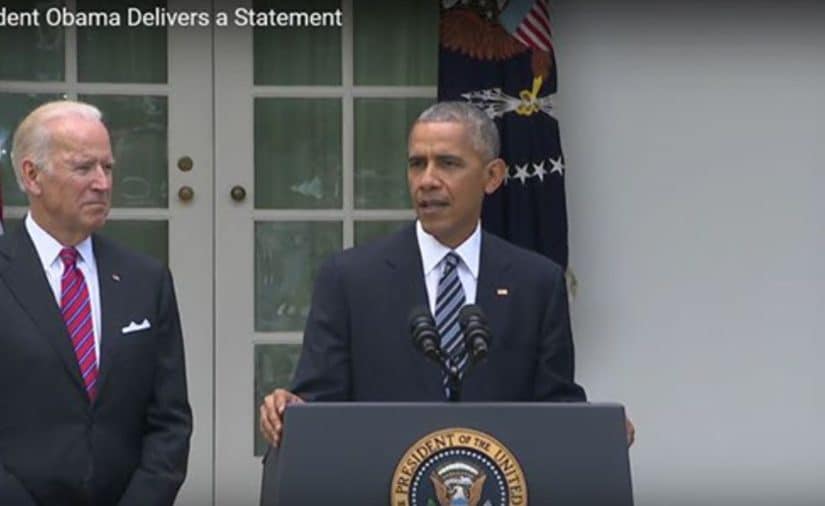
President Obama, November 9, 2016


President Obama said he plans to do everything he can to make sure that the next president succeeds.  He’ll meet with Donald Trump to help smooth the transition and invited him to the White House to talk.

Here’s what President Obama said

“Now, it is no secret that the President-elect and I have some pretty significant differences. But remember, eight years ago, President Bush and I had some pretty significant differences. But President Bush’s team could not have been more professional or more gracious in making sure we had a smooth transition so that we could hit the ground running. And one thing you realize quickly in this job is that the presidency, and the vice presidency, is bigger than any of us.

So I have instructed my team to follow the example that President Bush’s team set eight years ago, and work as hard as we can to make sure that this is a successful transition for the President-elect — because we are now all rooting for his success in uniting and leading the country. The peaceful transition of power is one of the hallmarks of our democracy. And over the next few months, we are going to show that to the world.

I also had a chance last night to speak with Secretary Clinton, and I just had a chance to hear her remarks. I could not be prouder of her. She has lived an extraordinary life of public service. She was a great First Lady. She was an outstanding senator for the state of New York. And she could not have been a better Secretary of State. I’m proud of her. A lot of Americans look up to her. Her candidacy and nomination was historic and sends a message to our daughters all across the country that they can achieve at the highest levels of politics. And I am absolutely confident that she and President Clinton will continue to do great work for people here in the United States and all around the world.

Now, everybody is sad when their side loses an election. But the day after, we have to remember that we’re actually all on one team. This is an intramural scrimmage. We’re not Democrats first. We’re not Republicans first. We are Americans first. We’re patriots first. We all want what’s best for this country. That’s what I heard in Mr. Trump’s remarks last night. That’s what I heard when I spoke to him directly. And I was heartened by that. That’s what the country needs — a sense of unity; a sense of inclusion,; a respect for our institutions, our way of life, rule of law; and a respect for each other. I hope that he maintains that spirit throughout this transition, and I certainly hope that’s how his presidency has a chance to begin.

I also told my team today to keep their heads up, because the remarkable work that they have done day in, day out — often without a lot of fanfare, often without a lot of attention — work in agencies, work in obscure areas of policy that make government run better and make it more responsive, and make it more efficient, and make it more service-friendly so that it’s actually helping more people — that remarkable work has left the next President with a stronger, better country than the one that existed eight years ago.

So win or lose in this election, that was always our mission. That was our mission from day one. And everyone on my team should be extraordinarily proud of everything that they have done, and so should all the Americans that I’ve had a chance to meet all across this country who do the hard work of building on that progress every single day. Teachers in schools, doctors in the ER clinic, small businesses putting their all into starting something up, making sure they’re treating their employees well. All the important work that’s done by moms and dads and families and congregations in every state. The work of perfecting this union.

So this was a long and hard-fought campaign. A lot of our fellow Americans are exultant today. A lot of Americans are less so. But that’s the nature of campaigns. That’s the nature of democracy. It is hard, and sometimes contentious and noisy, and it’s not always inspiring.

But to the young people who got into politics for the first time, and may be disappointed by the results, I just want you to know, you have to stay encouraged. Don’t get cynical. Don’t ever think you can’t make a difference. As Secretary Clinton said this morning, fighting for what is right is worth it.

Sometimes you lose an argument. Sometimes you lose an election. The path that this country has taken has never been a straight line. We zig and zag, and sometimes we move in ways that some people think is forward and others think is moving back. And that’s okay. I’ve lost elections before. Joe hasn’t. (Laughter.) But you know.”

(The Vice President blesses himself.)

(Laughter.)

“So I’ve been sort of –“

THE VICE PRESIDENT: “Remember, you beat me badly.” (Laughter.)

THE PRESIDENT: “That’s the way politics works sometimes. We try really hard to persuade people that we’re right. And then people vote. And then if we lose, we learn from our mistakes, we do some reflection, we lick our wounds, we brush ourselves off, we get back in the arena. We go at it. We try even harder the next time.

The point, though, is, is that we all go forward, with a presumption of good faith in our fellow citizens — because that presumption of good faith is essential to a vibrant and functioning democracy. That’s how this country has moved forward for 240 years. It’s how we’ve pushed boundaries and promoted freedom around the world. That’s how we’ve expanded the rights of our founding to reach all of our citizens. It’s how we have come this far.

And that’s why I’m confident that this incredible journey that we’re on as Americans will go on. And I am looking forward to doing everything that I can to make sure that the next President is successful in that. I have said before, I think of this job as being a relay runner — you take the baton, you run your best race, and hopefully, by the time you hand it off you’re a little further ahead, you’ve made a little progress. And I can say that we’ve done that, and I want to make sure that handoff is well-executed, because ultimately we’re all on the same team.”