All posts by Barbara Nevins Taylor

Privacy Protection For Tenants

If you’re a tenant, it’s hard to protect your privacy after you’ve rented from a landlord who wants to pass information along about you.

If you have a bad experience with a landlord that information may follow you to the next apartment that you try to rent.

Now there’s action that aims to protect tenants’ privacy. The Federal Trade Commission (FTC) warned six websites that if they act like credit reporting bureaus and report financial information and activity, they have to follow the rules. The FTC sent letters informing the companies that they are obliged “…to protect the privacy of tenants whose information they collect, including ensuring that those requesting information about tenants have a legitimate reason to acquire it.”

The letter reminds the companies of their obligation to ensure that the information they provide is accurate, to give consumers a copy of the information about them on request, and to allow consumers to dispute information they believe is inaccurate. 

The letters also note that the companies must notify landlords of their requirements if they use the data to deny housing to a tenant, and to notify the sources of their information of the requirement that they provide accurate information.”

The FTC says it didn’t determine whether any of the companies broke the law, but wants them to review their business practices.

The companies are:  The BlueChip Group LLC (www.donotrentto.com), M & R Rental Properties (www.badtenantlistings.com), The Landlord Protection Agency (www.thelpa.com), National Tenant Network (ntnonline.com), 123 Rent Inc. (therentersblacklist.com), and Tenancy Bureau Inc. (www.tenancybureau.us).    

Why Tax Health Benefits?

Who would tax health benefits? Maybe Congress. About 65.5% of American workers get health benefits through their employers. But depressingly, at a recent policy forum hosted by the Employee Benefit Research Institute (EBRI), the possibility of taxing those benefits was a key discussion point.

The EBRI points out that right now employers can deduct health benefits as a business expense. But budget deficit negotiations may knock out that tax break for business. Time to speak up.

What do you think?

Attacking Robocalls


The robocalls continue regardless of the Do Not Call registry.  Maybe solutions designed by winners of the Federal Trade Commission’s Robocall Challenge competition will make a difference.

Serdar Danis and Aaron Foss split a $50,000 prize for coming up with separate ways to filter out the illegal prerecorded calls.

There was also a prize with no money attached for a company solution.  Daniel Klein and Dean Jackson from Google won for what they called Crowd-Sourced Call Identification and Suppression.

“The solutions that our winners came up with have the potential to turn the tide on illegal robocalls, and they show the wisdom of tapping into the genius and technical expertise of the public,” said Charles Harwood, Acting Director, FTC’s Bureau of Consumer Protection. “We’re hoping these winning proposals find their way to the marketplace soon, and will provide relief to millions of American consumers harassed by these calls.”

Danis designed something called Robocall Filtering System and Device with Autonomous Blacklisting,Whitelisting, GrayListing and Caller ID Spoof Detection. It would analyze and block robocalls using software that could be implemented as a mobile app, an electronic device in a user’s home, or a feature of a provider’s telephone service.

Foss’s proposal, Nomorobo, is a cloud-based solution that would use “simultaneous ringing,” to allow incoming calls to be routed to a second telephone line. The second line would identify and hang up on illegal robocalls before they could ring through to the user. The proposal from Klein and Jackson of Google uses automated algorithms that identify “spam” callers.


Jamaica To Crack Down On Lottery Scams


The Jamaican government has responded to pressure from American politicians and lawmakers and passed legislation to crack down on lottery scammers. The lottery scam is a mini-industry in Jamaica. 

It’s estimated that scammers make 30,000 calls daily targeting elderly Americans. They tell their victim that he or she has a won a prize. But to get the money, they must wire thousands to cover fees and costs.  Hard as it is to believe, it’s estimated that collectively victims have lost hundreds of millions of dollars.

In Jamaica, The Gleaner reports the new law will cover identity theft and fraudulent use of credit cards. It also targets advance fee fraud and use of technology for illegally accessing data.  It also includes provisions to allow extradition of suspected scammers to the U.S. for prosecution. The Gleaner reports the governor general is expected to sign the bill into law soon.

Retirement Planning Pays Off

Those of us who use financial advisors or take the time to use online calculators aren’t wasting our time when it comes to retirement planning.

A new survey from the Employee Benefit Research Institute (EBRI) found people who set savings goals with the help of a financial advisor reduced the risk of running short of money in retirement by 9 t0 almost 13 percentage points.

 And those who used online calculators fared even better. They decreased the likelihood of running out of money by 14 to more than 18 percent.

Unfortunately, about 45 percent of those surveyed said they guessed at what they needed to save for retirement, and they were less likely to save enough.

Jack Van Derhei, research director of the EBRI 2013 Retirement Confidence Survey points out that planning is really essential: “As American workers bear a growing responsibility for accumulating retirement income and managing the drawdown of those savings during retirement, it is more important than ever that households be able to set adequate targets for their retirement savings.”


Undocumented Immigrants Gain Support

A new survey says 71 percent of Americans favor giving undocumented immigrants legal status. The Pew Research Center for the People and the Press also found that there’s still a divide when it comes to granting citizenship.  

Only 43 percent said undocumented immigrants who would qualify should be allowed to apply for citizenship.

While that might be uncomfortable news, the survey found that 49 percent of Americans have positive attitudes about immigrants and say they strengthen the country because of their hard work and talents.

More Americans (52 percent ) also think the growing numbers of newcomers in the United States make our society stronger.

Consumer Complaint Data Base


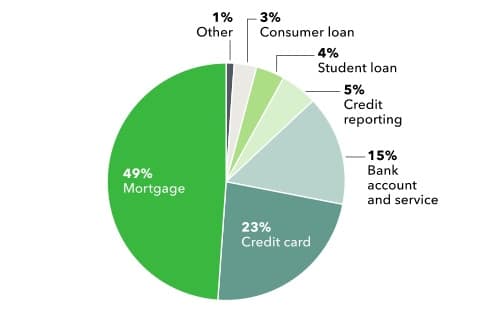
At one time or another, many of us feel the need to scream about a bank, a credit card company, a student loan, a home equity credit line, a mortgage and on and on. You get the drift. Some of us actually turned our screams into complaints to the Consumer Financial Protection Bureau.  Now you can search the database for free to find complaints and responses to the complaints.

The CFPB opened the database that has 90,000 individual complaints on financial products and services. They want you to take a look and see what others are complaining about and what actions were taken. You can find the database at  www.consumerfinance.gov/complaintdatabase

Here what consumers are complaining about:

CFPB Complaints

Honest Mortgage Modificiation Made Easier


Finally! At last! About time! The big mortgage giants plan to offer significant help for homeowners in trouble. Fannie Mae, Freddie Mac and the Federal Housing Finance Agency (FHFA), which oversees them, plan to make it easier for families facing foreclosure to modify mortgages. FHFA says it will eliminate bureaucratic obstacles and extensive paperwork requirements to speed-up the process.

Beginning again

Starting July 1, 2013, it should be easier for homeowners who are 90 days behind on mortgage payments to try to work out a new deal to lower monthly payments.

Once the payments are lowered, homeowners will have to make three monthly payments on time to prove that they can do it.  Then the new mortgage will go into effect permanently.


Foreclosures Prevented

The foreclosure crisis is easing everywhere except New York and New Jersey according to the Federal Housing Finance Housing Agency (FHFA), which oversee Fannie Mae and Freddie Mac. Mortgage modifications are making a big difference for a lot of homeowners. FHFA says Fannie and Freddie helped prevent more than 540,000 with loan modifications in 2012.

Lower Payments

In addition, 46 percent of homeowners who had mortgage modifications lowered their payments by more than 30 percent.


Victory For Homeowners


Score one for homeowners against questionable dealing by banks and insurers. New York State led the way when it cracked down recently on the practice of  forced-placed insurance, and now the Federal Housing Finance Agency (FHFA) intends to do the same thing.  FHFA is the agency that oversees Fannie Mae and Freddie Mac. It filed notice that it wants to ban commissions and payments to banks and loan servicers from insurance companies.

Why It Matters

This matters because when you fail to pay your homeowner’s insurance a mortgage holder can arrange forced-placed insurance for you. Whoever arranges this insurance profits by receiving commission from the insurance companies.

A New York State Department of Financial Services (DFS) investigation found, “…premiums charged to homeowners for forced-placed insurance can be two to ten times higher than premiums for voluntary insurance — despite the fact that forced-placed insurance provides far less protection for homeowners than voluntary insurance.”

New York reached a $14 million settlement with insurance giant Assurant and money will be refunded to homeowners.  Fannie Mae is now following New York’s lead. And that’s welcome news.


Debt Collectors Get Slapped


What do you say about debt collectors who pay a whopping fine and get to stay in business?  The Federal Trade Commission (FTC) slapped a debt buyer and a debt collection law firm with an almost $800,00 fine for alleged deceptive practices. But, according to an agreement they can continue on as long as they don’t make misrepresentations, or false claims.

The FTC complaint says debt buyer Security Credit Services, LLC, bought debt owed by consumers nationwide. Jacob Law, the legal firm it has worked with since 2006, then called and pressured consumers to make immediate payments over the phone via electronic checks, or credit and debit payments

Fees add to the bill

Jacob Law allegedly told consumers they were required to pay an additional fee of $18.95 for this service, but routinely failed to mention that they could avoid the fee by mailing the payment or paying online.

The FTC also alleged that Jacob Law Group implied that it would file lawsuits to collect the debts even when it did not intend to do so.


a debt buyer and a debt collection law firm, both based in Mississippi – violated the FTC Act and the Fair Debt Collection Practices Act by deceptively charging consumers a fee for payments authorized by telephone.  According to the FTC, the defendants led consumers to believe that the fee was unavoidable when, in fact, those who paid by mail or online did not incur the fee.  The FTC also alleged that the companies violated the laws by falsely threatening to sue consumers as a means of getting them to pay.  A debt collector is prohibited by law from using false, deceptive, or misleading representations or tactics when collecting a debt.

Under the terms of the proposed settlement, the defendants will pay $799,958 in restitution for consumers.  The defendants also are barred from making any misrepresentations  when collecting a debt, including false claims that consumers must pay an extra fee when making payments on a debt or that they will be sued for not paying a debt.

AThe FTC also alleged that Jacob Law Group implied that it would file lawsuits to collect the debts even when it did not intend to do so.


Obama Pushes For Immigration Bill

President Obama upped the ante on immigration with a call for speedy action on an immigration bill. At a White House naturalization ceremony for 28 men and women he said, “I expect a bill to be put forward.  I expect the debate to begin next month. I want to sign that bill into law as soon as possible”

Both Republicans and Democrats in Congress are working on immigration bills to create a path to citizenship for an estimated 11 million undocumented immigrants.

The President’s rallying cry was, “So let’s get this done, and let’s do it in a way that keeps faith with our history and our values.”


3 Things To Do Before Retirement


Okay. So you’ve heard it before. We all need to get our houses in order. It may be an old saw, but it’s true. It’s a good idea to do these 3 things before retirement.  And that includes those of us who are a bit a away from retirement age, and those of us who are putting retirement off to earn more money.

  1. You need a WILL.
    Your will should clearly spell out how you would like to leave your assets to your heirs or others.  Planning saves heartache and headaches for you, and eliminates any questions people may have later.
  2.  You need a HEALTH CARE PROXY
    A health care proxy is extremely important.  This document legally designates someone to help with doctors and hospitals if you get sick. Experts advise it, and I know it it’s true because of my personal experiences caring for my mother and elderly relatives.  If you don’t have a health care proxy, the current laws prevent medical professionals from discussing your case with anyone but you. And that’s okay to a point.  But it’s imperative to have an advocate when you deal with doctors especially in an emergency setting. So a health care proxy designates the person you want to help you get the best care possible.
  3.  You need a LIVING WILL
    This makes your wishes crystal clear about how you want medical personnel to treat you in extreme situations. You can choose to say that you want to be resuscitated and kept on life support,  or say that you do not want extreme measures used to keep you alive. This is all up to you, and your wishes should be recorded in a legal document.
  4. You need a POWER OF ATTORNEY
    This designates someone to handle your personal and business affairs while you’re alive, if you cannot do things yourself.  Even if you can do things, it’s always a good idea to have a trusted person assist. It’s smart to get a qualified estate lawyer to help make these plans and put them on paper. If you can’t afford a lawyer, some states and local bar associations offer online forms. But be careful. The American Bar Association www.aba.org offers a state-by-state list of clinics and not-for-profits that offer affordable and even free legal help.

ConsumerMojo’s video Key Steps to Plan Retirement has a lot more.

Share your story with us.
Like us on Facebook and Follow us On Twitter.

March Madness Scams


by Barbara Nevins Taylor

Take a look at Craigslist and you’ll find plenty of tickets for NCAA games. The big question is, are they real?

Fake Tickets

I did a story about a woman who bought tickets to a Lady Gaga concert from a Craigslist seller. Her brother met the guy, paid the money and walked away with fakes. We helped out and got in touch with Lady Gaga’s team to get her real tickets. So there was a happy ending. That doesn’t always happen.

BBB Advice

But the lesson here is clear. Many dishonest people claim to sell tickets to events like the NCAA. The Better Business Bureau’s St. Louis president Michelle L. Corey says, “The BBB advises fans to check out offers with the BBB before plunking down money or giving credit card numbers.”

Remember Craigslist does not offer guarantees. Sellers don’t have to qualify or prove that they are real before they list tickets.  If a ticket is fake, you’re stuck.

NCAA Info

Official NCAA ticket information is available at http://www.ncaa.com/tickets.

Ticket Resellers

StubHub, has a reliable reputation as a ticket reseller and it has NCAA tickets. The BBB websites in every region publish lists of reliable ticket sales people. The BBB sites are a little hard to navigate. But try their Business Reviews, or sections that say “Check Out a Charity or Business.” You have to enter the search term “Ticket Sales.” And that should turn up ticket sellers who get the BBB seal of approval.


Chase Protects Customers From Payday Lenders

This is welcome news from a big bank.  Chase says it is ready to protect its banking customers from payday lenders and others who try to milk consumers’ bank accounts. This is what the bank plans to do:

  1. Chase will only charge one returned item fee to customers in cases where a biller presents items that are returned to them due to insufficient funds in the customer account more than once in a 30-day period, even if the biller tries to collect multiple times. This change is intended to address payday lenders and others who present repeated payments to customers that are not in the spirit of their signed agreement with the customer. This change will become effective by the end of May.
  1. Chase is working to proactively identify potential misuse of the Automated Clearing House (ACH) system – including misuse on the part of payday lenders or other companies – and report such practices to the National Automated Clearing House Association.  Chase will work with NACHA to try to strengthen their own policies to disallow excessive presentments.
  1. We have an existing policy to always follow a customer’s instructions to stop a payment.  We plan to enhance communication and require additional training regarding that policy.
  1. Chase will make it easier for customers to close their accounts when there are open pending charges, including payday lender payments. If we believe those pending charges are inappropriate, we won’t honor them.


Homeland Security Email Alert


Ransomware is the latest email phishing scam to worry about. The U.S. Department of Homeland Security warns that hackers are  sending emails that claim they are from Homeland Security and its National Cyber Security Division (US-CERT). The emails say your computer use has been suspended and you have to pay a fine to unblock it.

US-CERT Advises:

Do not click on or submit any information to webpages.

  • Do not follow unsolicited web links in email messages.
  • Use caution when opening email attachments. Refer to the Security Tip Using Caution with Email Attachments for more information on safely handling email attachments.
  • Maintain up-to-date antivirus software.