All posts by Barbara Nevins Taylor

Call To Support Payday Lending Rule

If you need money quickly you may feel tempted to take a payday or an auto title loan. That’s when a lender will offer you cash for a short period of time for an interest rate that could reach 400 percent, or higher. Sixteen states and the District of Columbia outlaw these payday loans.

But the Trump administration team at the Consumer Financial Protection Bureau (CFPB) seems to think it’s unnecessary to protect consumers from predatory lending, even though that is supposedly the bureau’s job. In response to the CFPB plan to withdraw protections for borrowers, consumer advocates are calling for support of a payday lending rule that would protect borrowers from the worst abuses.

The payday lending rule was proposed after a five-year study, by the same CFPB, under the Obama administration. Basically, it would prevent lenders from making loans to people who don’t have the money to repay them.  Almost half of all payday loan borrowers take out more than 10 payday loans a year and get caught in a debt trap that never seems to end.

The Obama-era CFPB found, among other things, that a typical loan that goes unpaid for two weeks carries an annual percentage rate (APR) of 391 percent.

So at the urging of consumer advocates and consumers, the CFPB created the payday lending rule to protect people from these predatory interest rates. It is scheduled to go into effect in August of 2019.  But the new director of the CFPB, Kathy Kraninger, proposed repealing the payday lending rule that also would cover vehicle title loans. The title loans operate like payday loans and often people take out loan after loan to repay the earlier loans. 

Before the CFPB can rescind the rule, it needs input from the public. In Washington-speak it is seeking comments. This a good chance to speak up and let the Consumer Financial Protection Bureau and your congressperson know what you think.  

Lauren Sanders, Associate Director of the National Consumer Law Center, said, “The sudden reversal by the CFPB, which is charged with protecting consumers, flies in the face of extensive evidence of the harm of payday loans. The agency’s proposal is arbitrary and capricious and will certainly face a legal challenge if it is finalized,”

You can contact the CFPB here.

You can contact your U.S. Congressperson here.

You can contact your U.S. Senator here.


Some Like Dating Apps, Others Fear Them

Does it come as a surprise that people who use dating apps like them, and people who don’t use the apps fear them? That’s what You.gov.com found. People who use dating apps said they’re “interesting,” “convenient,” and “fun.” Those who’ve never used a dating app describe them as “dangerous” and “pointless.”

Interestingly, an almost equal percentage of users and non-users say online dating apps are “shallow.” And more than a quarter of the users surveyed find them “exhausting.”

Nearly a third of Americans think dating apps have killed romance and two-thirds of Americans say they would rather find a partner in a more romantic way, without using an app. 

The survey also found that Millennials and Gen-X’ers are more likely to use a dating app than older Americans.

Yet Statista points out that thanks to widely popular Tinder app, its owner Match Group’s income grew by 30 percent, earning $173 billion over the past twelve months. 

And despite the generational divide, Tinder added 1.25 million subscribers in the last twelve months.  Its impressive subscriber base stands at 4.35 million people and growing. 

The app is most popular in English-speaking countries including the United States, Canada and Great Britain.

Statista’s info-graphic below gives a clear picture of who uses dating apps, who doesn’t and what they think about them.  

If you’re older, Ira H. Silverman’s post about the challenges older guys face when they try to meet when online is worth a read. 


Infographic: The Dating App Disconnect | Statista You will find more infographics at Statista

Older Guys Face Online Dating Barriers

by Ira H. Silverman

The great philosopher, Baseball Hall of Famer Yogi Berra, once famously said: “You’ve got to be very careful if you don’t know where you are going, because you might not get there.”

Unfortunately, guys, when it comes to online dating, even knowing where you go might not get you there. My target group is women my age, which is AARP- eligible. The years have taught them to be self-protective, which makes sense, but I’ve encountered so many barriers and obstacles that sometimes I wonder if the trip is worth the effort. 

If I sound frustrated, here’s why. I’ve spent a decade trying to find a geographically and age-compatible woman I can laugh and talk with, whose outlook on life, values and interests are similar to mine, and who has the time and interest to work on a long-term relationship. So far, no luck. But along the way I’ve learned a lot.

So, gentlemen, I am here to help and enlighten you and maybe even get you to break through the online dating barriers and reach your destination.

WHERE TO BEGIN 

I have tried more than a half-dozen sites including Plenty of Fish and OkCupid, which you can use for free. Others like New Beginnings, Jdate, Match.com, Tinder, OurTime and Elite Singles require membership fees. 

If you’re a guy who’s new to online dating, I’d suggest you try the two free sites for a few months before committing to a mainstream pay site. But even before that, you might want to research the increasing number of special-interest sites that have cropped up. Trek Passions caters to fans of science fiction. My420Mate attracts marijuana users. Then there’s Clown Dating. If you’re a sailor you might try Sea Captain Date. If you want someone way out there, why not go for  Paranormal Date? There are several sites for travel lovers.

The possibilities are endless.

THE PITFALLS ALONG THE WAY

I don’t claim to understand how women think. But my personal research, trial and error, deep conversations and strong intuition have helped me understand why it is so difficult to make a meaningful connection with a woman my age via online dating sites.

As I get older, the women the sites match me with are obviously getting older, too.  That means more women who are widowed rather than divorced, and only rarely women who have never married or are separated.

Most of the widowed candidates say that they had long, loving marriages. It often appears they still miss their husbands, whether their loss occurred two years ago, or two decades.

As for the divorced contenders, whether their marriages ended recently or years ago, they often still carry feelings of heartbreak, anxiety,  and betrayal. Some have lost respect for men.

This, gentlemen, is the state of mind we can find when we join an online dating site.

SO WHY ARE THESE WOMEN ON DATING SITES IN THE FIRST PLACE?

I believe a lot of women use an online dating site because one or more influential people in their lives convinced them that they had to “get back out there again.” Maybe it was one or more of their girlfriends, a sister or cousin, their adult children, a co-worker or even a neighbor.

Which brings me to another Yogi-ism: “If the people don’t want to come out to the ballpark, nobody’s going to stop them.”

If these women are not truly motivated or excited about dating or establishing an ongoing relationship, they’re not likely to change their minds.

The truth is that virtually all of the women whom I have met through a dating site have, out of necessity, put a great deal of time, thought and effort into building full and satisfying lives for themselves without including a man in the mix.

These women surround themselves with family members, friends and pets. They either work full or part-time or volunteer for something worthwhile. Many babysit for their grandchildren whenever they can. They belong to clubs and organizations and enjoy exercising and working out.

A lot of them travel as often as possible and frequently take advantage of culture and arts opportunities.

In addition to the time that these women spend with their adult children, grandkids and dogs and cats, they almost always have separate groups of women with whom they have dinner and lunch on a regular basis. Others have set groups of friends for tennis, or mah-jongg or bowling. And some may have regular movie, concert or theater nights with their girlfriends.

Men On The Other Hand 

Conversely, most men, if they’re lucky, have two or at most three close friends in their lives. Sure, there’s the weekly poker night or hockey game, but they certainly don’t travel around in packs or with a posse.

My final bit of wisdom about online dating for older guys comes as a warning. If you notice that a woman you have met online recently has difficulty, right from the start, replying to written messages in a timely fashion, making phone calls as promised or clearing time in her schedule to meet in person, don’t expect that she will change going forward.

Remember, if you have no expectations, you’ll have no disappointments. But hey. I’m an optimist and I keep trying. You should, too. For all of the obstacles to online dating, when the right people connect, lightning can strike.


Ira H. Silverman is known as The Connector. Over the past 45 years, he has been a public relations agency owner, a sports and celebrity agent, a special events planner and producer, and a marketer and fundraiser for not-for-profit foundations. He lives on Long Island, NY.


Solar Roof Panels Pay Off

 by Mike Katz

Solar roof panels pay off for us and I’m shocked that my block is not filled with solar panel systems. Our flat roofs are perfect and yet only one neighbor, so far, has gone solar to generate his own electricity.

We own a brownstone in Park Slope, Brooklyn, in the Landmark District. In 2015 we started thinking about installing a solar panel system to provide electricity for our apartment and the ground floor unit we rent out. But before I jumped into it, I wanted to make sure that the jump to solar could save us money as well as improve our green footprint.

Community Board 6 seemed tuned in to our thoughts when they and the City University of New York sponsored a program called Brooklyn Solarize. They vetted installers and held a presentation. My wife and I attended and it sounded pretty good.

After the meeting we reached out to two installers and asked them to take a look at our house. They made proposals and we picked Quixotic Systems, Inc., because we felt it was the best fit.  The installer handled all the details including the permits and the application for tax rebates.

They started with Con Edison, our utility, to get permission to install and then moved on to the New York City Department of Buildings (DOB) for a permit. Because we are landmarked, they also had to file a request for a permit from the NYC Landmarks Commission (LC).

The installation required inspections by the DOB,  the New York City Landmarks Preservation Commission and the fire department. The installers scheduled the appointments, which took awhile to get. 

The DOB inspected twice, after the panels were installed, and Con Edison came out again. We were happy to be inspected. We wanted to make sure the system met all the standards and requirements.

Con Edison performed the final step. They installed a “net meter” that measures the two-way street of solar generation. It goes forward when you make less electricity than you use and backward when you make more. In our case, there are months in the spring and summer when we make more electricity than we use and months in the fall and winter when we use more than we make. Overall, we are net buyers of electricity. But I’m getting ahead of myself here.

Our location in a Landmark District was important. Landmarks does not permit modern improvements to be seen from the street. You can see our roof from two streets. That meant that our panels could not be angled for optimal production. In addition, the fire department requires a six-foot-wide free zone from the front to the back of the roof.

Thanks to tax credits, the actual cost to us for the system was a fraction of the overall cost. We benefited from a 30 percent federal tax credit, 20 percent from New York State up to a maximum of $5,000, and a New York City property tax abatement of 20 percent granted over four years. 

We paid cash and the tax credits didn’t come instantly. We got our federal credit with the filing of our 2016 tax return and it took two years to claim credit for the New York State credit on our tax returns. The city automatically deducts our abatement from our property taxes every year. We could have financed the system and bought electricity from our installation at a discount. But we chose to pay up front.

The cost:

We paid a little more than $32,000 for 16 solar panels, each with a capacity of 300 watts,  and a SolarEdge inverter that converts direct current or DC electricity to alternating current or AC, which we use to run our appliances.

solar-panels-pay-off


The tax credits added up to $22,453 and because we rent part of our house, we received depreciation tax benefits of almost $2,000. So the actual cost to us was $7,931. 

That’s really good when consider that our  system generated 4.7 megawatt hours in 2017 and 4.6 megawatt hours in 2018.

In our case, the cost per kilowatt hour is about 22 cents. In 2017 we saved $1,034 and in 2018 we saved $1,012. We modified our electrical panels, removing 4 panels and routing all our circuits into one panel with one meter. The modification results in savings of $1,440 in fixed costs per year.

So our annual savings with the solar panels are about $2,500 per year. The payback period for the system is a little more than three years.

A word of caution:

We know that our installer is reputable. We need them. If anything goes wrong, they have to fix it. The installation comes with warranties. Someone has to be there to fulfill those promises. I’ve been to my installer’s place of business. I know they monitor my installation just as I do. Our inverter communicates with the manufacturer and our installer via the internet. When a communication breakdown caused a failure of my network, the installer got in touch and helped us reestablish communication.

You also need to feel confident that they are using quality components. Our system has been solid, knock on wood.

Another word of caution:

You will get estimates about the benefit you can expect. Be skeptical of those estimates. I got estimates of 5 to 6 megawatt hours per year for the same configuration that I ultimately installed. You see how that estimate worked out. I got estimates of dollar benefits based on 29 cents per kilowatt hour cost. My actual cost is 22 cents per kilowatt hour. Conditions at your site can cause efficiency to be less than advertised. I have a giant tree that partially blocks the sun, and in 2018 we had 157 days of rain. The historical average is 121.

A word of encouragement:

If your system costs $25,000; your cost is $7,500. If you save $1,100 per year, your payback period is 6.82 years. That means that your investment earns 14.7 percent each year.  That’s not too bad. If you rent out a portion of your house, you can depreciate the system and lower the cost even more.

I’m really happy that we installed the system. If I had it to do over again, I would make the system bigger by using higher capacity panels and adding a couple more of them. For the last two years, I bought 2.8 and 3.3 megawatt hours. I would love it if my system over-produced by a little. I would consider a battery system and go off the grid. Battery systems are not legal in New York as I write this, but a bill has been introduced in the legislature to legalize them.

For now, in addition to the savings, I get to be smug about my dainty carbon footprint.  And by the way, if you look at my down-to-the-dollar figures in this report and guess that I’m an accountant, you’d be right. A green accountant with a solar roof.


Wells Fargo Will Pay Out More Money

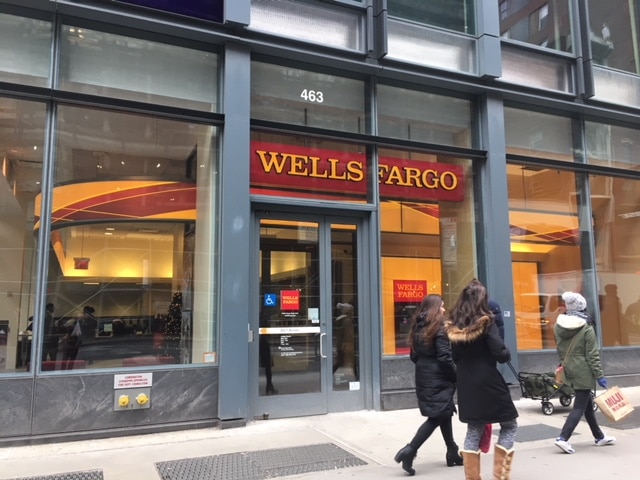
You may benefit from the latest Wells Fargo settlement. The bank will pay $575 million to settle a lawsuit with all 50 state attorneys general and the District of Columbia. The latest settlement deals with retail practices where employees  opened 3.5 million fake accounts and caused consumers to pay fees for services they never requested. The settlement also covers sales of sketchy auto collateral protection insurance (“CPI”), Guaranteed Asset/Auto Protection (“GAP”), and a mortgage interest rate lock.

Wells Fargo has been ordered to repay more $1.2 billion since 2015 because of practices that cheated consumers. The bank has worked to put that chapter of its history behind it and this settlement is the latest step.  

Tim Sloan, Chief Executive Officer and President of Wells Fargo, said, “This agreement underscores our serious commitment to making things right in regard to past issues as we work to build a better bank,” 

California will get more than a quarter of the settlement money because it’s the bank’s home state and most of its customer live there.

California Attorney General Javier Beccera called the bank’s behavior “disgraceful.” He said, “Wells Fargo customers entrusted their bank with their livelihood, their dreams, and their savings for the future. Instead of safeguarding its customers, Wells Fargo exploited them.”

In addition to the payout, Wells Fargo will:

Create and maintain a website that lays out the issues for consumers and explains how to receive restitution payments. 

Create a designated team to handle the complaints and help consumers get what they need. 

Since 2015 many consumers have gotten restitution through settlements Wells Fargo negotiated with the federal Consumer Financial Protection Bureau, the Comptroller of the Currency, and through class action lawsuits. 

The new settlement should help consumers who have not yet benefited from legal action. Wells Fargo set up a hotline that will operate 24/7:  1-877-924-8697.

Tax Refund Scam Uses Inland Revenue

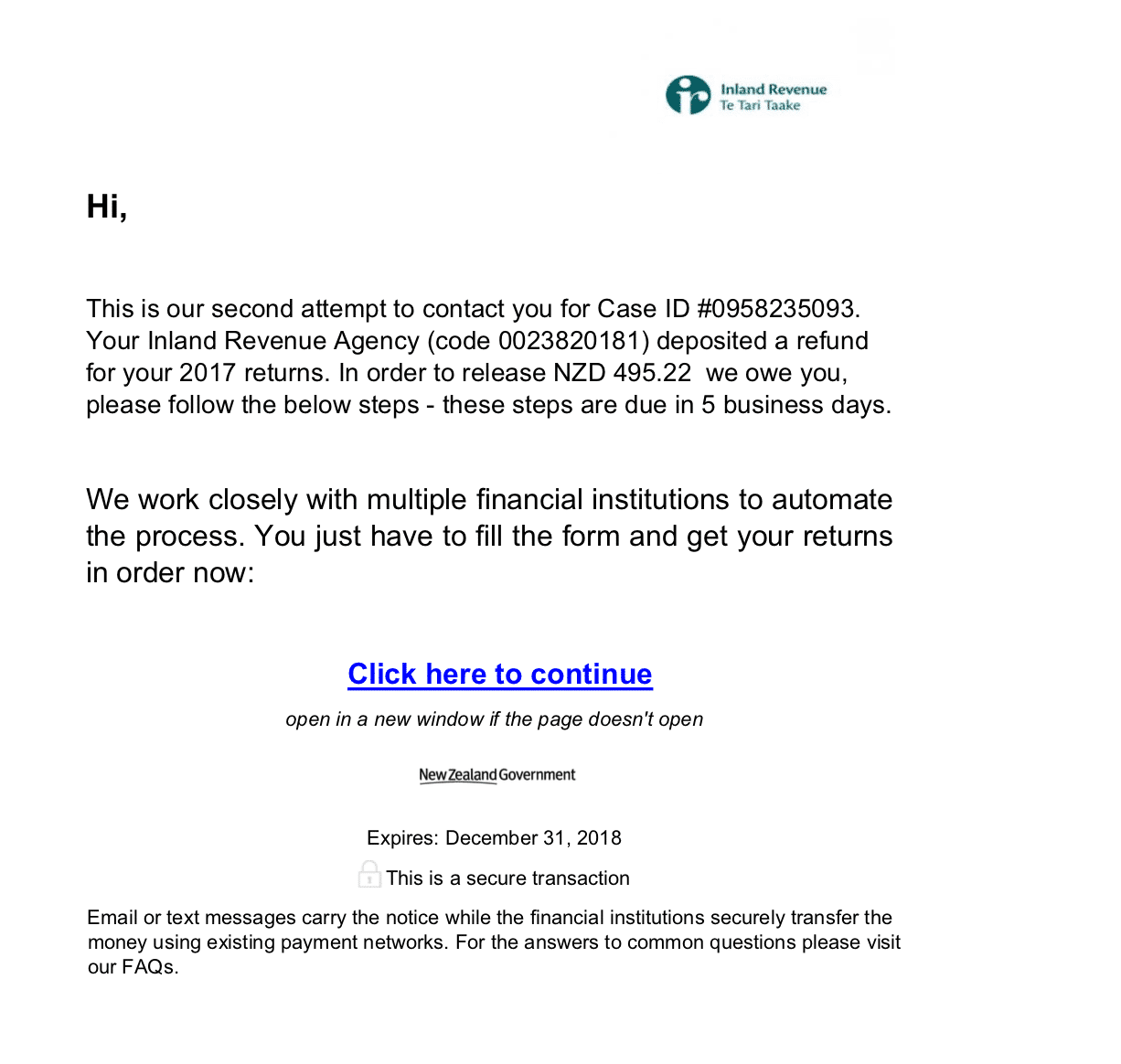
Scammers sending email about a mystery tax refund keep trying to bait us. The latest tax refund email phishing scam popped into our inbox as a message from the “Inland Revenue Agency” claiming that money awaiting us in our account. All we had to do was click “here to continue.”

IRS Email phishing scam uses Inland revenue

First of all, the United States doesn’t have an Inland Revenue Agency. A careful read shows you this purports to be from New Zealand’s tax agency, supposedly a VAT tax refund that you’re due.  But many of us just read “refund.”  And here the U.S. Internal Revenue Service advice still applies:  the IRS warns that we should not click on any links in the phishing scam emails.

An IRS alert says there is a “surge of fraudulent emails impersonating the IRS . . . as bait to entice users to open documents containing malware.”

Here’s the danger: malware can steal personal information, including your Social Security number, stored in your computer and this particular type of malware is difficult to delete, according to the IRS.

Once the criminals get your personal information they can file a fake W-2 in your name and claim your tax refund and other benefits. They are also looking for freelancers and small business Employer Identification Numbers.

IRS Commissioner Chuck Rettig said, “. . . as tax season approaches, the IRS and the Security Summit partners continue to warn employers to be on the lookout for emails asking for sensitive W-2 information, a dangerous scheme aimed at payroll and human resource offices.”

The problem is you often don’t know something is amiss until you discover  situations like these:

  • More than one tax return was filed using your SSN or your Employer Identification Number.
  • You learn that you owe additional tax, refund offset or have had collection actions taken against you for a year you did not file a tax return.
  • IRS records indicate you received wages or other income from an employer for whom you did not work.
  • Extensions to file are rejected because a return with your information is already on record.
  • You don’t receive expected correspondence from the IRS because the thief changed your address.

The IRS never sends unsolicited emails to consumers or contacts them by phone. And New Zealand’s IRA probably doesn’t, either.  So the best thing to do is ignore the temptation to click on the link and delete the scam phishing email.

You can also report it to phishing@irs.gov and help investigators keep track of the scammers.


Seriously Good Audiobooks

by Barbara Nevins Taylor

If you’re looking for seriously good audiobooks, I’ve got a some solid recommendations to keep you interested and entertained. My list of audiobooks runs from good contemporary literature to detective and thriller novels, and the audiobooks I recommend have excellent narrators who help turn the books into movies in the mind. 

Looking for an Audiobook

Washington Black by Esi Edugyan deservedly sits atop many best book lists of 2018. The audiobook, narrated by Dion Graham, lifts it to another level. The story of George Washington Black, born a slave, begins in Barbados and the terror and cruelty of slavery will make you wince. Yet there is always something hopeful about Washington, even as the truly evil master and life itself seem to conspire against him. Ultimately this is a story of a boy, a young man finding himself and his gifts against all odds, but I won’t give the plot away or spoil the story as it unfolds for you. Dion Graham gives a deeply felt performance as Washington and the many characters who inhabit his life. If you listen to one good book, choose “Washington Black“.

seriously-good-audiobooks


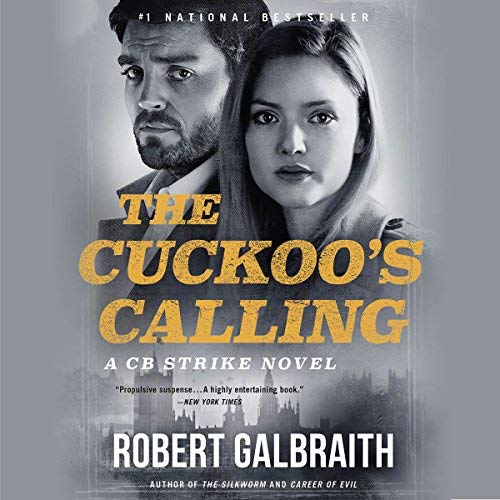
The Cuckoo’s Calling by Robert Galbraith — actually J.K. Rowling — and narrated by Robert Glenister got me hooked on the British detective Cormoran Strike.  I’m late to this party. The first book was published in 2013 and it was so good that critics and fans tried to figure out who this writer Galbraith was.

Rowling says on her website that she wanted to establish Galbraith as a credible crime writer in “his own right.” She accomplished that right off the bat. The intricate plot, great characters and good writing make it an addictive listen.

Her hero Cormoran Strike, a former military police officer, lost part of his leg in Afghanistan. When we meet him in the first book in the series, he is beginning a new chapter in his life. Almost immediately, we feel lucky to have discovered his company.  Robert Glenister’s thick Cornish accent takes a bit of adjusting, but it sounds just right pretty quickly.

Strike and his new assistant, Robin Ellacott, share a sizzle that they try to ignore. The rich backstories of both characters make them likable people who pop from the page. But there is so much more. The plot and the investigation into the death of a supermodel in The Cuckoo’s Calling take unexpected turn after turn. Just when you think you might have figured it out, there is the surprise. 


The Silkworm

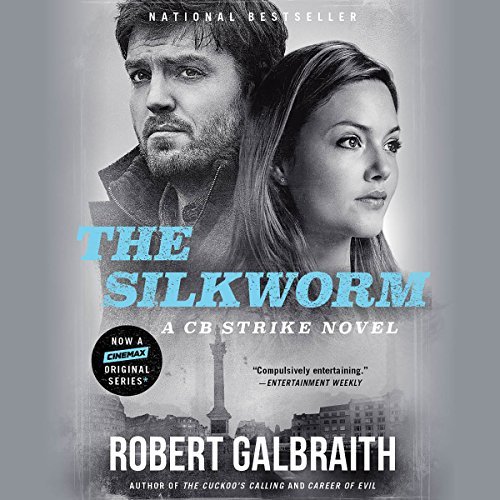
I liked The Cuckoo’s Calling so much that I wanted more, so I downloaded The Silkworm and quickly found myself gripped by another intricate plot.  The Silkworm, again narrated by Robert Glenister, takes us into the world of contemporary publishing. When a fantasy writer disappears, his wife calls upon Strike to help find him.  Strike continues to work against the odds and the relationship with Robin gets better and better. But she has a fiancé and the tension there continues.

In the meantime, the plot moves in and out of the literary world filled with egocentric characters and almost everything that happens seems surprising. 

Seriously-good-audiobooks

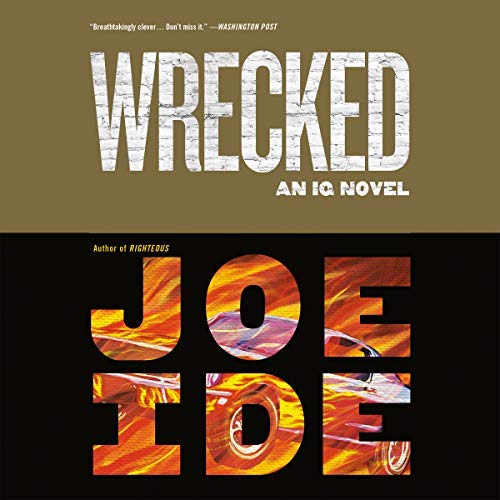
Wrecked: An IQ Novel, by Joe Ide and narrated by Sullivan Jones, is distinctly American, unique and entertaining. It’s the third novel in the series about Isiah Quintabe, a brainy young detective who takes payment from his cash-poor Long Beach, California neighbors in casseroles and ugly hand-knitted sweaters. 

The set-up to the plot, which involves former U.S. soldier-torturers from Abu Ghraib prison in Afghanistan, is funny in the twisted way that makes Carl Hiassen’s Florida books great.  Ide’s stories are California all the way and Sullivan Jones does a brilliant job. His Isiah is as a real as a guest on a Trevor Noah show, and all the other characters sound and feel like contemporary Americans.

seriously-good-audiobooks

Warlight, by Michael Ondaatjie, the author of The English Patient, pulls you into the life of a family in 1945 post-World War II London, just as the parents are about to disappear. The mother and father are off to Singapore for a reason that’s not clear to 14-year-old Nathaniel Williams, who tells the story, and his sister, 16-year-old Rachel. A man, a friend of their mother, will stay with them in their house and supervise.

The children think he and the friends who populate the house at night, in a dim half-light, are criminals and they’re right. They nickname their guardian “The Moth.” His friend, who fixes greyhound races, they call “The Darter.” 

Steve West narrates the atmospheric prose perfectly as the story explores memory and Nathaniel’s coming of age.  I found myself  listening compulsively on this journey of discovery with Nathaniel who learns no one is quite who they say they are. Turns out, his mother Rose worked as a spy, and his parents didn’t go where they said they were going, or maybe his mother didn’t. A harrowing manhunt for Rose puts the children in danger and your heart beats faster as you try to escape with them and figure out what’s happening.

In the second half of the book, Nathaniel, now 28, tries to piece together the bits of his mother’s life. His journey and research turn up surprises that keep you with him. “No one really understands another’s life or even death,” Nathaniel realizes. That is something that those of us who’ve tried to figure out a parent’s mysterious life will understand.


Why Put A Credit Freeze Your Credit Report?

Why freeze your credit report? A credit or security freeze on your credit report helps to protect you from identity theft and blocks anyone who tries to open a credit account in your name. You can now request a free credit freeze from the three major credit reporting bureaus, Equifax, Experian, and TransUnion.

A law requiring credit reporting agencies to freeze your credit for free went into effect on September 21. Consumer advocates called for the action after the Equifax security breach that exposed the personal information of 145.5 million people, most of the Americans.

Congress bundled the law into Republican legislation called the Economic Growth, Regulatory Relief and Consumer Protection Act. That law also scaled back some of the Dodd-Frank protections for consumers enacted after the 2008 financial crisis. But this one consumer-friendly provision may turn out to work in your favor. 

Here’s what you need to know: 

  • A credit freeze does not affect your credit.
  • You can still apply for a new credit card or ask for credit for something else. But you’ll have to give approval for a credit check.
  • You can unfreeze your credit report at any time.
  • It will still allow your creditors to review the report. But others will have to get your permission to see it. That means you have the control.

The new law also allows you to ask a credit reporting bureau to freeze your child’s account for free. This again makes sense, because thieves have stolen children’s identities and used their Social Security numbers to open credit card accounts, buy luxury goods, and even take out mortgages.

The new law also allows you to put a year-long fraud alert on your credit report, or your child’s credit report.

How do you put a freeze on your credit report? Simple.

Contact:

Experian 

TransUnion

Equifax

You can also help to protect your identity and your credit by requesting a free credit report at annualcreditreport.com. You can get a free credit report from each of the credit reporting bureaus once a year. 


Should You Choose Medicare Advantage?

Medicare Advantage may seem like an appealing choice, but you may find the insurer will refuse to pay, or will deny treatment and care you need. A new report by the Office of Inspector General (OIG) of the Department of Health and Human Services (HHS) found that Medicare Advantage plans have a built-in financial incentive for denying service.

Medicare Advantage May Not Give You The Care You Need
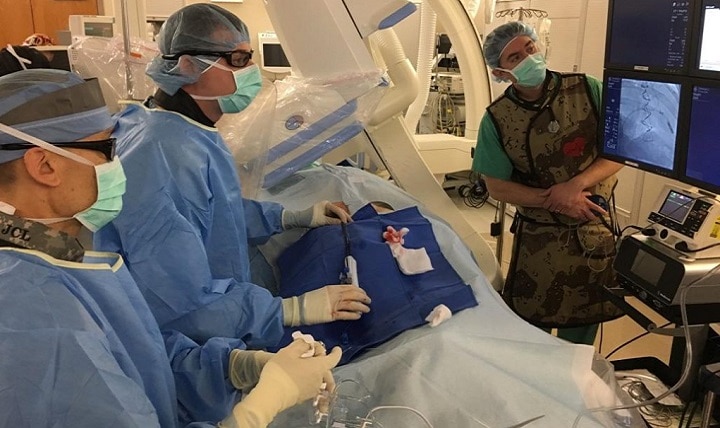
Photo Courtesy U.S. Military Healthcare, photo by Jacob Sippel

The OIG report hits home now because open enrollment for Medicare starts October 15 and runs until December 7, 2018 and you have an opportunity to switch plans and choose Medicare Advantage. It’s also significant because if you have it and you want to get out of it, you won’t be able to join the popular Medicare Part F Medigap plan, starting in 2020. Read more about this below.

For now the choice you make could impact your health.

Medicare Advantage May Not Give You Treatment You Need
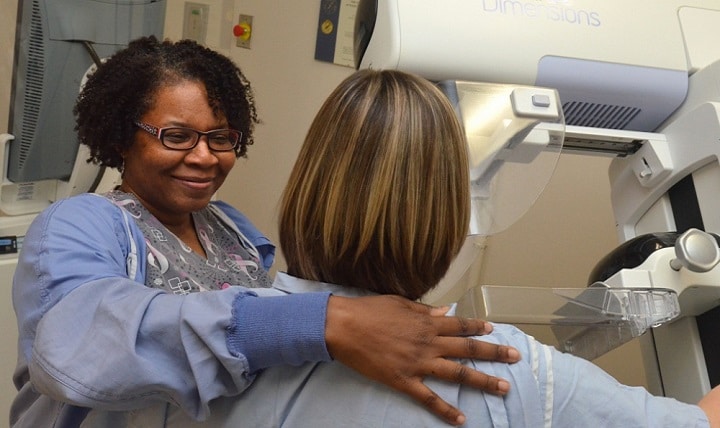
Photo by Collusor, Courtesy Pixabay

Twenty million people enrolled in Medicare Advantage plans in 2018. These plans, run by private companies, seem attractive because they cover a wide-range of service for inclusive fees. They do require doctor referrals and often you must use the doctors or services within the network. 

Investigators says these private Medicare Advantage Organizations (MAOs) often “…inappropriately deny access to services and payment in an attempt to increase their profits. An MAO that inappropriately denies authorization of services for beneficiaries, or payments to health care providers, may contribute to physical or financial harm and also misuses Medicare Program dollars that CMS paid for beneficiary healthcare.”

Medicare Advantage May Not Provide Care You Need

The Medicare Advantage plans get paid for each person they sign up, not for the care or services people receive.  So once you’re enrolled, there’s no incentive for delivering what you need. 

Here’s what happens: Your medical problem requires a procedure, or a referral. Your Medicare Advantage plan turns you down. Most people don’t appeal. But the OIG discovered that between 2014 and 2016, when people did appeal, they were successful 75 percent of the time.  That adds up to 216,000 denials overturned each year. In addition, more denials were overturned by people higher up in the Medicare Advantage organizations. So some people in these insurance companies are making bad decisions.

That means more people should appeal these denials. The appeal rate is just 1 percent. That means a lot of people are not getting the care they need and deserve and have paid for, and that’s not only costly but potentially dangerous.

The Centers for Medicare and Medicaid Services (CMS) recognize the problem. In 2015, it cited 45 percent of the Medicare Advantage companies with improper denials or for sending denial letters with incomplete or incorrect information.

The inspector general called for more oversight by CMS. But for people making choices right now, you might want to think twice about a Medicare Advantage plan and opt for Medigap or supplemental insurance called Part F by Medicare. 

Plan F is popular with Baby Boomers because it picks up the 20 percent of the bill Medicare Part B doesn’t cover. Rates are set locally depending upon where you live. Medicare recipients pay $149 in a place like Ft. Worth, Texas and as much as $336 in Miami, Florida, according to Forbes.  Part F also covers 80 percent of your health care if you become ill during foreign travel.

But guess what? 

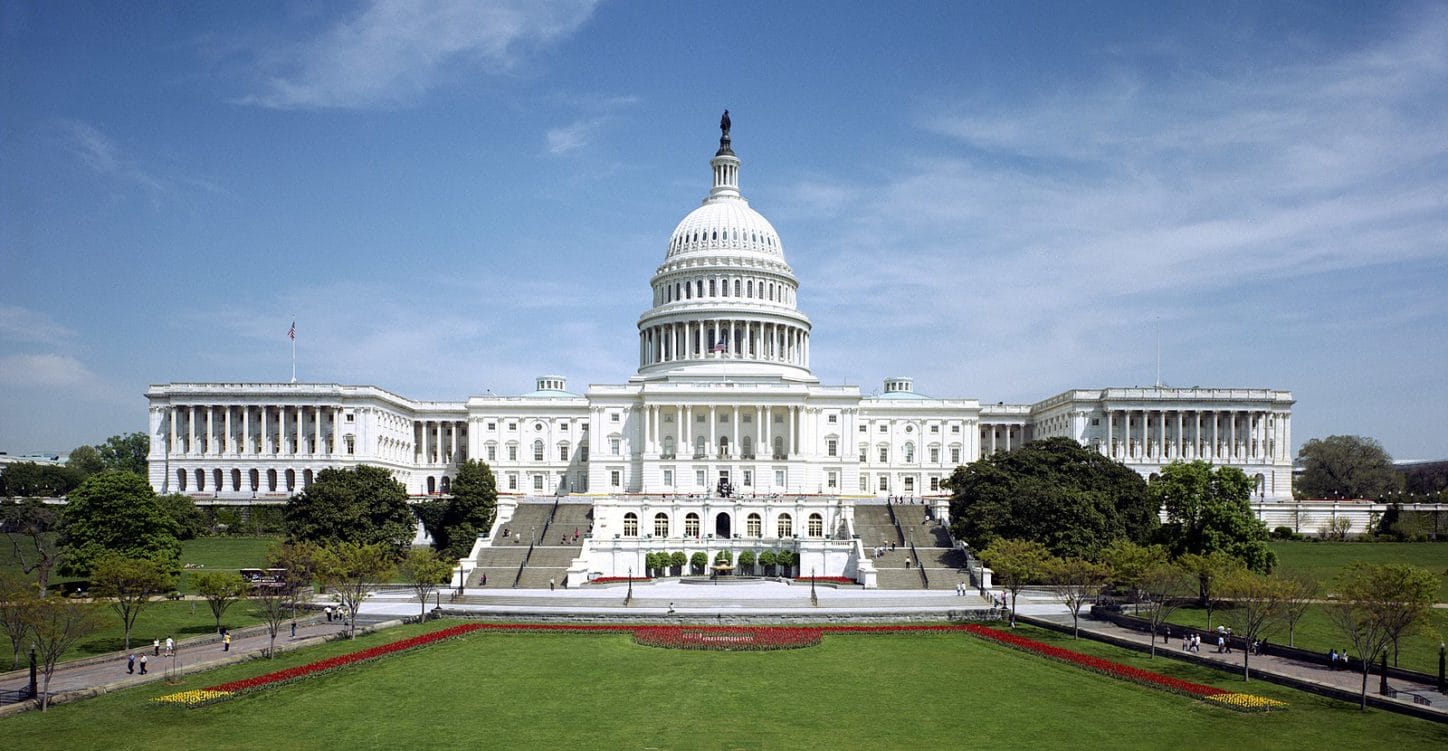
Photo by the Architect of the Capitol, Public Domain

Congress in 2015 passed a law that does away with Part F as of 2020 as a way of reducing the budget deficit. Why didn’t we complain?

If you have Part F now, you won’t lose it. But anyone who signs up in the future won’t be able to enroll as of 2020.

Every time, I write one of these healthcare stories I remember the sheep that we saw in Sardinia. Take a look.


Tree Of Life Synagogue Rabbi: “We Deserve Better”

by Barbara Nevins Taylor

Rabbi Jeffrey Meyers of the Tree of Life Synagogue in Pittsburgh wrote an essay for his congregation last July. He worried about gun violence, the treatment of immigrants and the failure of our leaders. He might have added the ugly atmosphere that fosters anti-Semitism. But then, he couldn’t have possibly imagined what would happen in his synagogue three months later. Who could?

Shannon Watts, founder of Moms Demand Action – a gun control advocacy group – brought it to my attention. Here’s an excerpt…

“Unless there is a dramatic turnaround in the mid-term elections, I fear that that the status quo will remain unchanged, and school shootings will resume. I shouldn’t have to include in my daily morning prayers that God should watch over my wife and daughter, both teachers, and keep them safe. Where are our leaders?” — Rabbi Jeffrey Meyers

I hope you will read the rest. Please think, when you do, about what we need to do as a nation to come together, to stop the violence, and tune out the self-serving platitudes of so-called leaders including President Trump who stir division for their political advantage and demonstrate that they care nothing for our country.

We Deserve Better 

by Jeffrey Meyers,  July 19, 2018

Current news recycles at a dizzying pace, with the important topic of yesterday buried beneath the freshest catch of the day. The television talking heads pick over each and every juicy tidbit like vultures over carrion. Just when you thought they were done, they find more. Remember the Thai soccer team rescue? Old news. The push by the students from Parkland, Florida to enact safer schools?

Now that schools are closed for the summer, apparently school safety is not important, as shooters are finding other valuable sites. It is remarkable that the horror of immigrant children being separated from their parents continues to be newsworthy.

I recall seeing a post not long ago that rather accurately describes the life cycle of news, and I paraphrase to the best of my recollection: Tragic Event – Thoughts and Prayers – Call to Action by our Elected Leaders – Hang Wringing – Next News Event.

Rabban Gamliel, who lived during the latter part of the Second Century, observed the following: Be wary of the authorities! They do not befriend anyone unless it serves their own needs. They appear as a friend when it is to their advantage, but do not stand by a person in his hour of need. How insightful was he, that he really understood an essential truth about the government.

Despite continuous calls for sensible gun control and mental health care, our elected leaders in Washington knew that it would fade away in time. Unless there is a dramatic turnaround in the mid-term elections, I fear that that the status quo will remain unchanged, and school shootings will resume.

I shouldn’t have to include in my daily morning prayers that God should watch over my wife and daughter, both teachers, and keep them safe. Where are our leaders?

Immigration advocates were wise in bringing the separation of parents and children to the courts, because we have seen legal decisions pushing our leaders to respond in a timely manner. What happens to the children whose parents were deported?

There must be a better system, and I would have hoped that bright minds in Washington, D.C., could sit down and work out a solution that takes into account all of the concerns that have been raised.

Alas, inaction once again. Soon enough those who are up for re-election will be on the campaign trail, seeking your dollars and your support. Will you ask them the hard questions, and tell them that you will hold them to their words, or that they should seek a different sort of employment?

Will the new freshmen class of Congress learn to just yes us continually until the roar fades to a whimper, which is apparently rule #2 in the Congressional handbook? We all know rule #1, and look where that has gotten us to. Our school students deserve better. Immigrant families deserve better. We deserve better.

Vote

Mystery Caterpillars Make Fall Appearance

by Barbara Nevins Taylor

Mystery caterpillars began to appear on our fourth floor deck in Greenwich Village in the early fall. We hadn’t seen caterpillars or their webs all summer, but suddenly during the second week of September I spotted the first one crawling seemingly to nowhere. I put an end to it with a steady stream of water from the hose, and thought no more about it.

Mystery Caterpillars Appear in September

But then, my husband Nick said that he had seen two in our living room. 

On the theory that if something happens to one person, it must be happening to others, I reached out to the New York City Parks Department and the New York Botanical Garden. At that point neither of us had taken a photo. Once we realized our mistake, we took photos and video. 

But when I talked to the experts, I could only describe what we saw. We told Don Gabel, Director of Plant Health at the New York Botanical Garden (NYBG) that we didn’t see a nest or web. “The caterpillars are there because they are probably on the way to somewhere else. It’s likely they were carried to the Village and your deck by wind currents,” he said.

Based on what I described, Gabel said he thought it was a Tusket Moth,  also called a Tussock Moth.  He said, “They are plentiful this year and windblown in their younger stages and it’s not unusual that they would end up on a balcony.

A few days later, we spotted another in the house, and had the wit to take a photo.

Mystery Caterpillars Appear in September


I sent it to Brien Mosley at the New York City Parks Department. Mosley, like the NYBG’s Gabel, said he thought it was a White Hickory Tussock Moth caterpillar. “You want to avoid touching them. They are venomous but not deadly. They secrete toxins through the hairs and it can cause a bad rash or affect vision if the eyes are rubbed after,” he told us.

When my husband Nick noticed one on a table in the downstairs tenant’s garden, he shot a video.

I sent that to Mosley at Parks. He said, based on the video our mystery caterpillar could be a Brown-tail Moth Caterpillar. “It also has the stinging hairs and can cause skin reactions. They are not aggressive, they just secret the toxin as a defense so it’s best to avoid touching both with bare skin,” he said.

Okay. But we didn’t know where these mystery caterpillars nested. And then, I saw where they lodged.

They tucked themselves into the climatis on the trellis over our kitchen door and the mandevilla

Mystery-Caterpillars-Make-Fall-Appearance

that climbs and blooms with beautiful pink flowers.

Mystery-moths-make-fall-appearance

They like to eat the leaves and make nasty holes.

Mystery-Caterpillars-Make-Fall-Appearance

Gabel at the Botanical Garden suggested we get the Azerdirachtin to spray. BioNeem also contains Azerdirachtin and when we discovered none of our local hardware or plant stores had it, we went to Amazon.

The spray works and we hope to be rid of the caterpillars soon. But we wondered about what comes next when we saw the little white moth.

Mystery-moths-make-fall-appearance

Mystery-moth-makes-fall-appearance


Crackdown On Future Pension Income Scheme

Relief may be on the way for people who borrowed money against their future pension income and those who loaned them money. The Consumer Financial Protection Bureau (CFPB) charged Future Income Payments and its chief executive Scott Kohn with defrauding consumers and making illegal loans. This action is a long time in the making.

The CFPB filed a complaint in Federal District Court in California asking a judge to put Kohn and his affiliated companies out of business.

ConsumerMojo reported extensively about pension advance plans and so-called structured asset schemes that trap people in high interest loans. Typically, marketers targeted retired people in need of cash, usually with military, police or disability pensions. The companies also reached out to older people whom they persuaded to lend a large of chunk of money in return for a steady monthly income. 

Under the agreements, the individual who wanted cash assigned monthly pension or disability payments, often in violation of the law, to a company that would pay the investor. These loans against future pension income ranged from $100 to $600, according to the CFPB  lawsuit, and interest rates and fees often added up to 183 percent.

We reported cases where the borrower stopped making payments, leaving the “investor” in the lurch without recourse. Courts often ruled against the lender because the advance against the future pension income was considered an illegal loan. Future Income Payments and marketers claimed it was a pension “buyout,” not a loan, and didn’t involve interest payments.

States including New York, Minnesota, Illinois, Minnesota, Massachusetts, Oregon, North Carolina, Maryland, Washington and California took action against Future Income Payments. They concluded the company made illegal loans and in some cases, like New York, banned it from doing business in their states.

The action by the CFPB aims to protect consumers from further financial harm and get restitution for those who lost money and paid usurious interest. It’s also asking the court to award civil penalties against Scott Kohn and his companies. 

Companies listed in the complaint include: 

Cash Flow Investment Partners LLC; Pension Advance LLC; BuySellAnnuity Inc.; Cash Flow Investment Partners East LLC; Cash Flow Investment Partners MidEast LLC; Lumpsum Pension Advance Atlantic LLC; Lumpsum Pension Advance Southeast LLC; Lumpsum Settlement West LLC; PAS California LLC; PAS Great Lakes LLC; PAS Northeast LLC; PAS Southwest LLC; Pension Advance Carolinas LLC; Pension Advance Midwest LLC; Pension Loans South LLC; and, Does 1-100

Who Protects Average Americans?


by Barbara Nevins Taylor

There’s a lot of talk lately about “the little guy” and who protects average Americans. If you are one of the average Americans who has a student loan, wants to borrow money, sign up for health insurance, or protect yourself against financial predators, there’s plenty to worry about when it comes to consumer rights

For now, just think about student loans and what’s happening at the Department of Education (DOE) in Washington.

The Department of Education under Secretary Besty DeVos scaled back protections for students defrauded by for-profit-colleges that didn’t deliver the education that they promised. 

Under her orders, the DOE is also trying to stop states that go after for-profit schools that defraud students. It supported a lawsuit by the Student Loan Servicing Alliance, a trade group, against the city of Washington, D.C. for setting up a student loan ombudsman office, according to The New York Times. Not a plus for the average American here. 

The Department of Education also plans to cut back rules that aimed to rein in for-profit-colleges. The Obama administration set up rules to cut off federal aid to for-profit colleges whose students couldn’t find the gainful employment they were promised. 

Consumer advocates have denounced the moves aimed at helping the industry and predators.

The National Consumer Law Center‘s Aby Shafroth said, “The gainful employment rule is a basic, commonsense safeguard designed to protect students and taxpayers by ensuring that federal dollars do not flow to schools that consistently fail to deliver sufficient value to students to enable them to afford their student loans. The rule protects millions of Americans enrolled in career training programs and provides incentives for schools to reduce their costs and increase their value.”

The Century Foundation, a non-partisan think tank, says the DeVos actions hurt students and help the industry. It suggests the changes made by the Trump administration will make it harder for victims of scams to sue companies that defraud them, and force students to default on their loans before they can get debt relief. 

The steady erosion of support for average Americans, students in particular, led to the resignation of the Consumer Financial Protection Bureau‘s (CFPB) student loan ombudsman, Seth Frotman. He sent a scathing letter to the CFPB’s acting director, Mick Mulvaney, who also heads the Office of Management and Budget, saying the bureau had abandoned consumers and was no longer enforcing the law.

The CFPB, during the Obama years, returned more than $750 million to student loan borrowers. And the Obama administration also forgave $450 million in federally-backed student loans that went to colleges where the students got worthless degrees.

Frotman said, “The current leadership of the bureau has made its priorities clear — it will protect the misguided goals of the Trump administration to the detriment of student loan borrowers.”

He went on to say, “Unfortunately, under your leadership, the bureau has abandoned the very consumers it is tasked by Congress with protecting. Instead, you have used the bureau to serve the wishes of the most powerful financial companies in America.”

So what happened to the promises to protect the average American? 

If this makes you angry and it should, vote and encourage others to vote.


How Russians Hacked State Election Systems

by Barbara Nevins Taylor

When do people in the United States get angry about how Russians played Americans for suckers and hacked state election systems?

Regardless of your political party, you should feel ticked off at the Russians and furious with any U.S. elected official who pretends it didn’t happen.

Defend our democracy.

Read the latest indictment from the Mueller probe that describes how Russian intelligence officers hacked state election board computers to get voter information and disrupt the 2016 election. Make your own decision. 

This is the time to stand up and stop pretending the Russians aren’t our enemy.  

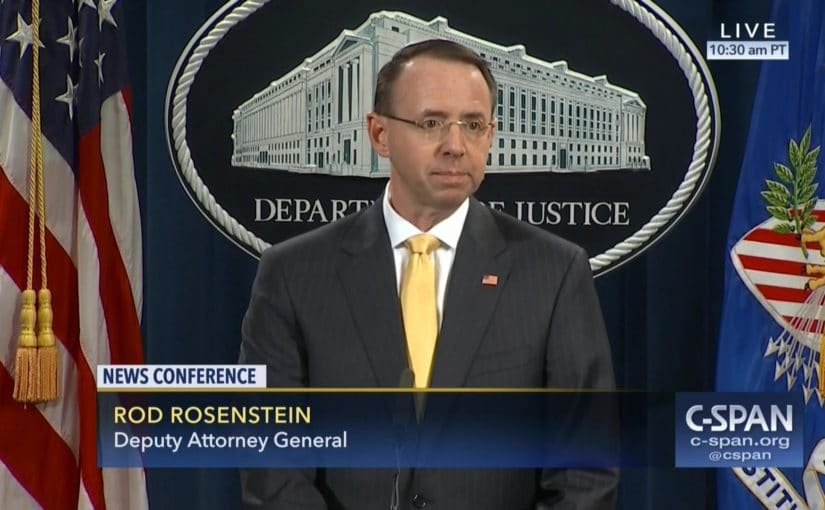
Read what Deputy Attorney General Rod Rosenstein said about the latest indictment of Russians:

“A federal grand jury in the District of Columbia returned an indictment presented by the Special Counsel’s Office. The indictment charges twelve Russian military officers for conspiring to interfere with the 2016 presidential election. Eleven of the defendants are charged with conspiring to hack into computers, steal documents, and release documents in an effort to interfere with the election.

“One of those defendants, and a twelfth Russian officer, are charged with conspiring to infiltrate computers of organizations responsible for administering elections, including state boards of election, secretaries of state, and companies that supply software and other technology used to administer elections.

“According to the allegations in the indictment, the defendants worked for two units of the Main Intelligence Directorate of the Russian General Staff, known as the GRU. The units engaged in active cyber operations to interfere in the 2016 presidential election. One GRU unit worked to steal information, while another unit worked to disseminate stolen information.

“The defendants used two techniques to steal information. First, they used a scam known as “spearphishing,” which involves sending misleading email messages and tricking users into disclosing their passwords and security information. Second, the defendants hacked into computer networks and installed malicious software that allowed them to spy on users and capture keystrokes, take screenshots, and exfiltrate data.

“The defendants accessed the email accounts of volunteers and employees of a U.S. presidential campaign, including the campaign chairman, starting in March 2016. They also hacked into the computer networks of a congressional campaign committee and a national political committee. The defendants covertly monitored the computers, implanted hundreds of files containing malicious computer code, and stole emails and other documents.

“The conspirators created fictitious online personas, including “DCLeaks” and “Guccifer 2.0,” and used them to release thousands of stolen emails and other documents, beginning in June 2016. The defendants falsely claimed that DCLeaks was started by a group of American hackers and that Guccifer 2.0 was a lone Romanian hacker.

“In addition to releasing documents directly to the public, the defendants transferred stolen documents to another organization, not named in the indictment, and discussed timing the release of the documents in an attempt to enhance the impact on the election.

“In an effort to conceal their connections to Russia, the defendants used a network of computers located around the world, and paid for it using cryptocurrency.

“The conspirators corresponded with several Americans through the internet. There is no allegation in the indictment that the Americans knew they were communicating with Russian intelligence officers.

“In a second, related conspiracy, Russian GRU officers hacked the website of a state election board and stole information about 500,000 voters. They also hacked into computers of a company that supplied software used to verify voter registration information; targeted state and local offices responsible for administering the elections; and sent spearphishing emails to people involved in administering elections, with malware attached.”

Read the indictment here.

Great Summer Audiobook Listening


by Barbara Nevins Taylor

Great summer audiobook listening means great stories narrated by  talented actors who lift the words from the page to envelope you in the world of the characters. 

Since I began narrating audiobooks a couple of years ago, I’ve become a passionate, yet particular listener.  I look for well-written books narrated by actors with voices I can welcome to my ears. 

Circe, written by Madeline Miller and narrated by Perdita Weeks, is my favorite audiobook of the past few months. Miller transforms the myth of Circe, the goddess-witch whom you may know from the Odyssey.  It becomes the tale of a woman’s self-discovery in extraordinary circumstances. She learns about herself, her powers, her place in the world, her loves, and the fierceness of motherhood. 

We begin our journey with Circe, an outlier, an unloved nymph, in the palace of her father Helios. Perdita Weeks gives a flawless, understated performance that will make you ache, hold you on to the edge of your seat, and leave you loving this audiobook. You root for Circe all the way. Well, maybe not when she is evil. But like many of us, she makes mistakes. 

After I finished listening to Circe, I looked up what Miller had written before and immediately downloaded The Song of Achilles. Again, I found another example of great audiobook listening.  I instantly fell in love with the way Miller upended a story that we may think we know a little, or even a lot, about. The Song of Achilles, narrated perfectly by Frazier Douglas, explores the relationship between Achilles and Petrocolus. They meet as boys and fall in love, but at first have no words to explain or understand the bond that develops between them.

Patroclus, another outlier like Circe, gets sent away from his father’s kingdom and loses the privileges of princedom, but becomes the sworn companion of Achilles. Miller uses Patroclus’ outsider perspective to tell the story of the beautiful, graceful Achilles, who ultimately becomes a war machine. But this is very much a love story about commitment and sacrifice. Again, it also explores the ferocity of motherhood. Thetis, Achilles mother, lives apart from her son, but plays a big role in his life. She tries to guide him to create his legacy, and at every turn urges him to break with Patroclus.  Since this is The Song of Achilles, it is also about battles and war, manipulation and hubris, and you won’t stop listening.

 great-summer-audiobooks

The Great Alone, by Kristin Hannah and narrated by Julia Whelan, tells a very different and very American coming-of-age story. Hannah, a master storyteller, takes us on wild, often violent and  unsettling ride. She starts the story in 1974 with Leni, a young girl, who is wiser than her hippy parents. Her dad Ernt, a Vietnam vet, suffers from serious PSTD and when he inherits a plot of land and a shack from a buddy who died in combat, he takes the family from California to a remote part of Alaska. 

Her mom Cora, from a comfortable San Francisco family, is besotted by her handsome, manic husband and blind to his faults. They all work hard to build a life, but their efforts are often undermined by Ernt’s madness. Yet their love for each other and the wild beauty of Alaska keeps them going. 

Ultimately, this is Leni’s story as she falls in love, faces terrifying, heart-breaking challenges, and fights to survive. Julia Whelan makes this great audiobook listening.

Force of Nature, an exciting police procedural by Jane Harper, takes us to the outback of Australia with detective Aaron Falk, her hero from The Dry. Stephen Shanahan narrates again and conveys a deep understanding of the conflicted Falk as he struggles with his own emotional turmoil while he tries to find a murderer.

Falk and his partner, Carmen Cooper, work in the financial crimes unit of the Melbourne police, and a source inside a company they are investigating ends up dead. She and five other women had been in a remote area on a kind of outward-bound team-building trip.  The story twists and turns and at times left me terrified as Harper took me back and forth between the investigation and an almost moment-by-moment account of what actually happened. You won’t want to stop listening.

great-summer-audiobooks 

Walter Mosley sets his thriller, Down The River Unto the Seain Brooklyn and introduces us to Joe “King” Oliver, a former cop turned private detective. Dion Graham, one of the great narrators, brings you into the heart and mind of King Oliver, a smart, sensitive guy set up by police brass on a phony rape charge. 

King’s relationships make this a deep, emotionally-layered crime story and King a compelling hero. He worries about his teenage daughter who works part-time in his office. He visits and cares for his grandmother in an assisted-living facility.  A criminal he calls on for help becomes a buddy, and a hooker he’s known for long time turns into a different kind of friend.

As King tries to solve a case for a client, he fights off the racist cops who want to see him dead. You may fall in love with King Oliver and worry about his survival, even though a lot of what happens to him seems far-fetched. 

 Erotica 

Great-Summer-Audiobooks

This won’t suit everyone’s taste. But if you like erotica, this one definitely provides a great audiobook listening experience. Taking Turns, the Turning Series, by JA Huss will keep you listening, wondering, and feeling sexy.  Ava Erickson, Sebastian York, Tad Branson and Joe Arden give us a quartet playing a sex game. 

Everyone’s rich, pretty or handsome, and an upscale, private sex-club in Denver plays home to the site of the games.  The guys are appealing but the     woman remains a troubled enigma.

For more great audiobook listening you might want to check out the books we started the year with and you can find them here.  Or our favorite books from last summer


Think Twice About Taking Expensive Jewelry On Vacation

If you love your stuff, think twice about taking expensive jewelry on vacation. Best advice: leave it home and enjoy your trip.

Sure you love what you wear every day and when you slip on when you go out. But you won’t be very happy if your jewelry is  stolen, or lost, while you’re traveling.  

Our friend Rachel wondered if she should wear her diamond ring on her bachelorette trip to the Dominican Republic. The answer from all the experts we talked with was a resounding, “No.” When it comes to traveling with jewelry say, “No,” to yourself.

The resort or destination may be safe, but things happen. Individuals steal and it’s wise to keep temptation away from them.  On a trip, to Tulum, Mexico we saw a couple practically in tears after they discovered their jewelry, iPads and iPhones, and other valuables were stolen from their room. Everyone thought the hotel was safe. The hotel owner said there hadn’t been a theft or break-in in years. But that didn’t make it any easier for the couple who lost valuable possessions.

The U.S. State Department advises that when you travel abroad, “Don’t bring anything you would hate to lose…. and leave at home valuable or expensive-looking jewelry.”

Even in the U.S. as you’re traveling or staying in a hotel, expensive jewelry draws unwanted attention.

Arlene Lester, a spokesperson for State Farm Insurance, suggests that, “You only travel with necessary items and don’t be flashy with your jewelry.

If you must take your jewelry here are 5 tips that may help keep you safe:

2. The best policy is to take only what you will wear, and wear the jewelry at all times.

3. If you have take it off, make sure you put the jewelry in the room or hotel safe and keep the key close to you.

4. If you have to take additional jewelry, keep it in your carry-on luggage or your handbag.

5. Don’t let a hotel, airline employee or anyone else carry the bag that contains your jewelry.

6. Again, keep what you are not wearing in the hotel safe and make sure you keep the key with you at all times.


For more travel tips view our video Renting A Car in Mexico and Hawaii for a Multi-Generational Vacation